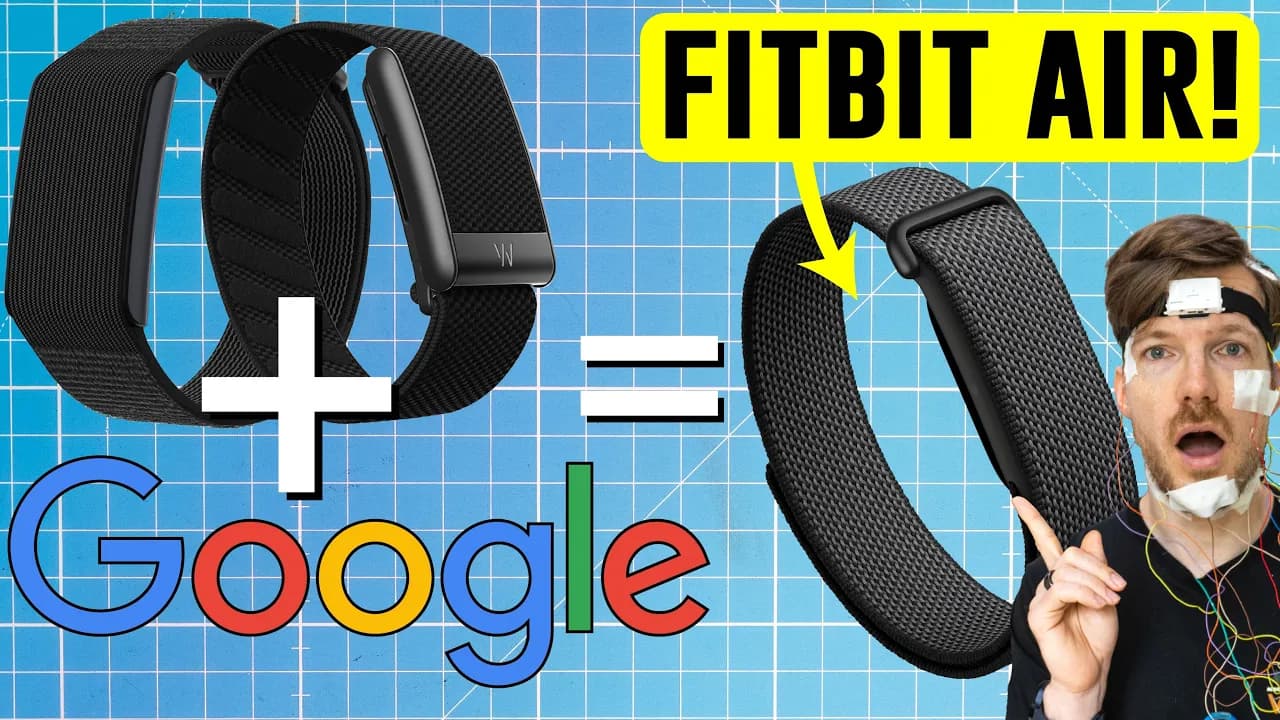
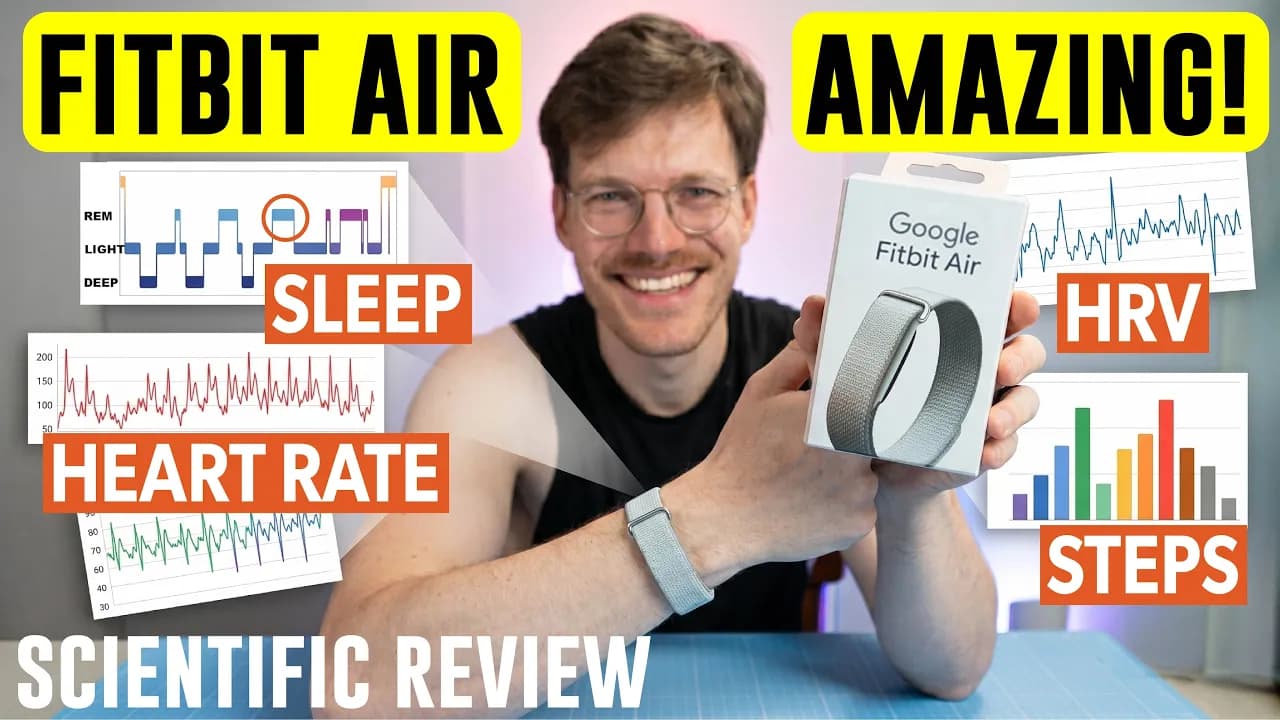
The Fitbit Air Found WHOOP’s Weak Spot!
In a Nutshell
The Google Fitbit Air, a $99 screenless tracker, challenges Whoop's premium subscription model by offering free basic metrics like sleep scores, HRV, resting heart rate, cardio load, and readiness, with AI coaching available via optional $9.99/month Google Health Premium—far cheaper than Whoop. Its lightweight (5.1g) design excels for sleep tracking with a claimed 15% algorithm improvement, pulling users into Google's vast health ecosystem while pressuring Whoop on price and accessibility. Casual users may switch for its "good enough" free features and comfort, though hardcore athletes might stick with Whoop's performance focus; accuracy and privacy remain key tests.
These notes were generated by AI and may contain inaccuracies.
This is the new Google Fitbit Air, a tiny screenless fitness tracker priced around $99, designed to work with many Gemini powered features. Unlike competitors, many basic functionalities are free with the device. Added features like AI coaching require Google Health Premium at $9.99/month or $99/year. This is cheaper than Whoop, which relies on a subscription model. For users with Google AI Pro or Ultra, the Google Health Coach subscription is included. This competition could lead to more innovation, better prices, and better products. The video unboxes the Fitbit Air, gives first impressions, and compares it to Whoop.
Rob is a post-doctoral scientist specializing in biological data analysis.
The Fitbit Air comes in several colors at $99 or $99.99; the Steph Curry edition is more expensive. It includes a breathable velcro strap for sports and health tracking, providing a snug fit. The sensor and charging module (puck) is removable for new straps. Hopes for a biceps band like the Whoop strap.
This is not a full review, as Google doesn't allow it yet. Plans: unbox and set up for first impressions; explain market shakeup; separate free vs. paid features and compare to Whoop strap.
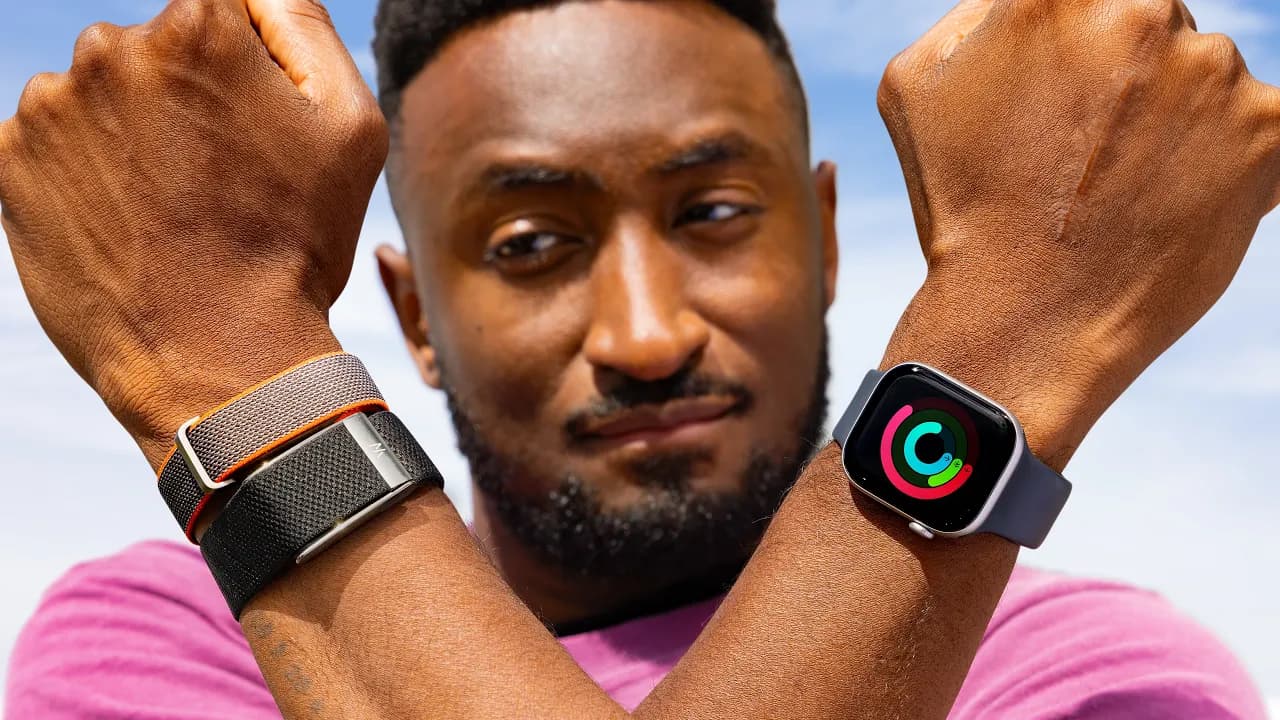
Both Whoop Strap and Fitbit Air have no display, no built-in GPS, no interface—just screenless wearables. People want wearables they forget they're wearing, quietly collecting data. Competitors now include Helio strap, Polar Loop, and Fitbit Air from the biggest company.
Whoop was first to realize people don't want another screen (e.g., Pixel Watch). They want recovery data, sleep data, strain or cardio load, and guidance. Whoop built a premium subscription-first model. Google starts with cheap hardware ($99), broad health app (works with other hardware), many basic metrics free, AI coach as paid premium. Lower price point.
Charging the Fitbit Air—small light indicates status. Both Fitbit Air and Whoop Strap are very light, ideal for sleep tracking. Smartwatches are uncomfortable or distracting at night. These are passive sensors you forget about.
Whoop and Google have top-tier sleep stage tracking algorithms—among the top five brands. In a light screenless wearable, ideal for sleep. Google announced 15% improvement in sleep stage tracking on Fitbit Air and other products (testing on Pixel Watch 4). Performance consistent across devices because best trackers rely on algorithms translating heart rate, HRV, movement—not advanced sensors. Fitbit Air hardware likely not disruptive; strategy and algorithms key.
Google turns Fitbit app into Google Health app with AI coach on health data. Fitbit Air is entry to bigger Google health ecosystem, competing with Whoop. Google doesn't need profits just from tracker/sub; optional premium pulls into ecosystem, connect to medical/fitness/nutrition/wellness data. Threat: Google wants to own health data layer. Smaller companies must justify pricing.
Fitbit Air: cheap tracker, useful basic app, subscription upgrade—lower entry. Google's algorithms are very good.
Light on side for battery status. Wear high on wrist, away from bone. Minimal, slim, smaller than Whoop Strap. Sensor layout similar to Whoop (Whoop has slightly bigger sensors/more LEDs). Likely like Fitbit Charge 5/6 sensors—no major optical improvements expected unless algorithms improved for noisy data.
Fitbit Air pod: 5.1g; Whoop pod: 12.1g (over double). Lighter beneficial for some. Looks like normal armband.
Entry feels lower; enough for mainstream users wanting sleep quality, resting heart rate trends, HRV trends, consistency. Could take casual users from Whoop, not hardcore ones.
Free Google Health app: activity tracking (steps, calories, distance, cardio load, readiness), sleep score/schedule/duration/metrics, heart rate, HRV, breathing rate, SpO2, medical records, trends.
Google Health Premium: Ask Coach, adaptive fitness plans, detailed sleep insights, proactive insights, medical record summaries, workout library, mindfulness sessions.
Free: numbers/basic trends. Paid: what to do with them. Wearables' data problem: metrics without decisions (e.g., sleep score but then what?). Google, Whoop, Oura solve by interpreting data.
Google Health Coach could use sleep, training, readiness, RHR, HRV, schedule, weather/context for suggestions. Google advantages: best AI infrastructure, tailor for own products. Whoop sources AI models.
Whoop more for performance, recovery, strain, athletes (optimize training/lifestyle). Fitbit Air broader general health tracker.
Serious athletes may stick with Whoop ecosystem (journal, philosophy, trends, coaching). Fitbit Air enough for normal users wanting small comfortable tracker for sleep, HRV, RHR.
Disruption: good enough, cheaper, easy entry. Doesn't need all Whoop users—just prevent new ones.
Accuracy critical (garbage in, garbage out): HR during exercise, sleep stages, HRV noise, auto workout detection. Older Fitbit sensors optically. Test 15% sleep improvement.
Data privacy: Fitbit health/wellness data not used in Google ads; users control/delete/export. Still cautious for some due to Google ecosystem.
Feels very good, better size than Whoop on wrist (on biceps, Whoop more stable; Fitbit might rock). Will test: HR tracking, auto workout detection, sleep stages, HR/HRV during sleep—systematically/scientifically.
Use affiliate links for Fitbit Air, Whoop, Oura Ring, Amazon items for discounts/support.
Keep The Quantified Scientist in your library
Save the videos and channels worth coming back to, and find them again in one place.