ICE deported Texas dad to Ghana because home country was unsafe; Ghana sent him anyway | 60 Minutes
In a Nutshell
ICE deported long-term U.S. resident Musa Diawara to Ghana despite a U.S. judge's 2012 order barring his return to Mali due to persecution risk; Ghana then immediately forced him onward to Mali against his will. The Trump administration's third-country deportation program—sending 25,000 people to nations they have no ties to—has repeatedly sent individuals with withholding-of-removal protections to countries that then deport them home, violating U.S. court orders and international law. DHS claims these removals enhance public safety, but most of the 63 deportees on Diawara's flight had only minor or no criminal records, while the program faces ongoing Supreme Court review.
These notes were generated by AI and may contain inaccuracies.
Nearly 1 million people were deported from the US during the first year and a half of President Trump's second term. Most were returned to their country of origin. About 25,000 were sent to third countries where they may have never been and may not speak the language. Third countries are defined as neither the US nor the person's home country. Iranians were sent to Panama. Cubans were sent to the Central African Republic. These deportations can be legal and past administrations have carried them out, but not at this scale.
A five-month investigation uncovered cases where people ended up in places where US immigration judges said they would likely be persecuted or tortured.
On July 11th, Musa Diawara, who had been in the US for 25 years with no criminal record, was wrapping up his night shift as an Uber driver heading to his home in the Houston suburbs that he owns with his wife and children, who are US citizens. When he pulled up, US Immigration and Customs Enforcement agents were waiting for him with a warrant for his arrest and removal outside of the US.
After 3 weeks in ICE detention in Texas without being able to speak to his lawyer or a judge, he was put on a plane and deported to West Africa. He was met there 2 months after his arrest, thousands of miles away from his Texas home.
"For me, it was like a nightmare. That's like a oh my god, what happened."
"It just didn't feel real. I still say myself, this is real. This is me."
25 years ago, Diawara entered the US and overstayed a tourist visa. He applied for refugee protection, arguing he would be persecuted if returned to Mali, the war-torn African country he's from. In 2012, a US immigration judge ruled he could be deported but not to Mali. As a result of this ruling, he was able to get a US work permit.
Past administrations rarely deported people in Diawara's situation, but as part of the Trump administration's mass deportation operation, ICE has deported 25,000 people to dozens of third countries that in return receive millions of dollars in aid or other benefits from the US.
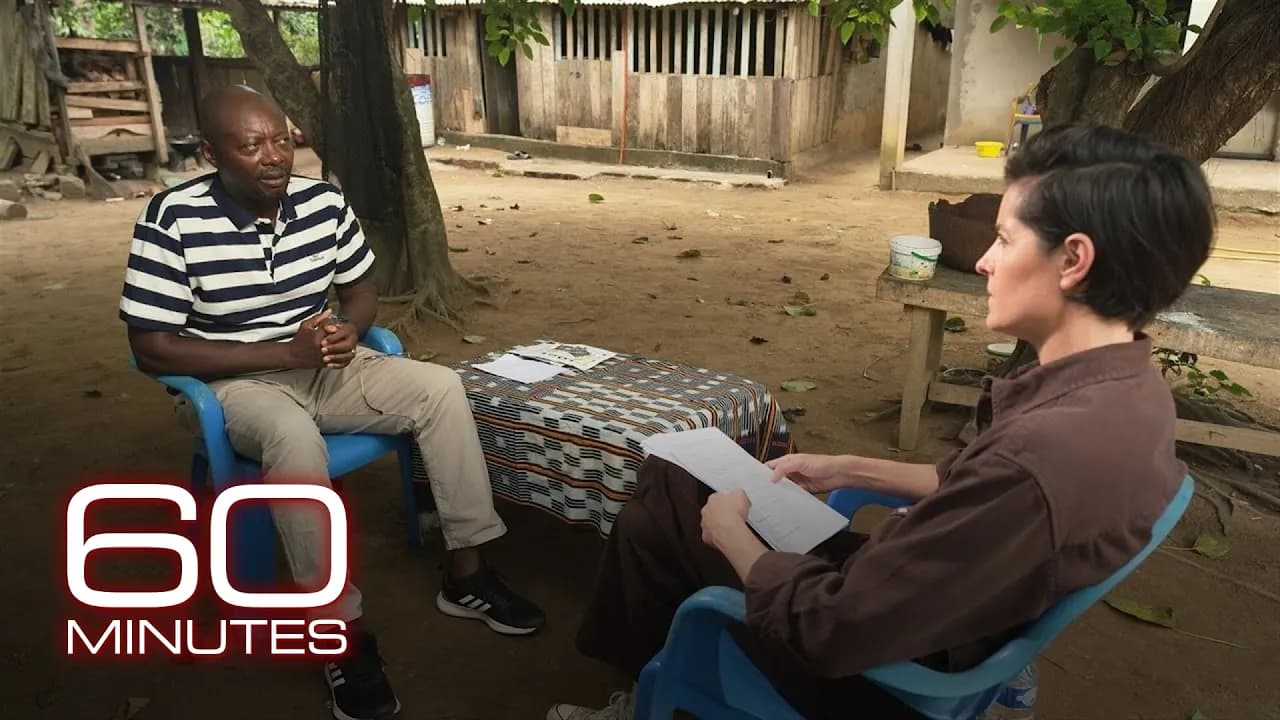
On July 31st, Diawara landed in Ghana, a place he'd never been. He and others were detained in a hotel by armed guards and not allowed to make phone calls.
"I cannot call my wife. I can't contact my lawyer. I can't talk to no one. I tell them this is kidnapping. You guys kidnap us."
Diawara has no connection to Ghana and knows no one there. Within 5 days, Ghanaian officials forced him onto a flight to Mali - the very country a US judge said he could not be deported to.
Diawara was met in Mali, homeless and in hiding. He stated he didn't feel safe there at all, partly because he had converted to Christianity, and Mali is a Muslim majority nation with an Islamist insurgency. He was dropped there with no money or ID.
"That bank is my bed for the last two weeks. Jesus Christ."
After 3 weeks in Mali, with help from local truckers, he escaped to another African country which he asked not to be disclosed.
"A little bit different than a Texas grocery store."
"Oh yes. No big difference. For me in America was everything. I call America my home because I'm 57 now. I moved in America when I was 32. I don't know nowhere."
The US government's position is that Diawara overstayed his visa and was in the country illegally for a period of time. They had an order of deportation and couldn't send him to Mali, but could send him to a third country.
In a statement, the Department of Homeland Security told that Ghana had provided the US with diplomatic assurances for his safety. DHS also questioned the credibility of Diawara's arguments for fearing persecution in Mali.
"You know, I think a lot of people who make fear claims do not make credible ones. There's a lot of fraud there. And so if somebody found themselves in a different country and decided they'd rather go home, then that's their decision."
James Perl, the top lawyer for the Department of Homeland Security, stated that third country deportations are widely misunderstood.
"I absolutely believe with all of my heart that these third country removals have stopped crimes from happening and kept Americans safer. And that is our fundamental obligation at the Department of Homeland Security."
Reasons for third country deportations include cases where serious criminals' home countries won't take them back, and cases where immigration judges grant country-specific relief allowing someone to leave the US but not return to their home country.
When an immigration judge rules that someone cannot safely be sent back to their home country, it's called withholding of removal. Musa Diawara had that protection, as did dozens of others on his deportation flight.
The names of all 63 people on Diawara's flight were obtained, which left Texas on July 30th and stopped in Sierra Leone, the Central African Republic, and Ghana. Of the 19 people reached who were sent to Ghana, 17 told the same story: Ghana quickly transported them against their will to countries that US immigration judges had ruled they should not be returned to.
When asked if aware of cases where Ghana has sent people against their will to their home country where they have withholding of removal, Perl stated he was not aware of such cases. He suggested people might consent to go home or that foreign governments apply their own procedures consistent with international law.
Perl was shown a video of a woman being dragged to her deportation flight to her home country where she had withholding of removal, identified as Rabiatu Kuate, a nurse who lived in the US for 30 years. An eyewitness confirmed these were Ghanaian officials pulling her.
Diawara showed a document he says US officials gave him on the deportation flight along with medication, stating destination as "SHRC Mali" where SHRC stands for special high-risk charter. His DHS-issued bag tags also said destination Mali, not Ghana.
Perl stated he cannot speak to why the piece of paper said Mali and that he was not aware of any coordination. After the interview, DHS sent a statement saying the bag tags were produced by contractors not part of the destination determination process, and the medication form was a clerical error. Ghana's government declined to comment.
Sierra Leone provides a pamphlet to arriving deportees stating Sierra Leone is serving as a temporary transit location while arrangements are made to return them to their country of origin. Perl reiterated that people are entitled to return to their home country if they consent and are also entitled to process fear claims.
Immigration attorney Meredith Yun stated the US government was warned about Ghana's conduct in a lawsuit last year, yet the US sent 10 more flights to Ghana, which Yun believes is a violation of international law.
Yun argues that if the US didn't send Diawara straight to Mali, they sent him to Ghana with full knowledge that Ghana is systematically deporting refugees back to the countries they fled, constituting a violation of international law.
Perl responded by emphasizing public safety threats associated with this population and that previous administrations abdicated their responsibility by letting criminals back on the street and doing no diplomatic efforts to remove them.
Third countries like Eswatini and South Sudan have agreed to accept deportees with criminal records for first-degree murder, armed robbery, kidnapping, and sexual assault when their home countries refused to take them back.
Of the 63 people on Diawara's flight to Africa, criminal charges or convictions were found for 19%, including theft, assault, drugs, and weapons possession. For everyone else, traffic violations or no criminal record were found.
The reporting reveals many deportees are nurses, mothers, and Uber drivers. Perl stated the administration is following the law Congress has passed and that there are people in this population who committed serious crimes.
"I'm not a criminal. I'm raising two children. I'm a married man and I'm working and paying taxes."
Last month, a federal appeals court upheld a ruling in a class action lawsuit finding the Trump administration's third country policy unlawful because it denied deportees due process. The Supreme Court has allowed these deportations to continue until it hears the case in December.
Diawara's attorney has asked a federal judge in DC to order his return to the US. His wife Barbara works full-time as a registered nurse. Their son Corey is 16 and daughter Chloe is 12.
"Yeah, it feels really empty without him."
"I worry about my mom a lot. I'm trying not to cry in front of them, to be strong for them because they need me."
"You don't forget every Sunday you need to vacuum the carpet upstairs."
Keep 60 Minutes in your library
Save the videos and channels worth coming back to, and find them again in one place.