In the Line of Fire; Lost Sheep; Jon Batiste | 60 Minutes Full Broadcast
In a Nutshell
The Secret Service is grappling with a 40% surge in threats and adapting to drone warfare and mental health-driven attacks, implementing new counter-drone systems, medical response units, and tactical decoys after multiple assassination attempts on President Trump. In the West Bank, settler sheep farms and hilltop youth violence have displaced over 100 Palestinian communities through land seizures and intimidation, with the Israeli government funding these efforts while showing little enforcement against the attacks. Meanwhile, musician Jon Batiste transforms subway cars into "love riots" and creates healing music amid his wife's leukemia battle, demonstrating how personal and collective connection can emerge from crisis.
These notes were generated by AI and may contain inaccuracies.
The United States Secret Service was created 161 years ago when Abraham Lincoln signed it into law. That same day, he was fatally wounded by an assassin. Since then, the service's mission has evolved from catching counterfeiters to protecting the lives of presidents, their families, and other top officials. Today, in the age of AI, the threats are not just from a lone assassin's bullet, but autonomous attack drones.
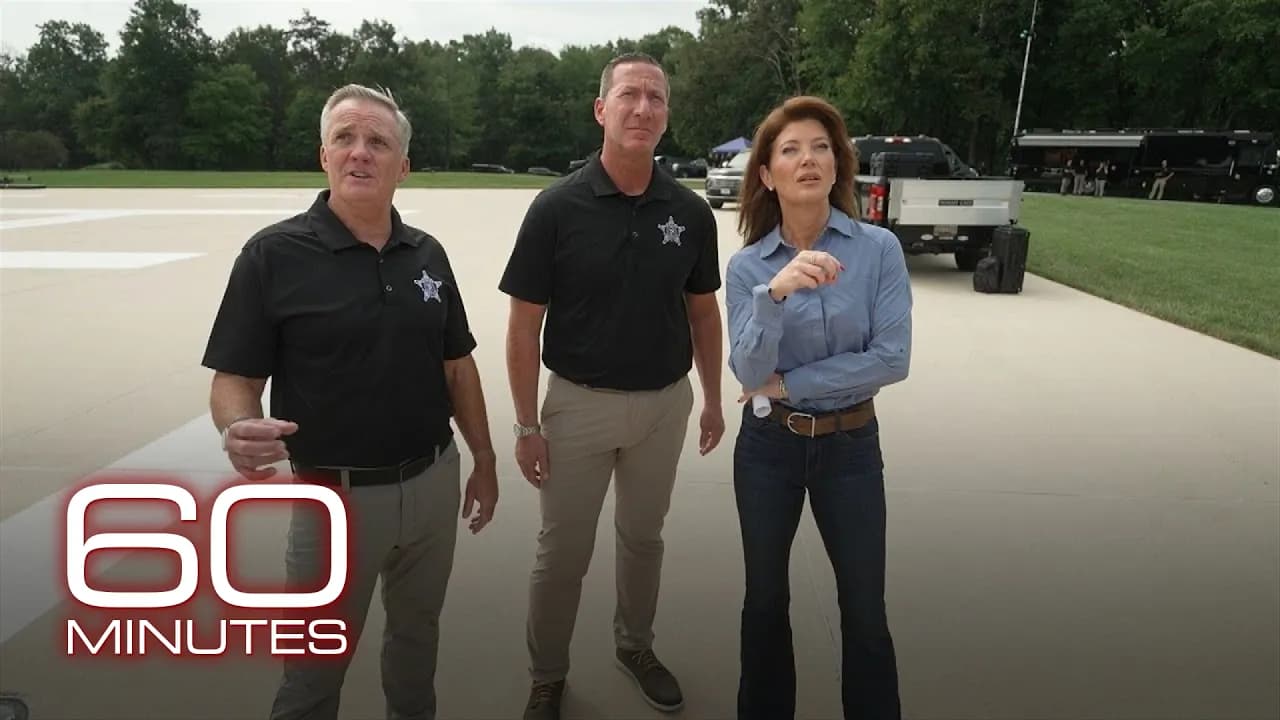
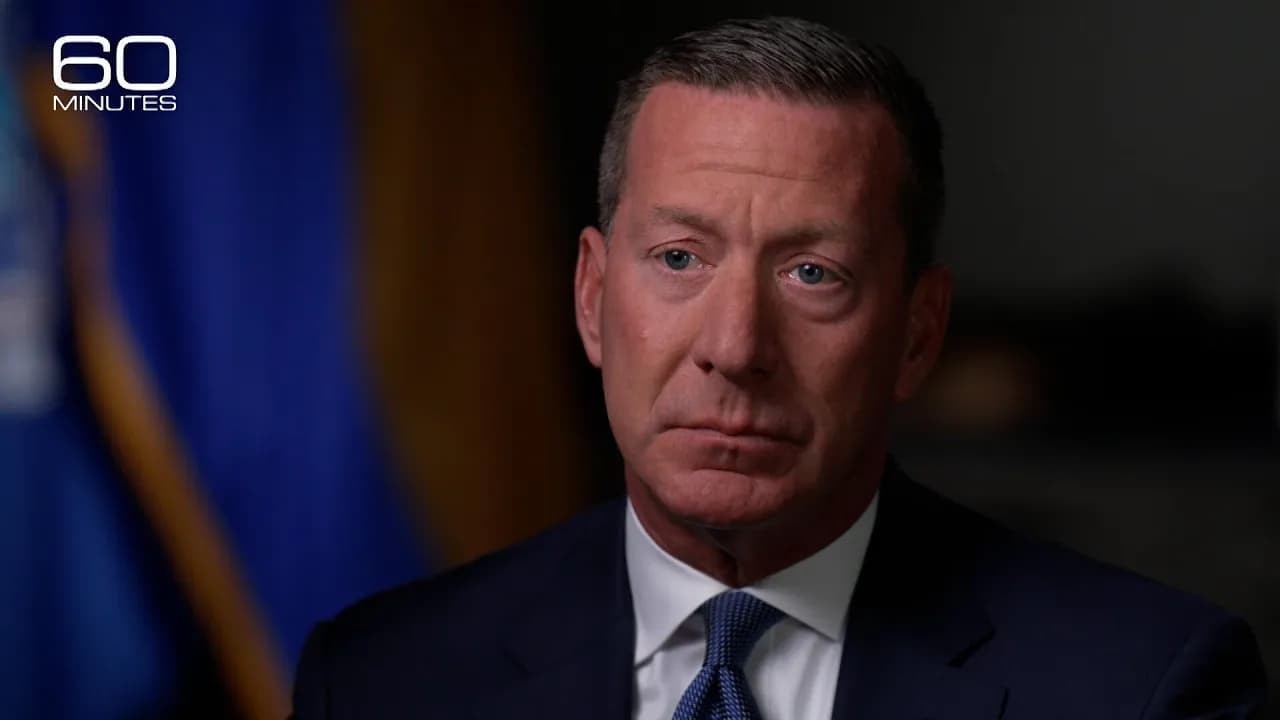
The US is a country that feels on edge. The Secret Service told us the number of threats is way up against its protectees, especially President Trump. He has been the target of more assassination attempts than any other president. Director Shawn Curran, the 28th director of the United States Secret Service, has been an agent for 25 years.
It's like we've never seen before. The threats on our full-time protectees are up just over 40% since they were last year. That's a massive increase.
Since January, there have been 10,000 threats on the people they protect.
In the last two and a half years, there have been three known attempts on President Trump's life: at a campaign rally in Butler, Pennsylvania; his Florida golf course; and the White House Correspondents dinner, where a shooter breached the security perimeter.
We are an a-political organization. We're here to protect who we're sworn to protect.
Look, I would say there's people on both sides of the aisle that either love or hate any president. I think the biggest factor we're dealing with today is mental health issues for sure. And more people are being pushed over the edge in either direction.
The world is different than what it was 20 years ago. You know, social media changes people.
The Secret Service does not weigh threats from the left or right. Research by the Center for Strategic and International Studies showed a spike in incidents at the local and national level from the left in 2025. It was the first time left-wing attacks have been higher than right-wing attacks in 30 years. This year that trend has reversed with more attacks coming from the right so far.
Eight months into a war with Iran, the threats from outside the country are also growing. They have vowed revenge. The director noted seeing massive banners saying "kill President Trump" at funerals.
Director Curran was the lead agent protecting President Trump when he was campaigning on July 13th in Butler, Pennsylvania. Curran was among the agents who shielded President Trump when Thomas Krooks fired eight rounds at the stage from a rooftop 155 yards away.
I mean, we were face to face and then I have to think about the next move. You don't have time to think about anything else. I am his vest. You know, I wear my vest for him. It's not for me.
I'd rather not get into the past. Um, I will tell you that I did request additional resources and I'll leave it at that.
A congressional hearing led then director Kimberly Cheetel to resign over the breakdown of security that day. The newly reelected Donald Trump put his lead agent in charge of the Secret Service.
This past June, the final government report on Butler was released. The Inspector General report found, quote, "The Secret Service missed multiple opportunities to detect, prevent, and disrupt the assassination attempt."
Yes. I am convinced.
The agency at every level has been dangerously understaffed for years. They have 942 people in training today, compared to about 200 in training last year.
Since Butler, the Secret Service has expanded the formidable security footprint that surrounds the president. New training has been added to avoid the mistakes of Butler.
The president's limousine, known as "the beast," weighs up to 10 tons with bulletproof glass and defensive countermeasures. The Secret Service added a medical response truck because of what Director Curran saw in Butler. It houses a trauma unit and a field surgeon ready to treat gunshot wounds. An armored personnel carrier is new to the president's motorcade.
When you look at some of the significant civil disturbance events we've had, how do you move people? You look at getting teams to the capital during the January 6th event. This provides us the ability to get people where they need to be and take care of them, keep them safe.
Deputy Director Matthew Quinn is leading the agency's new multi-million dollar program to develop offensive and defensive drone capabilities. The war in Ukraine has become a testing ground for the weaponization of drones.
Everything. We just had teams come back about two weeks ago. They are on the front. They are on the battlefield with this. We know that technology is going to hit the homeland at some point. So, we're using lessons learned there to build our program and make sure we're ahead of it before it gets here.
We have to plan for it. We have to assume that it's possible. Um, the second we're not, we're going to get caught flatfooted.
The Secret Service showed the drone hunter, a weapon which uses AI and radar to disable enemy drones and capture them with a net. They demonstrated how the drone hunter locks on to an offending drone and captures it.
The concern is that a small rudimentary drone could be weaponized with explosives and do serious damage to a large concert, sporting event, or campaign rally.
Just this much of C4 is plenty enough to do a lot of damage. So it doesn't have to be a big drone. You're saying just even a small amount of explosives could cause a problem.
60 Minutes has learned the Secret Service took down a drone using electronic jamming equipment at the Army Navy game in Baltimore last December, where the president and members of Congress were in attendance.
Swarms are a huge problem and a big threat. I'd love to tell you the swarm problem solved. It's not.
I will tell you that at the White House, White House is the safest place on Earth.
The whole goal of our job is to provide maximum resources without the appearance of overwhelming overt militaristic sight. There's ways to do it and still let Americans maintain their freedoms and still provide protection at the highest level.
Adding security enhancements to a 747 donated by Qatar for the new Air Force One cost the US nearly $400 million, according to the US Air Force. The Secret Service would not let the president fly home on that plane from Turkey in July after intelligence reports of an Iranian plot to fire a missile at the presidential jet.
Instead, the Secret Service used the old Air Force One as a decoy. They snuck President Trump into a catering truck while cabinet members, White House staff, the press, and Secret Service agents were left on the decoy plane.
Look, that's not the first time we've done that. Um, we wish that wasn't reported because that takes some of our tactics away from being able to do something similar again.
When you're operating in any protective detail with the president of the United States, for any president, the priority is the president. Everyone else, staff, agents, media, personnel involved are not the priority, including our own personnel. As hard as that may be for some to understand, the mission is to protect the president of the United States.
Israel has been at war with the Palestinian terrorist group Hamas in Gaza ever since the massacre of October 7th. The West Bank, under Israeli military occupation for six decades, is home to over three million Palestinians who hope to make it the heart of their future state, and over 500,000 Jews who call this Judea and Samaria their biblical homeland.
In recent months, some militant settlers are ramping up their campaign to violently drive out the Palestinians who live there, often with impunity. The Israeli government showing an unwillingness to crack down on the violence.
This is a biblical story. You have two populations, Jewish and Arab, the descendants of Abraham's sons, Isaac and Ishmael, fighting over ancestral lands.
Our right to be here is legal and it's ancient. The weapons they're using here are sticks and stones and sheep.
Mortai Minster co-founded a sheep farm. It's a new kind of settlement in the West Bank. The idea is to send sheep down to graze and then claim the land because sheep are grazing on it.
When you have sheep, everyone understands. Arabs tend to fight over grazing lands among themselves. It's a language that we understand that they understand. And it's a way to delineate the border. This is where I graze my sheep. You don't take your sheep here. You don't plant here. You don't build here.
The sheep have taken over huge swaths of land, 20% of the West Bank. In one Palestinian village after the next, herds from these farms have pressed in and the village shepherds pushed out.
They actually seized the land with their sheep.
They enter, they open the gate of the house and take the sheep inside to eat the trees around that house.
Some 200 sheep farms have popped up in recent years. For decades, Jewish settlers have put up fences to protect themselves from the active threat of Palestinian terrorism. Now, it's the Palestinians who are penning themselves in.
The violence is often carried out by young shepherds known as hilltop youth who have flocked here for a sense of adventure. They are told they're on a god-given mission to redeem the land. They routinely storm Palestinian fields and villages, harassing farmers and livestock, cutting olive trees. Over 1,600 incidents have occurred so far this year. They've torched cars and destroyed property.
There is a hard core of up to 500 of them. Up to a thousand more drift in and out. They range in age between 15 and 25. They don't do great in school. They don't get into the army that easily because maybe behavioral problems. Some of them end up in places like this taking care of sheep, doing construction. Some of these kids may have drug problems. They smoke pot. They grow pot.
I wouldn't classify it as terrorism, but are there some children who overreact and act in thuggish ways that need to be controlled and held in? Yeah, definitely.
None of this is great. And none of this changes the fact that our right to be here is legal and it's ancient.
Mahmud Faraj's family has had the deed to land in Janada for generations. On the 26th of March, a group of settlers entered their land and established a tent. There were something like 20-25 people.
They started to behave that they are the owners of everything.
Hilltop boys set up this outpost literally in his backyard, cutting off access to one of the family's houses. The young shepherds are trying to force the villagers to leave.
They are succeeding. If you go around them, you will see many houses they just left really empty. Abandon, they abandon their property. They steal electricity from the locals and they also steal water. This is their strategy to make the area unlivable.
In March, Hassan tried with his uncle and cousin Muhammad to reach their house. Within a few seconds, the hilltop youth started to attack them in small groups with wood sticks and stones. They had tear gas and three of them were armed. One of the armed guys shot Muhammad in the head. They came and started to beat Muhammad's uncle and his son with wood sticks.
It's an open case.
A group of Jewish activists called Sons of Abraham try to protect Palestinians under siege. They step between Palestinians and the teens like human shields. The idea being that settlers would be more hesitant to attack other Jews.
Amana, Dir, and Rowey grew up in right-wing religious homes. Amana was once a hilltop youth herself. They say Judaism calls on them to protect, not expel their neighbors.
I think they are angrier because we threaten them ideologically. And also I'm not coming from the outside. I also grew up as a settler. I tell them I changed my ways. I know what you're doing and I know it's not the right way.
It must be painful for me to see how people I grew up with and some of them were good friends of mine behave.
One of the older boys was particularly belligerent. He got into it with Hassan, headbutting him in the face. Then he got bashed again, this time fracturing his nose. Hassan shouted back, "This is my land and you won't stay. These are my roots."
Just as things were getting out of hand, a captain in the Israeli army turned up. The soldiers had to go down the road to rescue the last two activists. Then he told all of them to clear out. Hassan was kicked off his own property. The Jewish youth got to stay.
The army's priority is the settlers. Some soldiers are settlers themselves and occasionally join the violence.
The Trump administration has called on Netanyahu to deal with the violence and he has condemned it. But his government has poured tens of millions of dollars into expanding the sheep farms, arming them, and giving them American-made off-roaders.
People call it settler violence. I don't agree with it. It's a state violence. There is a violence of a government.
Hanging over all of this are the midterms in the US in three weeks. If the Democrats win, they're threatening to limit military aid to Israel in part because of the West Bank attacks.
I'm bothered by the fact that America's turning on us and we're turning on America. It's like, I see it as losing a friendship. And I'm also concerned that as a military ally, as a political ally, we may lose America as well. It looks like it's going in that direction, but Israel will find other allies.
No, I am worried about that, but I don't look at it as an existential threat.
Over 100 Palestinian communities have been displaced or erased by the settler violence and the ever encroaching sheep.
John Batiste is a virtuoso who loves to play the childlike melodica. He's intent on breaking down musical silos, blending Beethoven with blues to make something new. Jazz, classical, folk, pop, really any sounds that fire his imagination get woven into what he calls social music. It draws from every era and every corner of the world with one central purpose, to bring people together.
It's about 9:30 on a Tuesday night in Manhattan and music fills the air. At the center of it all is singer, composer, and musical dynamo John Batiste. After tuning up, Batiste led his merry band of musicians to their stage in the New York City subway.
So, what would you call this when everybody came together? Called it a love ride.
Jon Batiste created love riots, impromptu performances that turned ordinary subway cars into joyful spaces where people sang and danced together. These spontaneous musical events transformed the typically somber and grim atmosphere of New York subway cars into happy places. Batiste conceived this concept while studying at Juilliard, the famed performing arts school, using the subway as a testing ground for his vision of uniting people through music.
"You took this subway car that's usually a very somber, grim place, and turned it into a happy place."
Batiste describes seeing how different songs resonate with different people, creating unexpected feelings of belonging and connection. He sees himself as "a vessel that unites people, brings people together against all odds," viewing this as a form of faith.
At Electric Lady Studios in Greenwich Village, Batiste demonstrated his improvisational approach to music. Stevie Wonder, David Bowie, and Taylor Swift are among the notable artists who have recorded there. During the session, Batiste created music spontaneously without written notation or rehearsal, constantly improvising at the piano.
His physical expression during performance shows music taking human form, with tension and joy flowing through his body and face. He enters a trance-like state at the keyboard, describing the experience as feeling the music rather than hearing it while playing. Only during playback in the control room does he truly hear what he has created.
Batiste connects his approach to music's ancient origins, referencing the first hymns found in Syria and the first drums and cymbals from Neolithic China. He views improvisation as the source of his creative feelings, describing the piano as a calling that allows him to express openness like a tidal wave.
"When I get to the piano, there's a openness. It's a tidal wave. I can express all of those things that are here and here and here."
His body and face serve as the physical representation of internal musical expression.
Batiste's life changed in 2014 when he began dating Sulea Jouad, an artist and writer who has been in and out of treatment for leukemia. He once brought a love riot to her hospital ward, and they are now married. That same year, he impressed Stephen Colbert of The Colbert Report, leading to his role as band leader for The Late Show with Stephen Colbert for seven years.
During this period, he created the jazz score for Pixar's Soul, winning an Oscar. In 2022, the year he left the Late Show, he won five Grammys including Album of the Year for "We Are." He now has eight Grammys and two Emmys, performing to sold-out venues worldwide.
At the Hollywood Bowl, Batiste's musical imagination was on full display, mixing rhythm and blues, pop, and Beethoven without missing a beat. Despite his electrifying performances, he identifies as a deeply introverted person who felt he lived in his own internal world during his early adolescent years.
Batiste grew up in Kenner, Louisiana, a New Orleans suburb, in a musical family. He barely spoke until about age 10, preferring to observe from a magnolia tree in his family's front yard. The tree provided stillness where "time stops," and he recommends everyone find their own tree in life.
Music eventually drew him out of his shell, revealing what he could do and giving him the audacity to believe in his abilities. At his mother's urging, he took up piano and excelled, playing gigs across New Orleans by high school graduation.
Seeking greater challenge, Batiste auditioned for Juilliard in New York despite not knowing how to read music. During the sight-reading test, he improvised rather than reading the music, creating original music that got him accepted. However, his free spirit clashed with the school's structured methods, leading instructors to send him to a psychologist.
The psychologist helped him understand that being "weird" was acceptable. This experience led him to decide to create music his way without apology, learning to be comfortable being misunderstood and moving at his own pace.
Batiste's wife Sulea's leukemia has returned, requiring her to isolate, and she recently underwent her third bone marrow transplant. He notes that his brightest career moments have coincided with their toughest personal times, observing that "everybody has something that they're dealing with and the highs are never separate from the low points."
At the Hollywood Bowl, he performed "Butterfly," a lullaby composed to help Sulea's healing, asking the audience to hold up their phones as symbolic light. He sees this as evidence of igniting light in people, helping those in darkness recognize their own inner light and ability to move forward.
Keep 60 Minutes in your library
Save the videos and channels worth coming back to, and find them again in one place.