Investigating claims Trump tried to strong-arm Colorado into releasing Tina Peters | 60 Minutes
In a Nutshell
Trump pressured Colorado to free convicted election official Tina Peters by withholding federal disaster aid after the Lee Fire and threatening other funding, then restored the money once Governor Polis commuted her 9-year sentence. Peters had been found guilty of tampering with voting equipment and sharing sensitive data with election deniers, despite no evidence of widespread 2020 voter fraud. The episode illustrates how Trump used federal resources as leverage to advance his election-denial agenda.
These notes were generated by AI and may contain inaccuracies.
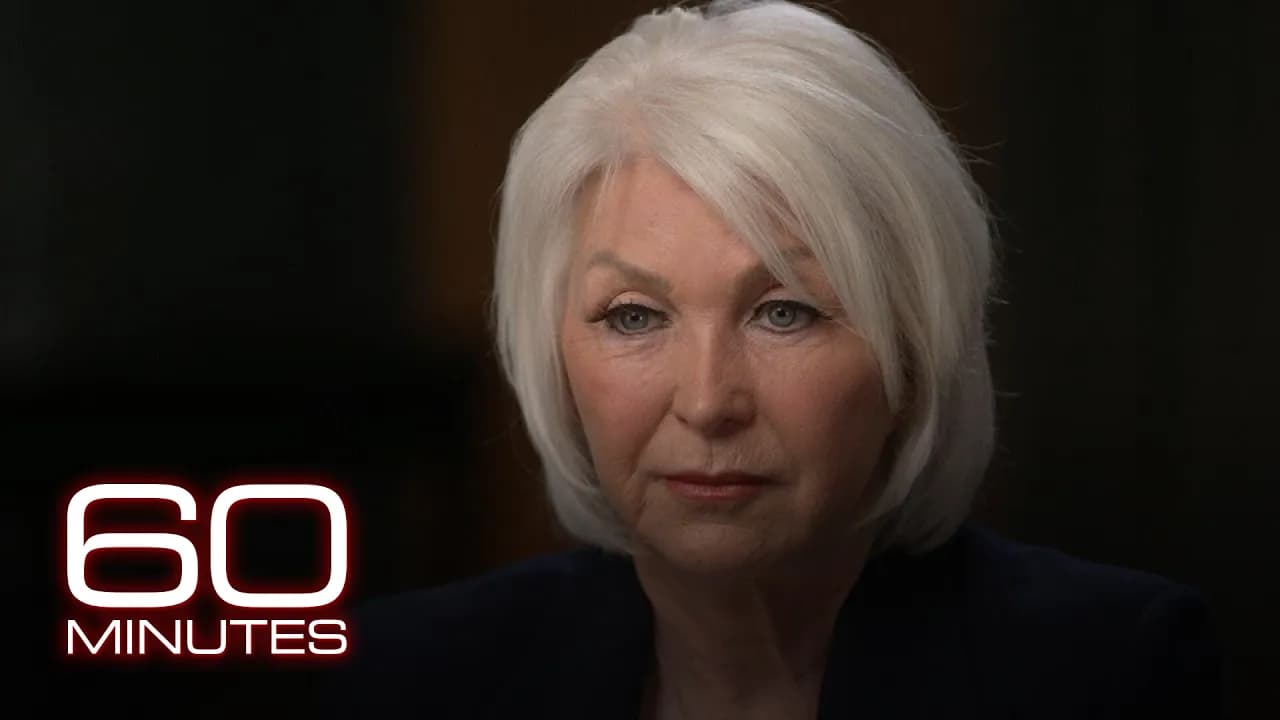
On the eve of the midterms, President Trump continued discussing voter fraud while taking extraordinary measures for election official Tina Peters, convicted of breaching the voting system she was sworn to protect. Peters, former Mesa County, Colorado's top election official, used her office to pursue Trump's unsubstantiated claim that rigged voting machines cost him the 2020 election. A Colorado jury convicted her, and a judge sentenced her to 9 years in prison. Trump sought her release, with critics arguing his methods revealed how far he would go to advance his agenda and punish opponents.
In August 2025, one of Colorado's worst wildfires in history scorched nearly 138,000 acres. Kathleen Kelly, a retired school teacher, lost most of her 2,000-acre ranch in the Lee Fire, which her father built in 1949. Kelly described the fire as "like watching a monster crawl across the earth" and "hell opening up." The fire destroyed buildings, structures, oil and gas infrastructure, homes, and left behind an apocalyptic wasteland. The damage met requirements for a federal disaster declaration.
Despite this, the Trump administration denied Democratic Governor Jared Polis's request for federal aid. Polis noted this was the first denial in decades for disasters larger than any state could handle alone. Critics linked the denial to Trump's fixation on Tina Peters.
Democratic Attorney General Phil Weiser's office helped convict and imprison Peters for tampering with voting machines. Trump stated he didn't like Peters' 9-year sentence and would "punish Colorado." During the Lee Fire, Trump warned on social media that if Peters wasn't released, he would "take harsh measures." The White House claimed denying wildfire aid was unrelated to Peters, with spokesperson Lauren Bis stating there was "no politicization" to disaster relief decisions.
The Trump administration threatened to withhold food aid from Colorado's neediest families, cancelled $109 million in transportation funding, and moved to dismantle the National Center for Atmospheric Research in Boulder. The administration described these as independent agency decisions. Governor Polis stated the threats were "not hidden" and "not subtle" and that Colorado was "fighting back." Polis sued the president, arguing Trump was "using bullying, using threats to take away our sovereignty" and that "President doesn't get to tell us what to do."
Colorado's Democratic Secretary of State Jenna Griswold oversaw state elections and stated Peters helped an election conspiracy theorist pose as a county employee, gave him access to secure voting equipment, and allowed him to copy proprietary software. Peters ordered video surveillance cameras turned off, took images of voting equipment, and shared them with a network of election deniers. Griswold discovered the breach when copies of the data surfaced at a conference devoted to election fraud claims where Peters spoke.
Peters was charged with obstruction for refusing to cooperate with the investigation. She was indicted on 10 criminal counts, which elevated her status among election skeptics. After a two-week trial, a jury found her guilty of three misdemeanors and four felonies. Mesa County District Court Judge Matthew Barrett sentenced Peters to nearly 9 years, stating he was "convinced you would do it all over again if you could" and calling her "as defiant as a defendant as this court has ever seen."
Matt Crane, leader of the Colorado County Clerks Association, stated Peters' actions and Trump's support fueled distrust of election workers, making them targets of threats and intimidation. Crane, a Republican, noted election officials lack the president's megaphone for spreading information about elections. In May 2025, Trump called Peters a "hostage" held by Democrats for political reasons and a "patriot." Trump issued a pardon for Peters that had no legal effect since she was convicted on state charges, not federal ones.
Governor Polis agreed with the jury's conviction but felt the 9-year sentence was too long, stating she should have received "a year, 2 years, 3 years." In May 2025, after Peters served less than 2 years, Polis commuted her sentence and set her free. County clerks expressed fury, with one stating it was "a complete betrayal of the election community here." Critics accused Polis of bending to Trump's pressure, though he denied this, stating the case would have been easier without Trump's involvement and that Peters was a "non-violent elderly first-time offender" who received an excessive sentence.
Since her release, Peters returned to the election denial circuit, attending a fraud fighter summit in Las Vegas and appearing on Alex Jones's podcast. She also met with President Trump at the White House. Peters remained unapologetic, arguing the ends justified the means and questioning whether people could "trust these machines." She claimed to be authorized under 52 USC 70201 to preserve election records and alleged records were "wiped from the system."
More than 60 lawsuits alleging voter fraud in 2020 were dismissed or withdrawn. Multiple investigations by federal, state, and local investigators, many Republican, found no evidence of fraud that would have changed the election outcome. The "wiping" Peters referenced was a routine system update of voting machines across Colorado. Matt Crane confirmed all required election records were preserved and backed up by Peters' staff before any actions. Crane compared the updates to routine phone updates, noting they were "a lot more secure and a lot more intentional."
Peters defended turning off security cameras, stating it was "not against the law," and argued her conviction was unjust because she believed voting machines could be breached. When asked about running for office, Peters stated she is "a woman of faith" who believes "what God brings you to, he'll see you through" and is "willing to do whatever needs to be done to save this country."
Following Peters' release from prison, delayed federal funds began flowing to Colorado again. $47 million in water projects was unfrozen, and the Trump administration approved federal wildfire aid for the state.
Keep 60 Minutes in your library
Save the videos and channels worth coming back to, and find them again in one place.