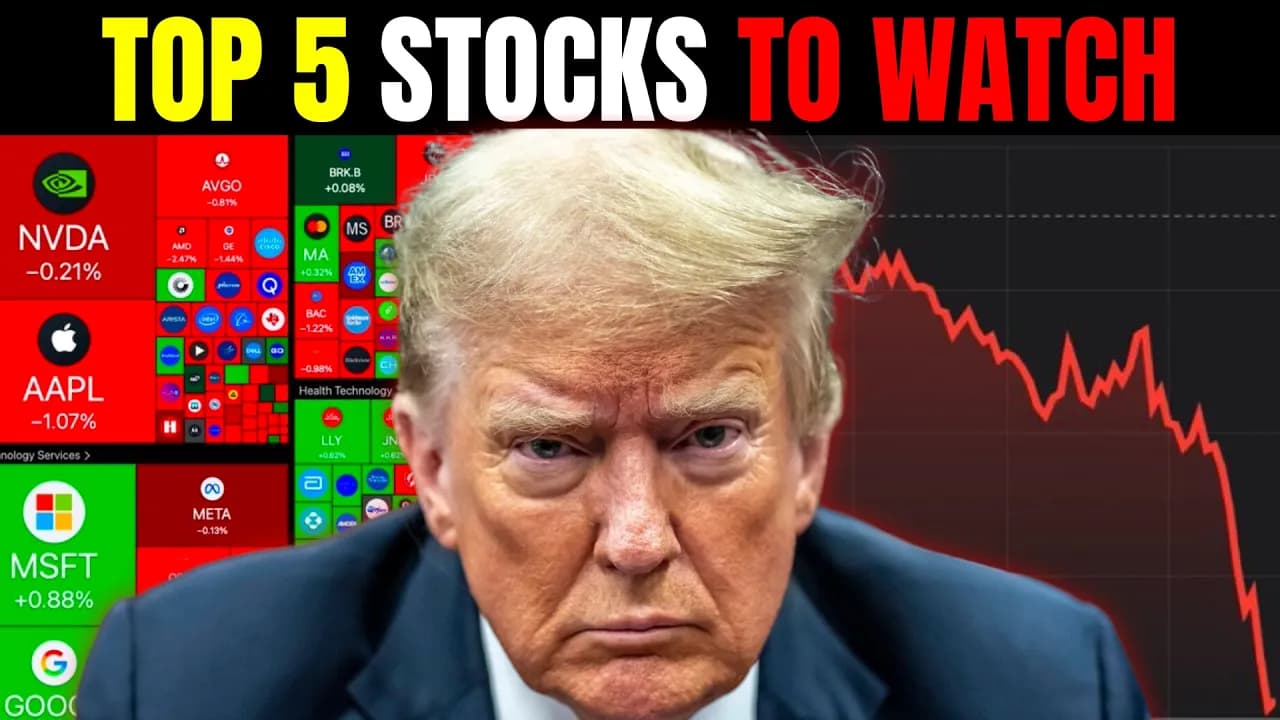
Iran Just Attacked Kuwait | Stock Market Crash Incoming?
In a Nutshell
Iran closed the Strait of Hormuz and launched a surprise ballistic missile attack on Kuwait, killing US soldiers and targeting US military systems just before markets open. Oil prices are expected to spike, which will increase inflation and pressure equity markets while benefiting oil-related assets. The NASDAQ remains near all-time highs, but semiconductor and tech stocks face downside risk in a potential 10-20% pullback, making risk management and cash reserves essential.
These notes were generated by AI and may contain inaccuracies.
On July 12th at 12:24 p.m., two specific developments that were not wanted over the weekend have been announced. The timing is notable because these attacks are occurring close to when markets open, which deviates from the recent pattern where the Strait of Hormuz would close on Friday after markets closed, followed by peace talks by Sunday as overnight hours began.
Iran has announced that the Strait of Hormuz is closed. This development matters because oil passes through the Strait of Hormuz. Oil has recently declined in price, and oil is one of the biggest contributors to rising inflation. A few weeks ago, Trump announced that the United States only had four weeks left of reserves, which prompted him to sign a peace deal with Iran. During the period of peace talks with the US and the announced ceasefire, Iran was passing as much oil as possible through the Strait of Hormuz to ensure that if they had to close it, they could close it for a longer period of time.
If oil cannot pass through this trade route, oil prices will likely increase. This is positive for those who bought the dip on oil stocks and ETFs, but negative for equity stocks because rising oil prices impact airlines, consumers, and producers, which will be reflected in rising inflation rates based on the PPI and CPI reports.
Initial reports indicate that the IRGC attacked US warships operating in the Strait of Hormuz, with multiple explosions occurring near Bandar Abbas. These attacks are happening literally moments before overnight hours open and a few hours before futures open.
Iran has launched a large-scale surprise attack on Kuwait with three ballistic missiles directly impacting US ATACMS ground-to-ground missile systems, with massive smoke rising from the impact sites. There are reports of a series of US soldiers being killed because of these attacks. This is unusual because attacks typically target specific sites without harming US soldiers. The timing is strange and the casualties create a difficult situation for Trump.
This year has been strong for semiconductor and memory chip stocks, as well as space stocks, which represent the top 10 performing stocks in the S&P 500. Some of these stocks are trading at very low P/E ratios and even lower forward P/E ratios. However, stocks including SanDisk, Dell, Micron, and especially Western Digital have already retraced 25 to 35 percent. Despite these retracements, the NASDAQ and S&P 500 are just 1 percent away from all-time highs.
Nvidia, Google, Microsoft, and Amazon are not at all-time highs and have experienced decent retracements. The NASDAQ is trading at all-time highs likely due to inflated prices from semiconductors. If the NASDAQ begins to sell off, semiconductor stocks that have been some of the best performers may give back gains.
When crypto was trading at $120,000 per coin, it was important to acknowledge elevated levels to avoid overleveraging and taking positions so large that a retracement would cause regret. The only people who get afraid or concerned during a pullback are those who did not prepare. It is not possible to predict the future, but preparation is possible through self-awareness of elevated levels, maintaining available cash, and avoiding overleveraging at these levels.
Even a 10 percent pullback can feel significant when substantial capital is invested. From current levels, if markets experience another 10 to 20 percent retracement, investors should assess whether they would feel comfortable and motivated to buy more or whether the pressure would be too great.
The NASDAQ market is still trading near all-time highs and remains incredibly bullish with no clear breakup pattern. Markets are still bullish and the direction remains technically favorable. Investors should maintain self-awareness, watch leverage, understand the downside risk, and ensure they can tolerate the time required for markets to recover. The most overvalued and overhyped stocks will crash the hardest if a selloff occurs.
Keep Ricky Gutierrez in your library
Save the videos and channels worth coming back to, and find them again in one place.