Ivanka Trump: My Dad Told Me Two Weeks Before He Ran For President!
In a Nutshell
Ivanka Trump shares her journey of overcoming underestimation, drawing from her mother's lessons on intention and her grandmother's nurturing love, while navigating a privileged yet scrutinized childhood marked by her parents' high-profile divorce and Michael Jackson attending her Nutcracker performance. She recounts her father's abrupt 2015 presidential run—announced just two weeks after telling her—leading to her White House role where she doubled the child tax credit, passed anti-trafficking laws, and launched initiatives like farmers-to-families food boxes, before prioritizing family and stepping away from politics' "dark world." Key takeaways include finding signal in noise via stoicism (e.g., Marcus Aurelius), embracing trust despite betrayal risks for deeper connections, being overprepared in male-dominated fields like real estate, and her new venture Planet Harvest to cut food waste and support farmers.
These notes were generated by AI and may contain inaccuracies.
She was extraordinary. My mother taught me a lot about bringing intention to what you do. Being the child of accomplished parents, most people thought that I would lack the ambition, the preparedness, but my mother taught me that being underestimated is not a bad thing. It's a very powerful thing actually and it almost always worked to the detriment of the person who underestimated me.
From real estate to her own multi-million dollar fashion line, Ivanka Trump continues to carve her own path into the business world, succeeding at every turn.
And then you learn 2 weeks before he announces your father decides he wants to be president of the United States. Did you have any sense that this was at all on the horizon?
Not really. And then when he pulled the trigger, it was full steam. Most people wouldn't give up an $800 million annual business to go into government. Why did you?
He asked us for help. He's like, "But I have to warn you. They're going to come at you hard. They're probably going to hate you." But one of the things I've learned in moments of tremendous pressure and scrutiny where any slip up is completely weaponized against you is to find the signal in the noise. I just don't get distracted by the outside noise. That's probably the thing that has been most helpful to me in terms of performance and success because you have a choice only in how you respond.
You've said politics is a pretty dark world.
This is quite a difficult question to ask, but when you heard the news that there was an assassination attempt on your father's life, do you remember where you were and like what's that like as a daughter?
Ivanka, you don't do many interviews, do you?
Not really. No.
Why don't you do much media stuff or podcasting or interviews?
I actually don't know. I think I get sort of really locked in and heads down on what I'm working on that I tend to kind of put on blinders and just go, but I like to have conversations in longer form with people that I admire.
I think the reason why I do this is because I naturally see everybody as like a jigsaw puzzle. And you've lived an extraordinary life. You've lived an extraordinary atypical life that it's safe to say almost nobody on planet earth has ever experienced.
I think from what I read things that you had said and different experiences you had as a child is just like trusting people.
I grew up the child of wealthy and accomplished parents. And so I do think there's like a natural barrier that goes up. You're worried about people, especially when you're a kid, liking you for the wrong reasons. I see this now with my son. He wants to be loved by his friends, and I appreciate that. That's good for who he is, not for who we are, and certainly not for what we have. So I do think being the child of famous parents and living such a privileged life, I had this guard and that guard served me really well for a long time. I didn't have any friends despite the really tumultuous life that I've had, ups and downs, who really disappointed me. Meaning close close close friends who didn't show up for me or who changed because of my circumstances or what was happening around me.
I've learned for me the purpose of life for me it's the expansion and not contraction of the heart and that's hard as you get older. How do you live a life of service and rooted in love and connection and I've learned more and more that those walls they don't serve you and the only way to have connection which is so fundamental to the human experience is to build it and that requires trust.
So I have to trust people. Now I have a good radar. I'm not foolish. I think I'm a very good read of people and I think it's one of my strengths and I think it's why I haven't been surprised by a lot of people. So I read pretty quickly, but I also have had to teach myself rather than grow sort of cynical as one tends to as they get older. I've really actually taught myself to be more trusting. And to the extent that means periodically I'll be burned like that's I'm okay with that trade-off because I think it will lead to more meaningful connections in my life.
Probably nets out better right in the long term.
I think so.
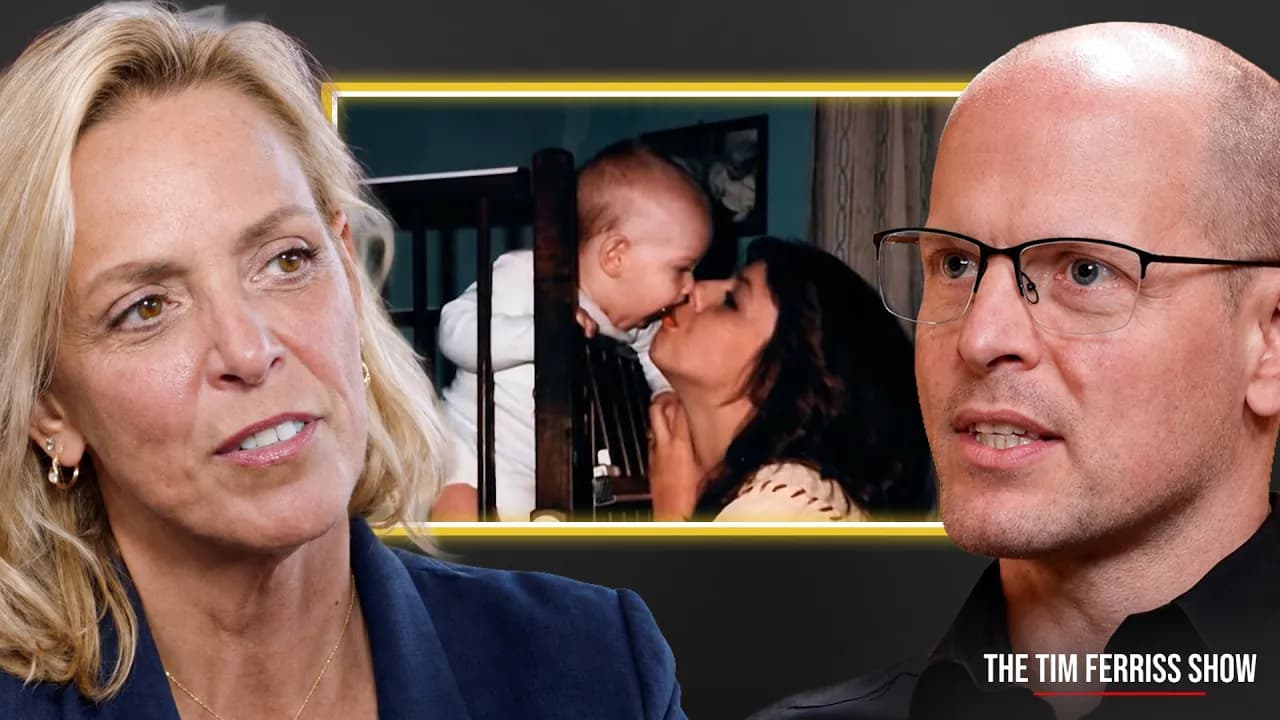
I have this photo here of a very smaller and so funny. I look at this and I see my daughter. That was like the first thing when I saw that photo.
At what age did you realize that life for you was slightly different from the average person? Like when does a child realize that?
I think there was always a lot of media attention and scrutiny. You see it, you experience it very early on. And I think my parents did a really good job trying to shelter us from it. And it was different then without social media. Not everyone I think the experience our children have where anywhere they go people have a recording device in their hands, their iPhone and can take pictures of them and you're so exposed during your formative years and thankfully I did not have that growing up but there were times I felt it.
I remember I wanted to be a dancer, a ballet dancer. And my mom was an incredible skier. She skied on the national team for then Czechoslovakia, now Czech Republic. And so she really believed in the importance of sport for cultivating discipline and so she really encouraged this. And I was dancing at Juilliard, the school of American Ballet here in New York. I was in the Nutcracker and I remember I was probably eight and I was some small role in the Nutcracker. I was a party girl and an angel. Those were like the entry roles where you dance at the party, where the man with the Nutcracker arrives and then you're in that angel scene. And I remember being so excited and was my first Nutcracker.
Michael Jackson had just moved into Trump Tower and was literally our neighbor in Trump Tower. And my father sees him one day, passing in the lobby. I'm with him. I said, 'You know, my daughter's in the Nutcracker. You should come. You should come see a performance.' So, he comes to the Nutcracker with my father at the height of his fame to watch me dance. And now this in retrospect could be like, wow, what a cool experience. But I was horrified. I was so embarrassed. I thought we had ruined the Nutcracker. Everyone was dancing with one glove. People who produced the show were hysterical that everyone was dancing with one glove. I thought it was all my fault and this was like just a wild childhood experience. I had things like that happen that were so far from normal that it's actually like comical in retrospect, but I think the day-to-day was like really grounded.
My grandmother and grandfather before he passed on my mother's side really raised us. My grandmother cooked every meal we ate for most of my childhood.
And Bubby.
Bubby. Yeah. So she taught me a type of unconditional love and tenderness and more than anything she was just this unbelievably nurturing. I'd come home from school and before I'd be out of the shower, she would have laundered my clothes and folded them and put them back on my bed. She was always feeding me and food for her was very much like an expression of love. I remember when I became a teenager and I'd sleep later and later, she'd wake me up for lunch, just like, god forbid I wasn't being fed at all at all hours.
I can see she means the world to you.
She does. She's 98 years old and her health has suffered and it's been a little bit of a difficult time for her but I feel so strongly for me and my children to have the experience to be there for her in just like a small fraction of the way that she was there for me is such an extraordinary privilege. And for them to grow up with her at our table every single meal each night and her telling her stories and stories of my mother who they sadly didn't get to know.
Are you okay?
No, I'm yes, I'm great. I have a lot of love for this woman. This doesn't happen to me often.
What is that mixture of emotions that you're experiencing?
She taught me so much just about love and we were talking before about connection. And it's been hard to see her now as she struggles, but it's a blessing to have her in our home and living with us and very special person.
It's often a testament to the person and the value that they've added to your life and how they were there for you that you would feel the way you do about her and that's so visible in your face. She must have been quite formative.
Oh, for sure.
You said that she was really taking care of you and sort of at the age of 10. Mother and father, I'm assuming very very busy.
My mother was an incredible trailblazer. An amazing example for me of strength and resilience and glamour and determination and ambition. And she was a great mother, too. But she would also say like she couldn't do it alone and she wasn't pretending she could. So she surrounded us with people who loved us. We had two amazing nannies. One of them worked for my mother until the day she died. The other worked for my mother until the day my mother died and still works with us today. She worked as after we grew up she worked as my mother's personal assistant. So they were very much part of our lives and part of our extended family and of course my grandmother who she trusted completely with us.
So she showed me a lot at a time when not many women were doing what my mother was doing inside the boardroom and on the construction sites all the time by the way with 5-inch heels and like perfectly coifed hair. So she made it look incredibly easy, but it was and continues to be very challenging to balance work and life like that, especially at a time where what she was doing was so singular. So she really and my mother served as an unbelievable role model for me for what is possible. How to be an amazing mother who is loving and nurturing and fun and provides for her children and also to be unapologetically and doggedly pursuing one's goals in a professional capacity. So she did that when she was married to my father. She did that following their divorce and really was just an amazing mentor for me.
You're growing up in a context where your family are privileged, they have no notoriety and the both parents are quite absent by way of them being so busy and they're also kind of.
I wouldn't say absent but my mother wasn't home cooking us meals. My grandmother was. But my mother was home when we ate them and then she'd go out again. Her and my father were actively building their life and pursuing their passions. And for my mom, much like me today, one of her creative expressions came in the form of design and architecture. She wasn't absent and neither was my father. So, he was filled more typical of that generation male role where he was less like present. But there was never a doubt in my mind that I was his top priority and that he was available to me.
So I used to call him from the pay phone at Chapin. It was in a broom closet and never once did he not pick up and sometimes his office would be filled with people he'd be in the middle of a deal or a negotiation or some politician or whatever it was and he'd always put me on speaker phone and then start the conversation by telling everyone how I got great grades and I'd start to blush. But he always picked up.
They weren't absent. Did I miss him?
No, because I didn't feel like he was absent. It was just different like he wasn't attending all of our sports games but by the way few parents were four decades ago there's a lot more sort of active participation like the way I am in my kids' life the way my husband is I think it is a little different especially for fathers today than 30 years ago.
If I sat Ivana your mother here next to us at the same age you are now what would be the fundamental differences in those individuals?
It's funny. I think back now and my mother and I are both incredibly similar and very different. So, she had like over-the-top style and glamour, and I think in some ways it was a reaction to the austerity and the control of growing up in a communist country in then Czechoslovakia. Like, nobody was going to tell her what to do. Nobody was going to tell her what to say. So, she actually would make my father look prissy and was hysterical. I mean, I spent much of my childhood being like, "Oh, mom, please stop."
Since my mother passed away unexpectedly from a fall a few years ago, there were just like I had a lot of questions and I really dug into her story and her history and really studied her almost in a way that I wish I had done when she was living and I could speak to her directly. And I think I understand her because I'm at a level of maturity and I've have some of the same issues, having young children. And I think I understand her though better today than I did in some ways in her life. Like I see her more fully.
What did you understand more about her that you didn't understand while she was here after she passed?
She wrote a book in the final years of her life that talked a lot more about her childhood and I think not uncommon for people who have experienced a lot of hardship sometimes they compartmentalize and it's like forward only and this whole part of her life she never talked about and I think when you're younger you ask a lot less questions like now I would tell everyone who's listening like really ask the questions especially if people are a bit of a vault and are less inclined to look back in the past because all of her life experience very much shaped her.
This was a beautiful photo that I found of you and I.
That was in Mar-a-Lago on my childhood bed. Very ornate.
She was really impossibly glamorous.
9 years old, your mother and father split up, divorced. It was quite well publicized that your father had an affair with somebody. And this is actually where the quote that I referenced earlier about trust comes in because quite remarkably reporters were waiting outside of your school to take photos of you and ask questions about your father's affair. And the quote that I read in GQ said this is a quote from you. > If I didn't have that lesson, I don't know that I'd be tough. It taught me not to trust anybody. You can never let your guard down. And I never really have since that time.
So that's probably the 25-year-old version of me as you know there's a lot of truth in it and I think certain defense mechanisms we create for ourselves are actually healthy because it was healthy for me not to be trusting before I had honed my own instincts and had learn to understand people and read people. So I think there was nothing wrong with a 25 or 27-year-old with my lived experience answering that way. But I do completely understand though like every part of me completely understands that reaction to that event at like 9 years old.
There was a level of aggression that like even today wouldn't exist with the paparazzi then, like to be shouting things and like reading quotes from tabloids to me as I'm leaving school. To put this in context, this divorce apparently garnered more headlines than the OJ Simpson trial. So, that was a lot. The difference is that once I stepped into my home, it was a safe place. Unless the TVs were blaring, which obviously they weren't during that period of time.
I think the difference today for parents and that I think about a lot with my kids is you just can't protect them in the same way. Like social media amplifies everything. So, while that experience with those reporters was extremely combative and aggressive and like totally unacceptable in a way that I don't think society would allow today, today it's very much more in children's faces. They can acquire the information they need. And obviously, when you're young, you're curious.
I think we're all, I think about it with my own children. I grew up with a lot of privilege and I've lived an extraordinary life and I never worried where my next meal came from. I never worried about being able to pay for the best school that I was able to get into. And so by so many metrics my life was extremely comfortable and easy. And I do think back like some of the challenges the moments that were disgusting or uncomfortable or even just the fact of my parents' marriage being torn apart. I think those create the pressure that turns you into who you become.
Did you know what it meant at 9 years old?
I probably then you couldn't look things up as easily. I don't know what I thought. I think I was probably more scared than anything of like the mob and the lights and the surprise of it all. Do you know what them separating me? Like did they have a conversation with you and say, you know, we're splitting up or was it?
They did. And I think the experience I had, albeit it was televised, but it was very much like any other child whose parents are separating. You start to wonder, will I be loved? Will I be forgotten? What does this mean? You want them to get back together. You're hoping. You're trying to create peace between them. Rekindle the love. All the things that I think are deeply normal and human.
You found out about the divorce by seeing a newspaper on your way to school one day.
Yes. That wasn't the plan. They used to have the big news boxes with the newspaper. My parents had sat me down that afternoon. That's when they had intended to, but it had come out in the morning.
What did the newspaper say?
I don't remember. I remember the photo. There was a picture of them with a rip down the middle. It was not an easy situation for a child. But that experience I always look for like what is the positive in any situation and the positive for me and my siblings were we really bonded in a different type of way because we were going through it together.
It must be so interesting being in your shoes because you look me and you're both aware that people they want to drive a wedge between you and your father. They want a headline. They want you to say something. I can see it within you that you have a real desire to be like open and transparent, but if I was in your shoes, I'd be thinking like everyone's trying to trip me out. Everyone's trying to make a headline on me and my life. They want to drive a wedge between me and my father.
One of the things I've learned under moments in my life of tremendous sort of pressure and scrutiny is to find the signal in the noise. And that's probably the thing that has been most helpful to me. It can become quite turbulent. I find myself sometimes literally like dancing in the eye of the hurricane. It's been many years of my life, but there's a lot of peace within me. So I just don't get distracted by the outside noise and I think if you know what you stand for then it really is just noise.
When did you have to learn this? Because am I right in thinking you this is the first time that I saw the Trump family during the Apprentice. So obviously growing up as a kid big fan of business we had the UK Apprentice but the US one was much more interesting. So this is when I first understand who your father is and who you are. What was the sentiment around you as a family at this point?
It was the biggest show in the world at one point. It was this massive phenomenon. He had been very famous in sort of New York and in real estate and in business circles, but this kind of expanded awareness of him beyond those New York circles onto a global stage. So, there was a lot of attention and a lot of excitement. He was very similar to how he is now. He said exactly what he was thinking, which could be polarizing at times, but it's part of what people loved about him.
I think the thing about my father and my mother is they're deeply authentic. So you can disagree, but there's a certain amount of respect for the candor of it. And the lack of fear to say what you're thinking because so many people are sort of afraid to be their true selves.
You're more delicate with your words.
Yeah, but I know exactly who I am. That's why the noise doesn't affect me. I'm really proud of the fact that, you know, I've lived through some incredibly intense times where people are taking cheap shots and swinging and I don't punch back because I don't believe in sort of spending my time and focus like being combative like jumping into that particular arena and like the nasty swirl of social media. It's just it's not for me and I've been consistent in that my whole life and I feel like that sets an amazing example to my children.
Where did you learn that? What is it that you've read?
You just have to be yourself and you have to be true to yourself and like I don't allow that noise to distract me. We were talking earlier about stoicism. I think like Marcus Aurelius's Meditations is so informative on so many levels. I mean here you have somebody who was literally an emperor and he's writing this journal in a tent in a battlefield. So his perspective is amazing and he once wrote that > the soul becomes dyed the color of its thoughts
and I think about that all the time. The cost to me of living in a way that's inconsistent and not aligned with what feels right, what models the right thing for my children, what feels inherently true to me. It's too expensive.
It's too expensive for my soul, so I won't do it. There have been times when the incoming narrative isn't right, and I want to correct it, but I consider the cost. Theo has a great quote: the cost of anything is the amount of your life you're willing to exchange for it. I focus on things that elevate my soul, my joy, my happiness, my connection to the people I love.
Have you always been there? Because you seem more stoic now.
I'm much more naturally like this. I feel things deeply. I'm a bit of an empath. I had to work to be like this, mature, gain confidence, and learn to let people in. After my children were born, I experienced a different type of love that cracks you open and you're never the same. You want more of that feeling. I'm very intentional about everything I do, even sitting here today—I have zero interest in spending two hours with a bully for a good podcast. I have conversations with interesting, curious people. In business, I do less things with more focus and intention.
You've lived an extraordinary life, but the lesson of being intentional—not just daily actions but what occupies your mind—is valuable for everyone. The world claws at us to deviate from who we are. At 16, the world wasn't pulling me away much beyond my mother's expectations of doctor or lawyer. Now at 33, every podcast guest makes someone mad, and everything I say can be spun. You have to get clear on who you are and what matters.
If you don't know who you are, the mob wins. They tell you who you are and you start to believe it. Once you know who you are, you feel sorry for people screaming on social media. It takes work to understand yourself. Modern society praises speed, fast pace, accessibility, responding quickly—then wonders why people don't know themselves or connect to something bigger. They aren't taking time to go inward. For big decisions, I ask what feels right. Even if hard, if aligned with values and who you are, it's never a mistake.
You grew up with a prominent family and father. At some point, do you decide to become your own person, with pressure to believe the same things, live the same life?
I think about it with my own children. Parents often view children as extensions of themselves, but I try not to. They are their own people, just as I'm my own. In public narrative, everything's comingled, but we're all unique with conditioning and learned behaviors—some great, some unwound in adulthood. I work hard so my kids see themselves as perfect, complete human beings in their essence, not based on accomplishments or external validation.
My parents taught me a lot—I love them. I'm like them in some ways, dissimilar in others. I was the peacemaker but true to myself. They created an environment where dissent was okay—I could agree or disagree respectfully and privately.
You started in real estate, interned at another company before family business—a heavily male-dominated space. Being a woman was an advantage.
I was underestimated twice: as child of accomplished parents—some thought I'd phone it in, lack thought process, ambition, preparedness. I worked twice as hard to prove worth, often in rooms before prepared. Being underestimated is powerful—it works to the detriment of the underestimator. If prepared and underestimated, they aren't. With accomplished people, do the work.
As a young woman in real estate 20 years ago, few women in development, construction, finance, acquisitions—mostly sales and marketing. I harnessed the belief they'd underestimate me (some from my insecurity), used it for motivation, and turned it against them by being overprepared.
You were described as a natural-born deal maker.
Prefer to be underestimated than overestimated. In negotiation, know what the other person wants—through research or listening. You're a great negotiator because you're an incredible listener. Silence is a weapon—people get uncomfortable and talk. Get them to share their win, achieve mutual win-win. Give little but they feel happy because it's what they wanted. Pure price negotiations are simple, but few are. Understand wants—you may give at little cost, everyone happy. Value authentically building relationships—best deals from genuinely getting to know someone. They want you to win, you want them to win. Now working on projects creating tangible things that uplift, solving problems through partnerships and coalitions.
When hiring, key characteristics?
First, strong sense of self and orientation towards agency—a self-starter. Hard to teach brilliant people good judgment or street smarts. Instinct about people, read a room—EQ skills harder to teach. Look for good people—I don't want to work with those I don't enjoy, trust, respect. Tell my kids: impress me by being a good person, not accomplishments, grades, trophies, external validation.
Was that the case for you? Trump family seemed competitive between siblings, high expectations.
Probably not. We're competitive and hard. Grew up with good values. Very competitive with siblings—mom disciplinarian, high expectations of performance. Father recited great grades to rooms. Having high standards isn't bad—my mom immigrant, didn't suffer fools. Proud my daughter sets higher bar than I could; my job is giving permission not to strive for perfection.
You built jewelry at 26, launched IvankaTrump.com at 33 in major retailers like Nordstrom, Neiman Marcus—hundreds of millions, exceptionally well, then shut it down.
Anna Wintour called day I graduated Wharton School of Business at University of Pennsylvania, offered Vogue job—incredibly honored, but wanted real estate. Love architecture, design as self-expression—city skyline as vision of hope, optimism, courage.
Launched fine jewelry at 26 while leading family real estate, starting family. Grew to 11 categories: apparel, footwear, sunglasses, fragrance. Created accessible, feminine line for multi-dimensional woman—work outfits not aspirational, couldn't transition to date night or drinks. Bridged gap for modern woman—no one posted work outfits on Instagram. Caught fire, $800 million annual sales when shut down for government.
Why shut down $800 million business?
Complying with Office of Government Ethics—put on ice, couldn't use my image, grow new accounts or internationally. Team oriented to forward momentum—easier to end on high note than stagnate. Always looking forward, not back. Serving was expanding.
Most wouldn't give up $800 million baby for government.
Thought of 40-years-future self who said no to father's request—didn't sit right. No intention to serve; few weeks after he won, asked Jared and me to help navigate Washington (knew no one). Warned they'd come at us hard, hate us, too young. Anti-sale, but privileged to serve country we love. Hadn't planned for it, loving prior path, but life changed—no business as usual.
You didn't choose this—from young age, thrust into contexts by father's ambitions.
True for all to some degree—path determined by circumstance. From 9, not choosing reporters at school. Father woke up, decided to run for president—no political buildup, first run was presidency and won. Drinking from fire hose—radical adjustment.
Did you think he'd win?
Hard to believe—everyone said no, but felt he would. Lived in NYC bubble of diverse minds; campaign ripped it open, exposed real country. Divergent views reinforced or changed perspectives—mind-expanding. Got thrown in, learned, grew, changed—privilege to serve when asked.
Watched 1980s interviews—Oprah (viral): if US bad, wouldn't rule out running. 1980 Rona Barrett interview: maybe run for president. Any sense on horizon?
Not really. Conversations beyond school: real estate, building, family business. Toyed with it. At 16 boarding school, called hysterical: read you're running—ruins my life. He said not happening. Dissatisfied as voter, formulating what he'd do differently—not articulated childhood ambition. Oprah interview on trade policy unfair to American workers—viewpoint consistent over time to this day on
In 2015, at age 33, Ivanka learned two weeks before her father announced his presidential run. The family gathered in Bedminster, where he shared his intention and asked her to introduce him. She questioned if he was really doing it as he came down the escalator. He had debated it for a long time but moved full steam ahead when he decided. Life hasn't been the same since— an extraordinary ride with highs and lows, but a lot of living.
Ivanka spent four years in the White House. Key achievements:
- Doubled child tax credit from $1,000 to $2,000, benefiting 40 million Americans with an average of $2,000 per year.
- Helped secure paid family leave for federal workers.
- Helped pass the Great American Outdoors Act, one of the largest conservative bills since the National Park System was created.
- Led efforts to modernize career and technical education, providing $1.3 billion annually to over 13 million students.
- Helped pass nine pieces of legislation combating human trafficking and child exploitation.
She left it all on the field with no regrets, incredibly proud of accomplishments despite the sacrifices to her children and the hard work. Felt privileged but no PTOIC fever—not drawn back to power. Wasn't expecting to serve; father asked for help, uprooted lives, scored wins like child tax credit ($2,400 average for 40 million families), nine human trafficking laws, vocational education and skills training relevant amid AI tsunami. Private sector committed to skilling/reskilling 16 million workers, facilitated 1 million apprenticeship opportunities. Proud of service, honored by father's trust. First responsibility is being a mom; kids now older, teenage daughter is 14, needs presence even through closed bedroom door. Knows sacrifice for kids, easy decision to prioritize family. Different time now—father has deep bench of helpers, refined policies. Priorities are family.
Nothing prepares you. Power amplifies what people already are, seen in politics and life. Realized leaders are just people—kids not speaking to them, fights with wives—across monarchies, democracies. Some feel consequential, others bafflingly elected. Removes veil, intimidation in interacting with humans.
Security changed radically, protected by US Secret Service—grateful to them for protecting family, risking lives. Scary troubling times; correlation between service and violence. Best in world at protection. President has highest fatality rate; recent assassinations, father shot in ear on campaign trail.
In July 2024, in Bedminster, NJ, saw it real-time by pool on TV before he stood up. Two children there; turned them away. Knew immediately he was fine—not his time. Horrified, scared, protective, but not worst outcome. Saw him that night post-hospital around 1-2 AM; met his car with Jared. Incredibly lucky, protected. Life lessons from mom's premature passing, husband's cancer scare—finite precious time, can't take for granted. Recommit to love, connection, value short time on earth.
Doesn't let it make her negative—accomplishes nothing, brings more negativity. Shooter had sickness; forgiveness difficult but focus on father's living as blessing. Traumatized but moves through to positive outcome—he's alive, extraordinary blessing. Choice in response; chooses positive.
Mind plays out scenarios; saw on repeat on news for months—not easy, avoids TV news. Felt like miracle, blessing; focuses there. Emotional toll present as he's her father who almost lost life but didn't—truly grateful.
Stepped away in 2022, prioritizing young children and private family life, not involved in politics. On Lex Fridman's podcast: "Politics is a pretty dark world. There's a lot of darkness, a lot of negativity, and it's just really at odds with what feels good to me as a human being." Nature antithesis of gladiatorial fame—as known, cares deeply about policy, helping people in private sector now, doesn't like politics.
Crow highly intelligent but aggressive, attacks eagle territorially or for fun, mobs and pecks back. Eagle doesn't fight—flies higher. Crow can't sustain altitude, falls off. Brilliant metaphor: choice to fight back or play on own terms, fly up, let crows fall off. Trained that muscle. Cared earlier—confused by unfair attacks, but politics like team sport. Can't get distracted by pedestal or attacks; be yourself.
Different from father but loves him deeply. Fascinating how she becomes own person despite noise defining her through others' actions. Life made her stoic to survive characterizations. Gratitude—taught lesson in peace, harmony beyond control. Needed intensity as medicine.
Didn't in childhood; as adult, friends who are teachers, professors, therapists provided perspective. Growth-oriented, always learning about self/world. Therapy amazing with right therapist to process/move through, not linger. Started adulthood as tool like meditation for internal inventory. Catalyst: leaving Washington, life in flux, Jared's second thyroid cancer diagnosis, mother's passing. Good at being tough/compartmentalizing; checked in to nurture self, heal not just move forward.
Tough and super soft. Life's intensity means moves through things fast—pulls back to process. Unprocessed issues drive bad decisions. Unpack close to real-time. Can't offload like average person—consequences in trust, media, family. Public stoic look but pure soft empathetic soul behind scenes. Life demands mask for survival—not punch back, suppress. Politicians inauthentic from never slipping mask. Father unique in authenticity amid robots. Balance: authentic but guard self/family. No room for error since childhood—nervous about embarrassing parents; politics weaponizes slips, so careful publicly. Mistake: lose self, bring guardedness into private relationships.
I think that's really unfortunate. One of the catalyst moments for seeking professional support was the death of my mother in 2022. She was extraordinary with wonderful hair. She lived a good life; she really lived, had fun, taught me about presence, bringing intention to what you do. She was very herself, joyful, loved to dance and play. It's unbelievably tragic to lose a parent suddenly and unexpectedly when they are strong. My grandmother, her mother, is still alive at 99 years old. She lost her life at 70 falling down the stairs. Grief from losing a parent hits different, especially unexpectedly post-COVID, which robbed many of years. Some sheltered together creating generational connection, but there was geographic distance; she was in New York, I was in Washington. We keep her memory alive, viewing her through adult eyes—her strengths and challenges. As a parent, I stand guard to expose my children to her amazing elements, share stories, and guard against passing on her challenges and struggles.
Grieving Properly
Have you grieved properly? Yeah, because you're very busy. It's super important; that's why I got introspective. Wherever there's discomfort, that's where you have to go. I would talk about her and cry, but recognized discomfort and had to unlock it, make time to think, talk, and process.
In 2023 at 41, I co-founded Planet Harvest with Melissa Akerman, inspired by creating the USDA's farmers to families food box program during COVID-19. Other projects include developing land in Albania, investing in technology companies, and family responsibilities. Balance is elusive; think of it as a scale that tips—one child's flu away from imbalance, a call from the school nurse, or project roadblock. Striving for balance isn't practical; lives are hectic with much outside control. Strive to live a life aligning with priorities, having more days than not feeling I've done that. If you get that right most of the time, you're doing well.
I've read a lot of stoicism, books, been to therapy, contend with businesses, investing, real estate, family, broader noise, yet managed to center on myself, pull inwards in a world pulling outwardly. Religion provides a beautiful framework like the Bible, Torah—to be a good person, live a purpose-driven meaningful life. Stoics are great guides. I love Eastern philosophies; Lao Tzu and the Tao Te Ching remind me of jiu-jitsu philosophy around presence, not fighting what is. Much suffering comes from rejecting facts versus what's in our control. Drawn to Buddhism and Taoism. Feel very alive in flow states—that's your medicine, your essence. Put myself in those situations as much as possible.
Planet Harvest (planetharvest.com) reduces food waste, creates change for farmers. Could have done much with leverage and experience, but chose this. Mission-driven passion. Nothing better than being obvious by being contrarian. Born from COVID pandemic insights via farmers to families food box program—created grants enabling farmers to sell perishable produce to distributors, NGOs, churches for last-mile needs, preventing waste tilled under. Early pandemic: supply chain shut down, restaurants, airlines, hotels closed; farmers had no place for food, couldn't afford removal. Got close to farmers' experience. Even normally, massive field-level waste—beautiful nutritious perfect food rots while communities want nutrition. Met CEO, co-founded to utilize excess, create demand, support environment and American farmers. Example: 400 million pounds of strawberries left in fields yearly, not imperfect, just not meeting rigid cosmetic specs from retailers 20-30-40 years ago for standardization. Solves problem, provides incremental revenue for farmers in tough business.
Closing tradition: question left assuming you're a parent—if oldest child wants to follow your footsteps, three pieces of advice to increase probability of happiness and success. For Arabella, who wants to be an entrepreneur and investor:
- First: You have to love it. Entrepreneurship requires enormous work, dedication, grind, challenges, responsibility for others' livelihoods—very heavy. Never seen anyone at peak who doesn't absolutely love it. Brilliant people flame out if proficient but not passionate; someone less capable but passionate works twice as hard—you can't compete.
- Second: You can't imitate; be yourself. Authenticity is key (Naval Ravikant: when copying, you're losing). Find yourself, blaze your own course. Learn from others but be non-derivative. Need tremendous resilience; pivot when right, receptive to information, but believe in yourself before the world does—you can't wait for the world.
- Third (implied in flow): Charge forward; invest in tech like AI, robotics with founders having conviction. Experience may not match confidence initially, but start believing or never get out of gate. Put up wins, world may believe too.
Keep The Diary Of A CEO in your library
Save the videos and channels worth coming back to, and find them again in one place.