Joe Rogan Experience #2456 - Michael Jai White
These notes were generated by AI and may contain inaccuracies.
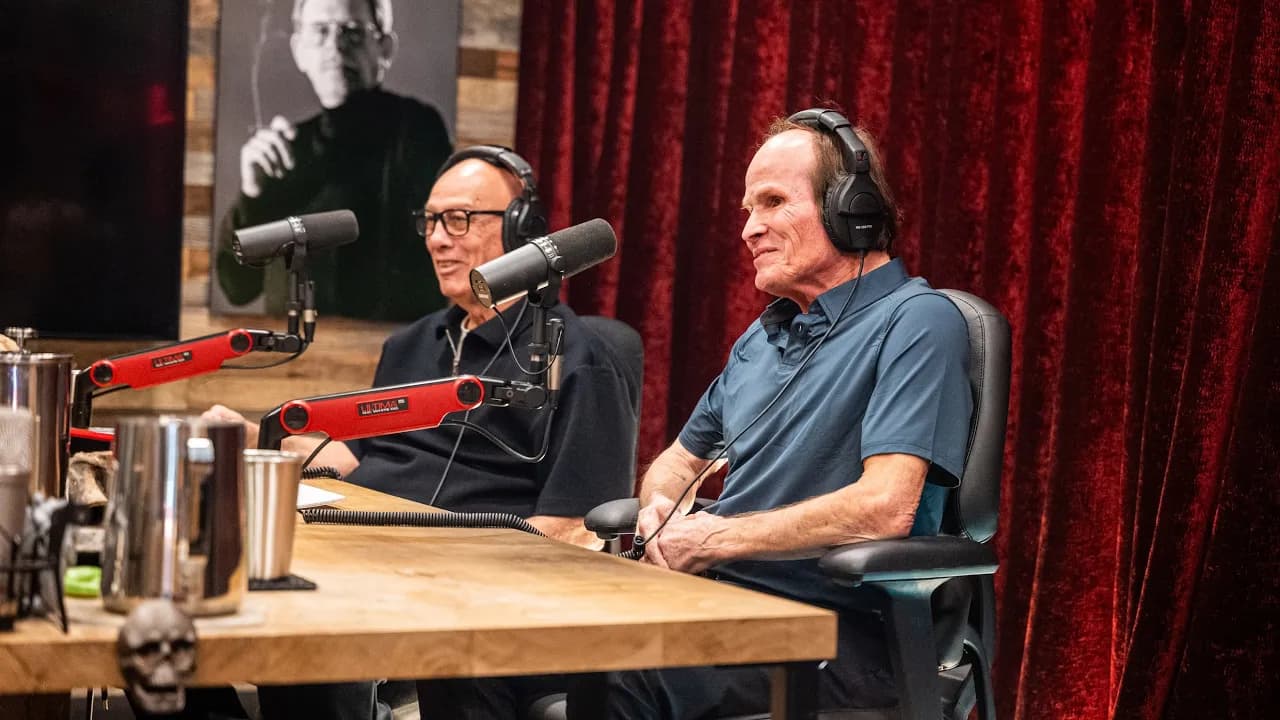
Joe Rogan welcomes Michael Jai White, noting his wild card boxing hat and Bruce Lee shirt. They discuss turning down the volume on equipment. Last saw each other at Terry Black's Barbecue, a great place. Michael plans to go there after the podcast.
Michael lives in LA and defends it: with good people, it's enjoyable due to hiking trails in 20 minutes, amazing geography, unbeatable weather, ocean to mountains in two hours. Joe agrees the spot is magical but concerned about a big earthquake soon. Article mentions high possibility of massive earthquakes in California within next decade, last big ones in 1972, 1994 (or 1993). Michael moved to LA right after the last big one, saw collapsed highway section.
Michael was in the 1994 earthquake: woke up off balance, jumped off first-floor apartment balcony to parking lot, watched building shake and lights go out from outside before main quake hit. Girl with him was trapped by closet door in hallway; he and friend pried it open. Guard confirmed lights went out when it shook, so Michael felt it before it happened. Joe attributes to good instincts, like animals sensing 2004 Thailand tsunami running to high ground. Michael's tuned into body and environment from being on own since 14, detecting predators, always saying "let's leave" before trouble like shootouts.
Grew up junior in groups despite looking like grown man since 13-14, fought heavyweights at 15. Taught karate at Bridgeport, Connecticut community center in the hood (top murder rate per capita). People thought he was adult, taught ~200 students under table at 15-16. Father at 15 with older student's sister; some in Bridgeport think he's in 70s now.
Street fighting was favorite; dove into styles as martial arts nerd, especially realistic portions. Trained at Legends gym with Joe 29 years ago; video of Michael snapping chain with hopping sidekick, bag flying, Eddie Bravo reacting. Trained when MMA wasn't popular: Maurice Smith, Carlson Gracie jiu-jitsu at Bomb Squad (first Eddie spot, closed), then Legends in East LA, Eddie's downtown place with Josh Barnett. Trained Bob Sapp, connected Frankie Liles. Frankie (super middleweight champion) got Michael into boxing; trained with Tommy Hearns, Sugar Ray.
Frankie most technical coach: analyzes jab, pulls elbow, tightens, moves position. Michael taught Frankie untelegraphed jab; showed Sugar Ray. Pressure tests techniques—if opponent can't stop even knowing what's coming, it's legit. No telegraph more effective than harder strike with telegraph. Taught Kimbo Slice on movie set: used rubber knife challenge, exploited telegraph to punch before knife move. Old trainers telegraph pads by flexing/reversing first.
Like jamming with Joe and George St-Pierre in gym, no ego, just improving. Different styles offer takeaways; new MMA martial artists bring unseen techniques effective against unfamiliar foes. Database of movements: see spin load-up, but unknown moves surprise. Inefficient loading misses milliseconds.
Threat Locker: zero trust allows only needed, blocks rest by default. Controls what runs, when, where, how. Blocks ransomware, zero-days before execution.
Jam (lift foot to hips on load-up) effective in taekwondo vs fast opponents; fucks people up, rarely used now. Gain from everything, even woo (hard vs half-size guys, floor work at his size). Ballet hard; any heavyweight doing ballet becomes better fighter. Lomachenko's dad made him do Ukrainian dance for 2 years young, amazing footwork.
Don't discard from one group; grew up hood but loves Eagles, Joni Mitchell (great lyrics), Erol Smith, O'Jays. Never marginalized; waste of life. Every martial art contributes, like all people—even idiots have 20% legitimacy to acknowledge first.
Envy Joe's access to perspectives from interesting people. Proud of Joe from gym days to now. Joe started podcast for fun with friends, learned a lot. Michael saw Joe perform standup in Orange County (Magic Club?), offered him James Coburn role in Blood and Bone (Sony's most successful non-theatrical, reimagining Hard Times with Charles Bronson, James Coburn). Joe declined to focus on standup, early podcast with Eddie; acting 16-hour days hurts comedy material polishing.
Joe part of UFC when nothing promised; people thought snuff films or porn. Joe did postfight commentary on NBC sitcom NewsRadio.
UFC organizers questioned Michael Jai White for flying to Alabama for cage fights. Good movies are made of stories like this: someone following their spirit with no promise of anything and accomplishing something. Kudos for that.
When young, everyone wondered: What is the best style? Kyokushin? Judo? Kung fu? No one knew. Benny 'The Jet' Urquidez fought in early no-rules fights, but they never took off. Benny was a special fighter and one of Joe Rogan's teachers. Joe trained at his gym, the Jet Center, in '94 right before the earthquake damaged the roof and rainy season caused it to burn down. It was an honor to train there. Michael's instructor Matty Mesi from Bridgeport trained with Benny early on, putting it on the map as the mecca for kickboxing in the 90s. Everyone talked about the Jet Center.
UFC answered the question by putting styles together. Initially, jiu-jitsu dominated because no one understood it. Rorion Gracie ran through opponents. It was somewhat set up: he faced beasts like Ken Shamrock, but Gracies picked smart matchups avoiding killers. Hoist Gracie (175 lbs, slender) beat Dan Severn (260 lbs) with a triangle from his back, putting jiu-jitsu on the map.
Hoist had a 100-pound advantage over some like Kimo (huge dude). Gracies were smart in early matchups.
People overlook Helio Gracie, Royce's father. Pound-for-pound the best due to jiu-jitsu skills, concentration, hypnotic presence, no wasted energy. Encourage pulling up his fights. Example of cross-training: Helio got into yoga for flexibility and breathing control, never got tired (seen in Hulk Hogan fight).
Helio taught long seminars then rolled with black belts, tapping world champions effortlessly. Paulo Filho (WEC World Champion, multiple Mundials winner) trained with Helio at age 40: "He treated me like I didn't belong." Pure technique and mastery of jiu-jitsu 101 basics, no fancy moves. Royce said his father was 10x better.
Jiu-jitsu holds martial arts tradition that karate lost to business (paying for black belts, diluted ranks, made-up titles like 'grandmaster'—an English word misapplied). Male ego issue.
Most martial arts sparring (karate, taekwondo) is controlled. Jiu-jitsu rolling is full blast until tap—no hiding skill. Eddie Bravo: "I killed you."
If he gets you in a triangle and you tap, it's because you were about to go to sleep and once you're asleep, he could just stomp your head into a pancake.
Very humbling, especially for beginners with prior experience (wrestling, strength, speed).
Ego from black belts means nothing in real fighting. Boxers or wrestlers humble you, forcing adaptation. Joe: Wrestler friend in high school humbled him on grass despite no prior respect for wrestling. Started wrestling. Excelled in taekwondo (state champ 4 years), but amateur boxer Dana Rosenblat (New England middleweight champ, beat Vinny Pazienza, Howard Davis Jr.) lit him up in boxing and troubled him close in kickboxing. Taekwondo flaws: weak hands. Then Muay Thai guy introduced leg kicks. Watched WKA fights like Dennis Alexio, Don 'The Dragon' Wilson eras—leg kicks everything. Then grappling mauled him on mats. Everything teaches something; restart often.
Martial arts fantasy hilarious due to Dunning-Kruger effect: everyone has opinions, few know reality. Movies fuel belief in air-kicking champions beating pros. Michael benefits as people think that of him, but he loves testing against anyone with real competition experience, especially training with champions (Gokhan Saki, Maurice Smith, Rampage Jackson). Philosophy: bow means "thank you for making me better" via obstacle. Brags about being humbled to learn. Loves being wrong.
Sparred Michael Bisping in Thailand pre-George St-Pierre fight (during Michael's movie). Bisping winded him second round despite drinking all day prior on yacht. Bisping: cardio machine, fought 11 UFC wins with one eye (memorized eye chart). Hell of a story; encourage movie. MMA fighters are modern gladiators; Michael puts them in movies post-career as fans discard them.
Third movie with Cowboy Cerrone (doing well). Outlaw Johnny Black (Michael wrote/directed): featured Cowboy, Randy Couture, Josh Barnett. Randy transitioned well (Expendables), calm personality. Pre-Tim Sylvia title fight, winked relaxed: "People who love you love you win or lose. Worst? You lose—you've lost before."
Randy spanked Tito Ortiz on ground. Had heart attack on Michael's movie set, drove self to hospital, returned like nothing. Joe saw Randy's 1997 debut: took down huge guy, mounted, beat him. Wrestlers (Mark Kerr, Mark Coleman, Randy) cracked code—top control beats jiu-jitsu alone. Takedowns cornerstone of martial arts.
Wrestling hardest sport, best for kids: builds discipline, mental toughness, tenacity lifelong. No one trains harder (anaerobic). Joe added wrestling intensity to taekwondo: running, calisthenics.
Senior year, football coach (ex-college wrestler) challenged him yearly. Michael beat him despite temper, not suited for team sports. Grew up harsh environment, sensitive kid built armor like Mike Tyson (understood playing him)—locked vulnerability inside to hide it. Volatile; martial arts channeled it. Was special ed teacher for EMD kids like him; still visits inner cities/community centers.
Classic story. Buddy out after 30 years prison found him on Facebook; hooked him up with job. Stories triggered Michael's memories—realized how close he was to prison or death. Devotes time helping kids as he was helped; won't pull up ladder, accepts risks. Abundantly lucky. Downplayed his past so much he thought friend exaggerated.
That speaks to your character that you had downplayed it all in your mind so much that you thought he was exaggerating.
Michael Jai White swept past hardships under the rug because he's not that person anymore. He went through many events on random Wednesdays but wouldn't trade them as they made him the happiest guy he knows. He can appreciate good times deeply and feels he should be slapped for complaining. He knows he's blessed, and what they're doing now is in the service industry—serving others by doing what inspired them.
Joe Rogan agrees they entertain but feels blessed to expose people to different ways of thinking, information, human beings on unique paths, disciplines, the human mind, body, ancient history, and more.
White praises Rogan's utmost honesty, recalling when Rogan pulled Sha aside as a friend to say hard truths. Rogan loves Sha, a great person, but had seen his path too many times. He warned Sha to stop fighting in the heavyweight division where knockouts are brutal; he'd get three or four more and not recover. It's non-manly not to speak up and let a loved one go down a detrimental road.
Sha had another path: he was great at podcasting, fun, hilarious, silly, a big giant silly dude. They had fun together, and he made more money podcasting than fighting. But Sha's identity was wrapped up as a top 10 UFC heavyweight who beat world-class guys like Mirko Cro Cop. That time had passed; he was one foot in, one foot out. Anyone one foot in runs into a fully committed samurai opponent, wakes up on a stretcher, forgets the fight, loses keys, forgets names, repeats stories, slurs speech. Nothing's worth that at age 35 with 45-55 years left. It's not about strangers; it's about friends and family who love you.
It's just so hard for people to abandon that identity. That's the hardest thing with fighters.
Even greats come back when they shouldn't, get humiliated.
People don't love you; they love the image and live vicariously through you. White recalls a Boston fight where he ducked a technique, countered coolly, and the audience cheered. He got angry thinking this guy could be messed up while they cheer like he's a pitbull. If he was down, they'd cheer the other guy. Something snapped: this isn't enough. He preferred skillful testing over dominating or peeling heads off. Competition became personal, not for audience. Something soured it after that.
White thought he'd rise if called out, mentions Rogan-Wesley Snipes which would have been terrible. Wesley needed money amid tax case troubles around 2005-2006, went to jail. Initially planned Wesley vs. Jean-Claude Van Damme, but Campbell McLaren from UFC said no one cares; fight someone current like Rogan. McLaren called Rogan, who thought about it overnight then agreed. Rogan trained twice daily for 6 months with Rob Kahn mornings and jiu-jitsu nights, always tired—realized professional training exhaustion.
White trained with Wesley's instructors Marcus Allegro and Lamar Thornton (Allegro's instructor). He's known Wesley since before fame, huge Blade fan (favorite comic as kid). Thought Wesley saw him as just grappler, unaware of striking background. Wesley planned knees on takedown attempts, but Rogan better standing. Negotiations long with lawyers; Rogan mentioned on UFC broadcast: "Come on Wesley, sign. I'm bored training. I was 35-36, no time left."
White protective of friends, warned Wesley about sovereign citizenship. At gatherings, told him not to bring hangers-on. Checked if healthy. Sees Wesley as big brother for early career advice: show up in overseas markets. Recently reached out to check in, wishes him best, wants him kicking ass again. Would love Wesley return as older Blade—he could do it. Opening Blade scene (vampire party, sprinklers spray blood) one of best in action movies. Blade saved Marvel; Stan Lee admits it. Huge hit when superhero movies struggling.
Superhero movies only ones Hollywood throws hundreds of millions at guaranteed to kill box office (Avengers, Spider-Man, Superman). White not big fan; not designed for him, meld together, limited stories. Likes believable actors with quirkiness, edge. No great superhero films; simple entertainment, silly escape like McDonald's. Critiques unrealistic feats: 90-pound women throwing people, three-point stances, stilettos. Compares to Charlie's Angels. Loves 300—badasses that look real, breath of fresh air blending fantasy/reality/comic history uniquely.
White has good movies coming, producing, shooting what he wants: body count with something to say. Rogan misses Spawn. White played Spawn (1997). Saw early cut with 71 special effects; Bob Shaye (New Line) let director Mark A.Z. Dippé (special effects guy) add more, killing story—convoluted, hid motivation to return to life. Fans who knew comic understood. HBO cartoon first (Keith David voiced Spawn), then comic, movie big hit for time, made money.
White signs Spawn stuff in comic stores; hardcore fanbase. Todd McFarlane talked another Spawn 25 years, wants to direct/produce unseen Spawn like Jaws (mist destroys, Jamie Foxx rumored). White skeptical: McFarlane never directed (like Stan Lee not directing Marvel); first comic creator-directing movie? Big budget, executives interfere. Miracle movies done as intended; few like Tarantino get left alone (Once Upon a Time in Hollywood).
White directing/producing, given freedom: body count plus substance. Questions Jamie Foxx as Mike Tyson (rumored decade)—Tyson's life transparent in docs; what story? Foxx versatile (sings, acts, stand-up, characters), great in Collateral and Ray (perfect contrasting year).
Jamie Foxx became Ray Charles in Ray. His singing as Ray Charles was insane, one of the best performances ever. He also embodied the hitman in Collateral. You believed it. Tom Cruise proved he could be scary in Collateral. Never thought I'd be scared of Tom Cruise, but he was convincing. He's a bad motherfucker, crazy as batshit, but has to be that crazy to do stunts at 60 years old, jumping off buildings and breaking his ankle. Similar to Johnny Depp in Black Mass—didn't know he had that in him.
Scene in Collateral where tactical instructors play: Tom Cruise double taps, whips gun out of the way, pulls his gun, unholsters fast and smooth. In an alleyway, guys try to take his briefcase. Played that scene over and over. Drilled it perfectly to look like a legit hitman. From start to finish, he embodied the character. > "My briefcase is your briefcase. Yeah, it is. Why you want it back? Your wallet. What else you got for me? Huh? Come on, son."
Visited Collateral set on another day. Shooting behind Tom Cruise's head with eight camera angles at video village for perfect shot selection. Michael Mann known for shooting a lot. Great movie that holds up. Jamie Foxx showed range as terrified nerdy cab driver wrapped up with hitman. Want to see him do more roles like that, requiring his full ability. Hard to find such roles; A-list competition and sales considerations. Create your own stuff. Nobody was going to write Black Dynamite.
Michael Jai White largely creates his own lane. Enjoyed writing, sold scripts separate from acting. Idea for Black Dynamite came in Shanghai, China, riding to set, listening to James Brown Super Bad. Saw entire movie including nunchuk fight with Richard Nixon, laughed in back of car. Jotted notes. Reflected on childhood idols like Shaft, Superfly, The Mack—pimps as heroes. Jim Brown and Fred Williamson killing 60 people okay, but pimps with clubs and women hilarious.
Three the Hard Way with Jim Brown, Fred Williamson, Jim Kelly: evil Dr. Feather puts liters of liquid in LA, Chicago, NY water to kill black people via sickle cell anemia. Not a comedy, serious movie. Conspiracy paranoia in community funny in hindsight, especially with real events like Tuskegee. Overcorrection from 60s butlers/maids to badass heroes. Treated Black Dynamite as lost movie from that era. Discussed with Tarantino, went own direction. Audience likes it.
Ideas sometimes come fully formed like Black Dynamite in a ride to set. Next: sequel to As Good as Dead, Samuel Goldwyn's most successful. Based on brother who moved from Florida to Mexico, started family. Character: cop hiding in Mexico from syndicate. Production two months after writing, done in a year. Grown-up Karate Kid: black dude in construction with wing chun dummy, trains kid avoiding gangs in unique martial art. Kid gets good, trace style to him, bad guys come. Starting sequel in weeks.
Still a fan of movies, writes what he'd want to see. Understands industry, stories with fresh action/martial arts. Choreographs mistakes for realism. Audiences sophisticated from UFC. Raise bar beyond superhero choreography. Full circle to Bruce Lee style: faster, more technique, beat to punch logically. No camera tricks if moving faster/stronger. Can put realistic heroic fights on screen. Hard art to make look real. Turned down Blood and Bone, John Wick 4, many movies.
John Wick 1 unrealistic but fun; series got over-the-top. Finished project in John Wick vein: high body count, lots of CQB (close quarter battle). Studied tactical training, may compete.
Trains with Tyler Gray (Delta Force), special forces friends. Goes to Taran Tactical. Taran Butler preposterous: shoots from hip better than laser users, iron sights (prefers over red dots, never fail), crazy accurate. Spooky how fast he clears a room, calm like Rain Man. Predicts exact run. Won 7 consecutive championships. Tyler Gray: Delta, contracting, Navy Seals consultant/director, mellow, huge arsenal in Vegas. Brother retired Secret Service. Shoots with Danny Hester (former Mr. Olympia Classic Physique), Flex Wheeler, other bodybuilders into guns.
Training reveals difficulty, long learning curve like karate/jiu-jitsu—levels. Texas great for it. Staccato range with old west town setups. Jon Jones scary, has Dutch the Belgian Malinois. Josh Barnett at Taran often, scary, analytical, Jeopardy-smart, knows everything. Inspired by Michael Jai White and wife (choked up hearing it). Met wife on Fear Factor sliding luges; now 6th movie together, two teens, empty nesters soon.
Stereotype of cage fighter broken by Josh: former youngest UFC heavyweight champ, depth in intellect/knowledge, quotes Nietzsche, makes whiskey, Renaissance guy. Same birthday, throw parties. Shot Never Back Down 3 in Thailand.
Thailand hot, Muay Thai motherland. Strengths/weaknesses: circular vs. straight boxing lines, tough fighters beat themselves up by 30s, start young. Train intelligently via play sparring (touch sparring), not hard sparring like Americans. Builds timing/pattern recognition/reps for weekly fights. Like jiu-jitsu: technique over muscling preserves body. Saenchai in 40s still submitting people—unassuming, playful timing/smoothness. Wedding ceremony in Thailand; Tony Jaa officiated Buddhist part, water blessing, sang.
Tony Jaa one of greatest martial artists. Ong Bak first high-level true Muay Thai in film. Incredible control: somersault foot tap to shoulder. Sick recently with cancer, hoping he's overcoming.
Thailand developed heavy leg kick/clinch/elbow/knee from gambling/fights. Dominated kickboxing; now Kyokushin from Japan rising, e.g., Yuki Yoza dominating Thai fighters with calf kicks. Officiated Kyokushin tournament recently. Did 30-man kumite (not 100), toughest challenge—want to give up.
You come to a point where you want to give up and have to walk the burning sands. Walking the next day after a 10-man kumite, several knees were on my legs because they destroy your legs so bad. Did a 20-man kumite once and made the mistake of having an energy drink beforehand, which made my heart race higher than normal, making it even harder. Around the 12th guy, you're like, what the fuck are you doing? Why are you here? But you have 18 more to go and have to dig deep. That's such a hard style, but getting faced with yourself, wanting to quit, and digging down to get through it has no substitute. When you accomplish it, you know most of the time when you tell yourself you're done, you're not. Valuable lesson to know that about yourself.
Last time trained out in BA Canada, usually these things are in Japan with people from all over the style training eight hours a day with little lunch breaks. Last one was about five or six years ago, went by myself while most people come with family. As a movie star, had a target on my back. During lunch breaks, people wanted pictures, so last to eat with only 10 minutes left, then back to training with a full stomach. Taught myself to think three hours in, I just got here, and dig deeper. Last few days fighting down to the last person with people eyeing me. Learned a lot doing footwork with Frankie for years, boxing technique with Benny Ortiz, Bill Wallace as instructor. Tested arsenal and benefited greatly. Thought am I insane with a movie starting a week later, could have been messed up or had a broken leg. In Japan, trading souvenirs often means broken bones, but had to overcome that.
In this coddled life, don't get to test myself much, had to listen to complaints and shut up to get through it. Not fair with pictures and being by myself, but point is to get through it. Train with champions because you should be tested. If heading a religion or cult, men go through rites of passage to know how to protect self, family, loved ones—that's paramount. Only way to find out what's inside is to test it. Dudes with chests pumped out talking loud do that to scare people off because they're terrified and don't know capabilities. Can't hide from yourself. Fighters are naked to the world, have to dig down and overcome—that's why love them, our gladiators, live vicariously through them. Dogged about actors getting accolades without doing it, myself included. Fine if called actor not fighter, but personally deeper. Identifies with Joe Rogan seen in gyms back when not popular, for self-improvement, overcoming obstacles. Biggest obstacle is yourself.
Martial arts are a vehicle for developing your human potential. It's so hard. People need something hard.
What about Khabib's rant on discipline? That rant might be AI, but Khabib would agree with every word. Becoming addicted to discipline. Every man addicted to something. Some smoke, some drink, some chase girls, some waste time. But real man addicted to discipline: to early wakes, to prayer, to training, to silence. Discipline needs no motivation, moves without feeling, says I go anyway even when tired, even when lonely. Discipline is best addiction. Want strong life, discipline builds it. Want peace, discipline protects it. Want respect, discipline earns it. No shortcut, only work. Be man with control, not with excuse. No cry, no blame. Want better life, start with better habits, discipline every day until discipline becomes you.
Kudos to the AI if it is one. That's how Khabib lives.
Dagistan, hard part of world developing baddest fighters. Even in Muay Thai, Azadullah Imangazaliev (22 years old) fucking everybody up, fights for ONE FC at 145 lbs. Tall, lanky dude, one of most terrifying strikers alive, best technical striker in world. Perfect timing, measurement, piecing dudes up. Exploits round techniques with straight front kicks to face, spinning attacks, comes off angle, head off center line, super technical, always attacking with long range benefit. Combines taekwondo, karate, precision Muay Thai. ONE FC highlighting elite Muay Thai like Tawanchai, Superlek, but not caught on in America—needs MMA for attention. Dagistanis entering Muay Thai terrible sign because hard tough people start young. Due to Khabib and Islam, know pathway to greatness with heroes and world champions out of Dagistan.
Yukioza, Kyokushin guy, shells up, gets tight, kicks inner thigh, outer calf, lower leg, chopping legs. Thai guys don't know what to do, not used to calf kicks shin-to-shin. Kyokushin have most conditioned shins. Second round, Thai guys can't walk, calves don't work. Calf kick revolutionized MMA—one or two compromise movement, pivoting, punching power. Yukioza putting it on Thai guys. Incorporates Russian style boxing with Kyokushin, non-telegraphed punches that look slow. From high-level gym in Japan producing Masaki Noiri who beat Tawanchai recently. Destroys legs with question mark kicks, evolved in Kyokushin, into kickboxing with toughness. Excellent movement, Superman punches, spinning back kicks. Thai guys have 150 fights by 25, much experience, but he's figuring them out.
Wish governing body for superstars like this guy vs that. ONE FC doing that with grappling, kickboxing, Muay Thai, MMA on one card, but not popular in America. Michael Schavello great commentator, not with ONE anymore. Seeing him in three weeks in Australia for seminars, meet and greets. Good fighters like John Wayne Parr. New Zealand hotbed too. Warrior cultures with history. Australians nicest, coolest, friendly, easygoing people with rites of passage. Sad about US not making men anymore—when they are, they stand out. In movies, American alpha males often played by Australians. Masculinity demonized here last couple decades. As school teacher saw beginning: everybody gets trophy, protect self-esteem, taking away competition. Kids don't deal with loss, end up shooting classrooms.
Dealing with loss most important lesson—if want better, lose. Losing best medicine because never want to feel that again, think about cut corners, what to do differently. Two options: get way better or quit. Winning sometimes you don't learn.
Born with gifts. Fluke beat fastest guy on track team in decathlon, coach put on team, went to college. Track evolved martial arts—cutting fractions of seconds in movement. Shot put against ginormous guys, generate power at 45 degree angle, inertia to get past. Running, all motion forward or step behind. Efficiency of motion applied to fighting gave cheat codes.
Like Bo Jackson or Herschel Walker, gifted big guy fast, fighting easy, but celebrated fighter less good martial artist, flaked off, didn't try as hard. Khabib said gifted people not best fighters. Philosophy: kid Sean 140 lbs fatigues at 100 kicks, takes 1000 for me. He pushes to 120, I to 1001—who better martial artist? He is, pushed beyond comfort zone. For him 100 to 1000 is 900 quality kicks I don't have. Comparing to others wrong—train to ability like Sean. Kicked basketball rim, but realized using gifts as crutch limits potential. Gifted guys slack off, not comfortable with struggle, key to growth. Admire freaks, celebrate pugilists, but praise not crux.
Physical limits can retard mental growth and potential. Gifted athletes have a responsibility to achieve full potential from genetics, life, or God—faster speed, quicker movement, explosive power. Harnessing it creates elites like Mike Tyson, Michael Jordan, or David Goggins' "uncommon amongst uncommon men." Many gifted gym guys peter off, disappear, and lose to slightly harder-trained or more experienced opponents because they dislike struggling or prefer beating weaker foes. Facing the person in the mirror is hard; elite guys dominate until they get beat and vanish, while true heroes get beat repeatedly, keep showing up, learning, and become elite. Examples include Izzy and Tyson critiques: gifted but tapped out when it got hard, lacking dig-down to overcome.
Tyson had elite coaching with Cus D'Amato early on; after Cus died, he lacked it despite amazing ability. If he'd gone to Emanuel Steward or another elite coach for style analysis and respect, he might have maintained 21-year-old discipline under world pressure. Played Tyson, studied everything: viewed him seeking father figures—dressed like Cus (suspenders), adapted Kevin Rooney's fast talk, Jim Jacobs' marriage influence, Don King's speech patterns (n-word every third word), even Mike Tyson in prison via Frankie Llaos call. Visited Catskills house, learned untold struggles. Kevin Rooney wasn't savior; did interview against Tyson's wishes during Robin Givens marriage, made over $1M at Sphinx fight but left casino owing, needed Tyson bailouts. Don King took advantage, pressured Tyson with cohorts. Met Tyson in prison via Frankie Llaos camps. Youngest heavyweight champion at 20, from 13-year-old no-family kid adopted by hypnotist Cus, exposed by Jim Jacobs to library of greatest fighters' footage (Bill Cayton). Prime environment produced unique heavyweight.
Scariest Tyson: vs. Marvis Frazier—undeniable mauling, bobbing, weaving, angles, not just frontal. Pre-Trevor Berbick, everyone knew he was real. No roadmap for superstardom pressure—no internet, few like Ali to relate to. Knocked everyone out first round amid screaming crowds.
Fought big-brother figure Holyfield (cruiserweight crew checking on him, holy man rep). Press conference: manufactured fake hatred for edge—mistake, psychological misstep. Holyfield's God-belief made him unflappable. Third round: crowd chanted "Holyfield"—air went out of Tyson, first time hearing that. Holyfield wars: Riddick Bowe, Dwight Muhammad Qawi cruiserweight epic, Bert Cooper—unflappable, never angry. Tyson committed to first blows; Holyfield counter-fighter with different center of gravity (thin legs, big top)—Tyson should've pushed but didn't show normal style (bobbing, weaving). Psychological and training deficit—no elite trainer like Cus. Moment: hurt Holyfield with body shot-uppercut combo, could've finished but chilled, didn't jump on—un-Tyson-like. Evander rebounded from wars.
Psychology: opponent mirrors self. Holyfield's character scary—unbreakable mentally, rebounds physically. Fighters like Fedor Emelianenko: stoic in chaos, sipping coffee amid war, unreadable. Robbed of Cain Velasquez prime vs. Fedor—heaviest cardio like marathon runner at 240lbs, perfect technique, scariest ever (speaker prides on fighting anyone but not him). Dos Santos fights ruined both: first, Cain blew knee (meniscus torn, brace), couldn't anchor/post, got caught right hand on Fox main event.
Later Tyson one-punch, stood frontal, lost speed/combos/movement/angles that defined him (e.g., Marvis Frazier funeral-walk entrance, grizzly maul). Tyson vs. Ali hypothetical: depends on versions. Best Ali pre-title strip: Cassius Clay vs. Cleveland Big Cat Williams (212lbs Ali vs. 210lbs Williams)—danced around power puncher, speed + size (Ali legs bigger than Foreman's, only 4lbs lighter than Foreman). Head movement best vs. Ali (Frazier, Norton). Post-3-year Vietnam layoff/no training: rusted, slower—vs. Jerry Quarry, body different, footwork/timing off, no endurance, shadow of self despite title win. Ali rarely threw body shots (maybe 10 career total, jabs only). Greatest boxer debate: one of greatest humans/Americans for Vietnam stand, talk show personality, memorized sharp fun lines.
Ali almost never threw body shots.
Howard Cosell said, "you're very truculent champ," and Ali replied, "whatever truculent means, if it's good I'm." He was a different human being, not scared of anything. In interviews, he was controversial, talking shit and threatening to whoop people's asses. If disrespected, like being called Cassius Clay instead of Muhammad Ali, he would fuck them up. "What's my name? Pop. What's my name? Pop."
Ali was a special person and one of the most significant cultural figures in American history. During a time when the world questioned the Vietnam War, he refused to participate. They stripped his title, persecuted him for three years while the world watched, and eventually let him fight again. By then, everyone realized Vietnam was not a just war. They took three years of his life because he wouldn't participate. What a hero, a real hero and cultural icon who inspired many beyond fighting.
My parents were hippies excited to watch the Leon Spinks rematch. As a kid, I couldn't believe they wanted to watch a fight because of who Muhammad Ali was. He meant something to America no other fighter before or since has, standing for equal rights and more. Can't think of many more significant people. He could have taken a desk job with the army but didn't.
Did a movie last year in Louisville, Kentucky, and visited Muhammad Ali's gravesite. Didn't expect it, but couldn't talk for two hours afterward, overwhelmed thinking about what he meant. It jacked me up.
Can't think of another fighter who meant more as a cultural icon, putting his life on the line. Cautionary tale for fighters about fighting too long. No one forgave Larry Holmes for beating up Ali. Holmes, one of the greatest heavyweight champions, never got his due because people never forgave him. It's crazy and unfair. Ali was trying to beat him, but everyone knew it was over; he wasn't the old Muhammad Ali. Holmes wanted to call an end to the fight, asking why he was doing this. Sad. Holmes wasn't that likable and hard to follow Ali's personality, but damn, did he have a jab—the best jab.
Even when Holmes fought Tyson, popping him with that jab, made you wonder what prime Larry Holmes would have done against prime Tyson. Exciting fight, but still don't think he beats prime Tyson. Tyson made his bones fighting bigger guys, making them miss and pay. He loaded up on his legs, often landing in the air. Middleweight speed in a heavyweight body. One of the fastest heavyweights. Usyk's pretty damn fast.
Usyk's a funny dude, a character with incredible technique. Trained by the same guy as Lomachenko—Lomachenko's father trained Usyk. Heavyweight Lomachenko with footwork, movement, Ukrainian-Russian style. Bivol has it too. Fortunate to see these incredible humans risk life and health, showing lessons in character and technique. Wish heavyweights concentrated more on technique. Usyk changing perspectives—can't just one-two everybody.
In this country, people not following boxing, going for money in football. Since Deontay Wilder, no American heavyweight boxing champion. Wilder not the best technique, but had what Teddy Atlas calls the eraser. Make all mistakes, then blam. Craziest knockout puncher ever. Hit you moving backwards, flatlining at 212, 209 when he fought Tyson Fury first time.
Went shooting with Wilder, done tactical stuff. Really nice guy, great on podcast. Just work on technique. Relied on that gift too long—39 knockouts out of 40 fights. When it landed, sloppiness didn't matter. Still wouldn't mind AJ versus him.
After car accident, AJ might be done—knocked unconscious for 10 minutes, two friends died. Last thing he needed after fights: extracurricular brain damage, plus losing friends. Sad. If he was my brother, I'd say go through with it for their sake—what would friends want?
Hope the best; he's a warrior putting body and life on the line. Modern day gladiators. Nothing like a fight—losses harder, victories greater.
Best friend Frankie knocked out Roy Jones in amateurs, WBA super middleweight champ five years straight. Front seat to boxing life—hard world, end not pretty, no one there. Bobby Chiesea, great 80s fighter, horrible end with deterioration, brain damage, no one there. Brain doesn't regenerate, only gets worse. Without treatment, some neural tissue regeneration possible, but certain damage irreversible.
Son going through brain stimulation, magnetic stuff, helped a great deal. Experimented with stuff, got high, but turned around with this rewiring brain stimulation.
Connected to anti-aging. Good friend Dr. Bob Goldman runs A4M (Academy of Anti-Aging Medicine), conglomerate of doctors worldwide fixing disease causes, not symptoms—against pharmaceutical companies. Six events a year, big one in Vegas. Sylvester Stallone, Arnold Schwarzenegger involved. Hooked Nick Diaz up for forefront new medicine. Huge rooms with innovative lectures, equipment. Good time to be older—science behind living to 100 healthily. Now's the time.
My doctor, Dr. Alivasos, 63, looks like a superhero. 63-year-olds when we were kids were frail old men. Getting older but fortunate. Good time to be older with info on maintaining body and health.
58 years old. Look great. Feel good. Great having you. Proud of Joe from the gym doing his thing big way. This was fun. We'll do it again. Bye, everybody.
Keep PowerfulJRE in your library
Save the videos and channels worth coming back to, and find them again in one place.