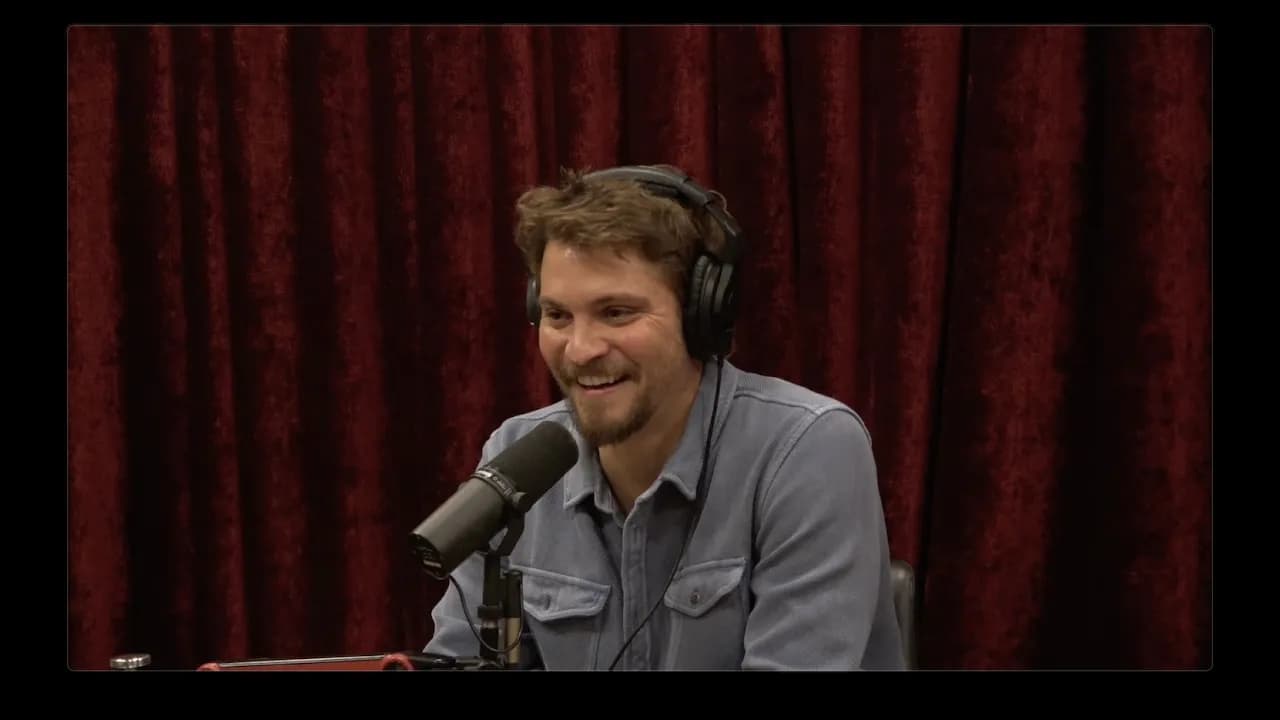
Joe Rogan Experience #2489 - Ryan Bingham
In a Nutshell
Joe Rogan and Ryan Bingham discuss Bingham's transition from bull riding and ranching to music and acting on **Yellowstone**, emphasizing how rugged outdoor experiences—like Montana guide school, hunting with Remy Warren, and survival skills—build resilience, reconnect people to nature, and fuel authentic art. They critique wildlife mismanagement (e.g., wolves preying on livestock, urban mountain lions/coyotes, invasive pigs), California's overregulation, wildfires, and exodus to Texas/Montana, while praising Texas's supportive music community and the therapeutic power of horses, music, and manual labor. Bingham shares career advice: persevere with grit, protect songwriting as therapy, ignore fame traps like Oliver Anthony did, and play live anywhere—real talent endures.
These notes were generated by AI and may contain inaccuracies.
Joe Rogan praises Ryan Bingham's performance at the McConnaughhey event last year, noting it was his first time seeing him live. Bingham was relaxed and created a comfortable chill vibe for the crowd. Bingham appreciates the feedback, mentioning it sometimes takes him a minute to get into the groove.
Rogan highlights the cool singer-songwriter event and auction event hosted by McConnaughhey, praising the good people involved. Bingham expresses appreciation for the Austin and Hill Country community that supports songwriters and music, crediting it for his career. When they get behind something, it feels good to see that many people come together with support. Rogan agrees Austin is a positive place with real people, preferring it over California.
Bingham is in the process of moving back to Texas from Topanga Canyon, LA, where he's been for years doing the Hollywood thing. Crossing the state line into Texas lifts a weight off.
Rogan compliments Bingham's cool character on Yellowstone, saying it must be fun to play. Bingham enjoyed it, describing it as one of the easiest jobs: smaller role, working 1-2 days a week, then fly fishing and disappearing in the mountains. Rogan notes Montana's awesomeness but mentions the show drove many people to move there, leading to resentment toward California plates—people write on hoods or run them off the road. Montanans are proud and protective. Rogan jokes it's not the United States of Montana.
Bingham notes Texas is more inviting and friendly with diverse walks of life. Montana's toughness comes from surviving harsh winters historically and still fighting for it, as highlighted in the Yellowstone series including older ones with Harrison Ford, explaining the history of how it started with people surviving by fireplace.
Rogan loves mountain men stories like Jim Bridger. Mountains get into your bones and blood; it's spiritual, nature's most potent art—stunning, overwhelming, like a drug with blue sky, clouds, mountains, lakes. It hits your DNA as a fertile, life-giving place exciting natural reward instincts.
Several years ago, Bingham attended a six-week hunting guide school at Royal Tine Outfitters in Montana—mule packing, backcountry skills. Grew up cowboying and ranching but first time deep in those mountains. Inspired by daydreams with his dad watching Lonesome Dove. Overwhelmed with music career, signed up; life-changing with six students. Spent weeks packing mules and horses, sleeping under tarp tied between trees, posting watch over horses. One June morning, woke to snow falling on horses' backs—moment of "I don't know if I'm ever going back; this is where I need to be."
Civilization weighs you down; nature lifts it, making you feel normal. No phones, distractions—senses heighten: eyesight, hearing, smell. Entered with full backpack, left needing only scissors and fire starter.
Rogan follows Clay (lives in Alaska, trips across lower 48), who lives solo in harsh environments with dog sometimes. Starts fires, gets food, purifies water—including distilling salt water using bamboo and fire to evaporate and drip fresh water.
Guide school included wilderness first aid (paramedic taught), leather work, shoeing horses, fly fishing, entomology. Memorable fire-building drill in wet, snowy conditions: 2 minutes for 3-4 foot flame. Bingham struggled with twigs; Alaska kid used big dead pine branch with needles, lit massive fire in 5 seconds. Instructor emphasized need for quick fires if guiding injured/elderly in snow.
They taught flame with pitch wood from pine trees, some bow and wood drill (hard, especially in wet/snow).
Rogan recalls Boy Scouts: bow drill took hours, need technique—stick to base with hole for embers, saw hard, better with bow or hands blister. Fritos make great kindling due to oil, burn like candles.
In Alaska with Steve Rinella, Brian Callen, Ryan Callahan—raining 5 days, one 10-hour dry stretch. Used Fritos and semi-dry wood under trees to start fire; happiest ever. Wetness penetrated tents/sleeping bags; middle-of-night piss revealed mist everywhere.
Six days on Prince of Wales Island (bush plane to pond); left early due to storm. Pond water pure (rain, too high for beavers, no giardia).
Bingham to Alaska in winter for skiing, wants to hunt/fish. People rugged from harsh conditions, bears, moose. Rogan: 11 p.m. still bright; people cool, friendly, community-oriented—you need each other. Car breaks down, someone stops; not like California. Neighbors help with backhoes/tractors if bridge washes out.
Misses Texas community: neighbors help with fences, tractors cheaply vs. California costs. Grew up stacking hay as summer job. Farmer strength real; used leverage as little guy. Last time: hungover college in July, stacking hundreds of bales in 110°F barn in Glen Rose near Stephenville, TX—decided last hay job.
Rogan: manual labor jobs show what you don't want, build work ethic, satisfaction from hard work—but find way out. Bingham: guitar felt better than shovel. Rogan: one summer installing fiberglass insulation—no masks, itchy, in skin/eyes/pours, breathing it.
Drinking from hose builds resilience (copper minerals). Granddad lined up jobs at 12-13: mowing lawns, building fences. Enjoyed company, beer stories after. Knows skills now for own place, loves projects. Younger guys clueless on fence posts.
Viscerally appealing: simple difficult life on Yellowstone. Awakens ingrained survival instincts dormant today. Planting garden wakes it. In genes as pleasing, satisfying life. Like mama bear energy with kids—wakes survival instinct.
Getting into nature wakes up inner vitality and puts a spark back in the eye. Staying in tune with that is key. Shows like Yellowstone appeal to people who never visit those areas, making them want to live that lifestyle. Horse prices have skyrocketed—trail horses now cost $50,000, up from $5,000. Keeps a few horses for the kids, enjoys feeding them carrots, brushing tails, and being around their energy in the afternoons. Youngest boy has a special mojo with animals; at age three or four, he'd pet the ears of old mule Honey (massive with big ears) in the pasture.
City kids anxious around horses or dogs for the first time due to their size, but after 20 minutes petting or sitting on them, they relax and the energy slows. Magical to watch. Primal relationship between people and horses. Equine therapy used for addicts, heavy anxiety, and depression—hanging out with horses helps. Even gets depressed sometimes but being around horses in the barn relaxes him. Touching their head, making eye contact feels like looking into the soul. Ancient bond: horses helped humans survive, and humans cared for them. Baked into DNA from thousands of generations surviving on horseback—only way to travel faster than running.
Around horses, it reestablishes the connection: "Ah, my friend. This is my friend." Wakes it back up. Nature stuff is innate, why people watch shows like Clay Guy or Steve Rinella's MeatEater with kids. Friends with Remy Warren, who became neighbor in Montana during Yellowstone filming.
Filming in southwestern Montana; stayed far out in West Fork area on edge of massive wilderness into Idaho. Road went from paved to dirt, got a cabin with no Wi-Fi. Met locals, Remy down the road toward Sula. Hung out, stomped mountains with him—cool dude. Ideal for remote places like Alaska. Remy knows how to get around.
Remy's shows: Solo Hunter where he films everything himself—carries tripods, sets up cameras to capture animal before shooting, films approach and execution. Complicated. Beast to keep up with in mountains; has mountain cardio, hunts 200+ days a year plus guiding. Went to Hawaii for axis deer hunt—got a buck, then Remy ran back to camp in dark after steep day, beat truck by half hour as workout.
Axis deer introduced to King Kamehameha in 1800s from India; 30,000 on Lai with only 3,000 people. Hunt bow hunting while staying at Four Seasons. Remy tracked red clay everywhere, fridge full of meat with blood dripping—had to switch hotels. Area former Dole pineapple plantation; layers of dirt over plastic-like material (like Hefty bags) to keep moisture, disconcerting—not natural feeling.
Mountains have old World War II turrets. Hunting axis deer surrounded by ocean. To control population, suggestion of bengal tigers—they evolved around tigers, so fast, jump strings incredibly. Video of 80-yard bow shot at 275 feet per second; deer hears arrow within 10 yards, dodges—arrow lands foot behind. Best time to hunt: afternoons when windy covers sound; mornings rough with blown stalks due to high brush. Find pinch points; they bark weirdly. Better to stay put as they move constantly—tons of them.
Rifle hunting easy, best meat; bow hunting hard. Trip with Remy Warren, John Dudley, Cam Hanes, Adam Greenleaf—all pros, everyone got deer. Next year, 150 went, only one successful with bow. Hunted 365 days/year, no season; night snipers for restaurants/population control, no predators. Eradicated from Big Island to prevent crop/garden damage; plenty of wild pigs there.
Texas wild pigs: 3-4 litters/year, up to 6 piglets each, pregnant at 6 months. Disturbing numbers on hunting lease—hear them everywhere. Came on boats from Europe. Bad in California too, from William Randolph Hearst. Eradicated from Channel Islands; some had mule deer huntable (e.g., Catalina?). Buddy Matt hunted recently, but stopping it.
Channel Islands like Santa Cruz, San Miguel nature preserves—back in time, great for spearfishing. California eradicating non-native mule deer on Santa Catalina Island (2,000 introduced 1930s)—ground hunters by early 2026 to protect natives from plant consumption, fire-prone grasses. Let people hunt instead. Worry about conservancies: want to eradicate California pigs, Tule elk (actually larger Rocky Mountain elk from 1950s, e.g., Tahoe area, 400-inch bulls from Tahoe Ranch—biggest private ranch, 270,000 acres). Elk hang on golf courses in Tehachapi community, lying 20 yards from players.
Saw 30 elk along coast near San Francisco. Love unexpected wildlife. Recent wolf in Los Angeles County—first in century, born 2023 in Plumas County, traveled 370+ miles including State Route 59 near Tehachapi. At least 60 wolves in state; one crossed from Oregon 2011. Wolves travel 500 miles. Reintroduced 1990s from Montana, Wyoming. Mountain lions kill more deer because wolves steal kills—surround lion, it leaves for another.
Wolves brought to Aspen from Oregon where captured for killing livestock—dropped near ranches with cows, including friend's. Problem bears relocated to farm/ranch areas. Decision-makers don't understand wildlife biology. Wolves programmed to kill cows.
Wolves know exactly how to prey on fenced-in cows that taste delicious and find it easy, so they have no reason to stop or chase tougher prey. Ranchers must monitor cows 24/7 with cowboys on horseback patrolling all night for wolves. Wolves have killed dozens of cows. These ranchers have survived on the land for generations, managing wildlife, so they should be consulted on handling it. They advise not letting wolves in initially, and if needed, killing them. Now something must be done. A hunting limit might help, but better to hire someone to recapture them and not release in Aspen, where they'd eat poodles and golden retrievers. Wolves eat dogs in Alaska frequently. Similar to lions coming after kids, like incidents in Malibu Creek Park.
Old, hungry mountain lions unable to catch deer target kids near woods. Speaker has a massive mountain lion visiting his house via game trail camera near a fountain; it lays on the front porch when he's away but avoids when dogs are present. Friend saw one jump fence into driveway at lunchtime with dead rabbit in mouth. Always aware lions could be watching from trees. Living with monsters. California spent over $100 million on a mountain lion bridge over the 101 freeway toward Ventura, still not done until early 2026. It's a dirt and grass mound nicer than human roads, but goofy. State refuses population control, hires people to capture problem lions, then kills them. Their diet is 50% pets—dogs and cats. Instead of spending money chasing them, issue hunting tags to control numbers and make money. At Tahone Ranch, trail camera on pond caught 16 different mountain lions drinking.
Coyotes spotted in Hollywood, even running down streets. First seen in 1994 at Oakwood furnished apartments near LA—temporary housing like Airbnb with couch, TV, bed. Saw coyotes mistaken for little dogs wandering streets; shocking as they'd never heard of coyotes on concrete. They're everywhere, more in town than wilderness. Large populations downtown, denning in abandoned warehouse buildings, under bridges and freeways. They keep rat populations in check, and cats too. Video from Woodland Hills: coyote grabbed toddler from grass next to car while dad unloaded, tried running off with kid. Always watch for them around kids; they're not scared. In Ojai north of LA, archery shop owner (big overalls, beard like Charlie Daniels) warned against taking Australian shepherd dog hiking due to real-deal lions: "You won't see them until they're on you."
Wildlife lovers and greenies downplay dangers to avoid alarms and killing. Goal is zero hunting, letting animals balance naturally—not possible with humans present. Cities plus 70 lb predator cats killing dogs require control. First step to stop hunting: ban dogs. Without dogs, hard to find or tree mountain lions for accurate population control (distinguish tom, female, mature). Same for bears. California allows black bear hunting but banned dogs, so harvests dropped, bear populations rose. Bears around Pasadena, recent one in Tanga area after 15 years, possibly from Malibu Creek state parks.
Panga great but fire risk sketches out. Hit hard by Palisades fire last year; evacuated multiple times. Now has horses there, keeps big truck and trailer ready. Friends in Burbank have stables as backup. Saw Palisades smoke a mile away while working in arena, loaded trailer, truck, camper, dogs immediately to beat rush. Drove through night with howling winds snapping power lines, trees down—felt like end of world. Parked camper tight to cinder block wall in Burbank for wind block; woke with sore throat, hard to breathe—Altadena fire started, black smoke overhead. Headed to friends in Moor Park toward Ventura; power cut due to wind/fire risk. After a few nights, drove east to Texas with five horses and dogs, as friends accommodate. Over it; closed indefinitely.
Joe evacuated multiple times in California; last in 2018. Home from Comedy Store at 1 AM, saw fire over hill; wife said "Let's get the fuck out of here," grabbed essentials. Didn't burn their house, but front three neighbors lost houses; next-door roof caught but friend's refusal to leave allowed guiding firefighters to hose it down. Canyons burn for thousands of years; Chumash set fires purposely to control. Now houses and communities back up in there. Santa Ana winds make fires roll fast. Surreal driving 101 seeing hills covered in hundreds of yards of fire burning houses. During Palisades start, hiked local mountain, saw flickers turn to hundreds-of-feet flames like gasoline dumped. Told wife to pack while hooking horse trailer. Winds shifted: offshore initially ripping through Malibu coast (thought safest), then onshore toward Burbank, then across.
Firefighters, helicopter pilots, tanker pilots incredible; saved Tanga canyon despite accumulated brush. Hats off cutting fire breaks, dropping retardant on ridgelines amid wind. Met helicopter pilot who explained thermals, holding heavy helicopters full of water in formation, power surge after drop in 90 mph winds. Coordinated: helicopters drop water, planes retardant, ground crews contain. Reservoirs not ready—devastating incompetence. Spencer Pratt (running for mayor) explained how bad. Fires happen every few years; inexcusable not to have full reservoirs. Residents more prepared: coordinate hoses, pools, evacuation plans, horse trailers. Freaked by Palisades toxic ground: electric cars, old houses with asbestos, lead, burnt electronics, TVs, computers, refrigerators, treated lumber seeping into groundwater via rain. Air still hurts throat weeks later. Many on septic, wells in Tanga. Buddy replacing backyard dirt after house burn, but neighbors' toxins spread on rain.
China top land buyers in Palisades. Wonder long-term chemical damage. Channel Islands oil platforms caused spills; oil sheens on surf from millions of years. Mother nature dilutes over time, but bad for people short-term. Residents can't depend on state; have programs ready.
Frustration with California's excessive government growth and regulations driving people away. Government increased by 24% while population rose only 1%. It's expensive to live there despite being paradise with Sierras, beaches, Yosemite, Kern River, incredible weather—ski in mountains and swim in ocean same day. Progressive politics and bureaucracy ruined it: banned flavored zins, blackjack in casinos. People want to be "the mommy of the world" with rules to justify bigger government.
Running out of places to escape to. Looking for hideouts like West Texas or Montana—don't tell anyone. Montana and Wyoming winters thin the herd. West Texas (Marfa area): ranches, local diners, junior rodeos; newcomers from New York leave after a week when only Dairy Queen open at night.
First hunting trip with Reanella: 9° in October, camping on ground, mule deer on table. Old homesteads from government land giveaways—not fertile, mucky clay soil. Eerie abandoned sites from 1800s families who tried farming, maybe killed by Indians. Bingham's family settled New Mexico in covered wagons with steer and pig, lived in dugouts, proved up land. Grandparents stopped in dry, flat, rough spot instead of pushing to California—miles of desert ahead. Wagon trails took weeks; rough country, sitting ducks for ambush from hills. Cowboy life was survival, no romance—no running water.
Granddad, real cowboy, said refrigeration most important invention—not computer or internet. No way to keep food cold except root cellars. Had to eat daily catch; ice houses rare. Learned to dry meat, pemmican. Market hunting nearly wiped out deer early 1800s due to need for fresh meat daily.
Regulations began with colonial laws in 1600s (seasonal closures for deer). First federal: Lacy Act of 1900 targeted market hunting, interstate trade in illegal wildlife. By 1900s, states had game commissions, seasons, bag limits, licenses. Wiped out elk from every state, bison nearly extinct (pickled tongues shipped east). Steve Rinella's show/book American Buffalo covers bison history. Now more deer than ever. Amazing U.S. public lands for hiking, rafting, fishing, hunting, camping—unlike any country.
Montana, New Mexico, California public lands. Stayed in small cabin with thousands of acres wilderness, dirt roads. Drove miles, hauled horse to trailheads, explored ridges, waterfalls, drainages—beautiful as national parks.
No grizzlies encountered, but alert—Remy advised few in area, possible from Idaho. Saw black bears, no wolves; horseback may deter. Push to relist grizzlies, limit hunting in Montana/Wyoming despite abundance. Locals need to protect against maulings (trash, backyards). Animals don't play by rules—900 lb eaters. Mountain lion at house: fine elsewhere, not backyard. In Texas, can shoot them; keeps numbers healthy, teaches respect. Laws protect animals over people—team people first. Ranching/farming: animal husbandry, provide food, care for land, water, grasses.
Urban environments create delusional view: food from restaurants, ground for streets/sidewalks. Rural/Alaska folks more robust, interesting, confronted by nature.
Rode steers at 10 in junior rodeos—like baseball where grew up. Steers: bulls without nuts, 600-700 lb, docile vs. 1500 lb bulls. Photo at 17 in Monterey, Mexico—got off without stomp. Know when to release, avoid gray zone under bull. Parents ranched; uncle pro bull rider—inspired early. Progressed: little steers (dad/uncle held horns), junior bulls, bigger. Pre-PBR: no helmets/vests, old school. Now bulls bred like racehorses, ranker; rodeos full events, fewer bad bulls then. Smoked, drank, no yoga/training. Loved road trips, buddies, bands, culture. Rode 10-23: junior rodeos, high school, Tarleton State (Stephenville), pro card as PBR started. Intense, once backwards.
Natural progression: junior rodeo dances, street dances, bands (Gary P. Nunn, Robert Earl Keen). Moved to Laredo at 16-17; mom bought guitar. Old Mexican taught La Malagueña (mariachi)—fingerpicking, strumming foundation. At Tarleton, saw Jason Boland, Cross Canadian Ragweed, Pat Green, Robert Earl Keen at City Limits bar—original songs. Learned chords from book, wrote about weekend adventures in truck (no radio). Buddies requested songs.
Worked for Mac Altizer, Buck Company Rodeo in Del Rio—ranch, rodeo help, still riding. Played afterparty flatbed trailer, hospitality tent. Spilled to bars; got gigs as bars asked if Bingham brought guitar.
Ryan Bingham shifted from bull riding to music after making $100 in tips and getting free beer and food in a couple of hours at bars, which matched his daily shovel work earnings. He decided to stick with music due to the supportive Austin and Texas community that encouraged live music. Places like the rodeo company with Mac, Dave Jennings, Casey, Smur, and the Bad Company crew had a house band vibe where everyone played songs regardless of skill.
No formal musical background or lessons; learned on the road in bars from other musicians. The guy who gave him the guitar taught him La Malagueña, then picked up chords from anyone with a guitar.
Started playing at 22 in Stephenville as Ryan Bull. Moved to New Braunfels in Austin area, then Los Angeles, toured with band for 4-5 albums over 5-6 years. Was 36-37 when Yellowstone started.
No prior acting. Did film Crazy Heart with Jeff Bridges, wrote songs, played backup band at bowling alley scene. Wrote songs for other films and TV. Met producer John Linson (and dad Art Linson, did Sons of Anarchy) in LA. John introduced to Taylor Sheridan via Wind River (Sheridan's first movie); wrote a pre-existing song for it. Sheridan learned of Bingham's rodeo and ranching background, cast him on Yellowstone despite no acting training, saying >"if you suck, I'll kill you off; if you do good, I'll keep you on."
Role as cowboy allowed playing himself with complexity, emotional and deep scenes. Credits co-stars like Cole, Kelly, Luke for creating environment; their skill makes reactions natural.
Still not fully comfortable; channels anxiety from bull riding into "go time." Uncle taught mental toughness: >"it's all mental... I know I can and I will... not cocky, just confident, mind over matter."
Rode bulls over a decade; uncontrollable, enormous beast, choosing to scare yourself. >"If you can ride a bull, you can do basically anything." Valuable life lesson despite risks. Compared to music: both low success ratios.
In Weatherford, Texas at Butler Arena on little hornless Angus bull. Stock contractor warned it spins right in gate, unridden past 3-4 seconds. Rode through spin, bull stopped frustrated, Bingham spurred to dismount, bull jumped straight up like a cat, jerked him down, headbutted, hand caught in rope, dragged and stomped. Knocked out front teeth (all fake now), lip hanging by thread, teeth through lip. Didn't pass out. Bull fighters helped; refused ambulance due to no insurance, drove to ER in Weatherford, then Dallas trauma/oral surgeon. Shock wore off, took pain meds, stitched lip, gums, cleaned dirt/hair. Months of dental work, posts/implants; scar visible if shaved.
Riding bulls with no insurance built perspective; music with truck/camper, no bills, $100/night felt like dream. Music business and touring easier after rodeo van life.
Path feels engineered: ranching, bulls, music led perfectly to now. Luck plus hard work and good people who gave gas money, places to stay, gigs. Helped by chopping wood, washing dishes, mowing lawns for gas. >"If you're willing to help yourself, people will help you."
Bull riding, ranching, hard labor shaped character to capitalize on luck.
Cowboy bull rider sings songs, encouraged professionally, then cast on TV hit. People doubt authenticity, think it's made-up; like stolen valor for cowboys. Bingham wore cowboy hat constantly early on.
No big Americana scene; only one in hat in NY/LA. At Santa Monica Pier, one-man band mocked him over mic: >"Oh, Brokeback Mountain," tourists laughed.
Excited by new bands, young folks on real instruments vs. electronic/DJs. Giant country comeback; loves Zach Bryan's I Guess I've Been Bull Riding Too Long (Open the Gates?) as great bull riding song. Charlie Crockett: street performing vagabond who caught on. Appreciation for authentic lives wearing experiences on sleeves.
Fear people like Bingham (bull riding, ranching, bar singing) fading; romantic, exciting to meet real ones. Unusual: rode bull at 10, not playing with GI Joes. Early difficulty accustoms to fear, anxiety, nerves. Mark of a man: ability to handle high stress and keep it together.
Riding a bull at 10 develops character that allows you to do anything in life. Most men see that and wish they were like that.
Ryan Bingham remembers transitioning from riding steers to big bulls at a junior rodeo in Odessa, Texas. It was his first year riding junior bulls. His uncle was with him. The bulls were massive with wide backs and horns sticking out of the chutes, but they didn't buck hard, just jump-kicked. He was scared and in tears. His uncle said, "Man, whatever you want to do, you want to pack it up, we'll get out of here right now. This is either for you or it's not for you." He suggested taking 20-30 minutes to think. Ryan walked around, knew he'd regret not trying, had dreamt about it, and loved it. He decided, "No, I'm going to do this."
He put his rope on, got support, gate opened, bull turned and jumped out docile. Rode two or three jumps, fell off, felt like "I'm the king of the world." Declared, "I'm a bull rider now, not just the steer rider kid." After that, craved it: "the higher they jump, the faster they spin, the better I like it. Just dirty rank. Run them in there. Let's go."
At 14 or 15, guys started breeding bulls for PBR with breeding programs. Used to practice on old farmers' 2-3 old bulls that just jumped around, not dangerous. Then young bulls, yearlings that bucked, needed test pilots. Ryan was the test pilot. Bradley Raspberry in Brownwood had 10-15. Ryan could ride well young, no fear, got on 10-15 a day. Young green bulls half-wild, flipping in chutes. They'd test which bucked, keep those, discard others. Wilder in chute, more aggressive Ryan got: "Okay, that's what we're going to do. Come on. Let's do this."
Wild bulls like scrub bulls, most dangerous animals. Buddy Adam in Australia encountered scrub bulls—wild domestic bulls that got out, bred many generations, now completely wild like deer. They run after you.
Knew Lance Kelly and brothers from North Queensland, Australia, lived in Stephenville (cowboy capital). Lance went back summer, videotaped VHS camcorder duct-taped to body on ranch. Chased wild cattle on four-wheeler with brothers till tired, knocked down with pipe, tied legs. Brother winched into trailer with truck. Ryan saw footage, thought coolest thing, wanted to go.
Australia bigger than US, fewer people than Los Angeles. Everything kills: snakes, saltwater crocodiles, great white sharks. Hardy people. Texas and Australia kindred spirits.
James McCann, comic from Australia, on podcast yesterday, lived in Austin couple years, misses it: "Mate, I miss it so much. No place like this."
Surviving things puts life in perspective: what's an emergency, life or death. Laugh at stuff. Love comedians joking about serious things: "God, we need that so much." Comedy is important service, medicine—feel better after good show. Puts life in perspective through different lens: "We're probably going to be all right."
Comics experience heaviest stuff to tell jokes/stories, educational. More than just a joke. Some do just jokes, depends on style. Richard Pryor explained life, told stories with humor. Leave feeling united, better, voicing what everyone's thinking but afraid to say. Wise hilarious perspective. Felt better, hope in humor.
Hope in music too. Music like a drug: good song hits, changes mood, excites senses/consciousness/feelings. Examples: Radar Love by Golden Earring, Free Bird guitar solo.
Therapeutic for Ryan: wrote first songs, got stuff off chest, changed him. Tool to heal, express uncomfortable things via song to wall, get out. Way for people to hear without annoying: sad story in person = "Grab me a river, kid. Everybody's got a story." Sad song = beautiful, real emotion. Loves good sad songs, e.g., Colter Wall's Kate McCall (Jamie sent it). Colter Wall gem, 21 when made it, sounds 58-year-old smoker. Still works ranch, great guy, favorite younger artist. First heard songs: "Who the fuck is this?" Saw picture: kid. Wicked Bird similar reaction.
Internet easy to share: YouTube/Spotify link to buddy, "Bro, check this out." Half songs from friends. Add to playlist instantly, no record store. Easier to record, no million-dollar studio, can do on phone.
Oliver Anthony: one song, first show 18,000 people. Ryan: couldn't have done that starting out, not prepared. Joe: settled easy, smart. Ryan feels for him.
Used to learn by ear from record, rewind. Now YouTube shows every note/finger placement. Learn quicker, handle crowds. Like UFC/martial arts: watch every fight ever, practice/improve young.
Ryan rudimentary player, 2019 tour prepping Charlie Sexton-produced album (Charlie legend: Beat So Lonely 80s, young then, Dylan Infidels/Street Legal? Charlie advised listen to favorites, not note-for-note, develop style. On road, YouTube favorite musicians/guitarists, blues lessons for kids. Memorized fretboard notes, fun, confidence to jam, know keys. No prior lessons, 3 weeks YouTube stepped up guitar 20 years in.
Positive: access guitar lessons. Oliver Anthony's Rich Men North of Richmond no production, 236 million YouTube views. Wife played first, Ryan: "What the fuck is that? So fucking rad." Saw live with band, fantastic, settled into fame, still same dude. Met early, phone call: freaking out, hit up by people offering money/contracts. Advised: "Don't sign nothing. You don't need nobody. Don't get locked in contracts. Talent #1, you have it. Keep making songs, can't lose. Avoid vampires, court battles." They say strike while iron hot—"Fuck them." $7M offer (they make 14), don't need, get all money yourself, make own records. Buy low sell high. Not missing opportunity, especially young/talented/good.
Woman Scorned new, post-breakup, hits bone marrow.
Oliver: sold heavy equipment, fed up, videoed song, boom.
People ask best young songwriter/musician/guitar player: probably 16-year-old in garage nobody heard, ready to crush.
Romantic stories like Ryan's, worry no more in digital/AI world vs. pure unencumbered life.
Ryan fortunate in mid-20s Austin: met Joe Ely, Terry Allen, Guy Clark, Steve Earle, legends. Thought last guys left. Many young folks crave it.
Audiences crave live music and want to hear it played; they're interested in feeling that energy. Despite changes in the world, including social media's complexities, the focus should be on keeping with the flow, writing songs, and making music. At the end of the day, if everything else disappears, you can always set up on the sidewalk with a tip jar and play—someone will stop and appreciate it.
Charlie Crockett started out that way. There are gigs in bars where you're tolerated rather than celebrated—my wife says, "Go where you're celebrated, not where you're tolerated." In those cases, park in the parking lot across the street, sit on the tailgate of the truck, and play; people will have a party over there.
Music is unique—you can set up anywhere without contracts or deals. With a guitar, your song, hold on to it and protect it ruthlessly. Songwriting is therapy; that personal part is more important than selling albums, concert tickets, or touring. What music provides is sitting alone at home, letting it pour out, singing to the wall—that's what saves lives, not the rest.
Stories like this inspire young songwriters and singers to grab a pad, pick up their guitar, and start writing; they get excited and dig in. Mentors like Terry Allen advised: just keep writing, hold on to what made you want to do it in the first place, protect it. The rest will always be around and change, but a good song survives and finds its way—like the song with 200 million listeners; it'll find its way into people's hearts.
It's important for people like you to tell your story—it's fuel for others.
Thank you for being here; it was a lot of fun. To find performances: check ryanbingham.com or binghammusic.com for all dates. On social media everywhere—pay attention mostly to Instagram, but it's overwhelming and robs time. Trying to get away where all that stuff is turned off—that's where I find myself.
Thanks, brother. Appreciate it. A lot of fun. Thank you. Bye, everybody.
Keep PowerfulJRE in your library
Save the videos and channels worth coming back to, and find them again in one place.