Joe Rogan Experience #2475 - Andrew Jarecki
In a Nutshell
Joe Rogan and Andrew Jarecki expose Alabama's prison horrors in *The Alabama Solution*, revealing uninvestigated deaths (1500+ since filming), guard brutality (e.g., Rod Gadson promoted despite killings), rampant contraband drugs/phones smuggled by underpaid guards, forced slave labor, and systemic corruption funneling billions into new prisons amid DOJ-ignored abuses. They critique the profit-driven prison-industrial complex warehousing nonviolent offenders and mentally ill as "human batteries," contrast it with elite impunity like Robert Durst's (*The Jinx*), and advocate transparency, rehabilitation (e.g., Doe Fund, Maine models), root-cause investments in poor communities, and nuanced justice over binary tough-on-crime policies. The film sparks outrage, protests, and bipartisan reform bills, highlighting how secrecy enables cruelty while contraband videos prove inmates' humanity.
These notes were generated by AI and may contain inaccuracies.
Joe Rogan watched Andrew Jarecki's documentary The Alabama Solution and found it wild, disturbing, and heartbreaking. He was shocked he hadn't heard more about it given the terrible story and praised the coverage.
Jarecki notes people drive by prisons seeing signs like XYZ Correctional and assume conditions aren't great but nothing terrible happens, due to secrecy treating prisons like black sites. Press isn't allowed in, public doesn't know what's happening. When people have total control over others, bad things happen.
Joe: Bad things happen every single time.
Rogan highlights the terrifying number of deaths with no investigation, detailed at the film's end: thousands since then. Alabama Attorney General Steve Marshall runs on tough-on-crime platforms, advocating locking more people up, especially violent offenders never getting out. Marshall calls some people evil with no regard for human life, yet presided over a system killing 1500 people since filming started.
Discussion on nature of cruelty, punishment, rehabilitation vs. warehousing drug addicts and mentally ill. Prisons are catchalls for society's ills. Mentally ill more likely to go to prison; once in, more likely to clash with untrained guards and get murdered, as seen in Alabama.
Who's going to watch the watchers? Nonviolent people writing and reading about terrible conditions face retribution. Robert Earl Council (guy with glasses) beaten blindly for leading nonviolent efforts.
Inmates get contraband cameras and phones from guards who sell them. Massive drugs in Alabama prisons; 80% addicted, many not before entering. Inmate explained: "We don't leave. The people that come and go are the guards." Guards earn $36,000/year base, sell drugs/phones to make $70-75,000.
Main drugs: Originally heroin, now flakka and fentanyl, smuggled on paper like acid. Efforts to stop mail drugs hinder family communication. Easiest way: guards sell them. Alabama Department of Corrections is the state's largest law enforcement agency and biggest drug dealing operation. More likely to die of overdose inside Alabama prison than on LA streets statistically.
Prisons went on strike, communicating via contraband phones from guards—ubiquitous issue. Radio commentators said, "It's prison. It's supposed to suck."
James Sales: Got 15 years for entering an unoccupied/abandoned building (no theft, possibly open). Inferred killed a month before release via hot shot (cigarette laced with something deadly), bleeding from orifices. He had too much information, frustrated guards near release, threatened to speak out.
Inspired by book The Sun Does Shine by Anthony Ray Hinton (wrongful imprisonment). Jarecki and 14-year-old daughter road-tripped to Montgomery, met first Black prison chaplain Chaplain Browder, entered prison as non-filmmaker. Later filmed revival in one prison with five cameras (unheard of). Inmates pulled them aside: curated view; see behavior modification dorm (guards killed guys), solitary for 5 years.
Felt safer with inmates than guards (warden called inmates dangerous). Kicked out after getting nosy.
Discovered inmate network with contraband phones documenting abuses.
Melvin Ray texted about violent guard beating someone; went to UAB hospital, found Steven Davis died.
Visited Sandy Ray (Steven's mother, white lady from Uniontown, AL with oxygen tank), who turned off life support. She joined film to prevent other mothers suffering. Taught her to record calls; officials lied immediately (claimed Steven attacked guards).
Steven: Drug addict in car during bad drug deal (friend shot someone inside house), charged with murder via felony murder statute. Highest security prison, beaten to death by guard Rod Gadson in front of 70 witnesses.
James Sales initially told police version to Sandy Ray's lawyer, hinted real story post-release. Likely monitored (even attorney calls); decent person, killed for potential truth-telling.
Knew issues from volunteer visits: Holman (death row), Easterling. Understaffed; walked death row 2-3 hours talking to men trying to get story out. In Easterling, inmates reported beatings causing defecation, unreported stabbings.
Guards provide phones exposing their crimes, ignore them due to no accountability. Rod Gadson (possibly most violent guard in America, implicated in 24-25 excessive force cases, 2 deaths) beat Steven Davis, promoted twice, up for another. Still employed post-documentary seen by millions.
Not all guards bad; some entered to help with addiction/rehab but found otherwise.
Steven had plastic improvised knife after being called gay (must fight or risk rape). Laid down 15 feet away, no threat, but guards (Gadson) beat him yelling "quit resisting" despite compliance (all witnesses confirm). Stomped head with size 15 boot (6'5", ~300 lbs). AG defends him every time.
Robert Earl Council: Lost sight in one eye from guard attack during nonviolent work strike.
Inmates leased for labor: governor's mansion landscaping (even denied parole). Sent in vans to work at McDonald's, Burger King, KFC, Hyundai plant.
Incarcerated people work at the Budweiser distributorship under the guise of community engagement, but it's forced labor. Refusal leads to punishment: long stays in solitary confinement, disciplinaries extending sentences, or beatings. This mirrors convict leasing from Jim Crow laws—exactly convict leasing—selling incarcerated labor to industries for pennies on the dollar.
Prisons get paid well, but prisoners receive little. Danny Dandridge, driving a sanitation truck, gets $2 a day. This applies to plant work and everything else. Prisoners are charged for the van to the workplace and uniforms, reducing pay to almost nothing. Much prison work is unpaid, including construction. In the drug dorm, funded by federal money for treatment, professional counselor Raul P. runs it unpaid after the counselor left; funds go into prison system coffers.
No meaningful accountability for prison money. State auditor admits inability to track it. DOJ investigated entire Alabama prison system—unprecedented—finding horrific conditions: murders, highest drug overdose and rape rates. Alabama dismissed it as anecdotal, responded by building new prisons (ironic film title reference). DOJ identified corruption, brutality, criminal enterprise; recommended addressing root problems, not new builds. Instead, Alabama builds, benefiting construction industry supporters. Called "Alabama Department of Construction."
Alabama, smaller population than Norway with tiny budget, funds multi-billion dollar prison plan. New prisons won't reduce overcrowding (200% capacity); DOC head admits same number of beds. Governor used COVID money (not for prisons), faced fines. Construction started pre-legislative approval: crew filmed 25 earth movers clearing bean fields for one prison despite no approval—"the fix was in." Initial $900M for three prisons; first now at $1.3B (from $300M), blamed on inflation.
Institutionalized thievery. Organized crime—when in charge of deciding what's crime in a state like Alabama.
Money perverts justice system. Jinx series: Robert Durst family worth $9B; killed three over 30 years, walks free. Contrast: Brazos County Jail women jailed for stealing baby formula (Jeff Ross documentary).
Private prisons like Geo Group, CoreCivic profit from full prisons. Service companies (Cisco food) also benefit. CoreCivic CEO Hener on shareholder call: with new immigration prisons, law enforcement emphasis, "most exciting time in my career."
Securus (Tom Gors, Detroit Pistons owner, $10B private equity): prison communications. Deals with sheriffs replaced in-person visits with video terminals ($12.99/20 min), even if family nearby. Contract explicitly required eliminating in-person visits, exploiting for profit.
When for-profit motive drives state institutions, system designed to exploit.
Darker human nature: unchecked profit opportunity at others' expense leads to exploitation, amplified in corporations via diffusion of responsibility—"just doing my job."
In corrupt systems, viewing people as "good" minimizes guilt. Org charts create thousand points of responsibility; each takes tiny share (e.g., accounting dept). Like healthcare denials: "not my job."
Prisons maximize profit, not rehabilitation. Incentives twisted: profit if rehabilitated and contributing post-release would align better.
Money root of most evil—75%, 60% at least. Exists in all industries: military-industrial complex, health insurance, pharma (Sackler family opioids, Painkiller series).
Prison industrial complex devastates mental health: 2M incarcerated, daily trauma (witnessing killings, constant fear). Release with $50 and bus ticket: can't afford Red Roof Inn, high recidivism blamed on "bad people."
Families suffer anxiety. Positive developments exist with community support.
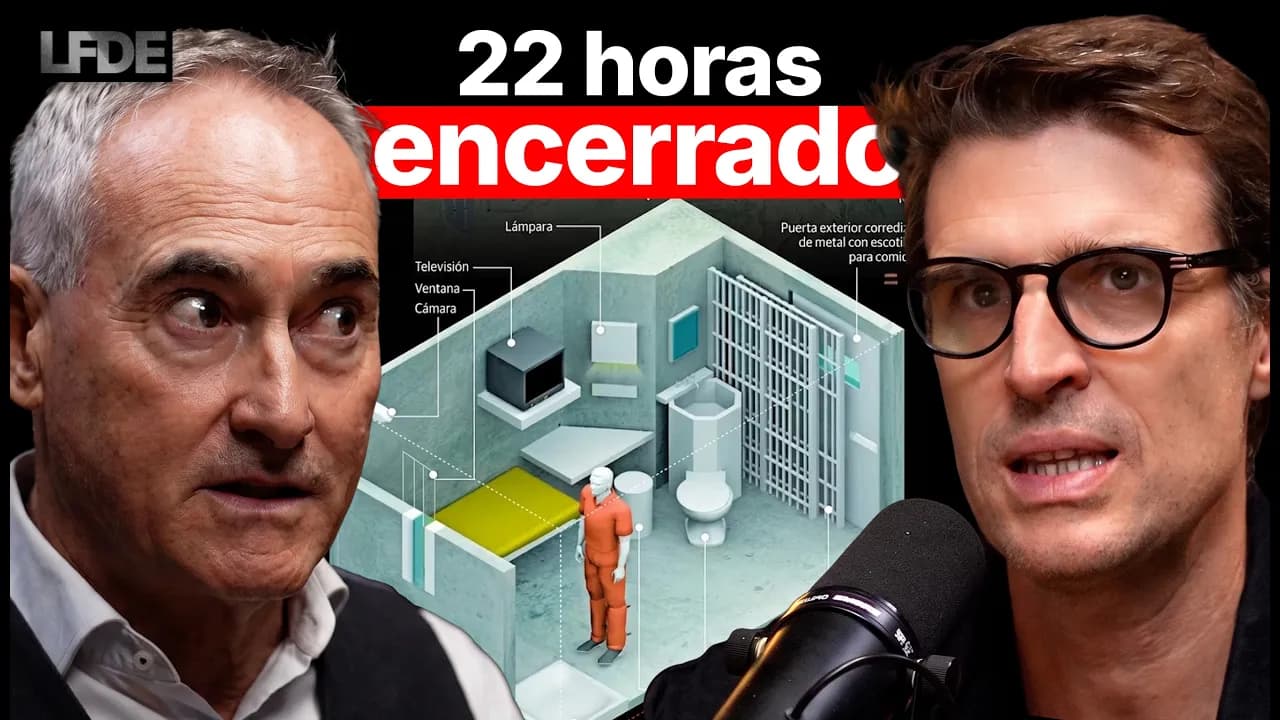
Erica (Alabama mental health professional): counseling in solitary (5x8 no-window cells, years-long) through tray slot on knees—absolute minimum, checking box. Blood-stained cells; only human interaction besides guards.
Torturing people in our community—what does it say about us, Christianity, God, forgiveness?
Joe Rogan: friend from kid martial arts (16-17) jailed, emerged muscled, tattoos burned off (keloid scars), violent "caged animal" in sparring—no holding back. Fought for life (e.g., broomstick vs. three guys), 3 years for drug selling, recidivated. Arrested re: body with every bone shattered (hammers), cocaine injections to keep awake, hands/head cut off—questioned, knew perps (drug-related), lost touch.
Fighting world attracts troubled, angry people from violent homes. Rogan from safe Newton, MA suburbs, drawn to self-betterment via scary competition. Trained hitman for Whitey Bulger (Irish mob organized crime figures).
A lot of those guys came and trained, especially because they knew some other guys that we knew. One of my friends was a professional boxer who lived in South Boston and was very tight with a lot of these guys. Some of these guys came to train with us and it was very weird exposure for me. I'd never been around any of that. I never had anyone in my family that went to jail. No one was a criminal. No one was a drug addict. Nothing really crazy. And then all of a sudden I was around a lot of these people that either went to jail eventually or had been in jail.
There's a role for prison, there's a role for jail. The question is whether we should be putting people into institutions that just further damage them, further retraumatize them, making them hardened. They're going to be worse criminals if they get out. There's no emphasis on rehabilitation. If you're releasing them back into the street, what are you doing to the rest of society? Taking a person who's committed a violent crime, making them way worse in jail, and then releasing them is like a slow release bomb. They have no options because no one wants to hire an ex-convict, especially someone who went to jail for aggravated assault. It's very difficult for these people and for society.
You want to make a quick fix, protect people, just keep them in jail. But there's zero emphasis on how to take a person from a completely broken childhood, broken home, violence, drug addiction in the home, all the chaos, complete accustomed to violent crime because it's all around you in your neighborhood. You imitate your atmosphere. And then what do we do with these people? There's no emphasis whatsoever. It's just using them as human batteries to generate money. And that's evil.
People have subverted the idea of incarceration being rehabilitation or correction. They call them correctional facilities. You're not correcting anything. You're just making money off of people, taking advantage of the fact that society looks at criminals who committed violent crimes as "fuck them. Push them aside." There's some people that I agree: fuck those people if they've killed a bunch of people, raped a bunch of people, constantly robbing people, breaking into houses violently. But that's a small percentage of what's in jail. A large percentage is non-violent drug offenders. That's where it gets really weird.
Society decides you can have the drugs that we sanction, that we tax: prescription drugs, alcohol from the liquor store (clearly a drug), cigarettes, coffee, Adderall. "Andrew, I think you got a little ADHD. Maybe you can use some speed and we'll sell you that speed and tax that speed." Anything else? We'll put you in a cage because you're not following our rules. A grown adult telling another grown adult what they can or can't do with their life is responsible for 50% of the people in cages. That's kind of crazy.
There's an illusion that everybody in prison for drug crimes or being an addict has been let out already. But it's not true. There's enormous criminalization of drug addiction. You make people feel hopeless, they turn to drugs, then you put them into cages. Steve Marshall, the AG in Alabama, says, "We've already released all of the nonviolent criminals. The only people locked in there are the worst of the worst." That's clearly not true, as shown by sales from the documentary.
He was put into a maximum security facility for entering an unoccupied building. There's inflation of the concept of violence. In Alabama, there are 44 different crimes considered violent crimes, including ones you and I would not consider violent: threatening somebody verbally (like in arguments), entering a building whether they steal something or not. It makes it easier to use them as human batteries or like the Matrix with 20,000 people in suspended animation for labor, selling them stuff, charging fees and fines.
Private prisons are a terrible thing. The founders of this country and writers of the Constitution understood how tyranny emerges and created checks and balances so one person couldn't accumulate all the power. Whoever initiated allowing and paying for private prisons didn't think through the incentives. People always figure out ways to make more money, justify it with rules, regulations, carveouts.
Prison guard unions and private prison owners actively work to keep laws on the books that the general public might not want illegal anymore, just to keep prisons full and make money. They use money from private prisons (human batteries) to ensure ridiculous laws stay, arresting people to fill buildings. Nobody saw that coming—or they did, short-term thinking: "This is a good business. We'll grow it like selling tires. Be number one in the human battery business."
How do you put that genie back in the bottle? State-run prisons like in Alabama function like private ones: deals with Securus for prison phone systems make millions extracted from the poorest people via high daily and per-minute fees. Companies sell food, health care contracts. State owns the land, but it functions like private prisons accountable to shareholders, not humane conditions.
Robert Earl Council (Kinetic Justice) in solitary: rats swimming in his toilet, rats in a water jar—11 caught in one night. He hangs food in a bag on the door, gets a disciplinary write-up. If on the counter, rats get it. Rats everywhere, crawling over him at night. He's one of the bravest people met: incarcerated at 19 for selling drugs. Someone tried to run him over with a car, he shot through the window, guy dies—30 years ago, should be self-defense. Now life without parole in Alabama.
He organizes nonviolent labor strikes, hunger strikes with contraband cell phone, knowing retaliation risks. Would be an unbelievable asset to society: advocates non-violence, smart, motivating. Entire prison listens to him over violence despite anger at treatment. Prison cuts food rations (birdfeeding) to force work back; he says that's not going to solve anything. Huge humanity, talent in locked-away people we assume are bad. Meanwhile, outsiders do worse without lockup.
Worked on Robert Durst story in The Jinx. Discovered evidence he killed his wife, best friend Susan Berman, neighbor in Galveston (dismembered). Found the only evidence proving it, dialogued with LA DA and LAPD on arrest. Even if not believing in current incarceration, role for prison—Durst keeps killing, needs removal from society.
Durst died in a Northern California facility for senior citizens with medical problems. Rich people hire consultants to navigate better prisons, negotiate conditions. White-collar criminals (stole $100 million, tax evasion, fraud) end up in prison farms, nice facilities. Poor people in rat-infested cells.
Made narrative film All Good Things (2010, started ~2005): Robert Durst origin story, relationship with wife Kathleen McCormack (from other side of tracks). Ryan Gosling as Durst, Kirsten Dunst as wife. Reached out to Durst via lawyer. Big New York Times article on accuracy pre-release. Durst calls distributor Magnolia Pictures president Eamonn Bowles (they imitated Durst's voice, "Bye-bye"). Real Durst calls, connects to Jarecki.
First call: arranged screening. Durst likes it despite showing killings—praised childhood explanation, Kirsten Dunst like Kathy, cried three times. Wanted to tell his story. Sat for 21 hours interview post-film release. Fascinating, incredibly honest about things most wouldn't: violent arguments with wife, offensive visit to her 80s mother (told her Kathy came out of shower, his penis was hard), lied to police about going to neighbors after putting wife on train (easy to disprove).
Candid, almost Asperger's level. Believable because mixes true facts with critical lies, but researched story caught them. Gave benefit of doubt to hear his version—he indicts himself, admits bad things, assumes guilt.
Durst ~early 70s first filmed, possible cognitive decline from hiding years. Compulsion to confess—not complete sociopaths reach point it's too much.
Famous note to Beverly Hills PD for Susan Berman murder: "1527 Benedict Canyon cadaver." Seldom happens. Speculation: Durst (her best friend) killed her, left note so body not left for dogs. Later denied knowledge. Investigation discovered a...
Letter written to Susan Berman with almost exact words as the cadaver note, addressed to her at 1527 Benedict Canyon. Handwriting sample says exactly what the cadaver note said, with same misspelled words, including Beverly misspelled with extra 'e'. Police hadn't known about this letter. Planned to show it to Robert Durst in second interview.
Durst had offered to sit down again and answer any questions. Became skittish when called for second interview; took two years. Consulted Marcia Clark, who advised showing evidence to him before police, as police couldn't do that and he'd lawyer up. Finally sat for second interview and showed evidence.
Durst had meltdown: burping uncontrollably, rubbing face, breathing heavily, surprised by letter matching cadaver note he admitted only killer could have written. Finished interview, went to bathroom with microphone attached, confessed to murder while talking to himself. Said, "There it is. You're caught." Then, "Killed them all. I killed them all, of course."
Didn't know about bathroom audio initially. Working with LAPD, gave them printed evidence of matching letter. 26 months later, editor Shelby Seagull cleaning audio tracks for HBO delivery noticed waveform squiggle. Muted other mics (room mic and his mic had noise from post-interview whispering to crew). Heard confession, screamed, told main editor Zach. Found drive with full 7 minutes of audio: long rambling confession.
Called LAPD and LA District Attorney two days after giving documents, shared new confession. They came to New York, listened. Series aired on HBO; Durst arrested day before final episode (where confession appears), anticipating he'd flee. Not aware of audio; probably didn't remember saying it, as he often burbled to himself.
Speculation on Durst's Mental State
Speculation: Did killing drive him crazy? Struggle of suppressing it and lying. He saw himself not as murderer but as law enforcement (Steve Marshall analogy) or guy trying to get along.
In 1982, Durst and wife having problems due to his personality issues, spoiled nature, power over her. Altercation at lake house in Westchester; admitted pushing/shoving argument night she died. Claims took her to train to city, but doesn't make sense. Likely accidentally or semi-accidentally killed her (e.g., hit stone fireplace), decided to dispose body to avoid both going down. Made her disappear; no body found.
Waited 5 days to report missing, reported in New York City (not Westchester lake house). Claimed she was at apartment in city. Redirected police investigation to city, away from lake house. Forensic exam of lake house done late, found nothing conclusive.
Accused of three murders: wife (Kathie), best friend (Susan Berman—shot in house with cadaver note), neighbor in Galveston (cut up body parts in black trash bags washed up in Galveston Bay, discovered by kid fishing).
Rare cases like Durst or Jeffrey Dahmer need to stay out of society. But many in prison for minor crimes (e.g., entering unoccupied building) shouldn't be. Others with good reason (robbery) may rehabilitate. Need nuanced view, not binary good/bad people.
Root Causes and Solutions
Examine why people become criminals: impoverished, crime-ridden communities unchanged for decades. Financially incentivize companies to improve economics/justice in such areas; privatize peace/safety. Pay prison companies based on productive ex-inmates (no recidivism, business owner, family, kids succeeding).
Doe Fund in New York: Takes ex-prisoners/addicts, provides bed, bank account, weekly pay for work. Jobs: street cleaning in neighborhoods (uniform, blue trash bucket, broom, often in pairs). Neighborhoods become clean. Stay until on feet; no drugs. Brings people back from abandonment/homelessness.
Address origins: community centers, education for peace/safety. Head Start programs reduce prison likelihood later.
Maine State Prison humane; inmates build tall ship models (art sold in prison store, $2 million/year funds rehab). Run by Randy Liberty (visited prison at 14 for dad, later sheriff with dad in his jail). Focus: 95% inmates release; rehabilitate to be good neighbors.
Need brotherhood; demonizing neighbors over small issues (e.g., tractor on lawn) vs. helping (flood). Rage rising; many enter martial arts from damage. Internet radicalizes both sides with hate/anger/frustration; often not real people, state actors pushing narratives. Hate porn addictive, consumes attention.
Twitter/X addicts mentally ill: functional but check responses constantly, get angry. Illness; ignore real life (people, neighborhood, stores) for cloud anger. Bizarre two-party system forces package deals of ideas; tribalism leads to groupthink, ostracism.
Tribal Package Deals
Agree to one idea, must accept others (e.g., men can get pregnant, trans in every sport). Package deal for tribe initiation. Excommunication terrifying; may join opposites or apologize for unbeliefs.
Bad for young people: Snapchat minimal communication; can't talk face-to-face, perpetually distracted, reach for phone. Gets worse with AR glasses. Kids recognize need to delete Instagram/TikTok cold turkey due to FOMO, but reinstall. Twitter most toxic.
Twitter is the most toxic platform in terms of harm but most beneficial for whistleblowers and breaking news. Joe Rogan checks Twitter first for world events. It was better before AI-generated content flooded it, especially war videos—fake ones or real videos exaggerated with AI. Questions arise: Who's creating them? US government? Iranian government? Many do it for clicks due to engagement-based economy; posts with millions of interactions generate money.
It used to be pure information, like cell phone videos. Now it's full of fake stuff, making it hard to discern truth.
A newspaper piece reported Trump receives a daily 2-minute video compilation of attacks and explosions in Iran, lacking nuance. He prefers watching over reading. Concerns from allies that he gets only positive videos of explosions, drinking his own Kool-Aid. NBC News: "Inside Trump's daily video montage briefing on the Iran war. The montage typically runs for about 2 minutes." This raises concerns he may not receive the complete picture. People tricking him don't want him nuanced; nobody thinks endless war is good. It's a TikTok-style briefing for the president.
Depravity in US prison system exceeds public perception. 'Alabama Solution' documentary on HBO and in theaters shows inside prisons, sparking outrage as millions see blood on the ground, beatings like kinetic justice where a man is beaten in his cell, dragged face-down bleeding (thought dead but survived), blood trail visible via contraband cell phone cameras. Without those cameras, no one would know. Guards smuggled phones for drugs, inadvertently enabling exposure.
Documentary taps humanity and community: People don't want to participate in such treatment. Shown to conservatives like CPAC founder; even tough-on-crime viewers say, "That's a human rights crisis. Where's the DOJ? Where's the government? Where are inspectors?"
No ambiguity: Full color, horrific reality. Average American doesn't want to harm others. Social media demonizes, turning people into one-dimensional figures for rage, distracting from personal problems.
People with wrecked lives—health, relationships, jobs—obsess over politics like US aid or government fraud, ignoring their disasters. Social media diverts attention from life's real issues, like drinking, gambling, pills.
Nuance calms by simplifying: Locking people up for 75 years seems straightforward; alternatives complicate judgment. Politicians divide into bad/good people, ignoring everyone has both. Recognize your own flaws; community requires backyard fixes, not raging at neighbors.
Alabama AG calls prisoners disrespectful of life while 1500 die under him, blind to his role. Cruelty intrinsic; humans want to harm when unwatched, like putting firecracker in frog's mouth. Othering enables it. Transparency activates conscience—no one wants exposure.
War on transparency huge problem; taxpayers fund prisons but can't see inside. Supreme Court ruled wardens can deny journalists access citing safety/security, yet no journalist harmed in last 20 years. Secrecy protects the system.
$116 billion yearly on prisons, jails, parole in US. Should track every dollar; watchdogs needed, e.g., Alabama drug treatment funds missing.
Transparency like factory farm gag laws preventing filming animal abuse—crazy, should hurt business. People avoid brutal chicken/pig farms.
Slaughterhouses: Bolt gun humane (instant kill); hanging by ankles and slitting throats rougher (for kosher). Problem is beatings with crowbars—sadistic workers accustomed to cruelty, like prison guards.
If Tyson Foods allowed weekly press access, it would prevent abuse; non-negotiable for ethical operations. Criminalizing abuse videos values profit over morals/ethics. Cheap bacon prioritized.
Diffusion of responsibility, money perversion, acclimation to horrors. Slaughterhouse worker: Never lose blood smell or images of thousands of cows dying weekly on conveyor belts. Traditional farming: Kill one cow for six months' meat, occasional chicken—not mass death.
Prison visits in Berlin, Norway with Virginia deputy commissioner Jenny: First to Sachsenhausen concentration camp. Guide describes processing: Trains, shave heads, strip, fire hoses, disinfectant powder, uniform, number not name. Jenny: "We do every one of those things in our prisons today."
Dehumanization—shaved heads, pale, same outfits—makes them look like convicts, desensitizing to harm. Tribal DNA others threats to kill/steal.
Overreach other way: No-cash bail releases violent offenders repeatedly—40-time arrestees pushing elderly onto NYC trains, mentally ill punching women in Seattle.
Not soft on crime to reform prisons; separate dangerous people humanely. Polarization: Progressive DAs abolish prisons, scaring public. All want public safety, not just tough-on-crime posturing.
Address crime roots in same gang-infested poor areas, not Beverly Hills. Massive ROI from resources there. Make America great: Fewer losers via opportunities. Not equal starting lines—invest in farthest back: Engineering for productive citizens, hope, better neighbors, thriving businesses, artists, economy.
Money in it long-term (GDP, taxes), but not quick riches. Profit motive races to bottom. US: 5% world population, 25% prisoners—broken society. Others kill offenders outright; we don't rehabilitate.
Low teacher pay forces them to buy supplies/books. Beating teachers who build community—surprised no community? Seems conspiratorial: California wastes billions (no high-speed rail, no tiny houses from hundreds of millions, 24 billion to homeless increased numbers). Redirect 24 billion to education/community centers: Best system, less homelessness.
Pay teachers exorbitantly, fantastic oversight, well-structured education.
With $24 billion, implement great counseling, social workers to help kids, productive ways to expel excess energy, focus them, identify jobs they excel at based on personality type, and educate them toward that. Instead, money disappears like in Kaiser with no accountability. Every audit attempt is vetoed. Alabama prisons went from $300 million to $1.3 billion for one prison, described as inflation, with no investigation or jail time.
Conspiracies do not have to include people in dark back rooms. It's very often just everybody's sitting around the table. Everybody knows what the motivation is and they just go, "Okay, yeah, I'll do the thing. You do the thing." There's not it. Nobody has to be rubbing their hands together and having secret meetings. They all know what's in their financial interest.
Beating prisoners to death and agreeing to lie about it is conspiring. People agree $24 billion should be spent without needing a secret memo to steal it. In Alabama, allowed to spend $1.3 billion on one prison. Construction starts before the deal is signed, so the fix is in.
Grew up in Boston, part of the most corrupt construction site: the Big Dig. Supposed to take a certain time but went on long after moving out, still ongoing 10 years later. By completion, Boston population increased, so didn't alleviate traffic. With no oversight, people inflate costs and add on.
Press is extremely important; governments don't like it. Freedom of the press is the disinfectant. Public senses when investigative stories produce facts and reduce corruption. DOJ monitors government institutions not defying the Constitution. In Alabama, prison guard crimes against citizens are cruel and unusual punishment.
During strike, starved prisoners with tiny rations, no food for days. DOJ used to pursue worst actors in police stations and prisons. Civil rights division now gone, repurposed to reverse racism, no longer handling those cases.
Current administration dismantled civil rights division. Previously, sued Alabama under first Trump administration; case started under Obama. Jeff Sessions approved findings letters. Alabama refused consent decree, so sued. Now DOJ doesn't care, people running it are gone.
Weekly press access to correction facilities would reveal extraordinary cases, but secrecy allows it as standard procedure. Cases like Rodrik Gadson with 24 excessive force cases would decrease with scrutiny. Film first chance for most to see this; hope it moves conversation.
Prisoners lowest priority. Radio voices in film dismissed. Podcasts with wrongfully convicted via Josh Dubin (Innocence Project, now Ike Perlstein Mutter Center for Legal Justice) got people out. Conversations show brilliant people who lost potential to nonsense.
Tendency to focus on wrongful convictions, but also excessive time for minor crimes. One got out, killed a guy, cut off head, wore wig (didn't know HD cameras; thought he'd look like a woman).
Prosecutors on "team" law enforcement, subscribe to everybody's guilty, lock up as long as possible. Steve Marshall (Alabama AG, running for Senate) exposed; push to step down. Claimed never met filmmaker, but 50 pictures of him walking around state house.
Tafaris Johnson on death row for murder million years ago; evidence fell apart, dozen alibi witnesses at club across town. DA wants new trial, not confident he's guilty, but AG office continues to execute him. Chris Barber: DNA shows someone else committed crime, yet AG tries to execute.
Career depends on wins: convict people, not overturning convictions. Better to kill them. Need fairness as metric for DAs, not just prosecuting everything. Brady material: must give defense exculpatory evidence, but prosecutors bury it (e.g., alibi witness testimony disappears, wrong gun).
Film puts viewer in position of team decision-making, showing loss of judgment/nuance. Two choices in country is stupid; or wacky libertarians.
Film grabs you; shrink says better when engaged. Mission: talk to people interested in talking to. Stick to genuine curiosity: review list, research, watch documentaries/audio books, invite if fascinating. Done from beginning with friends or after seeing their work. Keeps service as extension of honest curiosity.
If deviate for fame/views, ruin it. Lacks authenticity everywhere.
Likes playing pool but enjoys podcast. Fascinated by perspectives, choices, thinking. Curious about human history, norms, standards manipulation. May stop publicly but never stop curiosity, documentaries, books, conversations.
Podcast accidental: started bullshitting with friends in front of laptop, no money for years, grew without promotion. Now responsibility: gym, cold plunge, sauna to clear mind.
Not looking at phone during talks; only briefly for relevant info for Jamie. Long podcasts: time not staring at device, unexpected education on humans.
More educated about humans, self. Impacts relationships: cool conversations with three daughters. One 15-year-old has crazy recall (Titanic specifics, now Mongols/Jenghis Khan in school).
Hard talking to incurious people with placeholder opinions. Small life changes diverge paths over time. Many stuck in mundane jobs, exhausted, never foster curiosity. Fascinating people research from curiosity.
The podcast grew big without a plan, driven by a desire to express curiosity and take in information. Joe Rogan ignores critics who say he should have asked certain questions or handled guests differently. He stopped paying attention years ago, realizing he's at the mercy of illogical, petty, or mean opinions, often fueled by jealousy from people seeking more attention. Shitty perspectives are contagious; surrounding yourself with negative people leads to negative tendencies because we imitate our atmosphere. The 'pull yourself up by your bootstraps' idea is absurd for kids in dire situations—like a father in jail since age three, living in a crime-infested neighborhood with 11 kids in a one-bedroom apartment. Instead of blaming them for ending up in jail, address why so many are stuck there, leading to full prisons and high crime rates.
By age 19-20, you recognize assholes and avoid them. Online, at least 10% of interactions are shitty, so disengage to keep it out of your head. Joe is highly self-critical, analyzing interviews post hoc: when they went well or poorly, moments he should have challenged claims, stopped rambling, or circled back. He freeballs conversations without pre-set questions, just an understanding of the subject, letting it play out naturally. Scripted interviews sound rote; he treats them as genuine conversations. To critics: make your own popular podcast and ask the questions yourself.
Andrew Jarecki conducts 7-9 hour documentary interviews to converse deeply, understand people, hear them out fully, and let defenses drop for the most interesting revelations. Elon Musk noted the last hour is key, as agendas fade and worldviews emerge. To gauge feelings on love or life, let people brag, inflate accomplishments, dismiss others, or pat themselves on the back—they reveal themselves without pressure. People often have agendas to project, but open-book guests who are curious artists, singers, comedians, or athletes sharing their paths are amazing.
Joe loves comedy for its paths to becoming who you are. In Pumping Mics with Jeff Ross and Dave Attell over a weekend at the cellar (two shows nightly), Dave told the same joke six ways. In one, during an in-memoriam bit on Stephen Hawking, Jeff says he's the great astrophysicist we lost, and Dave quips, "Yeah, I knew something happened because my printer stopped working." It killed because it's impulsive and insane. The next night, he changed it to "my computer stopped working," getting no laughs. This shows spontaneity, unlocked minds, joke tweaking, and freedom—sometimes aided by being stoned. Even honed material feels most alive in the moment, delivering biggest laughs and human connections.
Comedy is a dance: stay in the moment regardless of repetition. Hypnotize the audience by leading their thoughts with your authentic mind—if you're distracted, they sense it even if words match.
Joe thanks Andrew for everything, The Jinx, and Alabama Solution, hoping it outrages people, draws attention to horrific prisons, and forces action—most have no idea how bad they are until seeing the film. Contraband phones reveal intelligent inmates conducting themselves well, highlighting systemic wrongs.
Positively, the film impacts Alabama: demonstrations with hundreds at the capitol steps, loved ones speaking out. It unlocks shame—45% of Americans have incarcerated relatives or been incarcerated. Viewers feel less alone, leading to more expressions. Republican Senator Larry Stutz saw the film, couldn't unsee it, wrote an op-ed on it violating Christian values, and introduced a bipartisan prison oversight bill. Investigations are currently run by the same department committing crimes. Transparency sparks public outrage and humane change; Joe discussing it helps.
Universally, viewers agree something must be done. Mutual thanks and goodbye.
Keep PowerfulJRE in your library
Save the videos and channels worth coming back to, and find them again in one place.