Joe Rogan Experience #2584 - Mike Baker
In a Nutshell
Mike Baker argues that America's aging infrastructure, tech dependencies, and compromised political system create systemic vulnerabilities that foreign adversaries like China are actively exploiting through espionage and influence operations. He emphasizes that intelligence failures, corporate infiltration, and political corruption have become normalized, with examples ranging from Epstein's suspicious death to Jensen Huang's alleged compromise by Chinese intelligence. Baker concludes that meaningful reform is unlikely because those benefiting from the current system will block changes like term limits, transparency requirements, and accountability measures.
These notes were generated by AI and may contain inaccuracies.
Mike Baker grew a mustache as part of a contest with his oldest son Scooter, a student at the University of Mississippi. Scooter's mother convinced him to shave it off for the sake of the ladies. Baker kept his mustache and dressed as Wyatt Earp for Halloween while his wife dressed as Miss Kitty from Gunsmoke.
Baker notes that both gay men and police officers seem to like mustaches. He jokes that mustaches exude authority but admits he made that up. Cops and firemen are associated with mustaches.
Joe and Baker discuss America's obsession with the Wild West period, noting that television used to feature westerns like Bonanza and Gunsmoke. They attribute this fascination to the appeal of uncharted territory and lawlessness, while acknowledging the reality of disease, poor hygiene, and lack of medicine in that era.
Baker landed in New York City for a UFC event on Friday when airlines were shut down nationwide. He discusses a series of recent disruptions including the Microsoft outage, banking disruptions at Chase Bank and Bank of America, and problems at United and Apple. He explains the frequency illusion or Baader-Meinhof phenomenon, where people notice more of something after becoming aware of it, and how media creates "crime day" packages that make isolated incidents seem like trends.
Baker points out that much of America's infrastructure is aging and was never designed to withstand cyber or physical attacks. Power grids are "knitted together like a quilt." He notes that hackers and criminals watch these outages to learn how easy it is to disrupt systems, especially given our dependence on technology and lack of resilience or redundancy. AI is finding vulnerabilities in systems.
Business shows are discussing an AI bubble, noting that AI companies are valued at billions despite not generating revenue. This mirrors the dot-com bubble, with investors focusing on future potential rather than current earnings. Baker notes this pattern of "this time it's different" thinking occurs before market crashes.
Baker wasn't surprised by midterm election results. He identifies the Iran conflict as the biggest factor, noting voters on the right wanted no more overseas wars. Additional factors included California transplants potentially turning Texas blue and draconian THC laws that appeared to benefit the alcohol lobby by targeting legal hemp businesses generating millions in revenue.
Baker discusses how GLP-1 drugs like Ozempic are reducing alcohol consumption, noting that when people eat less, they also drink less. These drugs appear to curb various addictions. Joe mentions friends on these medications look frail despite weight loss, comparing their appearance to being "starving."
Baker's cardiologist found elevated blood sugar indicating pre-diabetes. After cutting out bread, pasta, rice, and desserts for six weeks, he lost 12 pounds. His doctor approved martinis since they contain no carbohydrates or sugar. Baker emphasizes that while GLP-1 drugs work, lifestyle changes through meal planning and exercise are alternatives.
Baker argues marijuana should be legalized and taxed like in California, noting 70%+ of Americans support legalization. Federal-state law conflicts create cash-only economies, forcing Colorado cannabis businesses to hire armed security to transport millions in cash to banks, creating dangerous situations.
Baker expresses concern about young people embracing socialism without understanding economics, believing billionaires have too much money. He argues against capping success and notes that those controlling wealth redistribution become corrupt. Every historical attempt at this system has failed due to human nature.
Baker is alarmed that New York City disbanded its terrorism response unit, planning to use unarmed public safety officers for protests. Two private security officers were recently shot responding to a domestic violence call. He argues some people are violent and require restraint capabilities that negotiation teams cannot provide.
Baker advocates for term limits and ending the ability to profit from holding office, calling these straightforward solutions that face resistance due to self-interest in Washington.
The government is overwhelmed by influence from lobbyists and special interests. The revolving door between the FDA and pharmaceutical companies causes beneficial initiatives to get stalled while lobbyists get paid. This system is deeply problematic and prevents meaningful reform.
A company had lobbyists as its first investors who were described as good people, though the industry itself represents a revolving door of influence. The amount of money involved in Washington DC creates long-term relationships that differ significantly from short-term political engagements.
If politicians serve only two terms, the approach to building relationships differs from when dealing with someone who will remain on key committees for 36 years. Term limits would fundamentally change how lobbyists invest their resources and approach politicians.
There should be mental fitness requirements for politicians. When Mitch McConnell froze at the podium, that should have ended his tenure. At 83 years old, questions arise about whether politicians should continue serving, particularly when they could be enjoying retirement activities like fly fishing.
Elaine Chao, Mitch McConnell's wife, was known as the most difficult boss in Washington DC during her time at the Department of Transportation. She left for China on June 12th, two days before McConnell was hospitalized, for what was described as a long-planned philanthropic trip.
China sends sophisticated agents rather than obvious ones. The Russians historically brought in multiple agents who would raise suspicions. There have been documented cases of Russian sleeper cells operating on the East Coast, with the FBI handling most counterintelligence operations.
Diane Feinstein was approximately 90 years old and in a wheelchair when staff were telling her how to vote, which should be illegal. Washington DC investigations tend to die without consequences, and there's little pressure from Capitol Hill to pursue accountability.
Politicians' financial status should be examined at the start of their terms and compared to their wealth six years later. Ilhan Omar's case involved questions about how she became worth millions, with an initial claim of an accounting mistake reducing her reported wealth to $18,000.
Omar allegedly lied about her age, claiming to be 17 when she was 19 to qualify as a minor for naturalization. Her father allegedly entered under false pretenses, claiming persecution while actually being part of a militant group in Somalia that persecuted others.
Immigration fraud cases should bypass Congress and go directly to the DOJ or CBP, but there's little pressure from Capitol Hill to pursue such investigations. The Epstein list was repeatedly promised to be released but has not materialized.
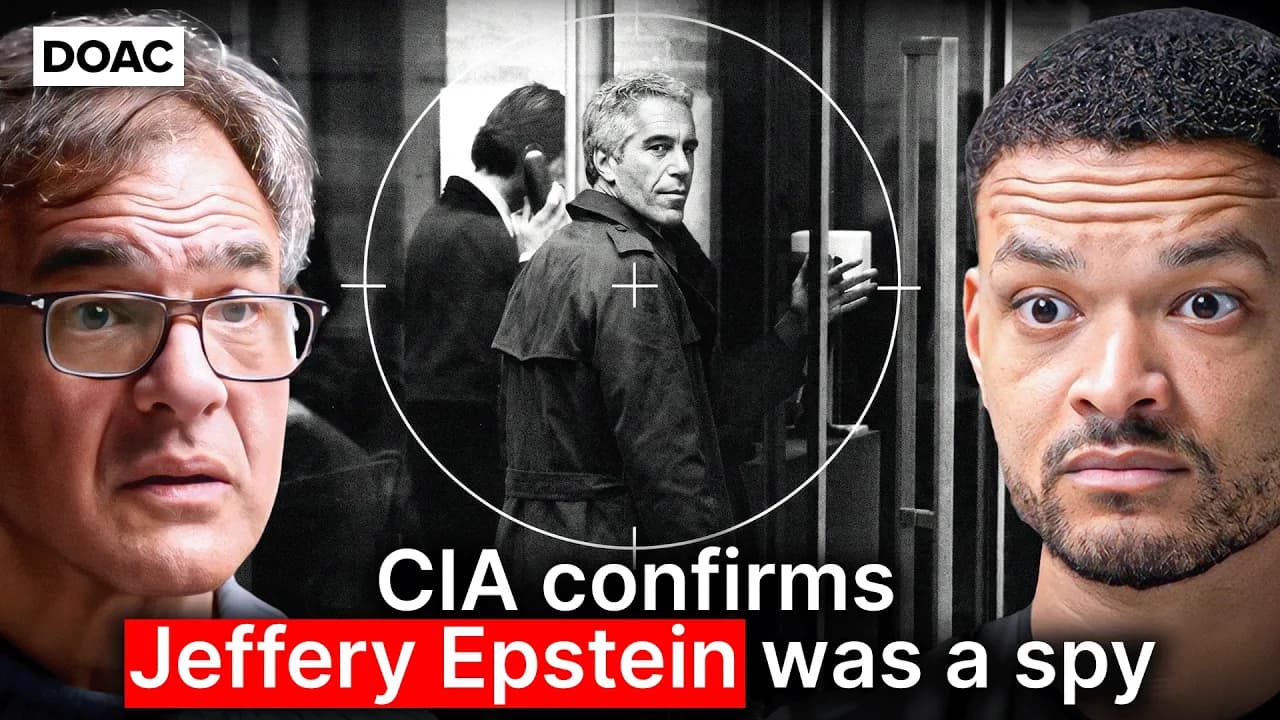
New York Times reported Epstein's death as a murder. The medical examiner who examined the records found the hyoid bone fractured in three places, which indicates strangulation rather than hanging. The noose sent for examination was not the actual cloth used but a sample from the same sheet.
Despite being the highest-profile defendant in a worldwide case, cameras went out, nobody checked on Epstein, and the medical examiner was denied access to the cell after death. The former cellmate who allegedly attempted to strangle Epstein was a multiple murderer and contract killer represented by the same attorney as Ghislaine Maxwell.
Mark Middleton, a former Clinton aide with Epstein connections, was found dead in May 2022 in Arkansas. He allegedly shot himself in the chest with a 12-gauge shotgun while hanging from an extension cord, with the shotgun found 30 feet from his body. This would require throwing the weapon 10 yards while hanging.
A 12-gauge shotgun does not have the recoil to travel 30 feet. Even a 50-caliber weapon wouldn't travel that distance from recoil alone. The investigation into Middleton's death was described as either corrupt or conducted by investigators fearing for their lives.
While not generally inclined toward conspiracy theories, the Epstein case presents enough irregularities to warrant serious consideration. Killing someone in jail can be arranged for relatively little money, and there were many people who had reasons to want Epstein dead.
Nicholas Tartaglione's defense attorney Bobby C. Sternheim also had roles in Ghislaine Maxwell's case. After Epstein's death, the death penalty was dropped against Tartaglione in December 2022, more than three years after Epstein died in August 2019.
A defense lawyer named Bruce Bquette did not disclose personal mitigation details in a case involving a contract killer who was also a cop killing drug dealers. The murder charges were not dropped, and the defendant was convicted with 23 consecutive life sentences, ensuring he will remain incarcerated for the rest of his life.
Gavin Newsom commuted the sentences of everyone on death row in California. He stated that the death penalty is wrong, resulting in hundreds of people having their sentences commuted.
A pattern exists where violent offenders are connected with racism, with the argument that their incarceration relates to racism. This rationale is used to justify releasing habitual violent criminals onto the streets. This approach appears to occur primarily in progressive cities, raising questions about prioritizing safety versus leniency toward violent criminals.
The fundamental question concerns whether prison serves rehabilitation or punishment. Rehabilitation arguments cite resource intensity and multiple layers of complexity, similar to solving homelessness. Success stories of individuals from bad neighborhoods who become exceptional human beings after incarceration are inspirational but rare.
Private prisons created profitability from incarceration, leading to policies that increased prison populations. Prison guard lobbyists work to maintain marijuana laws to ensure more people remain incarcerated for revenue generation. This system was identified as a significant mistake that corrupted the fundamental purpose of prisons.
Pharmaceutical drug companies receiving legal immunity for vaccines was cited as another profit-driven decision that negatively impacted society, similar to the private prison model.
The difficulty of reversing entrenched corruption stems from multiple interconnected interests wrapped around government functions. Tulsi Gabbard shared experiences about the challenges of implementing changes within this system.
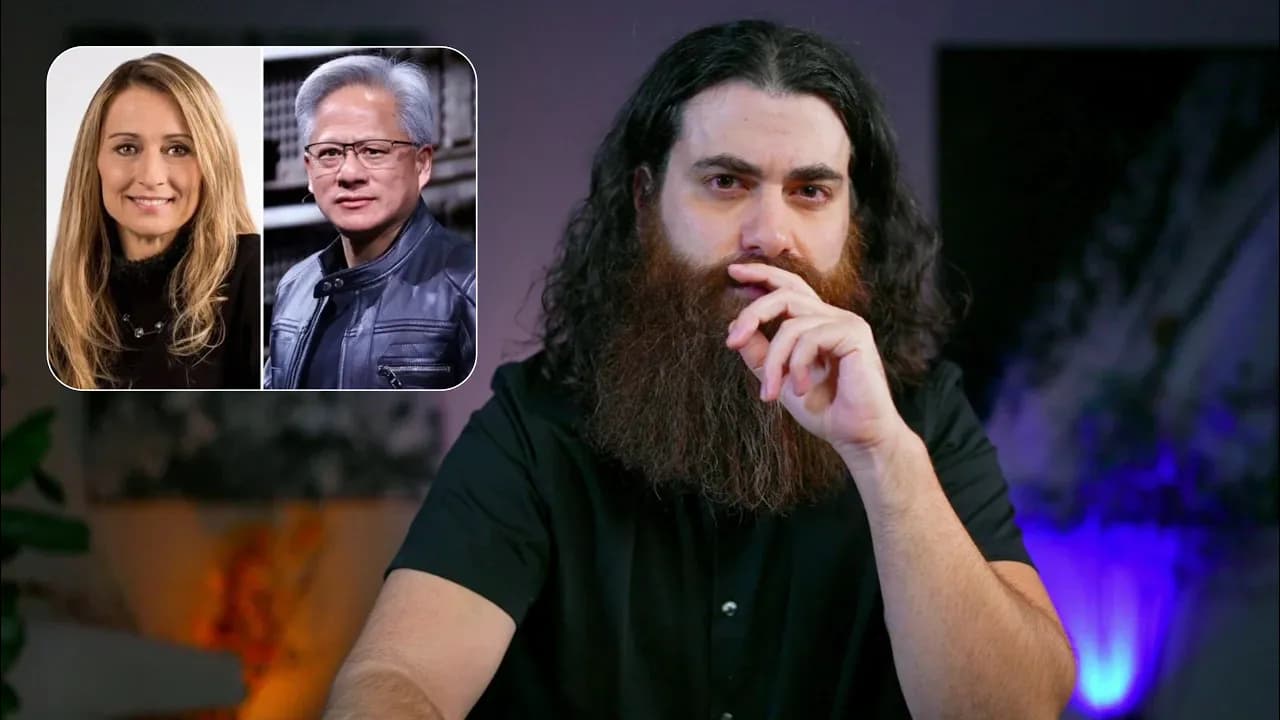
Nvidia represents another example of Chinese counterintelligence operations. An alleged honeypot operation involving Alice Huang resulted in Jensen Huang admitting to an intimate affair with an alleged Chinese spy. The timeline of White House policy changes toward China and chip sales coincided with a $25 million donation to a ballroom.
The first Trump administration took a strong stand against China regarding economic espionage and intellectual property theft. The second administration initially maintained this path before changing during 2025, partly attributed to Jensen Huang developing relationships with key figures including Howard Lutnik at Commerce.
Nvidia's system was described as faulty in identifying potential product diversion opportunities. The company should have been vetting foreign connections and individuals engaging with the company, as expected of all companies with global operations.
Nvidia transitioned from being known primarily for graphics cards used in gaming to becoming essential for AI applications. The same architecture that made their graphics cards superior for gaming proved valuable for AI development.
Palmer Luckey argued that China does not want Nvidia to sell GPUs to Chinese companies, preferring to build domestic processor and silicon industries rather than remaining dependent on the United States. Approximately 600,000 H200 GPUs are reportedly sitting in ports because China refuses import permits to develop internal capability.
China's approach combines both espionage and sales, with decades of stealing information to develop internal capabilities. The Chinese government prefers robust domestic industry development over American sales, using stolen technology to build independent production.
Alice Huang allegedly worked with Mega Speed, which had Alibaba as an anchor customer. The relationship between Jensen Huang and Alice Huang allegedly resulted in promotions being given in Beijing. Alice Huang is no longer reportedly an executive with Mega Speed.
Over 300,000 Chinese exchange students are in the United States. A story circulated about Chinese students in Berkeley dorms panicking during an internet outage because they missed mandatory check-ins with handlers in Beijing, fearing retaliation against their families back home.
Chinese influence operations in American academia involve funding from overseas, including millions of dollars promoting Marxism, Leninism, and socialism. Chinese students in universities and corporations maintain connections to the Chinese government, often due to family members remaining in China.
Alibaba allegedly maintains ties to the People's Liberation Army through subsidiaries that develop AI for military purposes. The distinction between Chinese companies and the Chinese Communist Party is minimal, as companies must comply with government requests for information and cooperation.
Jack Ma faced consequences for criticizing the Chinese Communist Party, including intervention by Xi Jinping to halt a $344.5 billion initial public offering. Alibaba received a $2.8 billion fine, and Ant Group was forced to restructure. Ma lost majority voting control and disappeared for years before returning with a softer tone.
The relationship between Jensen Huang and Alice Huang would have been considered a significant intelligence win, with promotions reportedly given in Beijing for successfully developing this connection with the head of a major Chinese AI company.
Discussion focuses on how intelligence agencies might use intimate relationships to gain access to corporate information, particularly at companies like Nvidia. Jensen Huang would not hand over corporate files directly, but conversations at dinners or casual comments about meetings at the White House could reveal sensitive information. Topics like regulatory policy toward chip access for China represent major intelligence targets.
The conversation explores whether such relationships involve genuine emotional connection or operate purely as business transactions. Speakers note that people working extremely hard at high levels lose their minds from constant momentum with no breaks, reflection, or relaxation, making them vulnerable to affairs.
High-pressure executives experience psychological strain that makes them susceptible to relationships offering relief. The discussion notes that billionaires like Jensen Huang are always attractive due to their wealth and status, making traditional counterintelligence indicators less reliable for identifying potential targets.
Intelligence operations distinguish between witting contacts who know they're being recruited and unwitting contacts who don't realize they're being worked. The Chinese intelligence apparatus doesn't require full recruitment if they're getting access, influence, or insight. Alice Wang appears to have been a target of opportunity used as an access agent rather than a professional intelligence officer, possibly a legitimate executive.
The tech community initially rallied around Jensen Huang, arguing he was indispensable and that removing him would be counterproductive. However, public reaction shifted dramatically when the affair with an employee became known, with calls for his immediate removal. Government pressure may have influenced the board's decision, particularly regarding chip sales to Chinese companies.
Replacing someone who's worked 16 hours a day, 7 days a week for over a decade presents significant challenges. The discussion compares this to Dana White's role at UFC and Steve Jobs at Apple, noting that certain leaders become deeply embedded in their organizations. After 33 years running Nvidia, the business may struggle without such dedicated leadership.
Questions arise about whether businesses dependent on single individuals are healthy. While committee decision-making can slow progress, having one fully dedicated person making decisions without multiple meetings may be more efficient. The conversation acknowledges that innovation at Apple changed after Steve Jobs, with some critics noting product stagnation.
Having affairs with Chinese spies and employees creates both ethics problems and issues with promotions. If only the spy relationship had been involved, internal investigation and policy changes would likely have led to reinstatement. However, multiple relationships and board decisions resulted in permanent removal.
Alice Wang may have been an asset rather than a full intelligence officer. The discussion covers how intelligence agencies look for access agents with leverage who can be brought on board for tasking without requiring full recruitment into organizations like the PLA's intelligence apparatus or Ministry of State Security.
China conducts persistent infiltration at multiple levels of American society, including government. Rather than focusing solely on Washington DC where policy change is difficult, they work at state and local levels through grassroots-appearing organizations and protests. This multi-tiered approach targets local issues like phosphate mining in Florida to impact state policy.
Eric Swalwell had a relationship with Fang Fang, identified as a Chinese spy. The conversation notes the effectiveness of traditional intelligence techniques and compares appearances of different targets. Historical examples include Russian sleeper agents like Anna Chapman, who was deported following a 2010 Russia-US prisoner swap.
Intelligence work involves being present in communities to identify people of interest at events, developing friendships, and gradually building relationships. The goal isn't immediate recruitment but potentially introducing more experienced operatives who can assess and task targets with requests for seemingly innocent information like research papers.
Chinese students in the US may require party clearance to study abroad, particularly in sensitive fields like material science or propulsion techniques. While not all students are involved, the disparity between 2,000 American students in China versus much larger numbers of Chinese students in America creates asymmetric intelligence opportunities.
A woman allegedly working on anti-gravity propulsion systems who had connections to China died in an unusual car accident after traveling between countries, representing another case in the pattern of intelligence-related incidents.
Ning Li was 78 when she died. The circumstances around her death were unusual, with some people raising questions about whether it was a regular car accident. The story emerged around the same time as reports about missing scientists working on anti-gravity research. Ning Li came back from China after a breakthrough and later died in America.
Her son stated that Chinese officials approached her in 2008 with an offer to return to China, but she declined the offer. He also claimed her work involved classified US defense research, though these details should be understood as his account and not independently verified public documentation.
Physicist Jack Sarfati gave an interview that fueled conspiracy theories. He stated that one of the key scientists in anti-gravity research was a Chinese woman named Ning Li who had disappeared and gone back to China. According to Sarfati, she worked at NASA and Redstone Arsenal, and the Pentagon could no longer reach her. Sarfati is 87 years old and operates in the UFO research space outside academia.
The Huntsville Business Journal reported that Ning Li was allegedly back in China and that Chinese researchers are pouring money into similar experiments. Intelligence analysts consider the Chinese the most likely candidates to develop the first anti-gravity propulsion technology.
When discussing intelligence operations regarding anti-gravity research, several scenarios were considered. If Chinese officials had approached a researcher with funding offers, US intelligence might consider allowing the researcher to return to China to gather information on Chinese anti-gravity research programs. This would be assessed based on the individual's credibility and trustworthiness.
Another possibility raised was that if information had already been stolen through espionage, sending a researcher back to China could help determine how far along the Chinese program had progressed.
During the New Jersey drone incidents, some drones displayed unusual capabilities including staying in the sky for hours, showing no heat signature, and shutting off lights to disappear when tracked by jets. These drones maneuvered in ways never seen before. Some appeared to be commercial drones, while others were described as school bus-sized, flying silently.
The Biden administration could have addressed concerns by briefing intelligence committee members on Capitol Hill about new technology being tested, but instead there was silence about what was happening.
Houthi strikes hit Riyadh, Kuwait, and Bahrain within a 48-hour period. The tallest building in Saudi Arabia was targeted, and a big hole was blown in Aramco headquarters in Riyadh. The East-West pipeline for Saudi Arabia was also hit, which Saudi Arabia depends on heavily for moving oil.
The Houthis have been targeting US radar defense systems in Bahrain, where the Navy's Fifth Fleet headquarters is located. Kuwait has also taken hits. The conflict involves tit-for-tat retaliation that has been ongoing for several months, though not at the intensity of the early February air campaign.
The Iranian regime is the primary reason for instability in the region through its network of proxies. The regime's stated goals include controlling the region, being the dominant power, and the destruction of Israel. The regime has slaughtered thousands of its own citizens to suppress protests.
The Iranian economy is struggling with inflation and food prices through the roof, doubled in some places. However, the pain is being pushed onto ordinary citizens while IRGC Revolutionary Guard commanders and leadership remain unaffected.
The US has three carrier groups and various warships in the region. The blockade of the Strait of Hormuz is an expensive proposition. The shipping industry and insurance industry still consider the area a war zone, with an oil tanker on fire.
The Iranians are conducting a disinformation campaign, claiming to have hit several tankers, though maritime trackers have not independently verified these claims. The Iranians are rebuilding their missile capability after previous losses.
The Iranian regime correctly anticipated that Republicans would lose seats in midterms and is now planning to drag out negotiations until January when Democrats take over, expecting reduced Congressional support for continued military action.
The regime is betting they can outlast the current pressure by hitting facilities, creating separation between US allies who are experiencing economic damage from the conflict, and calculating that the White House will eventually seek to end the engagement.
Venezuela has a recent history of democracy, unlike Iran. After Maduro was removed, people were excited about potential change, but the situation resulted in a reshuffling of leadership with figures like Deli Rodriguez becoming president and senior military security officials like Cabelo remaining in place.
US interest appears focused on oil transactions and drug trafficking issues rather than fundamental democratic reform. A new military cooperation agreement was announced between the US and Venezuela.
Members of the Venezuelan government were benefiting from the drug trade. The typical structure involves a cadre of government officials profiting from drug trafficking rather than a fully organized cartel operation run by the state itself.
Cartels have a cadre of individuals making money off the drug trade by providing safe haven for traffickers. Hitting drug boats has not had a measurable impact on narcotics availability in the states. The cartels were losing money every time drug boats were hit, potentially creating motivation for regime change. Operations continue with boats still being intercepted, though no longer receiving media coverage. Recent operations show increased efficiency - instead of joint marine-navy operations, they're now boarding refueling vessels, capturing individuals, and blowing up vessels with no one on board. Five people died in one incident on October 27th.
Violent crime has decreased significantly since Trump took office. The FBI reports the largest year-to-year decline since 1936, with violent crime falling 9.3% in 2025. Over the 10-year period from 2015-2025, the violent crime rate has fallen about 12%. This is attributed to more aggressive policing with increased police presence on streets, better coordination between local, federal, and state law enforcement agencies, and reduced street crime including shoplifting. New York implemented visible foot patrols, which reduced street crime and prevented store closures. The mainstream media has largely ignored these statistics.
The primary job of politicians at all levels is the security of citizens. There's concern that progressive policies view law enforcement and prisons as inherently wrong due to capitalism. The DSA (Democratic Socialists of America) is perceived as lenient on crime. However, with the Democrats gaining a majority, the DSA influence may be diminished. There's hope that both political sides can agree on the value of decreased crime statistics. The concern is that Democrats might push radical positions in upcoming midterm elections rather than taking moderate stances.
The average first-time home buyer is now 40 years old, while the average home buyer overall is 58 years old. This creates a generation that feels they cannot achieve the same economic status as their parents. The housing crisis stems from redline laws, Jim Crow laws, and cities that have been affected by drugs and crime since the 1950s without support. Young people aren't starting from the same position as others due to historical economic disadvantages. Many are dropping out of traditional economic systems, choosing van life and experiences over homeownership. Birth rates are dropping partly due to reduced immigration.
There's growing support for political violence among the left, including celebration of Luigi Mangione shooting the United Healthcare CEO. This represents a shift from previous norms. People feel they're being exploited by the healthcare system. Obamacare was drafted by insurance companies, leading to increased rates and profitability for the industry. Insurance companies have mandates to deny claims, and AI is now being used to deny claims at rates 16 times higher than typical. Stanford researchers identified how limited transparency in AI-based insurance decisions could lead to wrongful care denials. Everyone knows someone who died or was severely impacted due to denied healthcare.
Insurance companies profit by not paying claims. A business owner spending $30,000 annually on insurance had a $20,000 claim denied with the threat of policy cancellation. After 40 years with the same insurance company, a total loss claim for a Porsche Taycan was initially offered at only $14,000. The battery alone costs $70,000 to replace. The insurance company dragged out the process despite the policyholder being hit by another driver. This system forces businesses to carry insurance they may never benefit from, as claims result in policy cancellation threats.
Healthcare denial has more severe consequences than insurance claim denials for property damage, as people die from denied medical care. AI tools are being used to systematically deny claims at much higher rates. The immense profitability of insurance companies comes directly from denying claims. While Medicare for All is being discussed as an alternative, government-run insurance may not be the solution given government's track record. Better regulation of insurance companies and laws limiting what they can deny would be more effective approaches.
Political violence occurs across the entire political spectrum and is rarely the solution to problems. The real issue stems from the people elected to office and the lack of accountability once they're in power. There's a broader problem of voter disengagement, with many citizens not participating in elections, including midterm elections.
A significant concern is that proof of citizenship is not required to register to vote. This creates obvious vulnerabilities, as non-citizens cannot vote in other countries' national elections. The concept that voter fraud doesn't exist is unrealistic. While fraud may not be as rampant as some claim or nonexistent as others insist, any level of fraud should not be tolerated. Simple protocols like requiring identification when voting would address this issue.
California's law making it illegal to show ID when voting was particularly problematic, framed as discriminatory despite the only logical reason being to enable fraud. Ironically, California recently passed a law requiring ID to purchase creatine, with users needing to be over 18. This exemplifies the state's excessive regulatory approach and nanny-state mentality.
Creatine has minimal adverse health impacts according to studies and offers benefits for mental health, focus, memory, and cognitive enhancement. The regulation appears aimed at preventing young people from becoming too muscular, reflecting broader regulatory overreach in California.
Kratom presents a complex regulatory challenge, with lobbyists successfully pushing for its availability, including products like Feel Free drinks sold in gas stations. Chris Bell publicly documented his addiction to kratom, showing how users develop physical dependence and require increasing amounts. The drug is openly sold despite being addictive, raising questions about what to do with existing users if it were banned.
The American healthcare system is incredibly complicated, requiring significant advocacy and navigation skills. Many people lack support systems to help them through insurance, medical decisions, and finding appropriate care. Government-run healthcare like Medicare for All raises concerns about replacing private insurance with a system that may not deliver improvements.
The UK's National Health Service has documented cases of patients dying while on surgery waiting lists. Canadian friends have reported real problems accessing surgeries, suggesting government healthcare systems face significant challenges.
Effective healthcare reform requires public-private cooperation rather than removing capitalism entirely or turning everything over to government. The insurance industry must be involved in creating solutions that don't penalize people while avoiding the opposite extreme of complete government control.
Government agencies don't fix problems effectively, making complete government takeover of healthcare unlikely to succeed. Capitalism provides motivation through profit incentives, as exemplified by Jensen Huang working 16-hour days because of potential billions in earnings. Government-mandated fixed income structures won't produce the same efficiency.
Beyond personal satisfaction, business ownership provides meaningful employment and support for families, enabling people to raise children and build lives. Following socialist approaches to their logical conclusion would likely harm the economy.
Socialism has never been observed working effectively. While some cite Scandinavia as successful, these countries are small (size of New Jersey) with high incomes, and they experience relatively high suicide rates, indicating not all citizens are thriving under their systems.
Eleven NSA and US Cyber Command workers died by suicide over roughly the past year, more than previously known. This unusual spate has prompted White House and congressional investigation behind closed doors. While factors like stress, overwork, and foreign conflicts contribute, the possibility of non-suicides cannot be dismissed, particularly given the nature of the work involving foreign agents and hacking operations.
Intelligence community organizations lack robust mental health monitoring systems, with a culture of "just get on with it" rather than addressing psychological needs. While agencies have psychologist groups, they're stretched thin and often focus on mundane issues like divorces rather than deeper problems. Officers returning from covert work may be reluctant to report issues due to career consequences.
A cluster of suicides at NSA raises counterintelligence questions about whether foreign adversaries might be involved. The pattern is suspicious enough to warrant investigation beyond surface explanations.
The government consistently fails to release promised information, including Epstein files and UAP/UFO files from ATIP and the All-domain Anomaly Resolution Office. This lack of transparency fuels conspiracy theories and public distrust.
Republicans likely lost midterm elections partly due to failure to release Epstein files as promised. The Iran war and resulting inflation were probably the largest factors (around 60%), but unfulfilled promises on transparency contributed to voter disappointment.
Republicans created unnecessary losses through hubris and poor candidate selection, including Ken Paxton. Trump reminded voters of previous administration chaos through his behavior during the campaign. The political pendulum no longer swings near the center, creating increasingly extreme oscillations.
I don't think that's particularly healthy. We haven't even talked about Trump's summit with Xi and Vladimir Putin. That was exciting. But maybe another day.
Mike Baker promotes his podcast, The President's Daily Brief, which provides 20 minutes in the morning and 10 minutes in the afternoon. The show tells listeners what's happening in the world and gives them the facts so they can decide how to think about them. The podcast is run by Red Seed Ventures and is available on YouTube and all podcast platforms. It ranks in the top 20 news podcasts.
Baker notes the transition from CIA to podcaster, mentioning that people often assume he hasn't left the CIA. He receives approximately 100,000 messages on social media accusing him of returning to change the battery in his chip. When people approach him in airports calling him Joe's handler, Baker responds that nobody could handle Joe, and he wouldn't even be an unwitting asset.
Baker appreciates when people bring up the handler theory and finds it amusing. He acknowledges that from an outside perspective, it makes sense to assume he has a handler, but notes that it's more terrifying that he doesn't have one.
Keep PowerfulJRE in your library
Save the videos and channels worth coming back to, and find them again in one place.