Live From Dr. Sean, The Hidden Fat Your Doctor Never Looks For
In a Nutshell
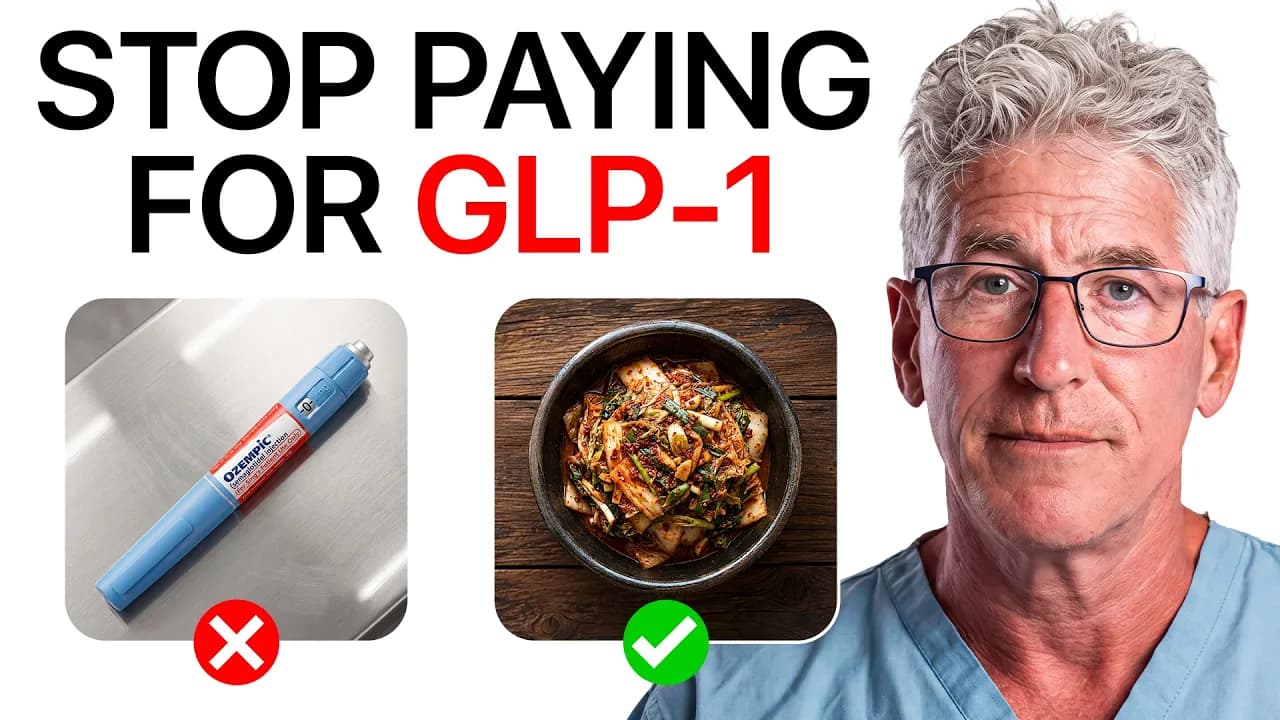
Dr. Shawn's session spotlights BRP, a natural peptide discovered via AI that reduces food intake by 50% and strips fat from obese mice without the GI or muscle-loss side effects of GLP-1 drugs like Ozempic. Unlike synthetic Ozempic, BRP acts only in the hypothalamus, is produced by the body itself, and leaves muscle intact while improving glucose tolerance. The broader message is that viewing food as a source of precise biological signals—rather than calories or vitamins—plus targeting hidden visceral fat via diet, fermentation, and MRI-guided strategies, can produce rapid, drug-free metabolic change.
These notes were generated by AI and may contain inaccuracies.
Dr. Shawn conducts live sessions every Wednesday evening across multiple platforms including X, YouTube, Facebook, and Instagram. The session focuses on peptides and features discussion of a new study on a powerful peptide called BRP from Stanford research published in Nature.
Dr. Shawn maintains a conservative approach to peptides despite acknowledging their significant potential. He states he is "super conservative and super natural" in his approach, noting that while these substances represent "some of the most exciting potentiators of change in human beings," long-term effects remain unknown. He reserves the right to change his position but currently maintains cautious distance and does not recommend them to others.
The Stanford study examined BRP peptide with the following key findings:
- Lean mice received a single intramuscular injection of BRP before meals, resulting in up to 50% reduction in food intake over the subsequent hour
- Obese mice received daily injections for 14 days and lost an average of 3 grams, almost entirely from fat
- Control mice gained approximately 3 grams during the same period
- Treated mice showed improved glucose and insulin tolerance
The study did not distinguish between types of fat lost - whether visceral, cardiac, intramuscular, or subcutaneous - leaving this critical detail unknown.
BRP operates through a fundamentally different pathway than synthetic GLP-1 medications like Ozempic. BRP works through receptors in the brain hypothalamus, while Ozempic acts on GLP-1 receptors throughout the body. This difference results in fewer side effects with BRP, avoiding common GLP-1 side effects including:
- Gastrointestinal issues
- Intestinal obstruction
- Nausea and vomiting
- Muscle loss
BRP is a completely natural peptide produced by the body that researchers identified rather than synthesized. This distinguishes it from Ozempic, which is a synthetic version of the natural GLP-1 peptide. However, the intramuscular injection method raises concerns about using natural peptides in unnatural ways.
Dr. Shawn introduces the concept of "signal biology" - studying life through the lens of biological signals rather than traditional questions about healthy nutrients. The key insight is examining "what biological signals are hidden inside our food" instead of focusing solely on nutritional content.
Peptides consist of two or more amino acids joined together. Humans have nine essential amino acids, and when these combine into peptides, they create powerful biological impacts. The human body naturally cleaves proteins into peptides through enzymatic action, with the microbiome and physiological health influencing this process. Some peptides promote health while others may cause disease.
When BRP was exposed to neuronal tissue, it produced a 10-fold increase in neuronal activity compared to a 3-fold increase from GLP-1 exposure. This indicates BRP has three times the power and influence of Ozempic while working through a different mechanism.
Researchers used AI to identify BRP by:
- Focusing on the PCSK1 enzyme known for powerful hormonal effects
- Narrowing from 100 candidate peptides to identify BRP as the most effective
- Scanning 20,000 genes to find high-yield targets
- Reducing thousands of possibilities to hundreds for detailed study
This AI-driven approach enabled identification of BRP's effects through in vitro neuronal cultures without waiting for observable weight loss in living subjects.
Dr. Shawn expresses concern that introducing peptides through injection bypasses natural regulatory systems. When the body produces peptides naturally, they are regulated by the body's own mechanisms - distributed appropriately and prevented from traveling to unintended areas. External administration removes this natural oversight.
Food should be viewed as containing powerful peptides and signals rather than merely calories or vitamins. GLP-1 itself functions as a peptide signal, and medications imitate these natural peptides through pharmacologic pathways. Nature likely contains thousands to millions of undiscovered peptides that AI will help identify.
Dr. Shawn advocates for research that asks questions beyond profit motives, including identifying harmful peptides and determining how to prevent their creation. He emphasizes the need for noble researchers advancing projects without financial incentives.
BRP demonstrated multiple advantages:
- Reduced food intake
- Preserved muscle mass
- Improved glucose and insulin tolerance
- Worked through hypothalamic pathways rather than systemic GLP-1 receptors
- Produced fewer side effects than synthetic alternatives
- Represents a natural peptide rather than synthetic compound
Signal biology examines good, bad, and neutral signals in biological systems. While medicine has traditionally been pharmacologic - affecting cholesterol, glucose, blood pressure - biology naturally communicates through peptides, metabolites, and hormones. The microbiome plays a crucial role as microbial partners in life, with bidirectional signaling between food intake, gut microbes, and body cells.
Dr. Shawn has used MRIs full-time for 13 years to study structural disease and visceral fat. MRIs reveal structural signals while peptides show communication signals - together providing a complete picture of health. The combination of structural disease analysis and peptide research represents complementary approaches to understanding health.
Fermented foods help cleave proteins in precise sequences needed for optimal benefit and create beneficial peptides. Animal foods contain different peptides than plant sources:
- Collagen peptides
- Dairy peptides
- Muscle peptides
These differ from amino acid combinations found in vegetarian and plant communities, with different biological consequences.
Food functions as information that communicates to develop either greater health or greater harm. This represents a more mature perspective than viewing food solely as calories or vitamins.
Traditional medicine focuses on measurements, biomarkers, and genetic medicine with hundreds of blood tests. Signal biology asks different questions: which signals matter, which are beneficial, which are harmful, and which are merely distractions. MRIs complement this by revealing structural signals often ignored, such as visceral fat around the heart.
Dr. Shawn shares client transformations achieved through structural disease treatment and microbiome optimization:
- One client showed dramatic body changes in 39 hours
- Another lost 60% heart fat in 5 days
- A client achieved 50% reduction in heart fat and 30% reduction in visceral fat over 90 days using comprehensive strategies
- Conservative estimates suggest 15% visceral fat reduction in 3 months with basic meat and ferment diet alone
Dr. Shawn presents his own 10-year transformation from age 53 to 63, showing improved health, appearance, and performance through elimination of visceral fat, heart fat, and muscle fat, plus microbiome optimization.
Histamine Intolerance and Ferments: Dr. Shawn refers viewers to his YouTube video on histamine intolerance rather than covering the topic in detail during the session.
Inulin in L. reuteri Yogurt: Inulin is avoided for clients because some cannot tolerate it, experiencing bloating, irritation, and inflammation of junctional epithelial cells. While it accelerates fermentation, it is not absolutely necessary.
Peptide Visibility on MRI: Peptides are too small to visualize on current MRI resolution. Polypeptides contain up to about 50 amino acids, beyond which they are classified differently. However, the effects and changes from peptides may be observable on MRIs.
BRP Natural Existence: BRP naturally exists in the human body, created when proteins are cleaved through enzymatic action. This differentiates it from synthetic peptides like Ozempic that do not naturally occur in the body.
Visceral Fat Reduction Timeline: Clients following comprehensive strategies achieve approximately 50% reduction in heart fat and 30% reduction in visceral fat over 90 days. Basic meat and ferment diet alone may produce 10-20% visceral fat reduction in 3 months, with 15% being a conservative estimate.
Client Demographics: Women comprise 20-30% of Dr. Shawn's clients. He welcomes more female clients, particularly motivated women and influencers.
Dry Fasting Position: Dr. Shawn advises against dry fasting until visceral fat is eliminated and health is optimized, noting that ancestral humans would never intentionally deprive themselves of water.
Avoid dry fast until you get rid of your visceral fat.
There are tons of great videos on YouTube that you can find out how to ferment. There is a great client group run by a client who runs a ferment group. There are lots of resources on the internet that you can get into and find out how to ferment dairy, make yogurts and kefir, and fermented vegetables and fruits. It is a wonderful process.
This concludes the session. The speaker invites participants to join back next Wednesday for the same format and more innovative science. Participants who like these programs can go to the website to find out how to get more involved in the practice and online community. The speaker moves to the side to avoid blocking QR codes for interested participants.
The speaker apologizes for not getting to all questions but will try to answer them online if possible. The speaker looks forward to seeing participants again next Wednesday.
Keep Sean OMara, MD JD, Health & Performance Optimizing in your library
Save the videos and channels worth coming back to, and find them again in one place.