The Shocking Truth About Peptides (What They're Not Telling You)
In a Nutshell
The video warns that most popular peptides lack proven human safety and effectiveness, with only GLP-1 drugs like Ozempic and Mounjaro having substantial evidence. Retatrutide shows dramatic 24% weight loss in trials but carries risks of muscle loss, nerve damage, and is unapproved outside clinical settings. The core message is that buying research peptides means becoming an unmonitored test subject, while FDA-approved GLP-1s used under medical supervision remain the only proven option.
These notes were generated by AI and may contain inaccuracies.
You've probably heard about peptides from friends, neighbors, or the gym community. Podcasts promise one tiny injection will heal joints, melt fat, and turn back the clock. Some claims are based on promising research, but questions remain about safety and verification. No pharmacies have verified many of these compounds, and no human trials have proven their safety. Guessing wrong doesn't just cost money—it costs the strength that keeps you independent and can cause more harm than good.
Some claims are true—one peptide took off 24% of body weight in a major trial. Another is banned in professional sports but can still be ordered online. The seven biggest peptides need examination for real benefits, real risks, and what sellers never mention.
A peptide is a short message—a chunk of protein. Your body runs on these messages: small chains of amino acids that tell cells what to do. Insulin is a peptide. So are signals that tell you you're full after a meal, like leptin and glucagon. GLP-1s are peptides—the big weight loss drugs like Ozempic, tirzepatide, and Mounjaro are all peptides.
A peptide sits between an ordinary drug and big biological medicines. It's small enough to build in a lab but powerful enough to talk to your body in its own language. A regular drug flips one switch. A peptide whispers to the body, nudging a whole system at once—appetite, blood sugar, repair signals.
The current explosion started with GLP-1 drugs. Ozempic, Wegovy, and Mounjaro are peptides that genuinely worked, changing society through significant weight loss and blood sugar reduction.
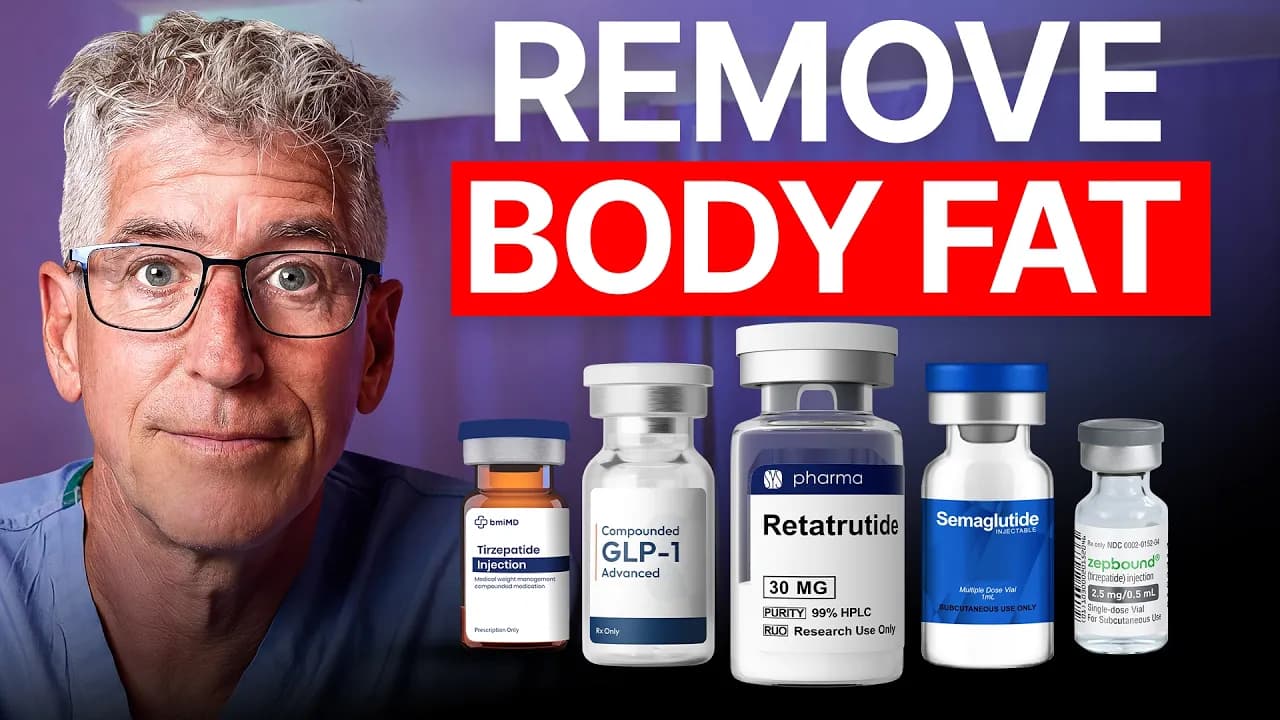
Retatrutide is the most powerful. In a major trial, the highest dose produced an average weight loss of about 24% in under a year—roughly 50 pounds for a 200-pound person. This isn't a diet result; it's closer to surgical outcomes.
Retatrutide is a triple agonist hitting three metabolic targets simultaneously: turning down appetite, helping the body handle sugar, and pushing the body to burn more energy. In diabetics, it brought long-term blood sugar down significantly. In one study, it cut fat trapped inside the liver by around 80%, improved cholesterol, and improved triglycerides.
Retatrutide is not FDA-approved. There appears to be a signal for potential neurologic damage and nerve damage. It only exists inside clinical trials, not as a finished medicine available at pharmacies. The FDA has specifically warned that compounded versions don't qualify under usual rules. Products sold online have questionable purity, identity, dose, and safety.
When losing fat this fast, muscle and bone come along with it—the very things that keep you independent and out of nursing homes. Side effects include nausea, faster heart rate, and a warning tied to thyroid cancer for this whole class of drugs.
The proven route for weight loss and blood sugar control involves testing, cutting the right carbs, and the right kind of exercise rather than unproven peptides.
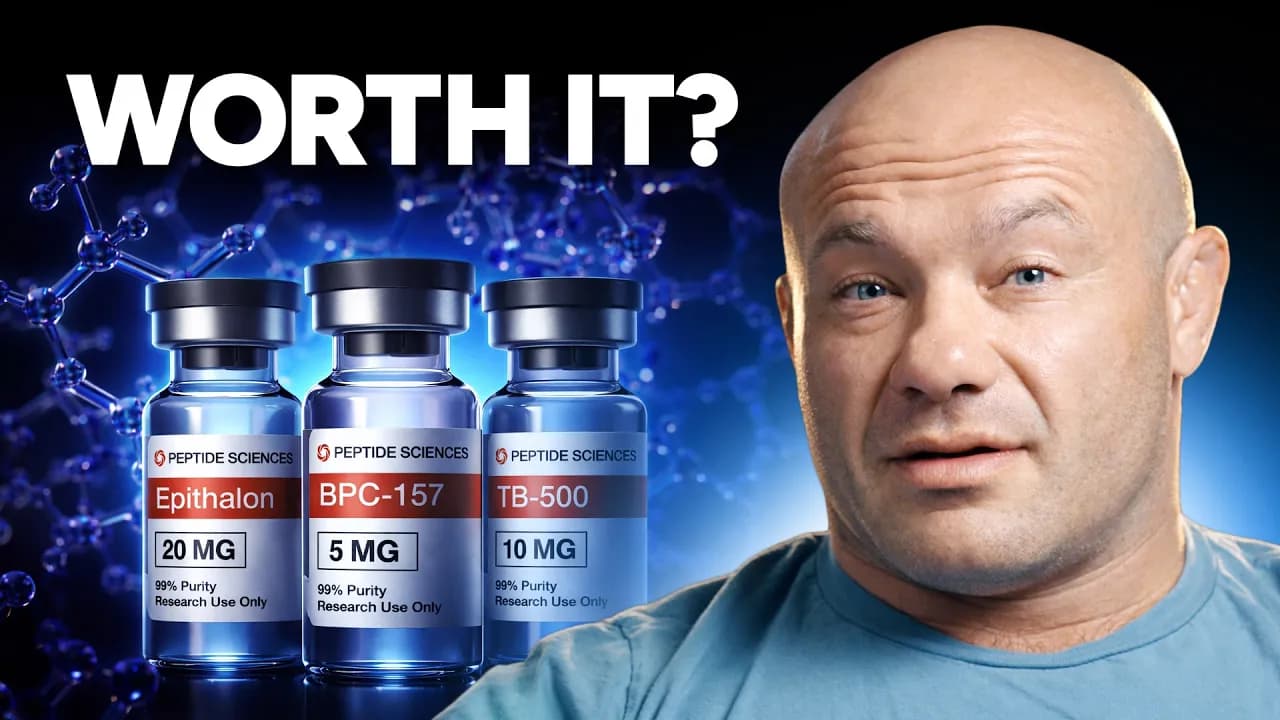
BPC-157 is popular in gym communities and injury forums, promising to heal tendons, joints, and gut faster than the body could naturally. It started as a fragment of a protein found in stomach lining. Animal studies show impressive results—wounds closing, tendons repairing, inflammation calming. However, almost none of this has been shown in humans. The entire human record amounts to a tiny safety check in a couple of healthy adults. It's not FDA-approved and is banned in professional sports.
TB-500 comes from a natural repair protein and works by helping cells travel to injuries for rebuilding. In animals, healing signals look real, but the human story is even thinner than BPC-157. There's no convincing human trial showing it works in any person. It's not approved and is banned in sports too.
Both are sold outside real pharmacies with no guarantee of what's inside the vial—whether it's sterile or whether the dose on the label matches what's in the bottle. You could be injecting something unidentifiable, made in an unknown place.
GHK-Cu, a copper peptide, has real human evidence. Rubbed on skin in studies, it improved firmness, smoothed wrinkles, and thickened aging skin. This is why it's found in serious skincare. However, this skin evidence gets stretched into claims about whole-body anti-aging, heart protection, and adding years to life. There's no solid human proof for these claims. The science supports skin benefits only—no injections, no heart benefits, no longevity effects.
MOTS-c is produced deep inside mitochondria. Levels increase during exercise, making it an "exercise mimetic." In animals, it improves blood sugar handling and helps adaptation under stress. However, no human trials exist yet showing that injecting it does anything beneficial.
Humanin comes from the same mitochondrial origin and acts as a survival signal. In lab studies, it helps cells survive stress instead of dying. It's been studied in models of brain aging and metabolic damage for over 20 years. However, there's no human trial showing it protects memory, extends life, or changes meaningful outcomes.
Angiotensin 1-7 is the body's built-in counterweight to angiotensin, which drives blood pressure up and stiffens arteries. It relaxes vessels, calms inflammation, and pushes back on arterial hardening. The physiology is convincing and well-mapped, but human trials needed to turn this biology into actual treatment remain small and unfinished. It remains a research peptide.
Across all seven peptides, none have been proven to work in actual human beings long-term with multiple numbers and multiple humans demonstrating safety. The excitement is built on cells in dishes, animals in labs, and a couple of human examples—not enough to prove safety. Medicine has seen this pattern before: molecules that looked spectacular early but either did nothing or caused major problems once real humans took them.
If you buy these now, you're not the patient—you're the lab rat, the experiment.
One question sorts every peptide into worth it or wait: whether it's been proven in real people with real trials demonstrating enough safety. For all these peptides, the honest answer is not yet.
The FDA's decision appears correct—there's not enough evidence yet that these are safe. Huge opportunity exists, but safety hasn't been proven.
Not recommending peptides, even Retatrutide, for home injection where you can't trust what's in the bottle. Proven, safe alternatives exist that may not be as flashy but can achieve the same goals.
The GLP-1 class like Retatrutide, semaglutide, tirzepatide, Ozempic, and Mounjaro have a real place. They've transformed weight loss and diabetes care, saving many people metabolically. However, these require a real medical relationship with physicians watching muscle and bone, checking labs, catching side effects early, and adjusting as needed.
The molecule was never the whole danger—going it alone based on friend stories and sales pitches is the real risk. The goal isn't missing out on the latest thing; it's staying capable for people counting on you. You protect that by being right, not by being first.
Keep Dr. Ford Brewer MD MPH in your library
Save the videos and channels worth coming back to, and find them again in one place.