One of America's last true secret societies: The Mardi Gras Indians | 60 Minutes
In a Nutshell
Mardi Gras Indians, Black Masking tribes in New Orleans, craft dazzling, handsewn suits over a year to honor Native Americans who sheltered escaped enslaved Africans, competing in Mardi Gras parades through beadwork, rhinestones, and chants in historically Black neighborhoods. Leaders like Big Chief Dean Malone ("De Man") and Big Chief Monk Boudreaux embody this secret society's resilience against oppression, with suits costing $25,000 and depicting stories like the Amistad rebellion, now recognized as fine art in global museums. Despite sacrifices, gentrification, and health challenges, elders pass the tradition to youth, preserving African, Caribbean, and Native American cultural fusion.
These notes were generated by AI and may contain inaccuracies.
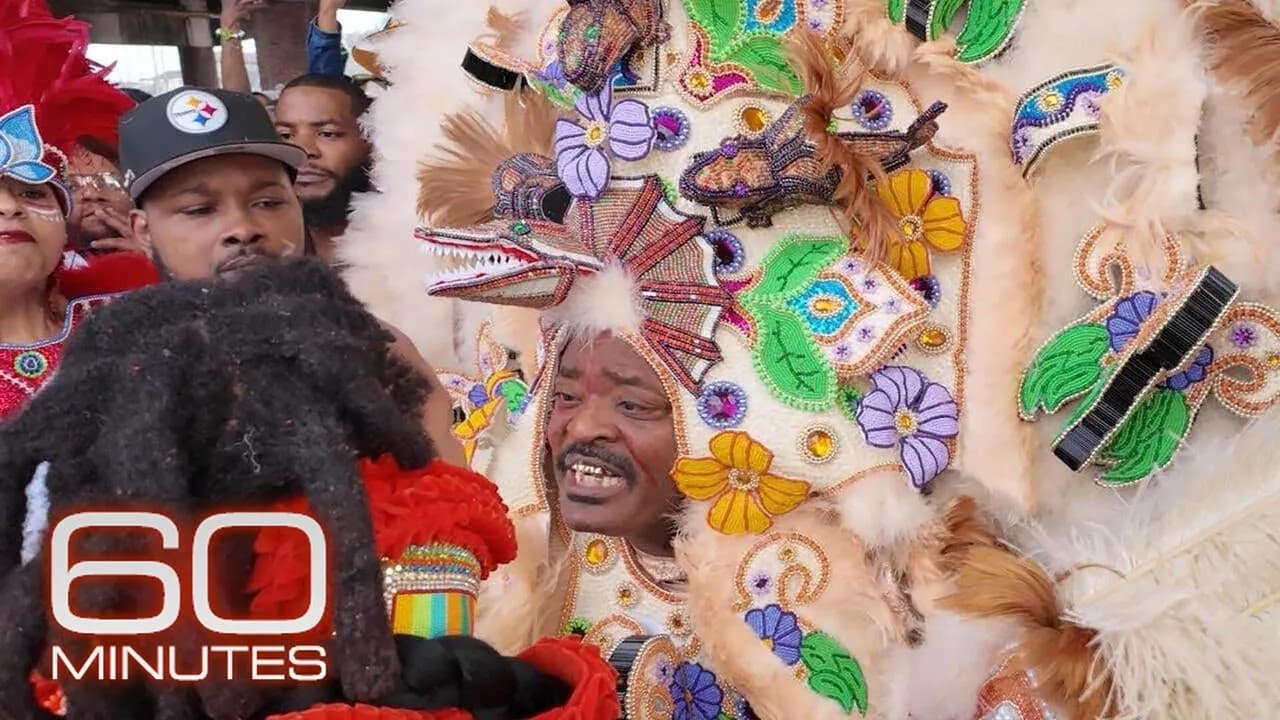
Every year on Mardi Gras morning, groups of black revelers emerge from the back streets of New Orleans. They call themselves Mardi Gras Indians or Black Masking Indians, roaming neighborhoods in dazzling handsewn suits. The tradition dates to the 1800s to honor ancestors. According to Mardi Gras Indian lore, it is rooted in profound respect for Native Americans who sheltered escaped enslaved Africans. It expresses joy, protest, and pride passed generation to generation. On this Easter Sunday, meet the artists and musicians preserving the culture and experience one of America's last true secret societies.
If lucky to find them, discover a vibrant tapestry of African, Caribbean, and Native American threads, part of the cultural gumbo of New Orleans.
Extravagant suits—plumed, bejeweled, beaded, sequined—are handcrafted in secret for an entire year, unveiled on Mardi Gras day.
Chawa, that's Big Chief Dean Malone of the Young Soul Hunters announcing his arrival. Chawa. Who the best? Who got the best beadwork? Who got the best rhinestones? Who could sing the best?
Who got the biggest tribe?
Dozens of groups call themselves tribes. The leader is the big chief, with his big queen and crew, strutting through historically black neighborhoods searching for other tribes. When Big Chief De Man meets another big chief, they square off in mock battle, competing to show whose suit is the prettiest.
De Man faced down tribes across the city.
What just happened back there? It looked like he just bowed out. But you won. Yeah, I think you're the prettiest. Yeah. We on fire. We on fire.
Who are you on Mardi Gras day? When I put that suit on, I'm Big Chief Dean Malone.
Is that different from the De Man sitting here now? Yes, indeed. Somebody that's ready to honor everything taught by my elders and ready to kill you dead with the needle and thread.
Needle and thread do the work of his heart and hands. Big Chief De Man and wife Alicia, meticulous as surgeons, sew beads the size of chia seeds on canvas and stitch rhinestones with dental floss. Painting with beads, making artwork for his suit.
What makes a suit pretty? The hookup. How it's laid out? How the velvet gets around it? How you break the feathers? How you manipulate the feathers? How many rows of rhinestones around the beadwork? That's the perfection of knowing your hookup.
This year's suit tells the story of the Amistad, a slave ship seized by captive Africans in 1839, led by Sengbe Pieh (Cinque). This panel shows Africans winning freedom in a US Supreme Court case.
John Quincy Adams was one of the lawyers.
You're doing this non-stop, 6:00 a.m. to 12:00 at night, every day. Why? Without these beads, I couldn't breathe.
Thousands of dollars and hours to design and sew a suit. For years, Big Chief Dean laid concrete and cooked lobsters, pouring spare time and money into creations. Now makes a living as an artist. This year's suit costs $25,000.
Flamboyant display flowers from deep roots.
The community is my fuel. The people infuse the fire because you do it for them, for your community.
It is the greatest kept secret in America. Mardi Gras Indian culture dates to slavery days.
Howard Miller, president of the Mardi Gras Indian Council (governing body for tribes) and chief of the Creole Wild West, says it's shaped by resistance to oppression and sustained by resilience.
How to explain Mardi Gras Indians to people with no clue? We weren't allowed in big parades, so this uplifted our people proudly.
No definitive origin story, but references date to mid-1800s. Stories: Enslaved people escaping New Orleans found refuge from Native Americans in the bayous. Many tribe members claim indigenous and African roots. Masking honored those tribes while disguising African identity.
In America, especially the South, everything African was forbidden. We went behind a mask to practice our culture.
Was it easy to join a tribe? No.
In 1969, 12-year-old Howard Miller took six weeks to enter a big chief's house (tribe headquarters).
Friend was in it, I'd go but they wouldn't let me in the gate. Stayed outside the yard. Eventually got on the porch watching the magic of suits. Rainstorm hit; chief said, "Is that boy still on the porch?" "Yep." "Tell that boy to come in."
Visited home of Joseph Pierre Boudreaux (Big Chief Monk) of the Golden Eagles tribe. Big chiefs are mentors and community leaders. Monk Boudreaux (84) is highly respected, preparing for 72nd year masking despite neighborhoods thinned by Hurricane Katrina and gentrification.
We going to do it. Let the world know we here and we've been here. We ain't just got here.
Joined family in sewing circle before Mardi Gras. For decades, Big Chief Monk sewed suits for children and grandchildren. This year, they helped him.
My whole family's talent from sitting there watching me all those years as kids, right there all night long.
Long hours inspired a song. In the 1970s, Monk married Mardi Gras Indian chants to New Orleans funk. Albums earned two Grammy nominations. Son Joseph and grandson Jawan sang backup. Met them, daughter Winona, grandson Marwan at Tipitina's club.
Impact on culture? Like Michael Jordan on basketball. Can't mention Mardi Gras without Monk Boudreaux. Never saw him take a break or say "not this year." Took street culture global. No one in New Orleans sews an Indian suit without his music.
Big Chief De Man agrees.
That man make me cry like Monk.
Expense nearly left De Man destitute.
You sacrificed a lot, lost a house consumed with suits. Yeah, but losing a house didn't make me stop. I'm preserving a culture.
Fine art world noticed: Suits and beaded portraits in museums/galleries worldwide. Bought a new house, every inch covered with plumes and patches.
Evening before Mardi Gras, after all-night work, Big Chief De Man emerged in 10-foot-tall, 120 lb suit, using U-Haul to move. Spirits carry him.
Spirits come down when we put it on. Elders live through me, opening of the gates. They come through me to walk in their shoes on New Orleans streets. Preserving for next generation.
Work featured at Venice Biennale in Italy next month, world's most prestigious art exhibition.
Will art success encourage youth? I pray one picks up a needle.
Big Chief Monk lives to preserve tradition but too weak to march this year, diagnosed with cancer just before Mardi Gras. Watched tribe from porch with sacred hymn "Mama".
What's it like seeing tribe march without you? Knew time would come, didn't know when. But got to see this day.
Day coming to pass crown to next chief.
If you don't keep it going, you lose it forever. Not here in New Orleans. They keep it rolling.
Culture in full bloom, too pretty, too rooted to fade. Anatomy of a showdown: It's warfare. It's basically a battle at 60minutesovertime.com.
Keep 60 Minutes in your library
Save the videos and channels worth coming back to, and find them again in one place.