The anatomy of a big chief showdown
In a Nutshell
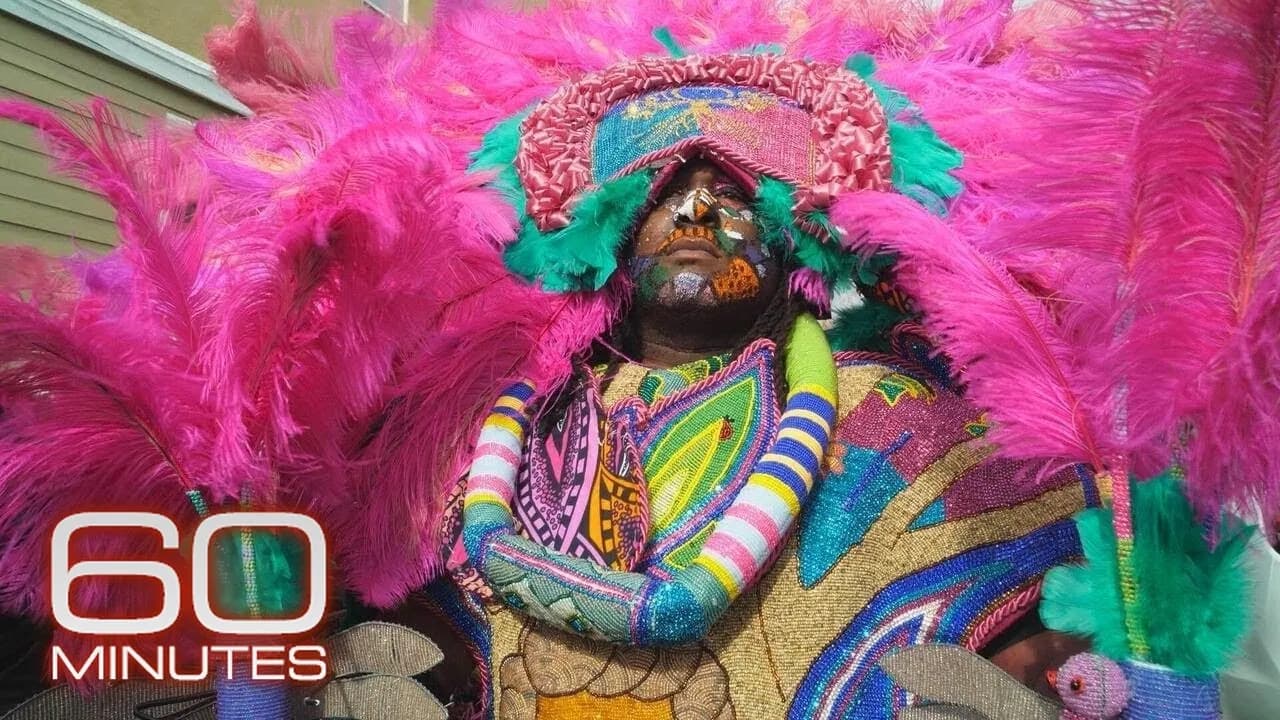
Mardi Gras Indians in New Orleans craft dazzling suits year-round for Big Chiefs and tribes to parade through Black neighborhoods on Mardi Gras Day, using roles like Spy Boy (scouts ahead with hand signals), Flag Boy (relays messages), and Wild Man (clears space) to locate rivals for ritualized showdowns judging the prettiest suits via crowd reaction. These vibrant standoffs, filled with trash talk and mock warfare, honor community pride and empowerment for people of color historically excluded from mainstream parades. Big Queen Rukia emphasizes the honor of inspiring others, turning the tradition into a celebration of shared love and visibility.
These notes were generated by AI and may contain inaccuracies.
60 Minutes overtime story on a little-known tradition in New Orleans: Mardi Gras Indians or Black Masking Indians, dating back more than 100 years. One of the most colorful, vibrant, exciting things. Suits are dazzling; makers work on them all year for display on Mardi Gras Day.
Big chiefs, leaders of the tribes, come out onto streets, mostly through black neighborhoods of New Orleans, to show off. Many other tribe members work on suits all year. Big Queen Elanora Brown, aka Big Queen Rukia, is an artist.
Then you look and then you show me what you're working with. Ah, the big reveal. Yeah. And I did alligators this year. This is beautiful. Thank you. This is beautiful.
Her bead work was incredible.
I tell the people that the story of the alligator and how we lived and how he took care of us. He fed us clothes, shoes, and he is a sacred symbol.
On Mardi Gras Day, they march through city streets to find other tribes for big chiefs to have a standoff or showdown to see whose suit is the prettiest, in their words.
Spy boy at the head, looking for other tribes. Met Joan Budro, spy boy for the Golden Eagles on Mardi Gras Day.
I'm pretty much the eyes of the tribe. I'm the first person that runs into anybody. So if anybody's coming with trouble, I'm supposed to sense that and know what's coming in contact with our tribe. They're hooping in rock and roll.
When spy boy sees them, uses secret hand signals. Flag boy, further behind, sees and communicates to big chief or big queen to go a certain way or avoid rowdy tribes.
Marwan Pleasant, flag boy for Golden Eagles.
Since I am in the middle of the spy boy and the big chief, I'm the communication. I hear something from the front and I would send a signal to the back to let the big chief know what's going on.
How do you do that? How do you communicate with the chief? With my flags through signals?
Joseph Bujo Jr. recently became a big chief after years masking with his father; formed his own tribe. Tribe may stretch 3-4 blocks apart, so verbal communication doesn't work; use hand signals, flags visible from blocks away.
When tribes find each other, ritualized interaction. Wild man clears space for big chiefs showdown. Askier Bennett, wild man for Young Soul Hunters.
You got to have space to show that suit. Clear visible space. You to be able to see him just as clear as you can see us right now.
So do you have to have a little bit of wild in you to be the wild man? Definitely. Yes, sir. Definitely.
Two chiefs confront, talking trash: "You think you look good? I know I look better." Walter Far, spy boy for Young Soul Hunters.
It's supposed to be like a mock war. It's warfare. It's basically a battle. So we competing to see who the prettiest Indian or who have the better suit.
So how is it decided who's the prettiest? You know, it's not up to us to decide. It's to the crowd. But the crowd, the oo and the eyes tells who's the prettier. You know what I mean? When your chief open up and you hit a crowd say, "Oh Lord, look at this." You know what I mean? That's kind of like what we looking for.
Although trying to show who is prettiest on Mardi Gras Day, not truly all about that.
When we say we're out there to look pretty, it's really for the community, right? Back in the day, people of color weren't able to actually participate in the parades. So to give them something to celebrate, we create these suits. The Mardi Gras Indians just took it on themselves to walk around their neighborhood. They're saying to the working class and black communities in New Orleans, hey, you're special as well. We're doing this for you.
Love from community fuels what they do.
So tell me what does it mean to be a big queen? It's a honor to carry this title because other little girls get to see me and women get to see me. What does that mean to you? What's your sharing? Sharing myself? That's the best love in the world. They don't know me like know me know me. They know me for me being a big queen. They always going to see me in a beautiful light. When I see that they feel better, I feel better.
Keep 60 Minutes in your library
Save the videos and channels worth coming back to, and find them again in one place.