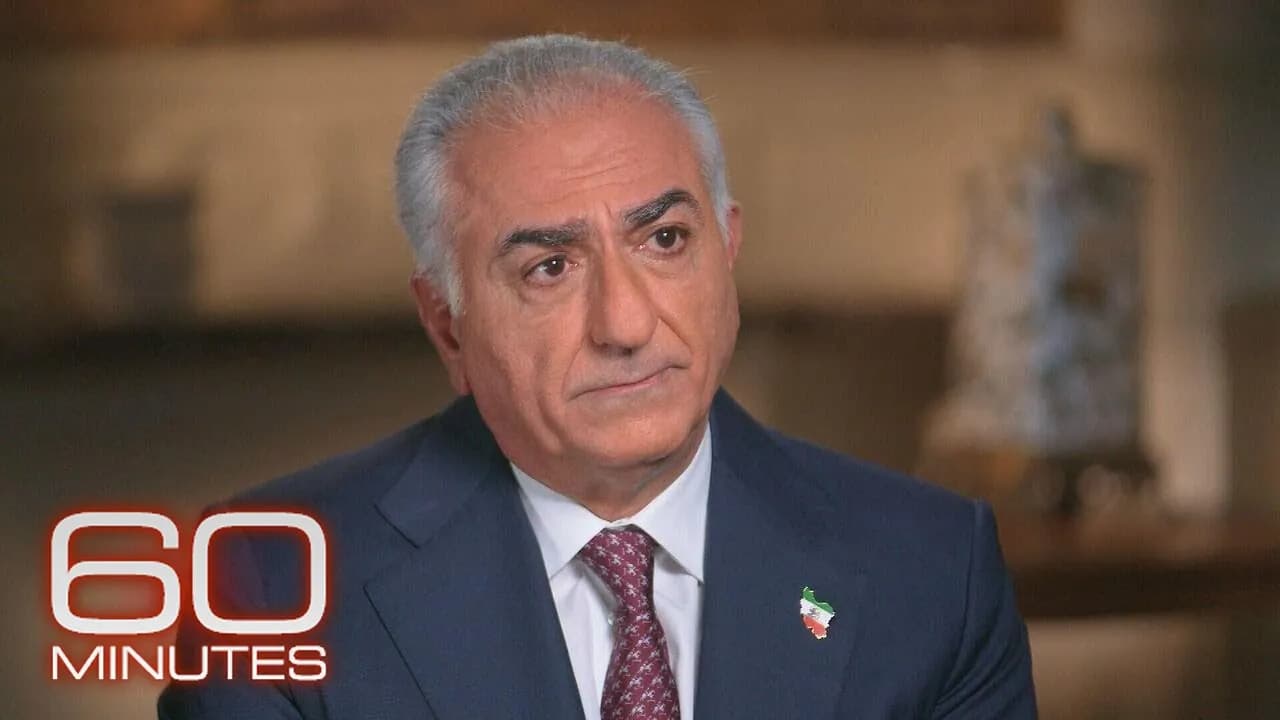
Prince Reza Pahlavi's extended 60 Minutes interview
In a Nutshell
Prince Reza Pahlavi celebrates Ayatollah Khamenei's death as the regime's collapse trigger, urging IRGC defections via amnesty for non-criminals, mass street protests, and a smooth transition to democracy under four principles: territorial integrity, religion-state separation, citizen equality, and free elections. He pledges total nuclear program dismantlement, positions himself as transitional "father of the nation" without seeking power, and pitches a detailed Iran Prosperity Project to the Trump administration and US for $1T economic gains, regional stability, and peace with Israel. Iranians, he says, will embrace America as friends post-liberation, fulfilling Cyrus the Great's human rights legacy.
These notes were generated by AI and may contain inaccuracies.
Death of Ayatollah Ali Khamenei is earthshattering. People identify regime monstrosity with him as chief monster. His disappearance brings elation: "Oh my god, it has finally occurred. Maybe this is it. This is our chance now."
You call him a monster.
Since regime takeover, unprecedented Iranian lives lost in contemporary Iran due to Khamenei's insistence on keeping his mafia regime in power at expense of people. True monsters.
Video of celebrations overnight after death announcement in Isfahan means people ready to return to streets despite cautions for safety. People brave, view it as liberation and humanitarian intervention to protect lives. Gives real opportunity as regime always bound to collapse. Iranians prepared to fight regardless of outside intervention, too much blood between them and regime. Thanking President Trump for standing on his word.
Regime could fall after almost 50 years because world leaders now say it lost legitimacy after massacre. Should have said from inception. Regime exports virulent extremist ideology, discriminated against ethnic groups and religious minorities, forced flight from Iran. World appeased regime, expecting change of behavior, but vicious circle continued. Now 46 years later, end is near, like apartheid in South Africa, Soviet Union, Czechoslovakia, Poland. Berlin Wall moment arrived as governments realize no negotiating with regime; invest in Iranian people instead.
Iranian people friends of America, unlike regime brainwashing youth to chant death to America or Israel. Once liberated, Iran different, contributes to world.
Regime claims new leaders in place, government continues, but trembling house of cards crumbles. Khamenei's death symbolizes collapsing system, not like Saddam Hussein or Gaddafi. Regime cut off Iran, waged war on citizens in darkness, sealing own doom.
Iranians not celebrating earlier due to being defenseless and unarmed against brutality. Now cavalry arrives like D-Day, playing field equalized for success, return to streets, take country.
Civilians vs 150,000 IRGC troops: top echelon benefits financially, but lower ranks get insufficient pay, need secondary jobs, kids protesting. Ideological commitment wanes. End of every totalitarian system. Offer exit strategy: anyone without blood on hands—civilian, military, paramilitary—can survive regime change, join people.
Launched campaign of maximum defection: indicate willingness to part with regime, not sink with ship, opportunity for future and family. Smooths path to stable transition.
Wait a minute. You're offering amnesty essentially to security forces in Iran.
Post-WWII Nuremberg trials for criminally implicated. Legal experts studying transitional justice, truth and reconciliation like South Africa. Victims—grieving mothers, tortured students, executed political prisoners—must have grievances addressed. Reduce time via national reconciliation and amnesty where warranted. Cannot deny justice but be sensible for nation's interest.
Information from inside: security forces willing to switch sides, in touch, assessing roles. Many refused crackdown orders; regime imported 5,000 from Afghanistan, Iraq, Lebanon—not even Iranian citizens. Shows regime incapable, near collapse. Campaign devastates control apparatus; time to join people or sinking ship.
Have faith in yourselves. Ancient civilization, proud heritage. Stop hoping, start believing. Gifted minds, natural resources. Tourism backbone of economy—most beautiful country, culture, poetry, food, attractive destination. Unleash capabilities; people will envy. Guarantee liberties like Americans take for granted. Cyrus the Great principle 25 centuries ago basis for American Constitution component; Jefferson noted. Iran gave free world human rights anchors; deserve better than clerical dictatorship. Be on right side of history, help liberate. Like D-Day ending Nazi regime, changes history course. Better world; Iranians say "We did it. Liberty, equality at home. Discrimination ended. Practice faith freely, no ideology worries, no ethnic/religious minority/LGBT discrimination."
Cavalry arrived, regime essence damaged, hopefully decimated. Horizon near.
Some communications recently as situation unfolds. Talking to administration, Congress. Spoke today with Senator Lindsey Graham, advocate for bipartisan council to hear transition proposals. Important for legislation, executive, business community, citizens: security, economic benefits.
Different Iran: people friends of America/Israel, unlike regime. 2001 9/11, Iranians held candlelight vigils in sympathy inside Iran; others celebrated. Regime responsible for US costs: embassy hostages, Beirut barracks attack killing Marines. Post-liberation: friends with neighbors including Israel/Arab world, stabilize region, no US military in Persian Gulf, no taxpayer funding campaigns/troops.
Economic: Iranian market creates over 1 trillion dollars revenue for America in 10-15 years via investors, American corporations. Eliminates nuclear threat, terrorism, radicalism, proxies; gains regional stability, economic prosperity. Win-win.
Thank Trump for courage to intervene; most celebrated foreign leader in Iranian history, changed ball game/world.
Trump January quote: "He seems very nice, but I don't know how he'd play within his own country... if they would, that would be fine with me."
No expectation of official endorsement. Millions Iranians call his name, recognize as transitional leadership bridge—not running for office. Support of millions, military, plan, unified opposition. Respect Iranian people's decision via free/fair elections. Mission: bring to that point, hand over to elected parliament/government.
You don't want to be king.
Not running for office. Trust as transitional leader, not future king/president. Focused on mission: free choice, then mission accomplished.
Four core principles: 1. Iran's territorial integrity. 2. Separation of religion from state, prerequisite to democracy. 3. Equality of citizens under law, individual liberties. 4. Democratic process for people to elect governance system.
Vision: path of progress/modernity, strengthened institutions, checks/balances, strong civil society, media, labor unions protecting rights. Iran Prosperity Project (2+ years, best experts): three phases—short-term (first 100 days transition), midterm (6 months-2 years), long-term. Addresses infrastructure, health, education, environment.
Presented to Senator Graham for lawmakers/business. Iran most attractive untapped investment area, anchor state stabilizing region—like pre-revolution, no problems with Arab neighbors/Israel despite Cold War.
Peace with Israel: modern history, Iran gave refuge to Jews escaping Nazis. Strategic partnership critical.
Nuclear program: totally dismantle; no need for military weaponization. Signed NPT when committed; considered reactors (two Bushehr) with consortium-supplied rods for electricity.
The regime's sudden pursuit of nuclear weapons from day one created distrust due to non-transparency, non-compliance, and disingenuous intentions. Iran gains no advantage from developing nuclear weapons, as regional neighbors would follow suit, leading to no net benefit. Iran should stand down, prove to neighbors it is not belligerent, and work toward a nuclear-free region. Unlike the current regime, a new government would demonstrate no intentions of pursuing nuclear weapons. Most Iranians understand nuclear weapons are unnecessary for national defense or security.
So you're pledging no nuclear weapons.
Part of the IP project calls for immediate stoppage and dismantlement of the nuclear program. This personal opinion is backed by many Iranians. The regime's opacity and non-compliance with IAEA inspectors and the international community has led to sanctions, with the Iranian people paying the price. To relieve economic sanctions, return frozen assets to a transitional government, and improve livelihoods, all doubt about Iran's nuclear position must be eliminated. Iran benefits more from security assurances than building a military arsenal, which is not conducive to progress. Iran previously had the best non-nuclear military in the world, deterring attacks; Saddam Hussein only attacked after the regime took over.
To eliminate ambiguity, no nuclear weapons. That's your position.
That's absolutely my position. Yes.
The ultimate choice belongs to the Iranian parliament and future governments. During the transition, the cycle must be reversed. This position will be communicated to the world and Iranians to regain international trust, assure neighbors Iran is no longer a threat, and fully dismantle the nuclear military program.
Handling Enriched Uranium Stockpile
The stockpiled enriched uranium must be recuperated to prevent it falling into wrong hands. Full cooperation is needed for safe handling. Storing it in Iran is not ideal due to risks of degradation over thousands of years; better to remove it to avoid unforeseen problems.
At 65 years old, if transition happens in two or three years, Reza Pahlavi's first inclination post-transition is probably not to take an extended role, having completed his job. He prefers being a father of the nation over governing. People of his parents' age celebrated his birth as the most significant day, adopting him as their child. Iran's Gen Z now calls him father—the best title, without need for crown or official position. He supports all equally, as a shoulder to cry on.
In Munich recently, at a gathering of diverse Iranians committed to the national liberation platform, mothers of slain people and young kids shot in the eye during the Women, Life, Freedom movement cried on his shoulder, calling him father. Being a father is more important than governance. He seeks no power, only to reconcile the nation, promote pluralism, tolerance, respect, and collective interests under the rule of law. Millions ask him to intervene in this role.
Critics cite repression and opulent wealth under his father's reign, but many who lived then now support him, recognizing the difference from today. Even former prisoners from that era back him. His father left voluntarily to avoid bloodshed:
I'm a king. A king doesn't build his throne on the blood of his own people. If the nation today wants me out, I would leave. I will not turn my guns on them.
Despite 50 years out of the country, millions chant his name on Iran's streets, trusting him because he has no association with the revolution or regime. Young protesters shot by the regime blame their parents' generation for supporting Khomeini, seeing where it led. Iran has been on his mind every day since exile. He could have pursued a successful life elsewhere but chose commitment.
After his father's death on July 27, 1980, Saddam Hussein attacked Iran on September 15. Three weeks later, he offered to fly from Cairo as a fighter pilot to join the Iranian air force against Saddam, despite Khomeini as supreme leader—prioritizing patriotism. He remains ready to sacrifice his life for Iran. Geographical separation does not disqualify him; Iranians followed him without modern communication, and today they research his consistent messages from the early 1980s matching his current stance:
If you turn your back on me, I will never turn my back on you.
Many others wavered or acted opportunistically, but he has always served. He ensures Iranians choose their future leadership freely for the first time.
He would return on the next flight if possible, not conventionally like Khomeini, even before full regime collapse—to hold hands as a father figure. He has a plan and process, working with talented experts (economists, legal experts) inside and outside Iran. The regime blocks capable people due to corruption; post-collapse, the best experts will rebuild.
- Civilian bureaucracy manages transition to keep country functioning.
- Hybrid approach: talented insiders plus brightest from worldwide diaspora ready to return.
Communication and planning with them ensures readiness to hit the ground running.
The US—administration, lawmakers, entrepreneurs, industries, universities—should invest in a liberated Iran, giving Iranians the benefit of the doubt to prove their capabilities. The Iranian diaspora in the US is one of the most successful since the revolution: highly educated, leaders in medicine, companies, Silicon Valley. Many Americans have Iranian friends, partners, or colleagues. A free Iran's relationship with America would be strong, as evidenced by diaspora views.
The courage on Iran's streets defines heroism, like the lone Chinese student in Tiananmen Square facing a tank, or the viral image of a firefighter carrying a wounded person who was shot, then killed himself weeks ago.
Keep 60 Minutes in your library
Save the videos and channels worth coming back to, and find them again in one place.