Russia-Ukraine War: Putin, Zelenskyy, Drones and the Future of Warfare | Lex Fridman Podcast #504
In a Nutshell
Russian forces are losing initiative in 2026 as Ukraine conducts successful localized offensives, but both sides remain locked in attritional drone warfare where 80% of casualties come from unmanned systems requiring 10-30 drones per target. Russia's maximalist political goals exceed its military capabilities while Ukraine's more realistic strategy aligns with achievable battlefield results, yet neither side shows willingness to negotiate as the war drags into 2027. Information distortion throughout Russian command structures creates dangerous gaps between claimed and actual territorial control, while Putin's involvement in strategic decisions and the Trump administration's inconsistent approach have failed to produce meaningful progress toward ending the conflict.
These notes were generated by AI and may contain inaccuracies.
Lex Fridman introduces Preston Stewart and Michael Kofman for a discussion on the Russia-Ukraine war. Preston is a West Point graduate and Afghanistan veteran who covers the war on his YouTube channel, podcast called War and Conflict, and newsletter Defense Tech News. Michael is a military analysis expert specializing in Russian and Ukrainian militaries, a senior fellow at the Carnegie Endowment, and hosts the Russia Contingency Podcast on War on the Rocks.
The war is in its fifth year. Michael Kofman identifies an inflection point last year. Ukraine is experiencing its best year of combat performance since the summer of 2023 offensive, but faces an expansive Russian strike campaign causing cumulative damage to energy and civilian infrastructure. The winter ahead is uncertain for Ukraine's population centers and the level of damage to the economy remains unclear.
The Russian military is performing poorly in 2026, experiencing its worst year since winter 2023. Russia's approach has reached diminishing returns, with manpower issues emerging and the effort fixated on strategic bombardment. Michael notes that strategic bombardment historically has a poor track record of achieving maximalist political aims when ground campaigns are unsuccessful.
In 2023, Russia attempted a winter offensive after partial mobilization, but forces were unready. The winter campaign largely failed except for the grinding battle over Bakhmut. Ukraine then launched a summer offensive using Western-trained and equipped units. The offensive lasted from June 2023 to November 2023, gaining some ground but failing to meet expectations.
Russia seized the initiative again in fall 2023 with the Battle of Avdiivka. Since then, Russia has maintained advantage in manpower and material, holding the initiative throughout 2024 and 2025 with a grinding offensive across a broad front.
By 2026, the Russian effort is floundering with significant reversals. The battle space has become much more dynamic at the tactical level. Ukraine is conducting two localized offensives, and territory is more fluid than perceived. Some Ukrainian offensive operations have gained more terrain than during the 2023 summer offensive.
The fight remains predominantly in the east and southeast. Kyiv faces daily long-range drone and missile strikes but not direct infantry attacks. Russian infiltrations occur in Sumy in the north, with fighting in Kharkiv on Ukrainian territory. The Donbas region (Luhansk and Donetsk) remains the site of heaviest fighting, including the Fortress Belt where Ukraine has created brutal conditions for Russian advances.
Further south are Zaporizhzhia and Kherson bordering the Black Sea. In the Donbas, fighting ranges from Liman to the main conglomeration of cities including Sloviansk, Kramatorsk, Druzhkivka, and Kostiantynivka. Dnipropetrovsk serves as an anchor in Ukrainian defense west of this area.
Zaporizhzhia is a dynamic area with both Russian and Ukrainian forces on the offensive simultaneously. Russian forces attempt to push west of Huliaipole while Ukrainian air assault brigades conduct a creeping offensive northeast of that area. Ukraine's Third Corps conducted a successful offensive operation called Vihod around Liman, liberating territory and wiping out Russian gains from 2025.
Ukraine does not hold cohesive defensive lines but uses pickets with small numbers of infantry. A vast gray zone exists between the lines, with a drone engagement zone extending roughly 15 kilometers forward and back of the front line. Russian forces attempt to infiltrate past this zone using individual infantry, light motorized attacks on motorcycles and ATVs.
Ukraine defends with prepared defenses, minefields, and drone units that engage Russian forces before they reach the forward line of troops. The defense functions as a zonal system.
Drones inflict 80% of losses according to available statistics, but the defense is a combination of capabilities. Traditional defenses and minefields make mechanized or light motorized assaults difficult. Artillery forces enemy forces to disperse and has a shaping effect, suppressing troops and slowing assaults. Artillery remains relevant because drones have limitations during poor weather in spring, fall, and winter.
Artillery consists primarily of 105 or 155 millimeter cannons with approximately 20 kilometer range. Artillery has shifted further back due to drone range expansion. Cannons operate from entrenched positions or mobile on tracks or wheels, requiring rapid repositioning after firing.
Reconnaissance drones are primarily fixed-wing systems that can stay airborne for extended periods. Both sides have transitioned from few high-cost larger drones to many low-cost, borderline attritable drones. FPV drones are the most common strike capability, consisting of small quadcopters 12 to 20 inches in size with munitions attached.
FPV drones number approximately 8,000 to 10,000 per day for one side, not including other tactical drones. Hundreds of thousands are employed per month. Strike capabilities exceed all personnel and equipment numbers on the battlefield by a substantial amount.
Most systems in this war are remotely operated by people. Drone operations are manpower-intensive, with typical drone teams requiring two or three people including a pilot, co-pilot navigator, and technician. The work is exhausting and intensive, requiring constant screen viewing.
Most systems are remotely operated with only a tiny percentage using semi-autonomy for terminal guidance and targeting. The war tests autonomy and artificial intelligence, but the percentage of the fight run autonomously is over-hyped. The war remains human-centric with substantial manpower involved in running, operating, and maintaining capabilities.
The war is heavily televised with drone perspective videos available from both sides. Videos create the perception that one drone accomplishes each task, but this is misleading. Drones experience battery failures, jamming, failed detonations, and impacts without detonation. Only a tiny fraction of drone operations are made public, and only a tiny fraction of those represent successes.
Realistically, 10 to 20 drones, sometimes upwards of 30, are required to eliminate a tank. For infantry, the ratio is closer to approximately five drones per person in practice. The most extreme case observed required 12 drones for one infantry target. For well-armored Russian tanks with electronic warfare protection, the extreme case reached 79 drones.
For drone-enabled mechanized assaults combining mechanized units with drone unit support, a mechanized company on the attack now expects substantial drone requirements for operations.
A mechanized company conducting an attack now expects to take close to 300 drone hits during the assault. Vehicles are expected to absorb multiple strikes, with most designed to withstand them. The saturation of drones on the battlefield is difficult to overstate.
Russia has shifted away from large mechanized formations that can be detected 10, 20, or 30 kilometers from the front line. Instead, they employ infiltration tactics using individual infantrymen on pickup trucks, ATVs, and motorcycles. Soldiers are sent forward five, 10, or 20 kilometers to reach forward consolidation points. Ukrainian lines contain significant gaps that are monitored through overhead drone coverage rather than continuous physical presence.
When Russian soldiers successfully infiltrate, the numbers compound: one soldier is manageable, but three becomes a significant problem as they begin harassing supply lines, forcing Ukrainian units and drone pilots to reposition backward, which opens additional space for Russian infiltration.
An American volunteer Marine fighting with the First National Guard Corps in the Dobropillia direction described this as an effective tactic if you don't care about losing soldiers, noting that you can eventually gain terrain but will lose 90 to 95 percent of your forces along the way. This infiltration approach has been Russia's primary method for at least the last six months to a year.
Ukraine cannot afford Russian-style attrition warfare due to manpower constraints and cultural differences in how they treat their forces. Instead, Ukraine focuses on establishing drone and fire support superiority to push opposing drone units further from the front line.
Successful Ukrainian offensive operations involve carefully planned sequences: suppressing Russian drone units through drone strikes and artillery, interdicting logistics behind drone units to create supply shortages, channeling Russian forces into predetermined zones, localizing their positions, and executing coordinated suppression strikes during the assault itself.
Different Ukrainian assault units have developed varied approaches. Advanced drone assault units like Code Nine Two and the First Separate Assault Regiment combine drones with well-equipped mechanized formations to restore battlefield mobility and conduct faster offensive operations. Air assault brigades in southern Zaporizhzhia employ three-man fire teams with drone support to systematically clear tree lines while maintaining low casualties.
Russian forces combine mechanized assaults with light motorized attacks. Mechanized forces are used to consume Ukrainian drone unit attention, creating opportunities for light motorized assaults on motorcycles, ATVs, and even Ladas to penetrate initial positions.
Light motorized attacks can succeed despite high failure rates because Ukrainian forward positions typically consist of three-man observation posts spaced several hundred meters apart. With only three such positions per kilometer, significant gaps exist between them. Secondary positions behind these are also sparse.
Many Ukrainian units lack sufficient manpower for immediate counterattacks if Russian forces break through. When infiltration succeeds, even small numbers of Russian soldiers accumulating behind Ukrainian lines can threaten drone reconnaissance units that are unprepared to receive assault teams.
The range of drones extends from small tactical systems like DJI Mini Pros and FPVs to large car-sized missiles. Fiber optic drones emerged as a response to electronic warfare jamming. Russia initially developed this approach, attaching thin fiber optic cables that spool out behind the drone, keeping the control signal internal and immune to jamming.
The limitations include reduced payload capacity due to cable weight, shorter flight distances, and potential cable snags. Ukraine initially experimented with fiber optic drones but did not adopt them until Russia demonstrated their effectiveness during the Kursk offensive. Ukraine has since matched this technology, with fiber optic drones reaching distances of approximately 50 kilometers.
Fiber optic drones represent roughly 15 percent or less of tactical strike drones but play a critical role because they cannot be jammed and are much harder to detect. Ukrainian forces commonly use systems like the Chuika drone detector, which resembles an old Game Boy with a screen and three antennas receiving signals across different frequency spectrums. When an analog radio signal drone approaches, the detector can display the enemy drone's video feed.
Fiber optic drones provide no warning because they emit no detectable radio signal. Both sides have established approximately three to four-month cycles of technology and tactic evolution, with Ukraine generally leading in tactical development and bottom-up innovation while Russia excels at scaling identified solutions across their forces.
The Chuika drone detector allows soldiers to watch enemy drone feeds in real time while driving or positioned in tree lines, literally observing Russian soldiers hunting them. This represents a completely new dynamic in warfare where combatants watch screens showing their hunters' perspectives.
This conflict represents a transition point in warfare. The lack of Russian air superiority fundamentally shapes the current battlefield dynamics. The U.S. military is built around air power and long-range precision munitions delivered from platforms like B-1 and B-2 bombers, a capability not available to either side in this conflict.
The Pentagon is developing a drone dominance program to identify agile small manufacturers capable of rapidly producing new solutions. The military is still determining which branch will ultimately be responsible for drone operations, as the technology has evolved faster than institutional structures can adapt.
This war began as a fairly traditional 20th century conflict with artillery armies using equipment recognizable from the 1970s and 1980s. Most NATO-supplied equipment dated from the 1960s through 1990s. Drones have evolved rapidly throughout the conflict, raising questions about whether current systems represent the final stage of maturity or whether autonomous drones with AI navigation and guidance will substantially reduce manpower requirements.
The challenge lies in determining which aspects of this conflict are generalizable to future wars, given each conflict's unique geography, context, and the question of which phase of prolonged conventional war provides the most relevant lessons.
Modern wars often begin with a clash of forces and reconciliation of military plans, but they frequently become positional and attritional in nature. Forces dig in, there are way more troops on the battlefield, everything's mined, and it's very hard to break through. Drones really came into their own more in these latter phases. Sometimes people make the mistake of looking at the latter phase, the late parts of a war, and thinking this is how the next war will start. But the next opening phase of a war is often different than the middle phase where both sides enter this dynamic that they're trying to break out of.
The United States is tactically an incredibly skilled force. They spend a lot of money on their military, on the training for their military, and the quality of their personnel. They spend a tremendous amount of funding on the expeditionary air component of their force because it's the best combination of mobility and firepower on the battlefield, which then enables the rest of the force to conduct combined arms maneuver. This includes infantry, armor, artillery, and aviation working together, with all pieces interacting with each other and supporting each other dynamically on the battlefield.
The big advantages of the U.S. force include not just technology and training of personnel, but the ability to run complex operations with these pieces working together to achieve much greater effect. One of the biggest separators of modern militaries is whether or not you can do the things you're doing in exercise or in a small scenario against a permissive environment, like fighting the Taliban, versus facing the largest conventional war Europe has seen since World War II.
The ability to scale operations and complex operations is a big limiter for other militaries. The Russian military really struggled with this extensively at the beginning of this war. The complexity of running a corporation with 10 or 20,000 employees scales dramatically compared to running a business with 10 employees.
The United States is very much advantaged in this regard, but there are open-ended questions based on what was seen in this war about whether adaptation is needed and whether traditional advantages will offer the same benefits in a future war featuring this technology on the battlefield.
Opponents like Russia do plan to fight in this way. There is already a sense of how they plan to fight because of how they're fighting in this war. The future is already here, it's not evenly distributed, and this is already on the battlefield in Europe.
Measuring who is winning this war is an absurdly large question. It's not like a football game where both teams look at the scoreboard and whoever has more points at the end of 60 minutes is the winner. Russia and Ukraine are fighting for different things and have different objectives. Russia is trying to take Ukraine, and Ukraine is trying to maintain their sovereignty. The fact that Ukraine still exists today to a degree is winning, but they have lost some territory that they don't appear on the verge of getting back, which is not winning.
Looking at historical conflicts like World War II, Nazi Germany was winning that war for the majority of it until they weren't, and then they quickly lost. Imperial Japan was winning much of World War II in the Pacific and seemed unstoppable if you took a snapshot in time, and then all of a sudden things turned and they were losing. Winning and losing in the middle of a conflict can be painted in whichever direction one would prefer.
Either side can collapse quickly, so tides can turn dramatically. Historically this has been seen, though there isn't a lot of evidence right now. There were expectations early on that Ukraine would collapse, with countless analysts saying they were on the verge and that this winter or summer would be it, but Ukraine is still holding. There are no indications that either side is on the verge of collapse, but some sort of large change could dynamically shift the conflict.
The Prigozhin-Wagner march on Moscow presented the possibility that might have brought about not necessarily a Russian collapse, but a Russian inability to continue to project power into Ukraine. This type of event could precipitate a major change in the direction the war is going.
Neither side right now is able to impose the kind of collapse that would force a dramatic change. The way they're fighting and the interaction between the two forces isn't really conducive to producing that. It's very hard to generate the level of momentum and exploit battlefield conditions to force a collapse on the other side.
Wars unfold in phases, so there are periods where one side has the initiative. Russia held the initiative for a long period of time. Now in 2026, Ukraine increasingly has the initiative on parts of the front and is imposing real challenges on the Russian armed forces. Ukraine has been advantaged this year on the battlefield. The debate is whether that is going to be a lasting advantage, a secular trend, or a window of opportunity for Ukraine.
The way one side fights can reach diminishing returns and become cost ineffective, which happened to Russia in 2025. Much of it is an interaction between the two forces, adaptation, and new technology. Both sides are experimenting with different ways to fight. Saying someone is winning often sets expectations that that side is going to win, but in the conventional world, it's very hard to see things forward even a couple of months because so much is contingent.
Ukraine is advantaged on the ground right now, but Ukraine also faces a very significant challenge from the Russian strike campaign. There is uncertainty about how the winter will go and how cold the winter is going to be. Other factors include what other wars will happen, like the US war with Iran, which had material and political impact on this war.
There are at least three levels of military analysis plus the central political level. The tactical level includes the nitty-gritty battlefield details, what's happening on the ground in specific fights, how the two sides are fighting at the tactical level, how force is employed, how infantry advances, how drones are being employed, correlation of forces, and day-to-day battlefield changes.
The tactical level informs understanding of how the war is being fought and helps set expectations for what's likely to happen in the months ahead. It also informs the strategic level because it sets expectations among military and political leaders for who has greater bargaining power, who has leverage, and who is succeeding on the battlefield, providing information to negotiations between the two sides.
The operational level involves the organization of intelligence, logistics, fire support, and the coordination of different units in a coherent action with a clear objective. Ideally, operations link what is trying to be achieved in terms of operational objectives with the political goals of the actual war.
Operations are phased and planned, involve coordinating a whole host of units, but have a clear objective behind them with sequencing. They've thought through how they're going to set the conditions, how the breaching force is going in, who's the second echelon, if there's success who will exploit that success, and if there's no success what the alternative courses of action will be.
Military strategy at its core level is a theory of success. There's some coherence to the logic of what is being done and why. There are choices being made, and it reveals itself often best in what is being chosen not to do rather than what is being chosen to do. There's some sequencing involved, with thought through sequencing of actions. Ideally, it links the actual operations being conducted and planned with the political goals of the war received from political leaders.
Strategy in theory is a plan that isn't going to change quickly or often because otherwise it's not much of a strategy. Any good strategy must have core planning assumptions, and if those assumptions are proven wrong, adjustment should be expected. A lot of times strategy goes poorly when people are trying to execute a strategy even though their assumptions are clearly wrong.
Strategy is iterative, interacting with the strategy of the opponent. Ideally, there's iteration by looking at what the opponent's strategy is, how one's strategy is performing against what they're trying to do, and then changing it over time. Tactics change quickly and have to keep pace with technology, and tactics inform strategy. If strategy is divorced from tactics, then it's a great staff planning exercise that may be very well written, but the force can't execute that strategy.
Among the community of military analysts looking at the situation in 2021, there were predictions of a full-scale military invasion of Ukraine. Even though there wasn't certainty about exactly how Russia would do it or what it would look like, there were gaps in information. The U.S. intelligence community had great knowledge of Russia's plans and were releasing that information throughout the Russian military buildup.
Many folks did not want to believe that what they were seeing on the ground, the Russian military buildup and the rhetoric leading up to it, was truly a buildup to a full-scale invasion. Even if all the pieces looked right, people naturally wanted to believe it was anything other than that. There were competing interpretations, with some countries and allies having different interpretations of the evidence.
Ukrainian political leadership also had real misgivings about the likelihood of a full-scale invasion. People thought if there was going to be a breakout of conflict again, it would be narrowly focused on the Donbas region and that much of the Russian buildup was meant to coerce Ukraine through coercive diplomacy or to distract Ukrainian forces.
Some thought it might be just another Russian attempt to seize the Donbas. Some thought it might be something larger trying to capture parts of eastern Ukraine. Some did think it was going to be a Russian attempt to take most of the country. There was prediction of the invasion early on and Russian intentions and the scope of the operation, but not the way they were going to do it.
There was over-rationalization of the way the Russian military would actually conduct the operation, not seeing how the military strategy and the plan, the concept of operations, would be tied to Russian political assumptions. The Russian political assumptions were that Russian intelligence had set the conditions in Ukraine for a speedy takeover. Russian troops would be greeted as liberators, and they could conduct essentially a coup de main, very rapidly advance into Ukraine, encircle the capital, either capture or isolate Ukrainian political leadership.
The assumptions were that even though there would be an initial phase of combat operations, it would be brief, and they could get Ukrainian forces to a large extent to surrender or isolate them. Then they could quickly move to a stabilization occupation phase. All that stemmed from the fact that Vladimir Putin did not see Ukraine as a real independent country with a separate national identity, and really had not learned or updated his views at all from the real beginning of the war in 2014.
Putin wrote many of his views in a July 2021 article where he laid out a whole series of views of how he saw Ukraine, how he saw the ongoing frozen conflict between Russia and Ukraine, and his assumptions were fairly clear. There wasn't a good enough job of tying those assumptions to thinking through how Russia might actually do this kind of operation.
The toughest thing to predict was the interaction between the two forces. It was not just a case of overestimating the Russian military, but also underestimating the Ukraine military, although there's a fair argument that the Russian military was overestimated in terms of how it would perform. The Ukraine military was underestimated in terms of how it would perform in the initial opening of the war, in part because far less was known about the Ukraine military.
Most expertise is usually against adversary forces, and there isn't nearly as much expertise among allies and partners. That's the nature of the field and the profession. More was known about Russian plans to attack than Ukrainian plans to defend, so there was a degree of anchoring bias that information has when doing analysis.
Ukrainian forces performed much better than expected, and Ukrainian volunteers showed up to fight in those early moments. It was a very chaotic early period of the war, the initial clash and reconciliation of the Russian invasion and the Ukrainian defense. Military power by itself cannot be abstracted in conversations about the United States being number one and China's number two and Russia's maybe number three or four or five.
There is no such thing as abstract military power because military power requires a context to express itself. If thinking of a potential battle between the United States and China over Taiwan, there is one scenario in mind. If thinking of a war between China and India, there is a different scenario in mind. Geography matters, political objectives matter, and they will drive the military strategy and the concept of operations, which will then heavily decide how the forces will be employed.
Knowing something about militaries is not the same as knowing how the two of them will interact in a particular fight, and that is subject to a lot of individual choices, political choices, military choices, and also a great deal of serendipity and chance.
The Ukrainian defense itself was improvised, and the first clash was contingent on a whole series of choices and early battles that went a certain way. Military history will continue to be debated for a long time about what happened exactly and why. There is a degree of humility needed because this war is hardly over, and there are still long ways to go to piece together what happened exactly and why. Often there isn't a great understanding of the probability of a timeline, because people naturally assume that whatever timeline they're living in, whatever happened, was the likeliest series of events to take place.
There was learning professionally as an analyst, particularly from the things that were gotten wrong rather than from the things that were gotten right. More is learned from what gets wrong professionally.
What was most surprising was first, how the Russians actually conceived of this operation. The fact that they had a fairly leveraged and fairly brittle force without any real plan B. There was no hedge in their invasion plan. Second, how poorly they performed at the tactical level, just in terms of
Western analysts overrated Russian military capabilities before the invasion, a common tendency when assessing adversaries. The professional assumption is to worst-case scenarios and assume opponents can execute their stated intentions, as underestimating an adversary can lead to disasters like Pearl Harbor. Initial predictions that Russia would succeed in the conventional phase assumed superiority in deployed forces, but Ukrainian mobilization was late and many units were positioned in the Donbas rather than available to defend in the south or north of Kyiv.
A fundamental difference emerged between Soviet and Western military approaches. Western forces push authority down the chain of command, allowing junior leaders to make decisions based on commander's intent. This includes task and purpose, enabling 18 and 19-year-old soldiers to make life-or-death decisions in combat. In Afghanistan, captains and staff sergeants made daily tactical decisions that could cost lives, with authority pushed to the lowest possible level.
Russian forces demonstrated the opposite approach, with decisions centralized at higher levels. When Russian columns advancing on Kyiv became stuck, they stopped because junior leaders lacked authority to adapt. Senior Russian officers were killed in the opening weeks because they had to move closer to the front to manage traffic jams, as authority was not delegated down the ranks.
Ukraine demonstrated a Western-style approach with junior leadership empowered to make decisions when orders were absent. The US and NATO had trained Ukrainian units, instilling the concept of mission understanding that allows soldiers to adapt when situations change. Ukrainian forces showed remarkable innovation in tactics and drone usage, with developments driven from the bottom up rather than imposed from above.
Pre-war analysis of Russian capabilities focused on doctrine and operational concepts but failed to adequately assess military culture and leadership deficits. Similarly, Western understanding of Ukrainian armed forces could have been more thorough. Many early battles resulted from unit and commander initiative rather than coordinated planning, with volunteers swelling the ranks to mount the initial defense.
Yevgeny Prigozhin was known before the war for Wagner's deployments in Syria, Africa, and the Middle East. Wagner entered the war early in 2022, paired with Russian airborne forces, and achieved success at Popasna in May 2022. Prigozhin received authority to recruit from Russian prisons, building convict-staffed assault formations that expanded Wagner's role significantly.
The fight for Bakhmut was one of the most important battles of the early war period, lasting from August 2022 through May 2023. The battle resembled a classical siege with two simultaneous fights: one for the city itself and another to control roads and logistics into the city. Bakhmut sits in lower terrain surrounded by higher ground, making defense difficult. Russian forces occupied positions east of the city, while Ukrainian forces fought to prevent encirclement.
The city featured industrial zones, nine-story apartment buildings, and a residential eastern area divided by a small river. Russian forces used BMP-2 infantry fighting vehicles firing 30-millimeter cannons, tanks providing direct fire down streets, and close-quarters combat between buildings. Artillery and infantry dominated the fight, with FPV drones just beginning experimentation in winter 2023.
Wagner employed constant assault groups of convict infantry to exhaust Ukrainian defenses, accepting high casualties while Ukrainian units depleted ammunition and became fatigued. More experienced troops would then follow. Russian airborne secured the flanks and provided artillery support, while Wagner focused on the urban fight. The Russian military held significant artillery advantage that contributed to the city's destruction.
By the time Russian forces captured Bakhmut, little of the city remained. The battle exemplified the tragedy facing many Ukrainian cities, where Russian forces ultimately took nothing of value after systematic destruction.
Bakhmut syndrome describes how the city became a fixing point in the war during a critical period. Ukraine's successful offensives in Kharkiv and Kherson in fall 2022 created expectations of a shorter war and military victory. Russia used Bakhmut as a grinding fight employing Wagner forces as expendables to fix Ukrainian attention.
The loss of Bakhmut proved tactically insignificant, as Russian forces took a full year to advance from Bakhmut to Chasiv Yar, and another year to capture significant portions of that town. The distance between these locations is minimal on the map.
Battles acquire political significance regardless of tactical importance. Wars represent contests of wills and systems between states, making certain fights bellwether events. Ukraine needed to maintain Western support and perceptions of momentum to secure continued equipment, training, and capabilities.
The "Fortress Bakhmut" campaign exemplified how declaring cities as fortresses prevents timely withdrawal and commits forces to prolonged, bitter fights. Ukraine drew out the battle but tied down experienced units, while Russia expended convict forces. Questions remain about whether Bakhmut prevented Ukrainian forces from training on Western equipment for the June 2023 summer offensive.
Population centers often fix fights and anchor defenses, making withdrawal extremely difficult once a siege begins. Both sides face the dilemma of when to withdraw versus when to continue exhausting an opponent with favorable attrition ratios. The decision becomes clearer when encirclement threatens, lines of communication are interdicted, or forces must counterattack to maintain positions.
Bakhmut demonstrated how battles gain added significance through duration and difficulty, becoming fortress cities regardless of original strategic value. Both Russia and Ukraine became hyper-focused on Bakhmut, with similar patterns emerging at Avdiivka and potentially Kostiantynivka. Military leaders face difficult decisions about withdrawing from national territory versus risking forward-deployed troops.
Military strategy flows from political decisions, with political decision-making holding supremacy. When political leaders designate fights as critical and raise political stakes, battles become important regardless of military analysis. The judgment of when to withdraw involves assessing whether favorable attrition ratios justify continued defense versus facing potential encirclement.
Territory control occurs in phases, beginning with normal civilian life and progressing through population evacuation, business closures, military presence, and eventual gray zone status where opposing forces face each other without clear control. Russian forces often claim more territory than actually controlled, with one soldier positioned forward while the broader area remains contested.
Russia increasingly deploys a single soldier forward to wave a flag for drone footage, marking the location on maps and claiming control of all territory behind that point. The propaganda value comes from video evidence suggesting advancement, even when actual control remains questionable. This week, an AI-generated fake video was produced and later called out by Russians themselves as fraudulent.
Even when footage shows a genuine soldier, the claim represents a PR victory of "Look how far we've advanced. We now control this territory." The counterargument maintains that one soldier in a basement does not constitute territorial control. The question becomes whether a platoon, regiment, or larger force is actually pushing forward beyond claimed positions.
True control requires the ability to move freely in and out of a town as needed, which likely requires holding positions 20-plus kilometers back from the front line. Even then, forces remain at risk of daily drone strikes. Forward areas present a different reality where presence does not equal control.
A major concern emerges from Putin increasingly referencing claims that diverge from battlefield reality. The AI video example raises questions about where in the chain of command falsified reports originate and whether they reach the top as genuine beliefs or deliberate deception.
Russian maps consistently claim positions 10-15 kilometers forward of actual locations. They regularly cite positions based on soldiers who may have infiltrated an area but no longer hold it. This culture of falsification creates operational problems as Russian forces organize fire support around positions they do not actually control.
Troops advancing into areas receive incorrect information about their forward line, leading to soldiers being killed because maps provided to them are inaccurate. The information trickles up to political decision-making, potentially explaining Putin's view that Russian forces continue advancing in the Donbas.
Russian offensive operations show a pattern of intensifying efforts during October-November, with increased casualties often resulting from pressure to actually capture territory that has been claimed in reports for months. Senior commanders demand proof of control over claimed terrain, forcing units to throw personnel at positions they do not actually hold.
The gray zone between forces extends for substantial distances. Control is best defined as the ability to use terrain for one's own purposes - denying it to the enemy, maintaining presence, and operating without substantial enemy fire control. Positions 10-15 kilometers from the front line technically belong to one side but cannot be freely utilized.
Ukrainian and Russian positions in cities and tree lines are often so commingled they appear marbled. Hundreds of Russian troops in basements of Kostiantynivka alongside hundreds of Ukrainian troops create situations where determining control becomes nearly impossible. The question of who controls Kostiantynivka when forces are intermingled in basements has no clear empirical answer.
The practice of coloring maps does not change battlefield reality, yet leaders make decisions based on these representations and send troops forward with inaccurate information. This has cost lives, as demonstrated by the Kupiansk incident over a year ago when Russia claimed ownership and Putin invited international journalists to verify, though they never entered.
When Gerasimov declared to Putin that all Ukrainian units in Kupiansk were encircled, observers positioned west of Kupiansk were reading this news while witnessing the actual situation. These claims failed basic credibility tests, yet this represents the pattern of Russian senior military leadership reporting to political leadership.
Throughout human history, from Napoleon to Hitler, Churchill, Stalin, and Genghis Khan, information distortion occurs as it travels up chains of command. The degree of distortion varies by culture, with questions about whether soldiers lie to commanders or generals lie to commander-in-chiefs.
Ukraine appears to maintain a better picture of front-line status, though both sides experience breakdowns. Commanders naturally prefer reporting success, and it requires integrity to report lost positions. Ukrainian military has seen commanders relieved for incorrect reporting, though the culture issue appears more severe throughout the Russian military from top to bottom.
The Russian military suffers from lack of trust between soldiers and commanders, breeding poor cohesion. The coercive culture creates strong incentives to lie, as any mistake results in punishment. Centralized command and control concentrates authority with senior officers rather than junior officers on the ground who possess better situational awareness.
This creates a "garbage in, garbage out" problem where false tactical information leads to planning based on incorrect data, with troops executing combat tasks based on false premises. Unlike forces with cultures allowing junior-level adaptation, Russian forces wait for information to reach senior commanders before adjusting.
Ukrainian forces have also experienced falsification issues, with planning commanders relieved, particularly under previous commander-in-chief Syrskyi. Some situations placed commanders in untenable positions where they lacked sufficient personnel to defend positions yet could not withdraw without general staff approval.
Commanders faced ethical dilemmas: sacrifice men to retake untenable positions they knew they could not hold, or face consequences for failing to report losses while preserving personnel. These choices were not straightforward.
At the general level, there appears to be optimism about paths toward strategic victory. The United States has engaged in prolonged conflicts in Afghanistan and Iraq without clear strategic victories. The question becomes at what level of information distortion does momentum sustain wars without strategic victory, or whether other factors drive this pattern.
Afghanistan represents a case study of how pride aspects - the belief that one can accomplish tasks - interact with resource constraints. Nobody wants to be the person saying they cannot complete a mission, leading to military mindsets of "We got this" even when situations exceed military capabilities.
Military forces cannot perform nation-building or cultural change operations effectively. In Zhari District of Kandahar Province, expecting local populations to accept representation from Kabul officials who speak different languages represents unrealistic expectations. The military mindset leads to claims of capability that should have been redirected to State Department and USAID personnel.
Political leadership often holds clear assumptions resistant to adverse information. Basic inputs into war planning include war optimism - assumptions that conflicts will be sharp and short. Examples include the Russian full-scale invasion in 2022 and recent conflicts with Iran.
Political leaders resist information suggesting wars might become prolonged or risky. When military leaders indicate requirements for large forces, political leadership may replace them with others willing to operate with fewer resources. In prolonged conventional wars, political leadership may ask not what forces are needed to win, but what minimum forces are required to avoid losing on their watch.
Wars are started by political leaders who decide to initiate conflict and hold supremacy in decision-making. Political leadership considers domestic politics, international politics, and other factors beyond strict operational planning or military analysis.
Military leaders frequently provide advice indicating wars could be risky or costly misadventures, with clear implications rather than direct statements against action. Those who have commanded troops in combat and understand the implications are rarely eager to pursue unnecessary conflicts.
In the United States system, military leadership advises on capabilities and options rather than making decisions about going to war. The chairman of the Joint Chiefs of Staff serves as top advisor on military affairs to the president without commanding forces directly.
This differs from systems like Ukraine or Russia, where chief of general staff or commander-in-chief positions can directly command forces. War remains a sociopolitical phenomenon where political leadership maintains decision-making supremacy and accountability.
Prigozhin's ongoing conflict with Gerasimov and Shoigu stemmed from positioning Wagner as a more successful alternative to regular Russian military forces. Elites within Russia backed different factions in this internal battle between Ministry of Defense and Wagner supporters.
Prigozhin received leeway to complain about insufficient artillery ammunition despite his effort being a priority receiving substantial support. He built a popular following while attempting to expand political influence. Competition between Wagner and regular military played out at leadership level, with Wagner viewing regular forces as incompetent and regular forces viewing Wagner as hired mercenaries or convicts.
During the Battle of Bakhmut, Wagner and Airborne forces competed for credit in taking Soledar and later Bakhmut. By April-May, Prigozhin claimed regular military had withdrawn artillery and fire support because they wanted Wagner to lose more personnel before taking credit themselves.
The mutiny began when the Russian Ministry of Defense issued an ultimatum requiring all Wagner personnel to sign contracts with the military after Bakhmut. This threatened Wagner's autonomy as an independent force supported by but operationally separate from regular Russian armed forces.
Wagner had withdrawn from Bakhmut and was replenishing in Luhansk when Prigozhin sensed he was trapped between surrendering Wagner's autonomy or launching a reckless adventure. The mutiny involved Wagner columns advancing past Rostov toward Moscow while shooting down Russian helicopters and planes.
The mutiny damaged the Russian Air Force significantly. Wagner forces advanced as a mechanized formation with tanks, air defense, and armored fighting vehicles rather than simple trucks. Moscow elites experienced panic as regular Russian forces were deployed around Ukraine and unprepared to face experienced Wagner troops.
The mutiny never came close to overthrowing power in Moscow. Prigozhin's advance on Moscow served as leverage to negotiate a stand-down, amnesty, and handover of Wagner operations. He recognized early that Russian elites did not view him as an alternative to Putin, eliminating any chance of successful regime change.
In personalist authoritarian regimes, the first priority involves eliminating alternatives to established leadership.
Most coups fail and never take off the ground. This was a rare case of a real mutiny that became a phenomenal 24-hour event. Most attempts at coups in personal authoritarian regimes are stopped by intelligence and never take off the ground. The number of elites and people involved in organizing a coup makes it very difficult to keep secret. If the authoritarian system is at all effective, it will discover the plot.
Prigozhin negotiated a hand off or sell off of his assets and was still alive after the coup, but it was clear he would not survive. Yevgeny Prigozhin died on August 23rd, 2023, aged 62, when his private jet crashed in Russia's Tver region while flying from Moscow to St. Petersburg. The plane exploded in midair on video. Prigozhin was killed along with several senior commanders of Wagner. The only explanation is that he was killed demonstratively as a demonstration to others.
There was a 48-72 hour period where it was unknown what would happen, with real consideration that this might be the end of the war. Prigozhin ran the Internet Research Agency, the bot farms in Russia. Prigozhin and Wagner were so popular at the time around Bakhmut, the biggest and most significant battle of the war to date. During the march, the bots did not know which direction to go - whether they were still on team Wagner or should sit out.
Wagner was a private military company that gave Russia deniability to say they were a private company, not their military. They flew in on Ministry of Defense aircraft and trained in Ministry of Defense locations. This was an effective mechanism of state power that Russia had put together. Wagner forces went head-to-head with US forces in Syria in 2018 outside of Deir ez-Zor, and it went very badly for them.
Wagner was innovative in pulling convicts into the war. A soldier who fought in Bakhmut described how exhausting it was that these guys just kept coming one after the other. Wagner wasn't just prisoners - they had very lethal, well-trained assault groups leading the way in new tactics. Prigozhin was competing to make them better. However, they became too popular, and Shoigu and Gerasimov panicked and shut it all down. There is now the Africa Corps operating in Africa with some old Wagner leadership.
Wagner was an incredibly brutal organization. There was a video of one of their own guys who surrendered or would not go on an assault, and they smashed his head with a hammer against a cinder block. Despite this brutality, they were effective, and Russia destroyed the organization.
After Wagner was dismantled, the Russian military widely adopted Wagner tactics. They began to contract convicts in very large numbers and created assault companies called Shtorm-Z and Shtorm-V. The Russian military began to copy and imitate a lot of Wagner tactics, deploying assault companies of convicts structured as assault groups across battalions and regular formations. The Russian airborne also built out assault groups and assault detachments. Prigozhin said he lost 20,000 killed in action in just the Battle of Bakhmut from August 2022 to May 2023. The Russian military lost far more convicts over the years.
Wagner tactics spread across the Russian armed forces, leading to some success but also causing the Russian military to overspecialize in using assault groups. This eventually led to diminishing returns. They specialized in small-scale combat action and over time struggled to recover the ability to conduct larger-scale, more complex operations.
Zelenskyy has offloaded a lot of military responsibilities to the military and is not making tactical or operational level decisions. Putin appears more involved than Zelenskyy at the strategic level but does not have much input at the tactical or operational level. Historically, the more a leader gets directly involved in military decision-making, the messier it becomes. Zelenskyy is constantly appealing to an international audience to solicit support from around the world. Putin is more focused on domestic matters and presenting a strong picture that Russia is not on the verge of collapse.
There is a fundamental mismatch between Russia's political goals and the military means available. The fault lies squarely with Vladimir Putin because he started the war. The first 30 days from February 24th to March 25th was an attempt at a coup d'état that failed decisively and cannot be recreated. Everything that followed is a war defined by attrition and exhaustion that will define the borders of the independent Ukrainian state, its economy, and its strategic orientation regarding NATO and the European Union.
Russia does not have the military means to achieve Putin's more maximalist objectives. In the past year, Russia's military performance has gotten worse. The inflection point was in summer-fall of 2025. Ukraine has narrowed its position in negotiations to match its combat performance, demanding a ceasefire along the line of control and repatriation of lost people and stolen children. Russian demands are not tied to actual military performance but to aspirational performance they wish they had.
Putin's maximalist objectives include Donbas, as much of Kharkiv, Zaporizhzhia, and Dnipropetrovsk as they could occupy. Russia seeks national concessions including limits on the size of Ukrainian armed forces, limits on Ukraine's capabilities, limits on Ukraine joining NATO, limits on Western forces being deployed in Ukraine, recognition of occupied and annexed territory, and issues dealing with Russian language status and the Russian Orthodox Church.
Ukraine's goals are far more reasonable and well-constructed, tied to what the military can achieve. Ukraine's strategy integrates military operations to stabilize the front line and liberate territory, protecting critical infrastructure with air and missile defense to reduce Russia's strike campaign, and exhausting the Russian effort by striking key components of the Russian economy including energy export, refining capacity, and data centers.
Wars come to an end when both sides see that negotiations and a negotiated settlement is a better alternative to fighting than what they can hope to expect to gain on the battlefield. This is why many are not optimistic about an end to this war anytime soon. As recently as the past week, Putin stated that Zelenskyy did not have the authority to talk about the future of Zaporizhzhia, Kherson, Donetsk, and Luhansk because those are historic Russian lands.
Russia has a significant manpower advantage over Ukraine. Ukraine has minimized soldiers at the front in dangerous positions by handing work off to robots when possible. Russia continues to push men forward with soldiers rather than robots and drones, costing many lives. Russia has started to struggle filling recruitment demands in certain regions and is beginning a shadow mobilization, coercing more people into joining the military.
Without Western support including capital and military capabilities, Ukraine would not have been able to sustain the war this long. Russia has benefited significantly from China providing access to machine tools and components, North Korea providing 40% of Russian artillery ammunition at one point and shipping artillery and troops, and to a lesser extent Iran. Russia is spending 44% of the government budget on the war, around 9-10% of GDP. Key economic elites in Russia have publicly stated that this level of government spending is not sustainable. The Russian economy has structural issues and is slowly consuming itself.
Genuine concern exists in Ukraine that some European parties want to conduct business with Russia regardless of implications for allies, Ukraine, or the broader conflict shaping future European security.
The United States continues providing considerable military equipment, ammunition, and other essential supplies to Ukraine, though Europeans are now paying for it. The US also offers support through foreign military sales funded by European allies. Intelligence support remains important to the effort, though the speaker cannot speak to specific details. Ukraine is no longer dependent on the United States to the extent it was earlier in the war when the US provided significant funding, artillery ammunition, and equipment. However, Ukraine still depends on the US in key areas. The US holds considerable power and influence that could either support or hamper Ukraine's military effort.
From the speaker's perspective, the Trump administration has not performed well in helping resolve the war. The US has ceded its position in the world, stepping away from leadership early in the administration. The president may have believed the conflict would be easier to resolve than it has proven, and may have lost focus. The US has lost leverage over Ukraine by no longer providing weapons directly, which previously gave ability to navigate the peace process with more power. Sanctions that could have been layered on Russia have not materialized. Doubt has been thrown on the NATO alliance structure, potentially giving Putin the impression that probing for openings might be worthwhile.
The approach has effectively kicked the can down the road and opened the door for Europe to take leadership. The speaker is not overly optimistic and believes mistakes have been made that are difficult for both Ukraine and the United States.
The Trump administration's engagement with the conflict has been fitful, returning to it every three to four months while heavily distracted by the Iran war. The administration initially tried to coerce Ukraine, viewing Ukraine as the problem, then recognized Russia as the problem but did nothing to compel Russia to change its negotiating position. The meeting in Anchorage, Alaska appeared to bring Russia out of isolation that Western countries had agreed upon. More recently, the administration returned to trying to compel Ukraine. The approach is considered fundamentally flawed.
Even if motivated by questionable reasons, the Trump administration's prioritization of ending the war and pushing parties toward clarifying their requirements for peace has been helpful. The previous Biden administration had no plan, with "as long as it takes" functioning as a slogan rather than a strategy. European allies had years to develop a peace plan but failed to do so, maintaining only the consensus to support Ukraine and sustain the war.
The Trump administration has not consulted key allies effectively. Their behavior has been capricious and unpredictable toward both allies and Ukraine. Parts of the administration want to normalize relations and do business with Russia, viewing the war as an impediment to that goal. The motivations are considered objectively suspect. The approach has focused on making a deal without examining whether the deal makes sense or will be lasting, potentially resulting in a ceasefire that is merely a piece of paper not worth the paper it is written on.
Decisions should be evaluated through the American lens, considering what is good or bad for the United States and its interests, not solely for Ukraine. Ukraine has offered assistance, particularly with interceptors for the Iran war. Opportunities exist for collaboration, joint production, and standing up facilities that would be mutually beneficial without requiring direct financial aid or equipment transfers. The US could help Ukraine produce while obtaining development rights. The speaker feels significant opportunities have been left on the table.
The Trump administration immediately maneuvered the United States from a leading role in the coalition supporting Ukraine to a neutral party role as referee and arbitrator. This approach ignored the previous history of the war and US involvement, giving up influence and leverage over European allies who no longer trusted US intentions and recognized the US was no longer on the same team. Ukraine immediately suspected the US was about to sell them out.
Russia does not view the US as a neutral party. They view the US as firmly in Ukraine's camp, making the neutral party positioning ineffective.
No willingness exists on the Russian side to negotiate currently. Negotiations are taking place with another push underway. A partial compartmentalized ceasefire might be achieved, such as a ceasefire on energy strikes or strikes against shipping in the Black Sea. The Russian position remains that fighting is their preferred alternative to negotiation and revision of their current demands.
Putin is likely waiting to see the outcome of the winter strike campaign to determine if it weakens Ukraine's bargaining position, and the outcome of European elections in spring, including France's election. No serious effort exists to compel Russia other than Ukraine's strikes or to exhaust Russia economically. Russia still has resources and will to continue the war into 2027, as does Ukraine. Europeans are likely to provide more funding for Ukraine next year. Military support the US provides that Ukraine depends on has not been cut off despite recent threats to suspend it.
Ceasefires can become rearmament periods to renew hostilities. Ukraine would be vulnerable months after a ceasefire when demobilizing forces. Russia's forces are largely contracted and may not demobilize. Without genuine security guarantees from the United States or others, Ukraine could be vulnerable six to eight months after a ceasefire. Previous failed ceasefires (Minsk I and Minsk II) never led to political settlements. The concern is that a ceasefire could lead to a third iteration of this war.
Successful negotiations would require at least a partial ceasefire compartmentalizing the war, beginning with strikes against critical infrastructure and potentially extending to strikes in the Black Sea. An agreement on a ceasefire for a period of days to show both sides' commitment to the political process would be necessary. Russia is not currently willing to agree to such a ceasefire, preferring to settle all complex issues before offering one. Putin's perception of the situation differs from objective reality and influences his calculus.
The war will leave lasting damage on both Ukraine and Russia. Ukraine will ultimately be judged as having successfully defended its independence, though the cost will be great. Ukraine should be viable as a state and nation after the war, depending on European support. If European nations see Ukraine as European and essential to European security, they will work to ensure its success.
Russia represents a more challenging question. The war is not just Putin's war—many Russian elites support or acquiesce to it, and hundreds of thousands of Russian men have signed contracts to fight. This represents Russia's failed imperial transition, as Russia has not become a post-imperial nation state in Europe. This is fundamentally an imperialistic war by a state that could not envision another way of being. The broader point is that this is a war of Soviet succession, resulting from the dissolution of the Soviet Union as both an event and a process of imperial collapse.
War is described as a sickness humanity cannot kick. Despite progress in human evolution, people continue killing each other over disputes. War brings out both the worst and best in humanity, with wonderful stories emerging from Ukraine. However, resolving differences through determining who can kill more people remains depressing. No end is in sight—it is a human condition.
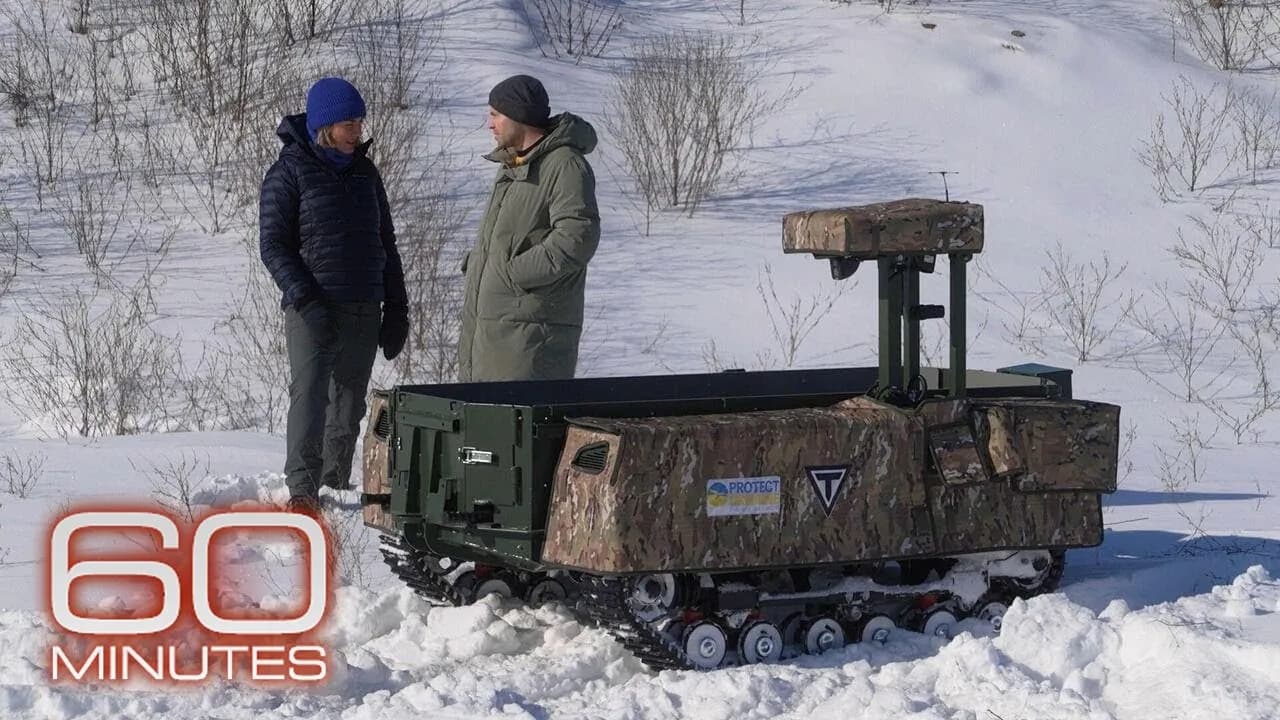
The Stanford Prison Experiment documentary showed people with nothing in common who became friends after being trapped together, demonstrating positive human connection without political debates. A recent robotics innovation from SkyFall saved a soldier using a drone flying 30 kilometers away. The system uses a casket-like pod under a drone. A soldier was evacuated when no other method worked—neither walking him out nor using ground robots. The soldier's buddies packed him in, and the drone flew him out while maintaining communication throughout the journey. The soldier was being treated in the hospital the next day with his child on his lap.
Another anecdote from the Cool Knight 2 regiment involves two wounded soldiers being evacuated by an uncrewed ground vehicle that was hit by a Russian drone and disabled. The company commander, without body armor, drove a pickup truck to rescue them, throwing both wounded soldiers into the truck and speeding away. All survived. A dark sense of humor helps people in this profession maintain their humanity. At every level, the ability to show love toward each other through wry smiles and humor represents a complicated but beautiful aspect of human nature that tragedy can bring out in sharper relief than normal daily life.
Thank you so much for everything you do in the world, and thank you so much for this conversation. This was awesome.
Thank you.
Thank you, Lex. It's been great.
Yeah. Thanks for hosting this and for inviting us.
Thank you for listening to this conversation with Preston Stewart and Michael Kofman. To support this podcast, please check out our sponsors in the description, where you can also find links to contact me, ask questions, give feedback, and so on. Thank you for listening, and hope to see you next time.
Keep Lex Fridman in your library
Save the videos and channels worth coming back to, and find them again in one place.