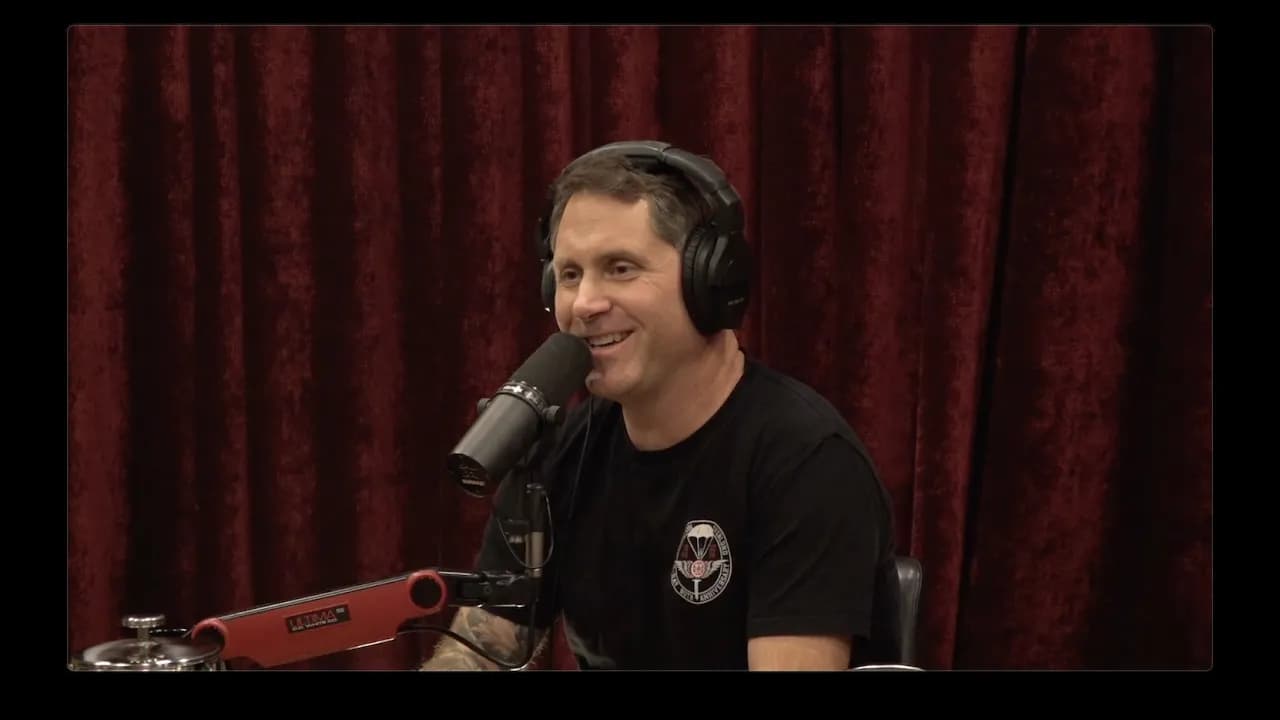
No One is Ready for This Coming War - Navy SEAL Andy Stumpf
In a Nutshell
Navy SEAL Andy Stumpf analyzes modern warfare's evolution—drones, AI autonomy, and Ukraine's trench-drone hybrid tactics—while debunking myths about special operations as superhuman feats, emphasizing that elite performers are "exceptionally average people" who succeed through emotional control, chunking overwhelming goals into micro-steps, and reframing failures as tuition. BUD/S training reveals quitting stems from fixating on distant endpoints rather than immediate actions, building resilience via controlled stress like drownproofing and diving tests. Life lessons stress authoring your response to hardship, avoiding isolation's suicide risks, modeling healthy relationships over no-quit suppression, and applying military tools to "suffer better" in civilian challenges.
These notes were generated by AI and may contain inaccuracies.
Andy Stumpf operated largely in the dark during raids, avoiding full moon nights due to high illumination. Even with night vision goggles, external light reduces technological advantage as enemies can nearly see operators. Aviators also avoid backlighting against bright skies.
Technology makes warfare both more humane and dangerous. During service, drones meant Predators, Reapers, or surveillance platforms for situational awareness. Never anticipated internet-ordered drones as kinetic options, like those built in Ukraine or smaller ones from Iran. Videos show people fleeing DJI drones that detonate—hard pass on involvement.
Field medics receive different trauma training due to new injury types. Late Afghanistan and Iraq were IED-heavy with explosive wounds tearing bodies apart. Drone warfare causes similar explosive injuries, possibly more aggressive or powerful.
Ukraine features cutting-edge electronics alongside World War I/II-style trench fighting at close ranges, like firing AKs around corners—a high-risk strategy.
AI phases: human in the loop (human final decision, AI-assisted); human on the loop (overwatching AI); human out of the loop (fully autonomous)—terrifies everyone. Anthropic (possibly Claude) reportedly stood ground morally against enabling mass surveillance or out-of-loop AI. Autonomous AI decisions faster than humans create tactical disadvantage; adversary must match or lose. Fears Terminator-like future working for robots.
From SEAL background, AI unlikely for close-quarters tasks like crossing door thresholds to solve problems (not always killing, depends on target actions). AI aids electronic spectrum, planning, analysis, targeting, timing. Robotic dogs (Rathon?) or drone control might evolve, but not yet. Go/no-go decisions by ground force commander based on criteria, not just intelligence packages—except triggers like cell phone pings.
Ghost Murmur detects heartbeats from aircraft (not space). Andy skeptical—saw Bigfoot online too. Prefers not revealing TTPs (tactics, techniques, procedures). Aviators have location-identifying methods detectable by aircraft; higher altitude improves line of sight. Heartbeat detection possible but improbable; simpler ways exist. Rejects quantum electrodynamics on Apache helicopters filtering animals to zero in from 40 miles.
Call signs from mistakes, not proud moments (e.g., galactic training errors). Andy's was just "Andy." Stupid ones involve alcohol, like Bone Crush for 142 lb person or Reaper.
Pilots ejecting have tools: ejection seat includes life raft, firearm, radio, beacon, food. SERE school (Survival, Evasion, Resistance, Escape) for aviators and special ops. Example: Keegan Gil ejected from Hornet ~3 knots under speed of sound, nose-down into Atlantic Ocean. Ejection felt like reversing unbroken bones; cold water shunted blood vessels, preventing bleed-out (hospital months). Aircraft vaporized on impact. Coast Guard nearby rescued after air combat maneuvers.
Aviators are specialists (e.g., F-15 weapon systems officer, no flight controls). SERE based on Vietnam (Hanoi Hilton, tap codes—5x5 alphabet). Warner Springs east of San Diego: classroom on capture, questioning, boundaries of info release (people break under pain). E&E simulation: group navigation, evade "enemy," caught after 2.5 days in slappy camp (dog kennels, music, discomfort, interrogation).
Longer evasion = better movie actor: 36 hours Mark Wahlberg, 48 Brad Pitt, 72 Chris Hemsworth.
Two truths: outsourcing killing via screens removes burden but enables more effective killing. Should not be flippant; pulling trigger (or equivalent) should scramble worldview permanently. S.L.A. Marshall study (flawed data—math doesn't add up) claimed few WW2 soldiers fired at enemies, leading to silhouette targets from bullseyes. Grossman's On Killing built on it. Vietnam vets shot everything until out of ammo. Tech might bypass moral hesitation—killing last resort, avoid flippancy.
All three of my kids saw Charlie Kirk's death unconsentingly on social media. That was the hardest conversation, especially knowing what their dad did. They have asked about my old job maybe five times. I don't talk about it; nothing military-related at the house. I just try to be their dad. Their generation is terminally online, scrolling during formative years. Filters aren't effective enough; you'll see people dying online, something most never see in real life. That barrier is good; almost nobody crosses it. People talk big but aren't willing. It shouldn't be talked about flippantly; don't remove barriers.
Tens of thousands of videos seen online are rookie numbers—just porno. The graphic angle of that death wasn't intended to see. Contending with freedom of speech vs. freedom of exposure. Some things we don't insulate from, but a guy killed graphically—who needs that for human development? Stuff exists and will; unknown impact on developing psyches.
Served with tremendous people, inspiring in every regard. They set the standard. Special operations community comprised of exceptionally normal people tasked with exceptional things. They suffer same life ailments. Unrealistic expectation they can do/tolerate anything, impossible to knock down—not true. Exceptionally average people.
First day of BUD/S: couple hundred people—D1 athlete can't swim, gone; marathon runner struggles swimming. Physiology sorts itself. Many look like grocery store checker—still savages, normal people. Forgotten often. Can lie to yourself in community; expect superhuman from self, head to dark place. Not as unique as thought; struggle differently. More in common with grocery bagger than think. Makes it easy to say "I can never do that because they're different"—excuse. Not saying take grocery bagger to BUD/S, but similarities vast.
Different experience as instructor. Some play roles/caricatures. Returned 10 years later rehabbing injury, into GWOT. Volunteered in peacetime 1997; prior SEALs post-Vietnam never saw combat. Training hard regardless. Class started 180, graduated 18 originals. Peel off daily, first phase mostly. Don't talk to them; shifted to another division for Navy needs. Can return after fleet time, rescreen—many legendary operators failed first time.
As student, chaotic: praised one day, ass handed next. Attention to detail, follow procedure regardless. Hard concepts at 18. Lens: just training, no war. Returned 2006, five years GWOT—aha moments. Attention to detail not about knife cutting hair or 1918 life jacket CO2/screws/rust/sand. Keeps alive following tactics when world falls apart. Time management, emotional control, decision-making.
Only instructor 18 months, then back to SEAL team with these people—pour knowledge for benefit/survival. Not treat as red-headed stepchild.
Hell Week fifth week: M60 blanks, smoke grenades—intro to combat. Class walked to beach, bullhorn "hit the surf"—run into water. Hated our class due to leadership. Leader at all times; they did not like me (not leader then). Failed leadership roles later—not technical capacity. Misconception: special ops naturally leaders in any situation—not true. Best and worst leaders there. Still succeed, get job done. Canvas group: some liked/appreciated, others lucky no dick in coffee cup.
Failures reframed as tuition payments. Some inexpensive, some to bankruptcy brink. Easier to get comfortable failing; cost of doing business. Didn't view that way for years—blame externals. Reframe as lesson applicable forward. $5,000 mistake saves $500,000 later. Person today because of failures/lessons.
Stayed 10 extra years in bad relationship due to no-quit identity. Talked self out of quitting. Everyone post-decision: good job, decade earlier. Rather people fall short, know when to walk away than destroy self. Fine line resilience vs. suppression; confuse suppression for strength. Giving up too soon vs. leaving on table vs. stopping pre-injury. No external tool measures. Emotional harder: erode well-being slowly; always one more day.
Mastery of negative self-talk encourages staying. Currency was never quitting. Pull back curtain: average people. Job/family suffer—family first before job. Unwillingness let down/admit falling apart. Guys get out, struggles. 50% pro athletes divorce first year post-retire. 270 days/year on road, independent parallel lives to 365 home—lost purpose, identity deceleration. Put brakes early, eye horizon.
Until view self as author of life, victim of it. Almost no control over events, complete control response. Life sucks? Suck with it or take control, be better. Accept, focus on controllable: actions, thoughts, internal monologue. Take responsibility for contributions, including traits once strengths now costing. No-quit attitude to everything heads to failure. Control tools.
Apply to alcoholism: never quit drinking, add heroin—out of control. Rather fall short than destroy self. Few things worth that.
Varies. Some marry strippers.
Divorce rate in special operations hovers at 80-85%, anecdotal based on experience. Even with high rates, 15% make it, including high school sweethearts who grow together despite separations. Much depends on what was modeled in childhood; people replicate those relationship avatars. Regret for staying 10 years longer in a marriage: reached point of asking if he'd want his children to follow that path. As the most influential person in children's lives, modeling something undesirable despite personal view of never quitting. > Would you want that for your kids?
AG1 simplifies nutrition to one scoop a day with 75 vitamins, minerals, probiotics, whole food ingredients. Drunk every morning for over 5 years. AG1 NextGen backed by four clinical trials: fills nutrient gaps, boosts healthy gut bacteria 10x, improves key nutrient levels in 3 months. Refined since 2010 with 52 iterations, more bioavailable. 90-day money-back guarantee. Free welcome kit with D3K2, flavor sampler at drinkag1.com/modernwisdom.
Spent time with Joo (likely Jocko) over Christmas; he extolled virtues of his marriage. Example of one that worked: about one and a half arguments in 35 years. Observed Jocko roll on floor with Mark Zuckerberg. Robot about half the weight and size, tenth the experience of Jocko. Fun to watch, like UFC 1. Zuckerberg 5'9", average height, packed on muscle, training. Best part of jiujitsu: lying on other men or having them lie on you; not all tops, sometimes bottoms.
Rob O'Neal conversation caused tsunami of reactions. First sit-down; he reminded Andy of taking him on first tandem skydive (didn't remember, took 1500 people). Never met him intentionally. Military operation (Neptune Spear, Osama bin Laden raid) has more divergent stories than any other. Knows many involved, wasn't there himself; stories don't align with common narratives.
Stories deviate at stairs from second to third floor (bin Laden, wives, children on third). Stairways tactically dangerous: narrow, grenade risk, minimal personnel. Got thin on bodies. First person saw movement, shot; entered room. Rob encountered bin Laden, shot him. As preparing pictures, another guy shot bin Laden in face multiple times in front of Rob. Third floor team decided pre-debrief what to include/omit, including initial and follow-up shots.
Shooting dead enemy combatant in face is mutilation, not advisable. Happens in ugly occupation showing best and worst of people. Difference between clearing (inflict wounds incompatible with life, e.g., headshots to prevent resurrection) and post-secure (unwrapping tactically, gathering info, photos). Front-line operators sharpen teeth for decades fighting same enemies.
Feels like righteous retribution in moment, probable immediate regret. Personal opinion: need to be better, beacon to world. Play by rules (Geneva Convention, rules of engagement, law of war) with flexibility to accomplish mission. Flip coin: American pilot killed in Iran, AK magazine to face on internet—won't go over well. Sets barrier for enemies' actions. Country and flag must stand for more.
Contention over US entering conflicts; impacts military service appeal. In UK, no early boarding for first responders/military (unlike US). Hundreds of UK flights, never heard it. Wore Black Rifle Coffee t-shirt with American flag; man thanked for service on plane. Reflex response in US. Dad's generation (WWII?) hid service unlike modern veterans.
Transport 9/11 to UK: capable of tall buildings? Had 7/7 bombings. If UK responded like US to Afghanistan, would mentality change? Correlation post-2001 in US: revered veterans with thanks, early boarding, parades. Now pendulum swinging back; 20 years anomaly. WWII guys revered, fueled baby boom.
Revering community above others dangerous: manipulatable, poor examples swing pendulum back. Naturally correcting.
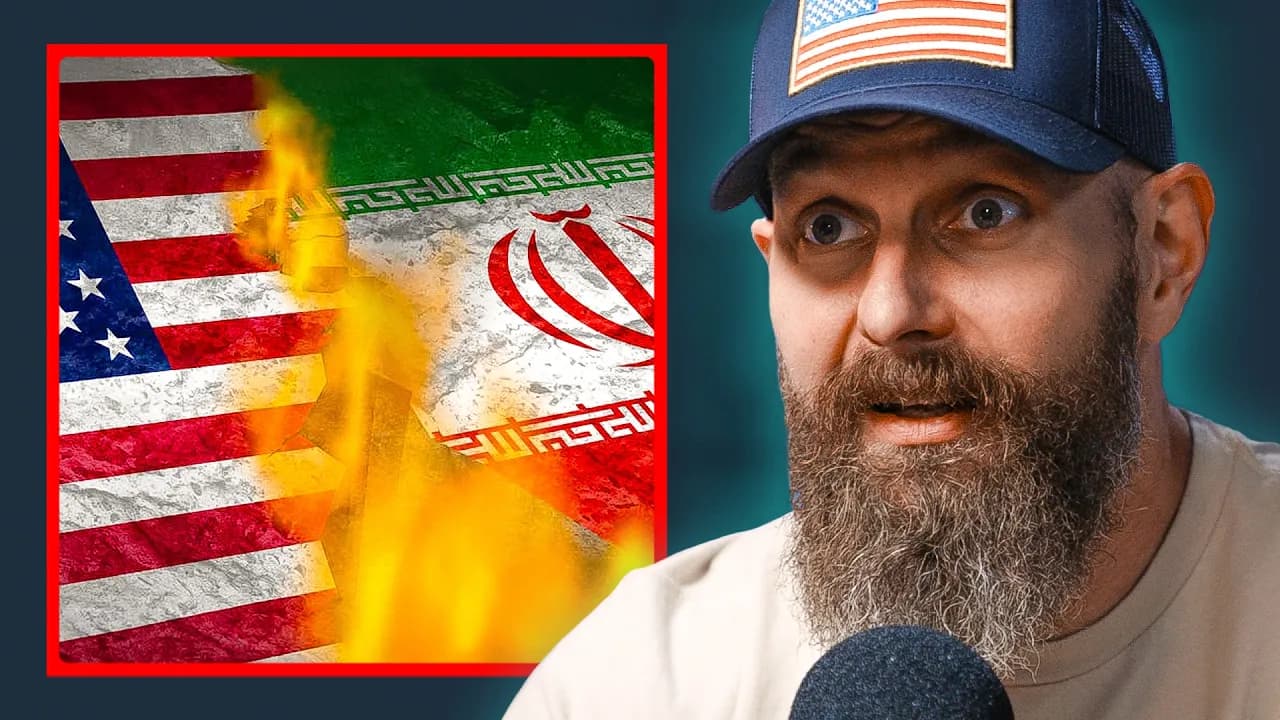
Potential boots on ground in Middle East; likelihood increasing. End wars phase, but AUMF bent by presidents. Wary of no definable end state. Afghanistan: military objectives in 90 days, stayed 20 years, poor exit (left Blackhawk, day after Taliban flew one with man hanging from neck). Iraq withdrawal ~5 years ago (August 30, 2021 for Afghanistan). Like toxic ex. Iran enemy 47 years; sandwiched Iraq-Afghanistan (Oreo creamy center). Bailed with infrastructure, now back? Metrics unclear: destroyed anti-air but lost F-15s, A-10s, nuked own AH6s, C130s. Struck uranium enrichment last year, now can't let get bomb. Wish decision-makers had skin in game.
Function: 160+ lab tests (hormones, heart, metabolic, inflammation, thyroid, nutrients, liver, kidney, 50+ cancers). Vs typical 20 markers. Clinician-reviewed, flagged abnormals, personalized protocols, dashboard for trends. $365/year ($1/day), $25 off to $340 at functionhealth.com/modernwisdom code modernwisdom.
Wars by old men, young die. Commentary contorts on positions. Trump approval: fastest decline in history? Pattern: bump, decline, low/polarized. 46% approval/43% disapproval Jan 2025 (higher than 2017), now 55-60% disapproval, net -14 to -20. Easter post: told people to fuck off, "Praise to Allah." Theory: elected TV star president. No clear US plan scary. Tribalism: team jersey over country thriving. Rather side win, country lose.
JD Vance ran on America First philosophy. Next Republican candidate will have to unwind current policies while Trump is still president and answer for them, walking a tightrope without throwing him under the bus. Trump might not support them despite consequences. Kamala struggled similarly, asked to throw Biden under the bus while his VP. Republicans may have won because Democrats forced their candidate, stripping voter choice for fundraising reasons.
Mercenary organizations (guns for hire) are not the way forward; usually advocated by their owners. Should not rent the American flag—it should be issued on uniforms. If military lacks capabilities, restructure it instead of outsourcing, which cuts corners and allows actions military cannot. Outsourcing compensates for deficiencies dangerously. Example: Nuked Iranian assets to rescue pilot; contractors lack military-level support like combat search and rescue (CSAR). No "red button" for massive response in contracting—purely capitalist with minimum manning. Motivations often skirt rules of engagement, meddling in affairs US military cannot due to diplomatic/legislative restrictions. Outsourcing war leads to allegiance to biggest paycheck, e.g., those with Bitcoin wealth. US should not have its own private military contractor.
People quit when focusing on how far they have to go. As BUD/S instructor for 18 months (global war on terror shore duty), observed it as a laboratory on quitting. Millions spent on predictors (psychological assessments, sports background, family, socioeconomic status, pre-training)—attrition steady: 75% summer, 80-90% winter. His class: last hard winter BUD/S Hell Week. Quitters (8-9/10) express regret, wish they saw it through—leaves lifelong question mark.
Reasons for Quitting
- Small categories: life events (e.g., dad died), injuries (uncontrollable).
- Main: Overwhelmed by cold, tired, hungry, pain—viewed time/distance to goal (e.g., first day to graduation ~180 days). Seeing only the gap overwhelms; ripping days off a 180-stack barely motivates.
Reverse Engineering Success
Focus on microscopic next step, not total distance—bridge gaps with forward motion. Muscle that fails at BUD/S is between the ears. Chunk goals into digestible pieces, stack consistently. Hell Week: Sunday-Friday, most quit by Tuesday.
The muscle that fails at buds is not below the neck. It's between the ears.
No difference specified, but overwhelm is self-induced by time perception—nobody can force it. Quitters blame instructors, but instructors facilitate self-sabotage. Tactic: Talk casually, set wrong watch time, emphasize duration ("12 hours in water"), water self-doubt. Most effective non-physical tool—purely psychological. Reverse: Encourage focus on immediate survival/micro-steps. Does not make pain/suffering easier, but digestible to avoid emotional decisions. Huge life trajectory impact.
Many a wrong move was made by just standing still. Worst in ambush: stay in place behind cover (bullet-stopping) vs. concealment (hiding). Enemy maneuvers kill you there. Fear/scared legitimate, but must move—punch through or flank linear/L-shaped ambushes. Fearless people undependable (inattentive/sociopath/psychopath). Better imperfect momentum than paralysis—correct quickly.
Detach emotions from decisions. Second phase diving test: 20 minutes, knots in gear—follow procedure exactly (e.g., start from mouthpiece or manifold). 4 attempts; deviate = fail. Instructor watches breathing, taps for breath or waits (dick move). Tests stress management/procedure adherence, not diving—advise against recreational scuba post-pass.
Introduced in first phase, final event (book cover): hands/feet tied, bob 1 hour, swim pool length/return. Relaxing if water-comfortable (exhale for buoyancy). Hear instructors only head above water (bullhorn fun). Crawl-walk-run: fingers behind back, then velcro legs, full ties. Followed by mask retrieval/bobbing/somersaults (awkward, no science—generational trauma). Teaches survival/control in uncontrollable environment before thriving.
Not for hostage escape (e.g., dolphin off boat). 50m underwater swim: Freaks people out 1:1—unnecessary operationally, but builds stress tolerance. Instructors use tricks/tools, e.g., target foreign augment students first.
The 50m underwater swim is a great example, but the diving test or tread is even better. In the tread, students wear scuba tanks, fins, and a weight belt, treading water to the wrist for five minutes. Five or six students go at a time while others on the pool deck have their backs turned, only hearing the action. If a subpar performer loses their regulator, everyone hears it, wondering what's happening, knowing they go next. Someone might sound like they're talking to a dinosaur, then get pulled out unconscious and slapped back to life by an instructor with medical training. The noises make people react with dread, and instructors love it.
It warms your soul like a candle that starts a forest fire.
In the underwater swim, students jump in, do a front somersault, swim underwater 50m to the other side touching the bottom, flip again, and return. Smart students dive deep to compress lungs for easier breath-holding. It's a 1:1 instructor ratio, high risk. If unconscious on the final breaststroke and head touches the wall, they pass. Noises when surfacing sound like a drunk elephant trumpeting or blue whale. Students pass out only briefly but make wild sounds. Contrary to myth, passing out in water evolutions means failure except this one; normally, use hand signal for help or fail for not following procedure. Four attempts total: two one day, two the next after sleep. Most pass on third try.
Andy passed the diving test on third try. First failure 30 years ago: regulator knotted, head yanked left like Jacques Cousteau's, exhale blocked but inhale possible, water enters mouthpiece. Panicked thinking about 20-minute duration instead of the problem. Second failure similar. Third time, focused only on current problem: breathe out nose, continue crawling (accept non-critical malfunction). Chunking: solve one problem at a time.
Why didn't I just do this first? The only thing that exists in my life is that one problem at a time.
Proper attrition rate essential because job is dangerous. Training reverse-engineers real-world requirements. If nobody dies in training, not training hard enough—no stakes, no real push, no fear.
Most common death: drowning. Last pool death: vomited and aspirated underwater. Last student death post-Hell Week: fluid in lungs, expired in hospital despite destruction—sandpaper-like abrasion from constant wet sand, nursing injuries, allowed tennis shoes after.
Pursuit of easy life is a mistake; grind is life. Everyone has hard life—key is suffering well and enjoying journey. Acknowledge suffering instead of avoiding; no hack for hard work, but hack efficiencies elsewhere. Value earned through work most. Learn to enjoy hard journey; biggest enemy is self. As older, choose harder upfront for easier later. Shared suffering with friends brings joy, missed from SEAL community.
Be cautious, know what you're willing to die for—not everything worth it. Many pursuits seem important but prove inconsequential without thought. Slow down; not all decisions moment's notice. If house not on fire, think options, educate, reinforce along journey. Can't avoid mistakes entirely; advice to younger self often what needed now—same patterns, fears from past (e.g., cut from team, breakup) drive life. Andy's: fear less.
What do you fear most? Not doing it right, not getting it right, not being enough.
Prepare, overcome. Whatever challenge, it hasn't destroyed you yet.
Don't believe you're only one struggling; isolation damages brain. Similarities outweigh differences. Special operations high suicide rate tied to perceived isolation post-service. Nobody knows your inner world; most worry about same things but isolate, worsening it. Common pre-suicide thought: world better without me, can't continue—plus isolation.
Feeling of being alone is one of most dangerous lies. Never asked for help without receiving it; overwhelmed by people waiting to help.
Competence curse: high performers seem sorted (diet, sleep, meditation), friends hesitate to offer aid thinking you don't need it.
Curse of psychological strength: rewarded publicly (discipline, grit, composure) but costs privately. Relationships need attunement, not endurance. Strong endure hurt, rationalize, stay too long—self-abandonment. Childhood patterns: push through disconnection for love. Pointless suffering exists despite belief hard = valuable.
What you are praised for in public, you pay for in private.
High performers have unusual inputs/environments internally; normal inputs = normal results. Success often pitiable cost; be careful what you wish for, envy misguided. Radical in meritocracy: say "I'm good."
Andy prefers living in Montana over downtown New York City because he values his current life. Many former special operations guys have that glint in their eyes, a telltale sign. He resisted the idea of being pinned down physically after the conversation, preferring to turn the mirror on himself and share it with others.
The most common reaction to Andy's background is that people call him crazy and say those experiences must have been unbelievable. They were, and they are statistically out of reach for almost everybody. If he does nothing with them and they only impact his life, he would regret it on his deathbed. He wants to package those experiences to help people, aiming to make the world a little better than when he entered it. Money and nice things are cool, but they bring no real happiness. Teaching someone a tool to attack a problem in their life is far more rewarding than buying something.
Andy aims to give people access to experiences and lessons they think are unavailable. These can be learned through organized sports; nothing is uniquely created in the military. Things are reinforced to a higher degree there because consequences can get gnarly quickly. If they work in that pressure cooker environment, they will help crush challenges in personal and professional life.
He resisted writing for years, talking shit about other SEALs who wrote books, and now faces the same from others. But he wants to create tools, foundations, and frameworks for people to apply to their lives so they can suffer better.
"Suffer better is a wonderful tagline."
If the world went sideways from a zombie virus outbreak and they had to form a militia to save humanity, Andy Stumpf would be the top draft pick—the tip of the spear, or base of the shaft. The rest of the militia would be exceptionally bad.
Andy appreciates the massive platform built and is proud of it. He saves emails from people whose lives changed due to something heard on the podcast—a folder with a dozen people who chose not to kill themselves because of it. Books are measured by bestseller lists, but true success is changing lives through accessible insights. People realize they are simpler than thought, can use these tools, and will make mistakes but suffer better.
Keep Chris Williamson in your library
Save the videos and channels worth coming back to, and find them again in one place.