Russian Honeypot: I Was Trained To Control A Man's Mind With Sex! | John Kiriakou & Aliia Roza
In a Nutshell
Ex-Soviet intelligence operative Aliia Roza was trained in KGB-derived psychological techniques to seduce high-value targets, using "love bombing," information control, and anchoring methods to extract secrets through sexual relationships. The discussion reveals how these same manipulation tactics are currently deployed in Chinese espionage operations, including the alleged compromise of Nvidia CEO Jensen Huang by operative Alice Wong to steal advanced AI chip technology. Roza now teaches defensive recognition of these techniques while acknowledging the moral trauma from facilitating target assassinations during her operations.
These notes were generated by AI and may contain inaccuracies.
A honeypot operation involves a beautiful woman willing to sleep with an important and well-connected man in exchange for something. The FBI estimates there are between 10 and 15,000 foreign intelligence officers in Washington. Many intelligence officers maintain cover jobs, such as museum curator from 9 to 5, then become CIA officers after 5.
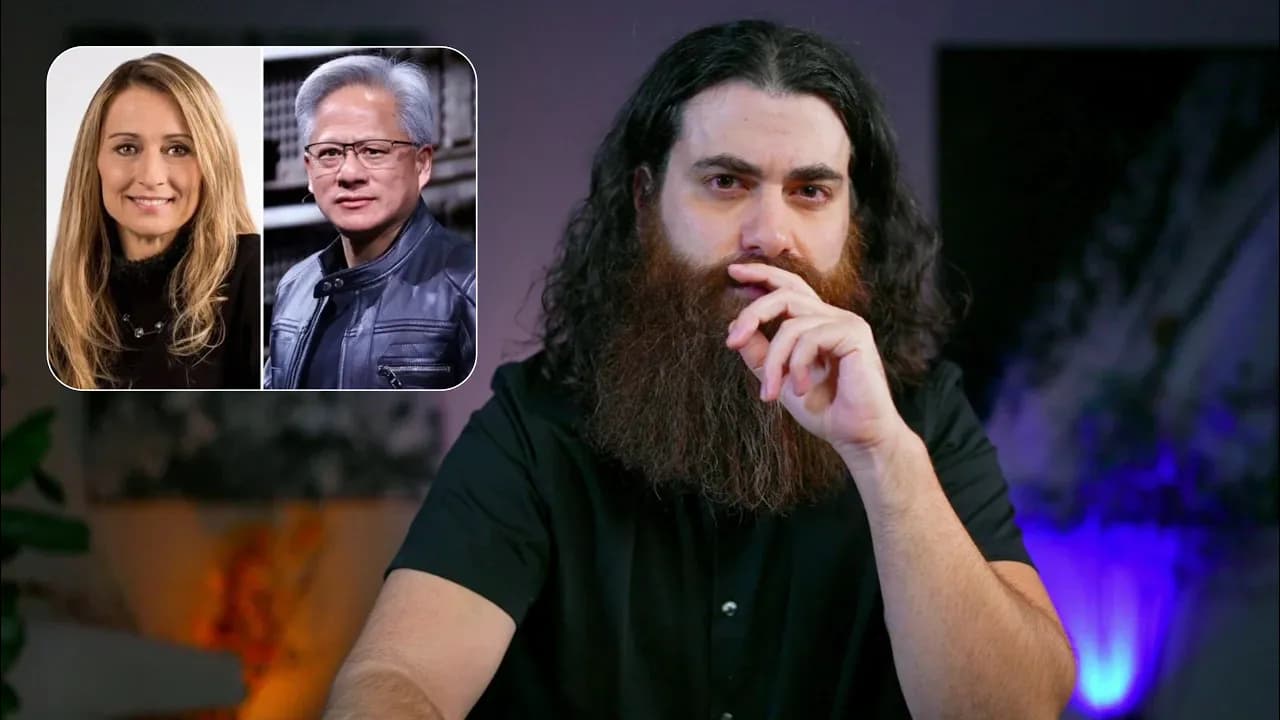
Jensen Huang, CEO of Nvidia, admitted to having an affair with a Chinese spy. The Chinese ran a honeypot operation against him because they sought the most advanced chips for their AI development. The US had not been willing to sell or allow Nvidia to sell them the most advanced chips, so the Chinese obtained them through espionage.
Alice Wong, who claimed to be an anchorwoman for Hunan TV and later CCTV, was the operative. Hunan TV issued a statement saying they never heard of this woman. There is not one second of video from CCTV of her anchoring anything. She became managing director at Mega Speed International, a purported Singapore-based tech company that actually had only a small office with two employees in Singapore, neither of whom were engineers, and an utterly empty office in Malaysia. The company somehow had $5 billion to buy Nvidia chips.
In 2023, Alice Wong became managing director at Mega Speed. The company had no website, no annual report, no board of directors, and no substance behind it. In June 2024, Jensen Huang and Alice Wong were photographed together for the first time. They were inseparable, and she could call him and he would immediately show up. This occurred despite Jensen being married for 41 years. In May 2025, they were photographed together in Taiwan. In October 2025, they were investigated for the $5 billion chip acquisition.
The CIA has infiltrated the Chinese Ministry of State Security. Somebody reached out to the CIA saying there was a problem in tech involving Jensen Huang. The CIA wrote a memo in March 2026 that was delivered to the president in early April 2026 warning that Jensen Huang might be compromised by a Chinese intelligence officer.
In April 2026, Donald Trump became aware that Jensen was compromised. However, months later in November, Trump sat next to Jensen at the White House. When Trump went to China, Marco Rubio blocked Jensen from traveling with the president. Trump then called Jensen from Anchorage, Alaska, and had him fly to China to join him, insisting Jensen sit at the same table with Trump and Chinese Premier Xi Jinping.
The business risk involves the Chinese reverse engineering the chips. The greater danger is pillow talk, where Alice Wong could extract information about conversations with President Trump, trade matters, CIA or DoD activities, DARPA chip development, and NSA information.
Jensen was vulnerable due to ego and age. A man married for 41 years, powerful and rich, became susceptible when a beautiful young woman made eye contact, making him feel young again.
Aliia Roza was born in the Soviet Union in a small gray city. Her father was a high-ranking officer who brought her to the criminal investigation department fighting human and drug trafficking when she turned 18. She had enrolled in university to become a designer but was told she had no choice because her father had invested time training her to become an operative.
Her grandfather fought during World War II and was a national hero. Her father came from a Muslim background, and the family valued patriotism highly. At 18, she was a virgin who had never kissed a boy and knew nothing about communication with men.
At the academy, 350 students entered the first year. The principal handpicked five girls including Aliia for a secret program based on classified KGB techniques. Selection criteria included height ideally 5'6" and age before 26. All five girls were young and pretty but different: one blonde with blue eyes, one with ginger hair, Aliia with Asian background, one with long black hair.
Seventy to eighty percent of training was about human psychology, especially men's psychology. The rest covered how to control a man's brain using intimacy. The training taught how to establish relationships with targets through gathering information, then love bombing with compliments. The strongest emotion for a human being is an orgasm, which can be used to program the brain to like a target.
Love bombing involves complimenting a target's achievements and work rather than physical appearance. For intelligent, mature men, focusing on career accomplishments is most effective. The technique builds rapport by finding common interests and creating a sense of likeness in the target's brain.
After establishing connection through love bombing, asking for a small favor causes the target's brain to feel investment in the relationship. When someone does something for another person, they become more likely to like that person because they have invested time, energy, and effort. This also makes the target feel valuable.
Aliia states these techniques have become implemented into her DNA and are now her nature. She applies these communication methods in business and all types of relationships, with people noting she remembers everything about them.
Aliia Roza explains that the techniques learned during honeypot training have become integrated into her personality because they proved beneficial for human interaction. She shares these techniques with the world because they helped her survive dangerous missions and stay alive. She emphasizes that women in patriarchal societies face significant challenges including lack of equality, career difficulties, and lower salary payments. The training provided tools to avoid becoming victims, as she herself experienced abuse and rape by commanders, went through suicidal thoughts, and worked with therapists afterward.
Aliia confirms she was trained to love bomb as part of establishing likeability and trust. After love bombing, operatives move into information control where they analyze the target's inner circle including their activities, locations, social connections, and interests. This involves inserting themselves into the target's life by attending the same events and conferences.
John Kiriakou notes that Western intelligence services lack the manpower to deploy thousands of agents hoping one succeeds, unlike Chinese operations. The Chinese intelligence service has become more sophisticated over the past 20-30 years. When Kiriakou joined the CIA, Chinese intelligence focused almost solely on technology but had poor English language capabilities, limiting their threat level. The primary concerns were Russian, Cuban, and North Korean intelligence services.
Aliia Roza reveals she is not a natural extrovert and was previously very shy and unconfident. She requires recovery time after public speaking events, spending days alone to recharge without even speaking on the phone. She believes these skills can be learned and crafted rather than being innate. The conversation addresses whether cheap labor in China enables training and deploying numerous agents with the expectation that some will succeed.
Aliia Roza's salary was $100 per month while working 6 days a week, sometimes 12-hour shifts. She notes that actual honeypot agents receive less compensation than prostitutes in movies. John Kiriakou recalls a Russian diplomat making approximately $100 monthly, with his wife teaching ice skating to supplement income. The motivation is not financial but national prize and patriotism, as Aliia was programmed to believe sacrificing her body was necessary and dying on missions was considered heroic.
In Aliia's specific cases, she was assigned individual targets rather than competing with other agents. Social engineering involves creating a virtual reality around the target where they notice signals and signs without understanding the manipulation. This requires team coordination as it's difficult for one person to execute alone.
Aliia describes a mission targeting a criminal lord similar to Pablo Escobar who built an army of followers from homeless young people after the Soviet Union's 1991 dissolution. The target had been heartbroken when his girlfriend (from Uzbekistan with long braided hair and specific fashion style) became pregnant by another man while he served in the army. The team created social engineering scenarios using actors resembling the target (blonde, blue-eyed, tall men) with Asian-looking women in various relationship stages - kissing couples, pregnant couples, and couples with babies - placed in locations the target frequented like boxing gyms and streets over time to plant seeds of desire for that type of relationship.
Aliia never approached targets directly but created desire first. Before meeting her target at a club, she had gathered complete intelligence on his preferences including drinks, jokes, women he pursued, and behavior patterns. She became his "perfect woman" by adapting to his interests, laughing at his jokes, and offering to help with his schedule and weaknesses without explicitly stating them. The social engineering phase lasted 2 months, followed by an 8-month relationship where she became his girlfriend, collected information 24/7, listened to telephone calls, and installed bugs in his house.
Information was passed through hidden spots used by secret police agents, leaving physical notes with dates and upcoming mission locations. Aliia also pretended to be a student, using college visits as cover to meet team members and provide updates through back doors.
Special program techniques allow dissociation of body from emotions during sexual relationships with targets. One method involves placing the target's picture in front of the bed and using anchoring techniques with specific words and perfumes. Aliia would masturbate while looking at the target's photo, smelling specific perfume, and repeating anchor words like "I'm the best" or "I'm the queen" to program arousal responses. The technique involves reaching orgasm during self-stimulation but not completing during actual encounters, maintaining sexual tension and arousal that manifests physically through blushing, different eye blinking, and altered movement - creating pheromones that targets can sense.
Aliia never caught feelings with targets, never missed anyone, and never developed emotional attachments. She always prioritized work over love or relationships. She describes herself as a sociopath, stating she is "just not there" emotionally and different from others. She warns people who become obsessed with her that she is not suitable for them. John Kiriakou confirms the CIA actively seeks people with sociopathic tendencies who can lie convincingly and pass polygraphs, though they don't want actual sociopaths who would lie to the agency itself.
Aliia transformed her mission from offensive intelligence work to defensive education, teaching people to protect themselves from manipulators, narcissists, toxic people, abusers, and predators. She applies the same skills previously used with her body to now help others recognize manipulation and social engineering in dating, business, family relationships, and news media. Former agents lack sympathy toward targets, viewing people as tools and operating on facts and analysis rather than emotional connections.
Aliia believes she was born with certain abilities that her father cultivated and trained when she was a young girl. She describes her father as having similar traits and always saying similar things to what she now shares. John clarifies whether she believes these abilities were innate and then trained and cultivated with specific tools, which she confirms.
Aliia distinguishes between being alone and being lonely, noting that loneliness involves sadness and a desire for companionship during activities like watching movies. She states she doesn't experience this feeling and prefers to work, read books, and focus on her work. John acknowledges he has been lonely and is currently seeing someone, but notes he gains strength from being around people, even difficult ones.
John describes being able to go out with a "bonafide terrorist" and have an enjoyable time, which Aliia connects to analyzing and collecting information. They discuss how establishing connections through storytelling can lead to recognizing someone as a psychopath while still having a good time. Aliia emphasizes that collecting these memories is what she enjoys.
John questions what motivates Aliia given her level of effort and focus, noting that most people's efforts center around wanting love, acceptance, and family. Aliia explains that her Instagram following of a million followers came from sharing her story, with many women messaging her saying she is their role model and they want to be like her.
John challenges whether Aliia has genuine empathy given her statements about lacking it, to which she responds that she looks at humans as if they are all three years old from a mother's perspective. She describes having seen significant horror and states her end goal is to buy an island, adopt thousands of orphan children, build an orphanage, and educate them without internet, TikTok, or manipulative tools that governments use.
Aliia clarifies that she feels emotional empathy for humans because she genuinely wants them to become stronger and independent from manipulation. When asked when she last cried, she states she doesn't remember and hasn't cried for several years, though she sometimes does cry.
John references a scene from The Sopranos final season where psychiatrists discuss how sociopaths feel empathy for children and are kind to animals. Aliia confirms she has a dog and cat. John notes that sociopaths will readily harm adults who aren't children or pedophiles.
Aliia states she cannot stand injustice, unfairness, and crime, feeling responsible because she has knowledge and may be more advanced than civilians. She believes this moral motivation comes from how her father raised her. When asked about her mother, she says she is close to her mother but would never want to be like her because her mother lives in a victim mentality, whereas Aliia has gone much further.
John notes that many people feel powerless and use victim mentality language, feeling the world happens to them. He finds it remarkable that spies are trained to take control of situations and wants to explore this perspective for an audience trying to take control of their lives.
John describes how CIA operations involved in-depth conversations with headquarters about manipulating targets, including asking for suggestions and ideas. He mentions that during training, old instructors would tell war stories from operations in places like Moscow in 1968 and Mexico City in 1974. After John advocated for it, they created a class called "non-traditional operations" featuring these stories.
John explains that after taking the non-traditional operations class, he could send classified emails to veteran operatives asking for ideas on approaching targets they wouldn't encounter at diplomatic cocktail parties. The veterans would provide various suggestions that proved effective.
John states that in his experience, money motivated targets about 90% of the time, with the remaining 10% involving ideology, desire for excitement (referencing James Bond or Jason Bourne movies), or revenge from being passed over for promotions. Aliia adds desire for a legacy as another motivator, citing Steve Jobs and Elon Musk as examples.
Aliia describes emotional dependency as establishing a connection where the target feels they are soulmates who understand each other deeply. The target receives significant attention, love, and energy, feeling they can only be their best version of themselves with this person. She explains that seduction creates a state or bubble where the target feels like their best version, leading them to love that state.
John asks whether espionage attempts to copy what happens naturally when humans fall in love, noting that the described techniques sound like great relationships but are used to control and influence decisions. Aliia confirms this approach, emphasizing that it's not love but rather obsession.
Aliia explains the isolation phase involves separating the target from their inner circle, particularly family members and friends who might have opinions about the relationship. The technique involves subtly planting seeds rather than direct attacks - for example, suggesting a sister lost money or said something negative about the target's business or image, making it seem like the target's own idea to distance themselves.
John describes how intelligence agencies recruit anyone who can provide actionable information. He shares an example of a Defense Intelligence Agency agent whose prized recruit was a San Francisco cab driver with cousins in Afghanistan. However, the preferred targets are those with direct access, such as White House valets who overhear everything while laying out the president's suits, even though they never speak directly to the president.
Aliia agrees that the best informers are those who feel unappreciated and are cheap labor. John confirms this assessment.
Aliia describes gaslighting as the most damaging technique, where the target stops believing in themselves. The manipulator constantly refers back to what the target says, planting seeds of doubt and creating internal conflicts. She demonstrates by gaslighting John about his previous statements on honey traps, using his own words and bringing additional facts to make him question his position.
John explains that gaslighting dulls the target's sense of self and makes them question themselves through subtle repetition of things that may be partially true. Once targets start questioning their abilities and beliefs, they become more easily manipulated.
Aliia describes using various disguises depending on the mission and target preferences, including different wigs, makeup, fashion styles, and body language. She mentions mirroring techniques where operatives adapt their voice, words, and even breathing to match the target's patterns.
Aliia explains that body language mirroring on first dates can indicate manipulation. She describes testing whether mirroring is intentional by changing gestures and observing whether the other person follows. She notes that pickup artists use these same techniques and teaches women to recognize these red flags.
Aliia provides a specific test for determining whether mirroring indicates manipulation or genuine interest: change a gesture and see if the other person follows exactly. She also warns about people who claim too many similarities too quickly, suggesting soulmate connections or past-life recognition.
Aliia admits she still uses some techniques like telling men they are soulmates, though she claims to do it out of boredom for flirting and fun rather than operational purposes. She states she has never been attracted to any man since her time as a honey trap agent.
Aliia reveals she has worked with therapists for 15 years to address her inability to relax and trust men, partly because she knows too much about how men's brains work. She suggests she might only be able to connect with a former agent or military person. John references a friend with similar issues who only has relationships with intelligence officers, noting the problem of constantly running operations against each other.
John confirms the CIA provided training on body language, including mirroring techniques and reading others' body language signals like leaning toward or away from someone and maintaining eye contact. Aliia explains specific honey trap techniques including maintaining appropriate eye contact distance (within 2 meters), keeping body position open, avoiding placing bags on laps as barriers, relaxing shoulders, and using hair touching to display vulnerable areas like wrists and neck.
Aliia emphasizes the importance of relaxed, open posture without crossed legs, maintaining eye contact for a few seconds before looking down shyly, then reconnecting. She explains this creates an impression of vulnerability and openness to contact.
The technique involves touching lips while creating associations with James Bond, then touching cheeks or face. Showing the wrist while displaying blushing mood creates excitement mixed with shyness and vulnerability. The eye contact pattern follows a triangle method - looking down, then back for a few seconds, then down again. This includes looking at the lips and smiling to mirror facial expressions, creating playful and vulnerable dynamics.
The milk technique works by using word associations to quickly gather personal information. When asked what "milk" brings to mind, responses include childhood, mother, and babies. Within one minute of questioning, an operator can determine that someone was connected to their mother, is nostalgic about childhood, had a nice childhood, misses it, and wants to return to that nurturing environment.
The technique involves identifying important past experiences or life elements where the operator can install themselves as the perfect person who provides what the target is lacking. If someone mentions having their teddy bear, the operator would adopt a nurturing mother archetype position, offering hugs, back massages, and saying "John, darling, you're so tired. Come here. Let me hug you. Let me carry you."
The mother archetype position involves nurturing behaviors that mothers typically perform. If the target mentions "boobs," this indicates the need to shift from the mother archetype to the lover/seducer archetype instead.
When asked what "cow" means, responses include stability, food, ground, grounded, and support. This demonstrates how the milk technique can reveal different psychological associations and needs.
Espionage using these techniques happens every day, all over the world. The CIA generally doesn't use long-term relationship building anymore because such relationships require honesty and directness between agent and officer. However, the Russians, French, Israelis, Chinese, and a handful of other countries continue these practices.
Washington has more spies than anywhere else on the planet, with the FBI estimating between 10 and 15,000 foreign intelligence officers in the city. Thousands of potential dead drops exist in any given neighborhood, including under foot bridges, behind bushes, and in front of libraries.
Jensen Huang faces multiple problems: investigation by the Nvidia board with outside investigators, potential FBI investigation involving CIA, NSA, and Pentagon that could become criminal, and no prenup agreement. Reports suggest the divorce could cost between 100 billion to half a trillion dollars, making it the biggest prenup payment in history.
Nvidia will have a meeting on November 17th to disclose earnings. The affair with the alleged Chinese spy went public three weeks ago, causing shares to drop 20%. Given that Nvidia is the only company with the necessary GPU chips and the focus on AI, buying shares during the dip presents an opportunity regardless of personal scandals or divorce proceedings.
Jensen Huang has 60 direct reports, creating a flat organizational structure. When asked about successors, he has consistently said there is none. The company spends approximately $10 million annually on Jensen's security, raising questions about why Alice Huang's background wasn't properly investigated despite their public relationship.
Alice Huang is married to Kangwi, a Chinese investment and fund executive who previously headed a fund and founded the Shanghai-based private equity firm Hexi Investment Management. Kangwi has known Jensen since 2010 and reportedly introduced Alice to him. Kangwi has faced scrutiny from Chinese authorities including fines and criminal sanctions for alleged stock manipulation.
The CIA has a program called the Knock program for non-official cover operations. Officers go overseas posing as wildlife photographers, museum curators, or other professions rather than as state department or defense department personnel. These officers maintain their cover jobs from 9 to 5 and conduct intelligence work after hours at cocktail parties.
Unlike official cover personnel who rotate every 2-4 years, non-official cover officers remain in position for 20-30 years. Cover can be provided through legitimate companies where CEOs and security heads agree to provide positions when the CIA requests assistance for national security purposes.
Proper backstopping involves setting up legitimate-seeming companies with actual phone numbers that ring inside CIA headquarters, or establishing real offices with working staff in locations like Reston Virginia, Tyson Corner Virginia, Singapore, or London. This contrasts with situations where two people work in a storefront without knowing what their supposed company does.
Reports indicate Alice slept with Jensen and conducted the affair while married to Kangwi. The question remains whether Kangwi knew about the operation, whether he might be positioned to buy Nvidia shares at the reduced price, and what his role might be in the overall scheme.
If Kangwi has known Jensen since 2010, Alice potentially engineered her way into the relationship as part of a 16-year operation. This represents a much longer-term and more sophisticated approach than typical intelligence operations. The question arises whether Kangwi genuinely loves his wife or if this represents a business transaction.
The president's response to welcome the situation onto his plane raises questions about whether he genuinely doesn't care, knew about the situation before April 2026, or might be part of the operation. Alice joined Kangwi's firm as a senior executive shareholder around 2015, raising questions about the source of that money and positioning.
The CIA generally doesn't conduct operations lasting 10-15 years because promotion structures don't support such long timelines. Officers need to make recruitments within 2-3 year periods to advance their careers, making extended operations impractical within the agency structure.
Trained individuals see through public narratives to identify the orchestrators behind events. While the public focuses on spy accusations and unfaithful husbands creating social media memes, the real question concerns who organized and profited from the situation. The Chinese intelligence service operates as a bureaucracy with constant personnel changes, requiring someone to maintain operations over 15-16 year periods.
The federal bureaucracy, sometimes called the deep state, consists of career officials at CIA, NSA, FBI, and Department of Defense who serve 25-35 years while presidents change every 4-8 years. These officials can effectively resist presidential orders by agreeing verbally but then waiting until the president leaves office.
Trained individuals can identify surveillance through behavioral patterns, such as vehicles following through residential neighborhoods where such following would be unusual. After prison release, FBI surveillance occurred regularly before eventually backing off to occasional sightings.
High public profiles can serve as effective cover for intelligence operations by drawing public attention away from other operatives. Podcast appearances criticizing the CIA build credibility and trust while creating plausible deniability for intelligence connections.
Sleeper agents receive instructions to live normal lives until activated, with activation potentially coming after 1, 10, or 30 years. One documented case involved an elementary school teacher in Arlington, Virginia, arrested by the FBI. Another case involved Jack Barsky in Brooklyn, New York, who was activated after marriage and having a daughter, but chose to report to the FBI instead of complying.
Official resignation requires finding ways to leave the agency while starting new lives in different countries. The decision to defect came after the main target Vladimir was killed, at which point the criminal world knew about the operative as a mole and targeted them for elimination. A corrupted commander from another department allegedly set up the operative as bait to become the lover of a criminal lord.
Vladimir held power comparable to Jensen, leading a massive criminal gang with extensive resources and influence. The operation's objective was to compromise him through seduction, and the outcome was predetermined regardless of any genuine emotional attachment. In the criminal world, sleeping with a mole meant execution - there was no alternative punishment like imprisonment.
The gang lost significant money and heroin over eight months, leading to internal questioning. The commander eventually revealed the mole's identity, exposing Aliia as the agent who had compromised their trusted leader. The commander's motivation became clear later: he wanted to eliminate Vladimir to install his own protégé, as Vladimir had expressed desire to stop drug trafficking from Afghanistan and legalize his operations, aspiring to become like Abramovich.
The usual evening routine of being picked up by the same driver changed dramatically when Aliia noticed other men in the car. She was blindfolded with a potato sack over her head and taken to a forest location where her team had previously conducted surveillance operations involving executions and burials.
During the transport, she heard numerous missed calls from Vladimir trying to reach her. The criminals intended to execute her at the forest site, but Vladimir intervened by phone and ordered them to bring her to him instead. The men beat her severely, requiring later bone restructuring and leaving permanent scars.
When brought before Vladimir, bleeding from the assault, he asked only one question: whether she had genuinely loved him or if it was entirely an operation. Aliia employed all her psychological training and survival instincts, framing herself as a victim who had received orders to stop drug trafficking from Afghanistan. She acknowledged that her professional mission had evolved into genuine feelings due to his qualities - his intelligence, nobility, and kindness toward her.
Vladimir believed her account. They spent hours until 4:00 AM piecing together the commander's betrayal and his plan to replace Vladimir with his protégé to continue the drug operations. Vladimir arranged for a non-criminal friend to transport Aliia to a safe house and provided contacts and cash for security.
Two months later, Aliia learned from newspapers that Vladimir had been killed by his own criminals. The commander's protégé was installed, and the drug trafficking operations continued unchanged. The specific perpetrators were less significant than the fact that the commander's plan had succeeded.
Aliia continues to experience profound guilt, describing it as internal pain that prevents complete happiness or peace. She attributes this ongoing guilt to multiple deaths connected to her operations: two team members killed by criminals, Vladimir himself, and other targets eliminated during subsequent missions where she would seduce targets to gain access for the "cleaning team" - the termination unit.
Aliia describes being the operative who would seduce targets and provide access for the termination teams. While acknowledging the targets were criminals and pedophiles, she struggles with the moral weight of her role in facilitating their deaths. When directly asked whether she has ever killed anyone, she distinguishes between direct action and providing information that resulted in terminations, stating that giving operational intelligence leading to target elimination was part of her job responsibilities.
Aliia discusses her book "Honey Trap: How Never Be Trapped Again," which focuses on techniques for identifying manipulation and protecting oneself from predators. She emphasizes that these psychological techniques are transferable to positive applications, such as motivating partners toward success and providing emotional support. The skills can be used to build confidence and maintain femininity without exploiting others.
John mentions his newly released book from the previous day, noting he has written multiple books on his experiences.
Keep The Diary Of A CEO in your library
Save the videos and channels worth coming back to, and find them again in one place.