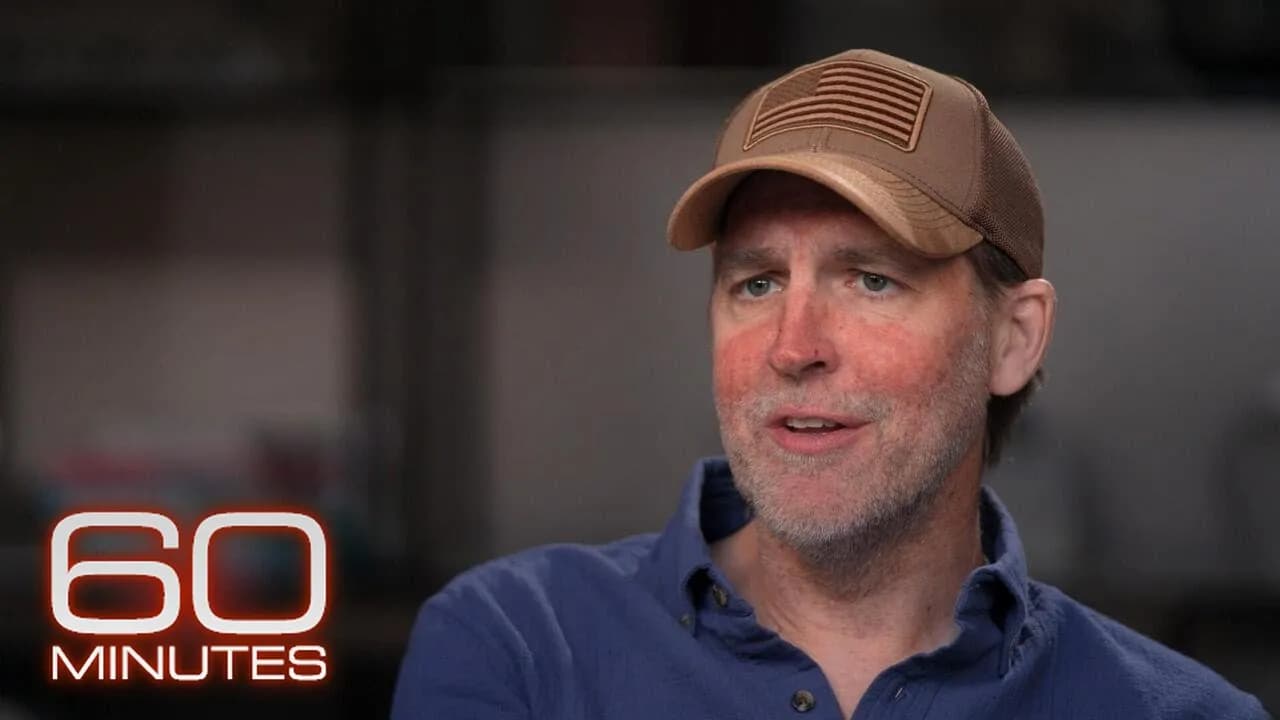
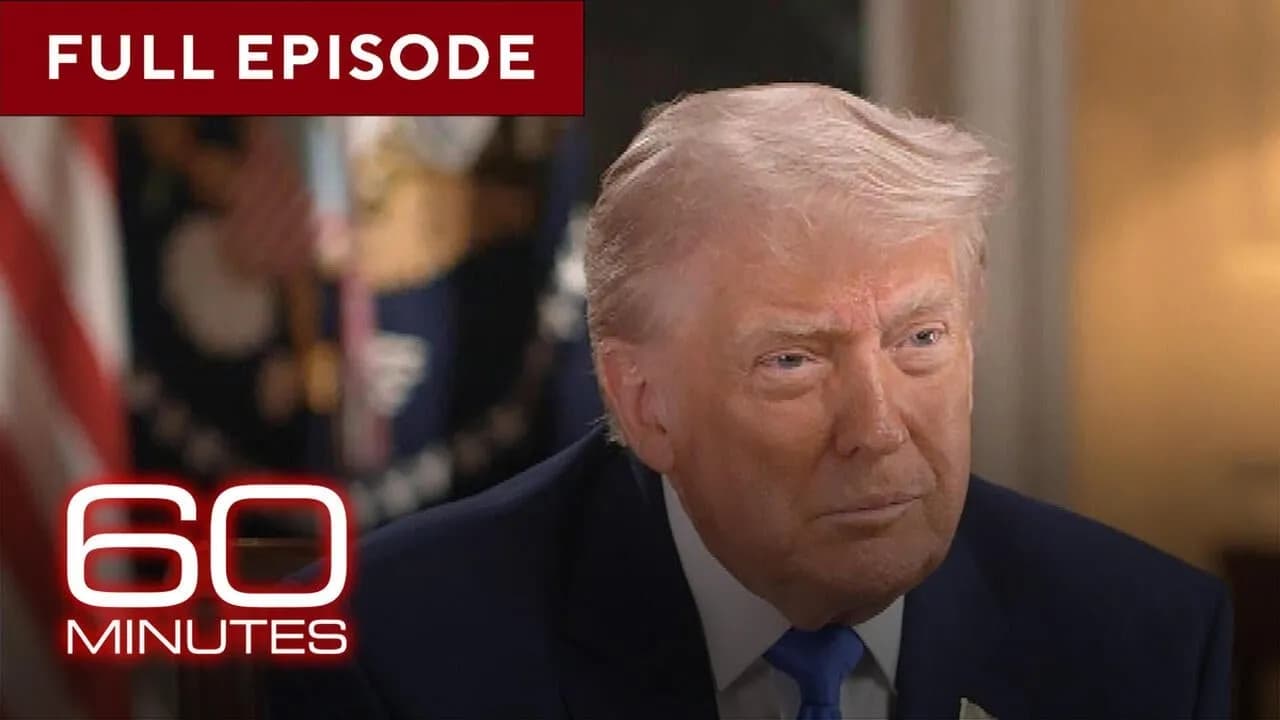
Sen. Tillis warns that without checks and balances, U.S. democracy is at risk | 60 Minutes
In a Nutshell
Senator Tom Tillis is retiring after repeatedly clashing with the Trump administration, most notably by opposing a major Medicaid bill and later calling for Defense Secretary Pete Hegseth's resignation over his handling of the Iran conflict. He accuses several cabinet members of being unqualified and chosen for appearance rather than competence, and warns that Republican senators' fear of primary challenges is enabling the executive branch to bypass Congress. Tillis argues this erosion of checks and balances risks turning the U.S. into a "one institution country" and that democracy could be lost faster than people realize.
These notes were generated by AI and may contain inaccuracies.
Senator Tom Tillis of North Carolina, age 66, has spent the last two years navigating the challenge of being an effective Republican senator during the Trump era. He maintains a voting record aligned with Republican positions while functioning as a maverick who makes deals and checks the White House. Tillis criticizes many administration officials while insisting he wants to help President Trump succeed. This approach has led to his decision to retire after crossing the White House too many times, particularly with his vote against what he called the "one big beautiful bill."
Tillis demonstrates extensive knowledge of the U.S. Capitol's layout, including passageways, staircases, the Capitol subway system, and underground corridors connecting Senate offices to the Capitol. When approached by reporters, he consistently provides sound bites on various topics, including questioning whether senators understand AI, noting that "a lot of them can't spell it" and lack relevant experience.
Tillis's vote against the administration's major bill, arguing it would push too many low-income North Carolinians off Medicaid, escalated tensions with the White House. President Trump responded by calling Tillis a "talker and complainer, not a doer." Tillis maintains respect for the president despite their strained relationship, explaining his approach: "If you come at me with what I think is unfair or incorrect data, I'm going to come back after you." The president threatened to find a primary challenger, leading Tillis to announce his retirement.
Instead of running for re-election, Tillis wrote an unfiltered, profanity-laced book titled "How to Lose Friends and Antagonize Presidents," playing on Dale Carnegie's work. The cover features unflattering photos of administration officials rather than President Trump. Tillis acknowledges antagonizing multiple presidents across administrations, including Biden and Obama.
Tillis voted to confirm all of Trump's cabinet nominees, including Defense Secretary Pete Hegseth, a decision he now calls his biggest regret. Regarding the Iran conflict, Tillis believes Hegseth got "caught up after the immense success of the first strike" and failed to listen to military advice about changing posture afterward. He is calling for Hegseth's resignation.
Tillis helped expedite Kristi Noem's departure from her position following a deportation campaign in Minneapolis that resulted in the deaths of two American citizens, Renee Good and Alex Prey, at the hands of federal agents. He criticized Noem's refusal to admit mistakes, stating: "The fact that you can't admit to a mistake, which looks like under investigation, is going to prove that Miss Good and Mr. Prey probably should not have been shot in the face and in the back."
Tillis expressed frustration with certain cabinet members, citing the $200 million Department of Homeland Security spent on an ad campaign featuring Noem riding a horse, and her characterization of shooting victims as domestic terrorists, which proved false. He believes some cabinet members were selected based on appearance rather than qualifications, stating that Noem and Hegseth are "poster children for men and women who should never have the authority they've been granted."
Tillis maintains his support for President Trump's goals while criticizing implementation by advisers. He argues that problems stem less from what Trump wanted to accomplish and more from "how he went about it," noting that some officials "aren't looking around corners for him."
Born in 1960 in Jacksonville, Florida, as one of six children, Tillis grew up moving frequently throughout the South due to his father's itinerant lifestyle. The family experienced economic instability, sometimes renting, sometimes owning homes, and occasionally living in trailer parks. This background influences his views on affordability issues, leading him to reject claims that affordability isn't a problem, arguing that "there's some segment of our society that always does" face affordability challenges.
Tillis warns that bread-and-butter economic issues threaten Republicans with what he describes as an "electoral bloodbath" in the midterms. He reveals in his book that at least 30 Republican Senate colleagues privately expressed reservations about many presidential actions, but they fear primary challenges and the political weight of opposing the president.
Tillis explains why colleagues hesitate to oppose the administration publicly: "There are some that just really do not want to bear the weight of the president. I get that. You're up for reelection. He'll target you in a primary." He notes that "all martyrs have in common? They're dead," suggesting that earlier opposition might have created a better midterm environment.
Elected in the 2014 midterms just before Trump and MAGA transformed the GOP, Tillis describes himself as maintaining consistent conservative positions: pro-Second Amendment, pro-life, limited government, and fiscal restraint. He distinguishes himself from other conservatives by having "a long list of things that were ratified" that others lack.
Tillis's Senate mentor was Mitch McConnell, whom he honored by naming his dog "Little Mitch." He developed expertise in parliamentary procedure, vote counting, and calculated risk-taking during his Senate tenure.
Tillis criticizes the trend of recent administrations, particularly Trump 2.0, governing through executive orders rather than legislation. He argues that the Senate and Congress are being treated as less than co-equal branches, stating: "We're a co-equal branch and they're at our best when they treat us like a peer." He acknowledges this problem exists across administrations, noting that both parties make the mistake of "conveying power to the White House" when their party controls it.
Tillis addresses what he calls Trump's "WTF moments," including threats to seize Greenland, comparisons to Jesus, and comments about "annihilating Iran." He specifically mentioned concerns about opening the Strait of Hormuz and potential military action against Iran. Tillis has directly told the president that he needs to "understand the weight of your words and how literally people take you."
Tillis acknowledges the Russian concept that "if only the tsar knew," where people blame advisers rather than leaders for problems. However, he argues that with Trump, "it's on him" because "whoever he has around him, he's the tsar." He contrasts this with Truman's approach, noting that Truman had great advisers and famously said "the buck stops here."
Tillis expresses strong condemnation of January 6th, calling it "the first time in the history of this country that we had not had a completely peaceful transfer of power" and describing the events as "despicable." He wished participants who assaulted police officers "were still in prison and serving a very long sentence." Despite this, he voted against convicting Trump in the impeachment trial, arguing the process was rushed and "uncenatorial."
Tillis acknowledges that Republican senators had significant leverage during the impeachment process but chose not to use it to prevent Trump's future candidacy. He rejected the argument that the impeachment process should be used to achieve political ends, calling it a "means justifies the end rationalization" and stating he doesn't "buy it."
Tillis expresses concern about how President Trump might react to potential Republican losses in midterms, calling it "another political unforced error." He used parliamentary procedures to install a plaque honoring Capitol Police and other officers for protecting Congress on January 6th, mounted by the door presidents use for inaugural addresses.
Tillis warns about authoritarianism risks, specifically the executive branch "threatening people in primaries basically degrading their independence or eliminating it all together." He argues this would create "a one institution country which is exactly what we fought a revolutionary war over," warning that "we will have a sort of dictator king if we're not careful." He notes the escalation of presidents ignoring Congress across four administrations and emphasizes the need for checks and balances among all three branches.
"I want checks and balances. I want all three branches to have their individual role and continue to check power as they have for 250 years. And I think because we've been such a successful democracy for so long, it's hard for the American people to understand how quickly we could lose it all."
Keep 60 Minutes in your library
Save the videos and channels worth coming back to, and find them again in one place.