Senators John Fetterman and Dave McCormick: Bipartisanship, Money in DC, Datacenters, Graham Platner
In a Nutshell
Senators Fetterman and McCormick argue that bipartisanship is essential for Pennsylvania and the country, citing their joint work on energy, fentanyl, and avoiding government shutdowns despite major policy differences. They frame data center and AI infrastructure development as a major economic opportunity for the state, warning that opposition—driven partly by foreign misinformation and domestic extremism—risks ceding the AI race to China. Both reject party extremes, defend the filibuster, and emphasize that Pennsylvania voters reward pragmatism over ideological purity.
These notes were generated by AI and may contain inaccuracies.
Senators John Fetterman and Dave McCormick discussed their approach to working across party lines. Both voted in favor of a bill to prevent a government shutdown, stating that shutting down the government is wrong for Pennsylvania and the nation. They emphasized finding common ground when possible while maintaining their disagreements. Their votes reflect country over party.
"We're trying to set a good example because we have lots of disagreements, but we trust each other. We like one another, and we look for ways to work together."
Fetterman expressed pride in calling McCormick a good friend and stated he refuses to engage in extremism. He emphasized fighting together for Pennsylvania and the nation and finding a better way forward. McCormick noted that Pennsylvania voters expect senators to find ways to work together, describing the current moment as the most consequential in lifetimes due to artificial intelligence, life sciences, defense, and energy changes. These changes create anxiety that fuels polarization.
They have collaborated on energy policy, the fentanyl crisis, anti-semitism, and drone technology.
Fetterman noted that he and McCormick are the only two senators in their respective cycles who flipped seats, rejecting extreme views in favor of working together. Pennsylvania's 19 electoral votes make it a microcosm of the country with urban Democratic centers in Philadelphia and Pittsburgh and rural Republican areas. A coalition must be built across these divides. Ironically, many of the same people voted for both Fetterman and McCormick, including working families, significant Latino turnout, and the highest African-American turnout in 30 years.
The Senate has an all-time low approval rating. The public is frustrated with both parties' inability to control the debt, soaring inflation, and $40 trillion in national debt. McCormick noted Congress and many institutions have very low public trust. He has more bipartisan legislation than anyone else and believes the filibuster creates the requirement to get things done despite being frustrating from a business perspective.
Fetterman stated recent inflation is primarily driven by energy prices because the president decided to hold Iran accountable. He is the only Democrat agreeing with this approach. Every Democrat running for president previously stated Iran must never acquire a nuclear bomb. Fetterman continues to vote against war powers resolutions. He warned that if opposition to Trump outweighs concern about Iran becoming a nuclear power, there will be profound implications globally.
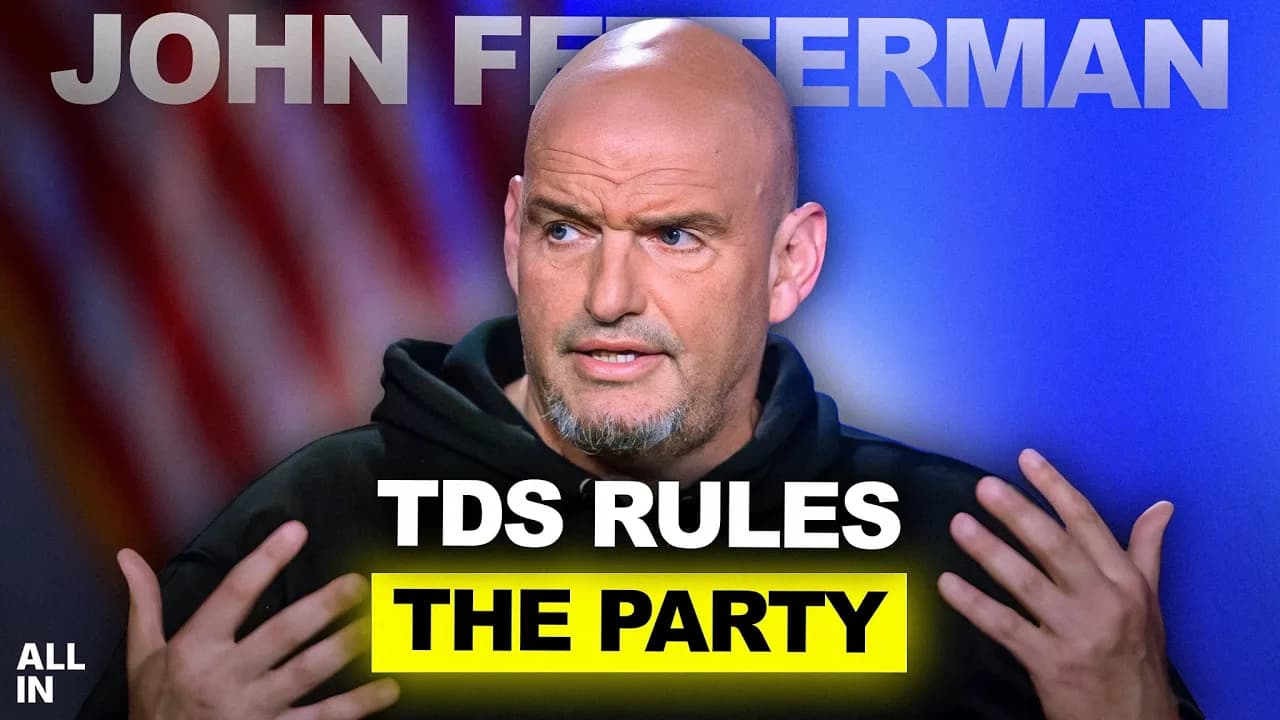
Fetterman described "TDS" (Trump Derangement Syndrome) as defining the Democratic Party by opposition to whatever Trump supports, even opposing ice cream and lazy Sundays if Trump endorsed them.
Fetterman admitted the entire Democratic Party was wrong about the filibuster in 2020 when every Democrat wanted to eliminate it. He thanked Senators Manchin and Sinema for standing against it, stating history vindicated their wisdom. Democrats wanted to eliminate it in 2022 and 2025 but now love it because it forces both sides to work together. Fetterman stated he would be the first to announce he was wrong and would die on the hill defending the filibuster for protecting minority rights.
McCormick stated major progress has been made on energy, which is essential to winning the AI race. Permitting reform is hoped for as the biggest economic lever. The border has been closed and fentanyl flow stopped. Pennsylvania saw 4,000 fentanyl deaths in the last year of the Biden administration; this year deaths are down 60%, with similar national statistics.
The median income in Pennsylvania is $52,000 a year. Fetterman described enormous anxiety from globalization's impact, where a mill in his hometown went from 2,000 employees to 100. The last 10 years have been the greatest in history for those with assets, but the bottom half is not happy.
McCormick stated there must be multiple plans to address this. Invest America accounts build opportunity for the next generation. The school choice provision in the working families tax cut act provides $1,700 annually that everyone can give, directing billions into school choice for equality of opportunity. These accounts take money out of government, circumvent government, and are based on incentives and choice rather than government dictate.
The more government intervenes in markets, the more inefficient and expensive those markets become, making wealth and value creation less accessible. The freer the market with less government intervention and spending, the better things get for people. Fetterman refused to engage in government shutdowns, which collectively lasted over 120 days. He is proud to be a capitalist and stated capitalism is the only system proven to raise living standards globally. He rejects socialism and communism, noting people who lived under those regimes are absolute capitalists.
Fetterman is concerned about AI, including mass hacking and weaponization, but is not terrified. He believes AI should belong to America and America should build that chassis. He refuses to accept his party's framing of AI as a scourge or cancer. He stated some opposition to AI is funded by groups aligned with the CCP. He advised against calling out private citizens like Bezos as problems, noting they create jobs.
Graham Platner has a literal Nazi tattoo on his chest. It was discovered he was sexting with up to a dozen women. A couple years ago, he described an American soldier in a firefight with the Taliban as a "dumb motherfucker that doesn't deserve to live." He described the American army as "absolute trash." Fetterman stated someone like that should not be a viable candidate.
McCormick stated the Democratic Party has seen a migration to socialism and Marxism, plus a rise in anti-semitism and hatred. Mainstream Democrats like Chuck Schumer and Elizabeth Warren campaigning in Maine have lurched far left. If such candidates win, it validates that stream of thinking, which is unhealthy for America. A strong Democratic party with good ideas keeps Republicans honest and in check.
Fetterman described his party's position on Israel as a profound betrayal. Candidates winning elections have signature anti-Israel views bordering on raw anti-semitism, isolating him in the party.
Josh Shapiro is described as fantastic. A prominent Jew winning and running Pennsylvania well is a good sign for the country that common ground exists and anti-semitism is more in check than perceived.
Fetterman stated a seat or job is not worth maintaining if it requires lying or pretending things are not true. He can be primaried and some Democrats are angry at him for supporting Israel and opposing government shutdowns.
Fetterman stated he refuses to call Trump a Nazi or fascist, and that he will never do so. He noted that he votes 93% along Democratic lines and would never change parties. Even if he announced a party change, his votes and views would remain the same. He warned that if Democrats run him out of the party, they would be attacking a committed Democrat who votes the party line 93% of the time.
Fetterman observed that current Democratic campaigns are based on Trump-focused outrage and constant rage bait in commercials and emails. He refuses to engage in that approach. He noted that many conversations are driven by representatives from safe blue states, while Pennsylvania keeps people honest. He predicted that in 2028, voters will remember who was willing to be bipartisan versus those who engaged in extreme rhetoric.
McCormick described receiving approximately 100,000 outreaches per week across letters, emails, and phone calls from Pennsylvania's 14 million residents. He noted that activist mobilization on specific issues is visible in these patterns. He holds an open mic call every two weeks that draws about 10,000 participants.
Data center calls have become significantly more frequent. McCormick and Fetterman hosted an energy and innovation summit in Pennsylvania in July that secured $92 billion in committed investment, attended by energy CEOs, AI CEOs, global investors, Fetterman, Governor Shapiro, the president, and cabinet members.
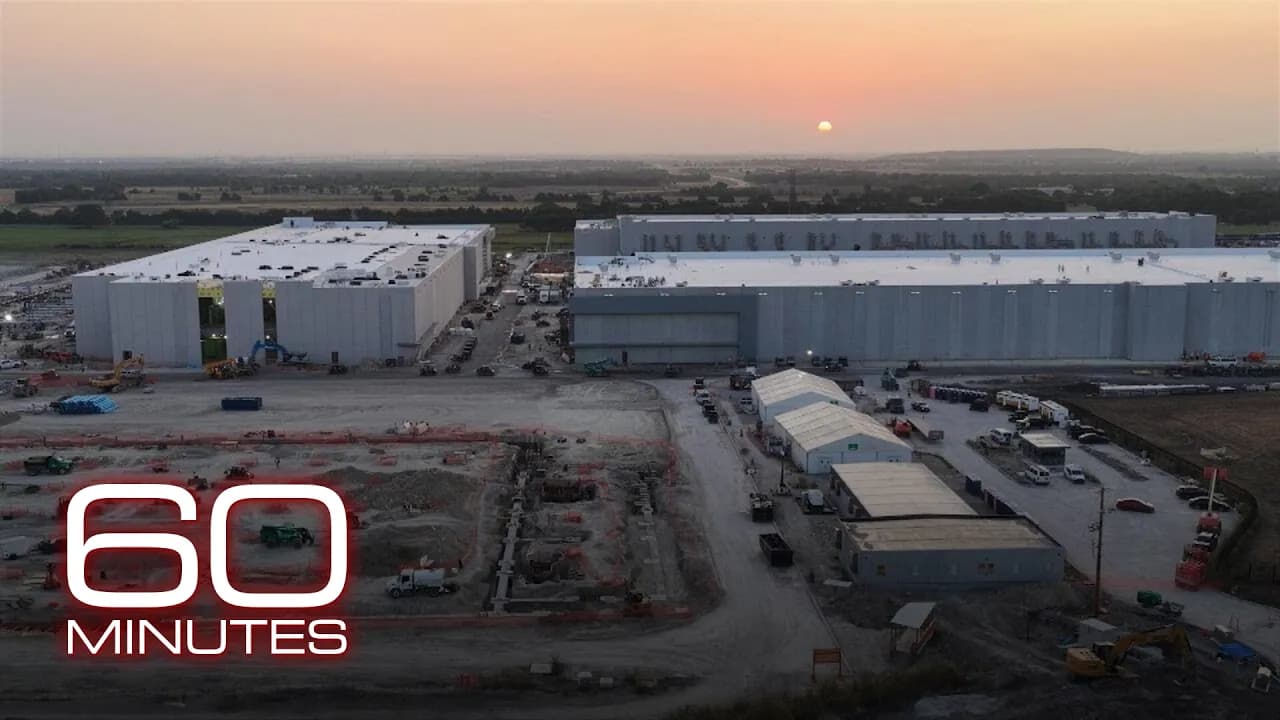
McCormick visited the Homer City project, where a coal plant is transitioning to natural gas. The facility will produce 4.4 gigawatts total, with 3.4 gigawatts allocated to a data center complex and 1 gigawatt returning to the grid to help lower energy prices. Opposition to data centers is growing across Pennsylvania.
McCormick stated that while some opposition stems from legitimate local concerns about having data centers in communities, enormous misinformation is being driven by China and outside forces. There is also genuine lack of understanding that requires better communication.
Communities need clearer information about what data centers mean locally, including increased energy usage, closed-loop water protection systems, tax base contributions, and infrastructure or school investments.
The primary resident concern is often whether energy prices will rise. Secondary concerns include water usage, potential school crowding from new residents, and increased road traffic. Residents frequently fail to connect new jobs to increased tax base revenue that could offset infrastructure demands.
McCormick and Fetterman both referenced their experience with the fracking debate, which featured significant misinformation campaigns and lack of public understanding. Fifteen years later, there is now broad-based support for fracking in Pennsylvania. Fetterman noted that unlimited money can amplify any B-roll footage into extreme narratives, citing how he was once portrayed as a socialist and is now labeled as MAGA despite unchanged views.
Fetterman emphasized that energy is national security, pointing to Europe's situation as an example of what happens without energy security. He argued that AI development requires both energy and technological infrastructure, and that Pennsylvania is positioned to provide both.
Fetterman stated that forces are describing data centers as a scourge or cancer that will bankrupt communities. He acknowledged potential downsides but argued the overall impact will be productive and create new opportunities. He refused to join a party of "lites" that would claim data centers represent only danger and downside.
McCormick noted that shale opposition primarily came from environmentalists concerned about methane and water table contamination. In contrast, AI and data center opposition involves more foreign state actor-driven misinformation campaigns alongside legitimate local concerns.
Pennsylvania holds the fourth largest natural gas reserves in the world. If it were a country, it would rank fourth globally. The state is the second largest energy producer in the United States. Fracking generated enormous royalties for farmers and became the economic engine for the state. As jobs were created and economic benefits materialized, public support for fracking grew to an estimated 80%.
McCormick stated that the United States has a six to eight month lead over China in AI. He noted that some Democrats are pushing for a data center moratorium and questioned whether China would welcome America voluntarily ceding the AI race.
Fetterman stated that if voters believe it is acceptable to give China an advantage in winning the AI race, they should vote him out.
Fetterman attended McCormick's summit and was struck by the broad representation, including software companies, hardware companies, manufacturing, robotics, energy (nuclear and fracking), and notably the trades. This realization highlighted that AI infrastructure development represents a blue-collar construction boom.
Hundreds of thousands of new construction jobs have been created with 25 to 30% wage increases for construction workers. McCormick reported that the most secure jobs in Pennsylvania are currently for seasoned welders and electricians. Workers in their late teens and early twenties completing training are earning over $100,000 annually, with employers unable to hire quickly enough to meet demand.
McCormick outlined four categories of economic activity from data centers:
- Thousands of jobs to build data centers and associated energy infrastructure, with 5,000 to 10,000 workers on individual sites
- Hundreds of permanent positions to operate data centers
- Hardware and equipment upgrades every three to four years, bringing hundreds or thousands of additional jobs
- Secondary economic activity including restaurants, hotels, and logistics, with an estimated two logistics jobs for every data center job
McCormick emphasized that township supervisors and county commissioners make local decisions about data centers, not senators. He framed data centers as a potential rebirth for Pennsylvania, which has been losing population for 20 years and struggles to retain young people. He argued that communities need to articulate an alternative plan if they choose not to pursue these investments.
Freeberg asked why Democrats struggle to embrace empirical evidence of job creation and value creation from data centers, noting the absence of data showing job displacement.
Fetterman responded that AI broadly is being conflated with data centers specifically, and that these are distinct issues. He stated the challenge is not limited to Democrats, noting that the America First movement on the right and far-left elements are converging on anti-AI positions. He mentioned that even some individuals occasionally adopt jobs apocalypse narratives.
Fetterman stated that removing money from politics would not rank among his top five priorities for fixing America, though conceptually he would prefer less money in the system. His Senate race cost $500 million total, with $200 million raised on his side and $300 million on the opposition side.
McCormick noted his prior race in 2022 cost $300-330 million, which now seems quaint compared to projected 2026 and 2028 spending. He observed that $300 million spent on reputation destruction could instead have been invested in Pennsylvania communities.
Fetterman suggested that either money needs to be removed from politics or donors need to contribute substantially more to both sides, and that the primary process should be opened to reduce the elevation of extreme candidates.
Keep All-In Podcast in your library
Save the videos and channels worth coming back to, and find them again in one place.