Sharks, Butterflies, Birds, Horses | 60 Minutes Full Episodes
In a Nutshell
Great white sharks have vanished from Cape Town waters, with scientists split between orca predation (led by distinctive pair Port and Starboard) and human factors like longline fishing and shark nets that decimated prey species and killed sharks directly. Monarch butterflies have declined 70% over 30 years due to habitat loss and milkweed eradication from herbicide use, though conservation through way stations and forest protection shows promise. Colombia's bird diversity, preserved by decades of armed conflict that kept habitats intact, now fuels ecotourism as former FARC fighters transition to guiding, while the unsolved 1983 kidnapping of champion racehorse Shergar remains one of sport's greatest mysteries.
These notes were generated by AI and may contain inaccuracies.
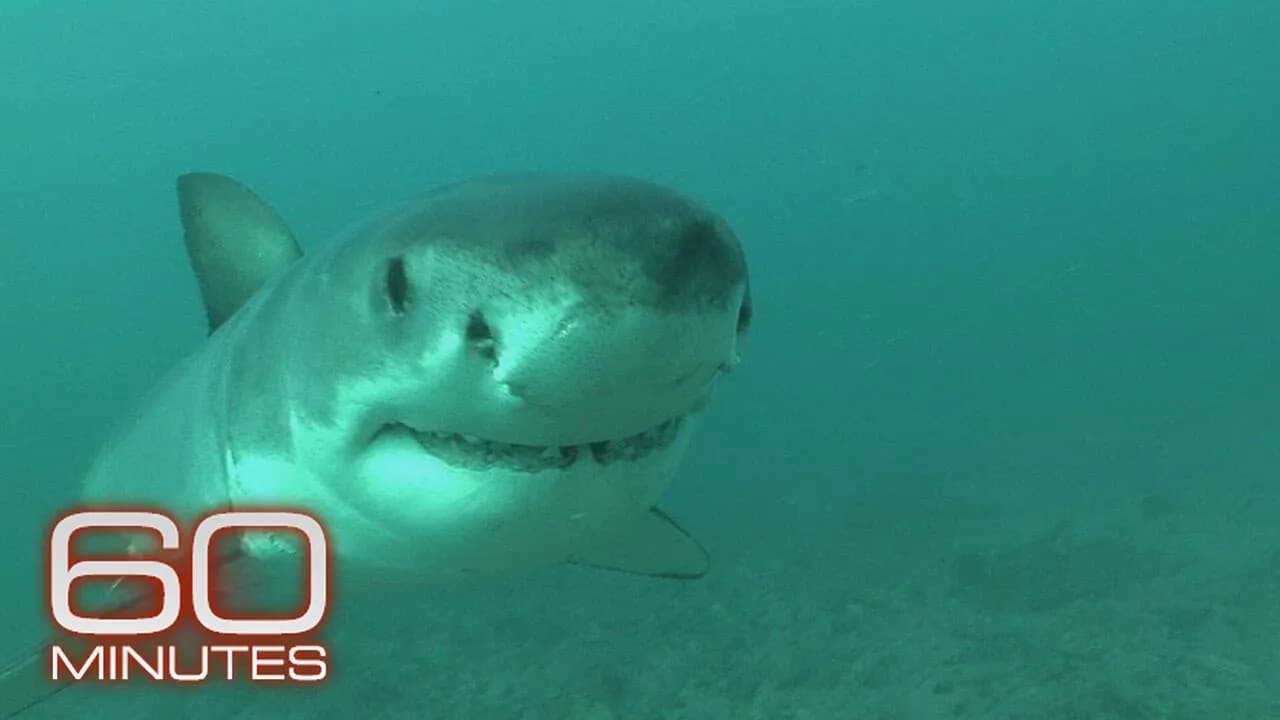
The coastal waters around Cape Town, South Africa, have long teemed with great white sharks. About 10 years ago, carcasses of these feared predators began washing up on beaches with their livers missing. It is now hard to find any great whites. The story has all the hallmarks of a who-done-it, fueled by a bitter feud among scientists and conservationists who cannot agree on who or what is the real culprit.
Scientists and conservationists agree that the great white sharks that once cruised these waters are gone. For as long as anyone can remember, the ocean off Cape Town was the best place in the world to see great whites. There were plenty of smaller sharks for them to hunt and tens of thousands of seals which lived on a small stretch of rock nearby called Seal Island. Early each morning, with a little luck, one could catch sight of these majestic predators flying out of the water.
Chris Fallows, a photographer and naturalist, used to see 250 to 300 different great white sharks a year. The images he took are amongst the most breathtaking of the natural world. He describes the sight of great whites flying out of the water as unforgettable, still giving him a tingly feeling.
In 2010, tourists came each year for close encounters in cages. Divers were taken diving without a cage in water chummed with blood to attract sharks. A 15-foot great white would swim straight toward them. Sharks circled constantly. Just a few years after that dive, sightings of sharks began to dwindle and the tourists stopped coming.
Allison, a marine biologist with South African National Parks, began searching for clues. In 2015, divers sent her photos of smaller shark carcasses on the sea floor with mysterious incisions. It looked so surgical from the photographs that she first assumed it must have been done by somebody with a knife, a fisherman or something. When the next incident happened, she retrieved some carcasses and studied them, finding tooth marks on the pectoral fins of some of the dead sharks.
Those tooth marks suggested the culprits could not be human. Allison and her colleagues went diving for more evidence and encountered an unlikely suspect: orcas, killer whales. They retrieved one of the carcasses and her research partner identified orcas under the boat in their study area. The orcas were feeding right in that area where they just found the carcass.
What's so tasty about a shark liver is that it's the most calorie dense organ out of the whole body and it takes up almost a third of the shark's body. The orcas are not trying to eat the entire shark. They are just targeting the liver. Allison and her colleagues performed necropsies and confirmed orcas were indeed the culprits.
Orcas have been in these waters for years, but no one had ever seen one kill a great white there, though they are known to hunt them off California and around Australia. For South Africa, this was completely novel because for a long time people thought white sharks are the apex predators. This is why people struggle to believe that this was happening.
David Hurwitz helped put the puzzle together. He is a whale watching tour operator and was the first person to see two very distinctive male orcas hunting and killing sharks. He named them Port and Starboard. What was distinctive about them is that both of their dorsal fins were collapsed, which is very unusual. One had collapsed to the left, the other one to the right. Being a nautical man, he immediately thought to call them Port and Starboard. They have become world famous or infamous.
Unlike most orcas, which hunt in groups called pods, Port and Starboard were hunting sharks for their livers as a pair. They are hunting on their own in ways people there have never seen before. Scientists now believe Port and Starboard might even be teaching other orcas how to hunt down sharks. In 2022, drone footage captured five orcas working together, stunning and then killing a great white.
Allison maintains the presence of these smart hunters has chased the once dominant great whites further along the coast and insists that overall the population of great whites in South African waters is stable. The predator eats the prey and that has an impact on some of the numbers. One of the biggest things with predation is the fear of predation or the risk of predation and what is called the landscape of fear.
Gazelle do not disappear because a lion is killing some gazelle. They have evolved alongside of their predator. White sharks have not. White sharks have been the top dog. This was a novel predator for them. They were not used to being predated on by another species. Orcas have been killing white sharks for thousands of years.
Enrico Janari is an Italian marine biologist who has been researching great whites in South Africa for 20 years. He does not agree with Allison that the population is stable. The question is not whether the orcas are pushing white sharks away. The same thing happened in California and Australia. The question here in South Africa is why they are not coming back.
In California, orcas have killed great white sharks, but then the great whites came back up to six to nine months later. The white sharks left but they always came back. Janari and photographer Chris Fallows both agree the numbers of great whites plummeted a few years before Port and Starboard began their killing spree.
By the time the great white sharks had completely disappeared from Seal Island, they had never once seen Port and Starboard at Seal Island. Fallows does not buy the argument that these two orcas have made all the great whites disappear. He asks how one can blame somebody that was not even on the crime scene.
Fallows and Janari argue humans are ultimately to blame. They have been documenting the impact of commercial fishing boats on smaller shark species that are a staple of the great white's diet. The boats lay miles of long lines with thousands of hooks attached on the ocean floor. The sharks they catch are exported to Australia and used for cheap fish and chips.
Shark long lining is undoubtedly robbing the great white sharks of food. It is the primary prey source for the great whites when they are not feeding on seals. When you remove the prey, you have a significant impact on the predator.
An even bigger impact on great whites is shark nets and baited hooks attached to buoys which the South African authorities have used to protect swimmers along the coast since the 1950s. Nets and hooks kill more than 20 great whites a year along with whatever else gets caught by them. The devices are designed to kill and lower the population number. The concept is one less shark, one less chance of an encounter with a human.
Janari would like to see South Africa embrace a variety of alternatives to protect swimmers like underwater magnetic fields which interfere with the sense sharks use for hunting or increasing the use of smaller mesh nets which create a barrier without entangling marine life. The problem in South Africa is they are only using one method and that is outdated and unsustainable.
If one believes that these two orcas have driven away the great white population, there is not much humans can do about that. The argument is that there is actually a lot humans can do with long line fishing and getting rid of these shark nets. That is something humans can impact. The call is to stop bickering about something they cannot control and start focusing on the things they can control. If they do not start addressing those factors they can control, there is no hope.
In 1991, South Africa was the first country in the world to protect the great white shark. Enrico Janari believes those efforts have failed and now fears it may be the first country to lose them. If they lose the white shark in South Africa, they lose a battle for all nature. If they cannot protect even the most charismatic, most protected species on paper in South Africa, what chance the little guys, the other sharks or the other animals have against unsustainable use? Nothing.
Even if people may not have a lot of sympathy with great white sharks, they should care in the same way as they never used to have sympathy with whales. They are wiping these animals out to the point of extinction. Great whites are no different. So even if they do not like the look of the animal, they are incredibly important going forward.
With no great whites to document, Fallows has shifted his focus to photographing humpback whales. Since a moratorium on commercial whaling was enacted in the 1980s, humpbacks have made a remarkable comeback. It has 100% to do with enlightened governments, passionate individuals showcasing the whales for what they were. They are incredibly sentient creatures having an important role to play in the ocean. Therefore, they became protected and now their numbers are being allowed to expand naturally.
One of the most remarkable and mysterious migrations in the natural world occurs every spring from Mexico to the United States. Tens of millions of monarch butterflies make the epic aerial journey home. They have spent the winter hanging out in trees in a forest on a remote mountain in Mexico, resting up after flying all the way from Canada and the northern US where they were born. It is believed monarchs have been making this journey for thousands of years, but there are a lot fewer of them than there used to be. The population in Mexico has declined 70% in the last 30 years.
The monarchs come to these mountains in Michoacán in central Mexico starting in late October. One of the guides, Jorge Rickards, is the director of the nonprofit World Wildlife Fund in Mexico. The monarchs roost in patches of fir and pine trees 11,000 feet up. There are some 66 million of them there, but it is hard to see them at first. There are what appear to be clumps of dead leaves hanging from sagging branches, but those are butterflies. Tens of thousands of them clustered together in trees all around. There are so many of them on the branches of the trees that the branches are all pointing toward the ground.
The monarchs are in a kind of hibernation. On the way there they fattened up on nectar which helps them survive and rest through the long winter months. The climate on this mountain is ideal. The canopy of trees protects the butterflies from storms. And though the air is cool, it is relatively humid so they stay hydrated. The clusters are so drab when looking at them because they have their wings closed. In many butterflies, the underside is drab or less brightly colored and that happens in nature a lot. So it is not very inviting. It would not be inviting for a predator.
They are very sensitive to sound. They are also sensitive to CO2. So the less they talk the better. They relate that with a predator or other mammal. They can sense a mouse breathing or a bird breathing. On the forest floor all around, monarchs litter the ground. But most are not dead. They have just fallen from trees during the night and their muscles are too cold for them to fly. They need a certain temperature to get their wing muscles back. They are very, very vulnerable when they are on the floor. The birds know that and the mice know that.
When the sun begins to hit the trees, flashes of orange appear. The monarchs are warming and slowly opening their wings. As the day warms up, there is more activity. Court Whelan has been bringing tour groups there and photographing monarchs for more than 20 years. It is a warm day and they are getting a lot of sunlight. One can actually hear the sound of butterfly wings.
It is still something of a mystery how these monarchs managed to get there. Most only live about a month. They spend their short lives eating and mating, and females lay eggs. But in late summer and early fall, what is called a super generation of monarchs appear. Hatched as caterpillars, they transform into chrysalises. And then after a week or two, emerge as butterflies. And that is when they do something extraordinary. With winter coming, they sense the shorter days and changing temperatures and suppress a key reproductive hormone, a process called diapause, which helps them conserve their energy and live up to 9 months, nine times longer than most monarchs.
It is crazy that there is this super generation of monarchs that can make it all the way and then the rest die off after a month. What is amazing is how they detonate this process of not developing sexual organs but using that energy for the flight. Monarchs born west of the Rockies stay there and migrate shorter distances. It is this super generation born in Canada and east of the Rockies in the northern United States that flies to Mexico. Hundreds of millions of them join up on a journey of some 3,000 miles, which can take them 3 months or longer.
To help them find their way, monarchs have circadian clocks in their antenna and navigate using internal compasses that respond to the position of the sun and the Earth's magnetic field. Why they are coming there is a big mystery. Maybe it is a prehistoric route. Maybe it was determined by geographical conditions in terms of topography. Maybe it had to do with climate. It is one of the most magical things that can happen in the natural world. Multiple generations all have this exact same instinct and know where to go and all go to the exact same spot.
The monarchs were discovered by researchers on this mountain range in 1975, and the Mexican government declared the area a federal reserve 11 years later. But for decades, illegal logging threatened the butterflies' roosting spots, which once covered as much as 45 acres. It is now down to 4 and a half acres. World Wildlife Fund has spent years trying to combat the destruction, assessing the health of the forest, measuring the size of butterfly colonies, and planting trees. They have also worked with local communities and indigenous groups to protect the land and help them profit from tourism.
The good news is the forest is rebounding. This is a classic mud puddling of monarch butterflies. They are mainly after hydration, but butterflies are known to need some trace elements like salts. It does not look like much, but just this little bit of water in this mud puddle is enough for them to get some water. And then what will happen is they will return to the roost before evening.
After about 4 months in Mexico, this super generation of monarchs are near the end of their long life cycle. They are finally ready to mate and migrate north to lay their eggs. They will die before they can make it back to where they were born, and their offspring might not live long enough to get there either, but future generations will. And there is an army of people trying to help them.
In Kansas, volunteers come out to catch and tag monarchs so scientists can track their migration. They are recruited by Chip Taylor, an 87-year-old ecologist who has been fascinated by monarchs since he was a child. There are over 100,000 species of butterflies and moths, but pretty much the only one people know are monarchs. Monarchs have got charisma because they are accessible. They are large. They are beautiful. They are slow. You can catch them. It involves Canada, involves Mexico.
Taylor founded a nonprofit called Monarch Watch at the University of Kansas 30 years ago. So far, it has helped tag more than two million of them. This is a tough butterfly and it has to go thousands of miles. It is resilient.
That resilience is being tested. Monarchs returning to the US need milkweed plants to lay their eggs on. It is the only source of food their newly born caterpillars will eat. But milkweed is now hard to find. It has been virtually eradicated on agricultural land because of genetically modified corn and soybean crops that allow for mass spraying of herbicides. Monarch Watch encourages people to plant milkweed in their gardens and on public land, creating what they call monarch way stations. 50,000 of them have been planted so far.
In Mexico, those efforts have gotten noticed. Eduardo Rendon, head of World Wildlife Fund's Monarch Butterfly Program, showed a tag he recently found. It is one of the tags for Monarch Watch from Chip Taylor. He finds maybe 12 of them over there. He was measuring the colony and then saw the ground and found this tag. But it is the only way that they can prove that monarchs from United States and Canada come there to overwinter.
Less than 20% of the monarchs that head out on this miraculous migration actually make it to the mountains of Michoacán. Scientists say worsening storms and rising temperatures kill off many. Though this past year, the number of monarchs that survived the trip nearly doubled. It was particularly welcome news in Mexico where the butterfly's arrival in late October coincides with a deeply spiritual celebration, what is known as the Day of the Dead. That is when many there believe the souls of family and friends who died return to visit their loved ones. And so that is why the butterflies are returning as well.
Local people believe that the monarchs are the returning spirits of the dead. So who knows? Maybe they are actually reviving someone's ancestor. It is very magical.
Since the story aired, scientists tell that conservation measures are going in the right direction. One survey found that the monarchs covered more than double the forest area during this year's hibernation season. That is more than 7 acres of Mexican forest covered in butterflies.
Once in a while, there is travel so far off the beaten track there is hardly a track at all. That was the case when going to the mountains of western Colombia. There are some 2,000 species of birds in that South American country, more than anywhere else on Earth. Partly because of its diverse geography, but also surprisingly because of war. Decades of fighting among the Colombian government, left-wing guerrillas, right-wing paramilitaries, and narco traffickers made some areas so dangerous few people could go there, preserving the birds' habitat.
Since 2016, when Colombia's government signed a peace deal with the FARC, the largest left-wing guerrilla group, it has gotten safer to travel. All those species of birds and untouched forests have become an important part of a growing ecotourism industry. It brings in millions of dollars to Colombia's economy, and bird watchers, birders as they are known, are flocking there, hoping to catch even a fleeting glimpse of species that cannot be found anywhere else on Earth.
On the western slope of the Andes Mountains, in an area with few roads in or out, lies Tatama National Park, a vast stretch of lush rainforest punctuated by powerful rivers. Delicate flowers blossom in the rain soaked forest and the sound of birds fills the humid air. This is one of the wettest places on Earth. They set off before dawn in a four-wheel drive vehicle through untouched forest. Hidden in the lush vegetation were all kinds of birds. Some shy, others curious. Their colors as vivid as their names. The blue gray tanager, the cinnamon fly catcher, the purple-throated woodstar.
Diego Calderon Franco knows them all. He is one of Colombia's most famous birding guides. Diego's enthusiasm is infectious. And this is the star here.
Diego points out a velvet purple coronet hummingbird, noting its spectacular colors. The group observes territorial behavior between two male Empress Brilliance hummingbirds, which are described as "real warriors" that fight for resources throughout the day. The iridescent pink throat feathers of these birds are highlighted as particularly striking.
Diego demonstrates his ability to replicate bird calls, including that of the munchika wood wren found in the highlands. The call is described as having a happier, cooler tone compared to other regional variants. Birding in Colombia is compared to Victorian-era exploration, with the potential to discover new bird species still existing in isolated mountain ranges due to the country's troubled past.
The area around Tatama National Park was controlled by illegal armed groups, which prevented habitat destruction through slash-and-burn agriculture. Over decades of fighting between armed groups and government forces, more than 450,000 people were killed, with most being unarmed civilians. Additionally, 50,000 people were kidnapped during this period.
Diego was kidnapped in 2004 by the FARC while on a graduate student expedition in northern Colombia's mountains. Despite being held hostage, he maintained his sanity by observing and documenting birds, including a slatey brushfinch which he drew and noted on scraps of cigarette paper. He was held for 88 days before his father paid approximately $30,000 for his release.
Michelle Tapasco and her family moved to the Tatama area in the 1990s to escape right-wing militia violence, only to encounter left-wing FARC activity. In 2008, the FARC kidnapped and killed her partner. Despite having five daughters to support and facing skepticism about her eco-lodge business, she persisted and developed the Montazuma Rainforest Eco Lodge.
Colombia hosts more than 160 hummingbird species. These birds are unique in being able to fly not only forward but also up, down, and backwards. Their wings move at approximately 80 beats per second, a rate that challenges human comprehension.
Following the 2016 peace agreement with the FARC, nearly 10,000 fighters surrendered their weapons. Diego introduced former FARC combatants to birding as an alternative livelihood. Former guerrilla Marcos Gua now works as a photographer after Diego helped him secure his first job. Bird watching provided these former fighters with training in conservation and income generation.
Despite the peace agreement, Colombia continues to face violence. During the filming period, bombs exploded in Cali and a presidential candidate was assassinated in Bogota. In April, 20 people died in an explosion attributed to a FARC faction that refused to disarm.
American birders Gary George and Joseph Brooks from Los Angeles maintain a "life list" tracking the approximately 11,000 bird species worldwide. They have documented nearly 8,000 species. Brooks has approximately 50 bird species tattooed on his body, including a satin bowerbird from Australia and a red-crowned crane from Japan.
The LA birders were searching for the elusive Chami antpitta, which they had failed to spot on two previous trips. During this visit, they finally heard its call, though the bird moved too quickly for the camera to capture. The experience is described as finding "a jewel" that creates complete presence in the moment.
Worldwide, approximately 60% of bird species are experiencing population declines due to logging, agricultural expansion, and economic development. Michelle Tapasco is working to purchase additional land for bird preservation. Her daughters are now pursuing careers in biology, forestry, birding, and conservation.
The group observed the gold-ringed tanager, a species endemic to this region of the Andes Mountains. This bird plays a crucial ecological role as a keystone species for seed dispersal, consuming berries and distributing seeds through defecation away from parent plants.
Shargar (also referred to as Sugar), a champion Irish racehorse born near the Curragh in County Kildare, dominated racing in the early 1980s. The horse won the 1981 Epsom Derby by 10 lengths. Owned by the late Aga Khan, the horse was syndicated for stud purposes with 40 shares sold at $250,000 each.
On February 8, 1983, masked gunmen broke into Ballymany Stud Farm and kidnapped Shargar. Head groom Jim Fitzgerald was forced at gunpoint to lead the kidnappers to the horse's stable. The kidnappers drove Fitzgerald approximately 30 miles before releasing him. The kidnapping occurred during "The Troubles" in Northern Ireland, with speculation that the IRA sought ransom money to purchase weapons.
Racing journalist Derek Thompson received a 2:00 AM call from the kidnappers directing him to the Europa Hotel in Belfast, known as "the most bombed hotel in Europe." For 12 hours, Thompson and fellow journalists negotiated by phone with the kidnappers, who made varying ransom demands ranging from £40,000 to £2 million.
Three days after the kidnapping, the kidnappers made a final call stating "the horse has had an accident. He's dead." No ransom was ever paid, and Shargar was never found. Theories about the horse's fate include an accidental death during transport, with speculation that the body was disposed of in remote bogland in County Leitrim near the Northern Ireland border.
Journalist Tommy Conlon wrote about the case, noting that the remote, sparsely populated terrain of County Leitrim would have been ideal for disposing of evidence. Kevin Mallon, a convicted IRA operative who had previously escaped from prison by helicopter, was named in an informant's book as the ringleader of the kidnapping operation. Mallon has denied any knowledge of the incident.
The unsolved kidnapping remains one of sport's great mysteries. The case is viewed by some as a shameful episode, given Shargar's status as a symbol of Ireland representing freedom, beauty, wildness, and magic.
Keep 60 Minutes in your library
Save the videos and channels worth coming back to, and find them again in one place.