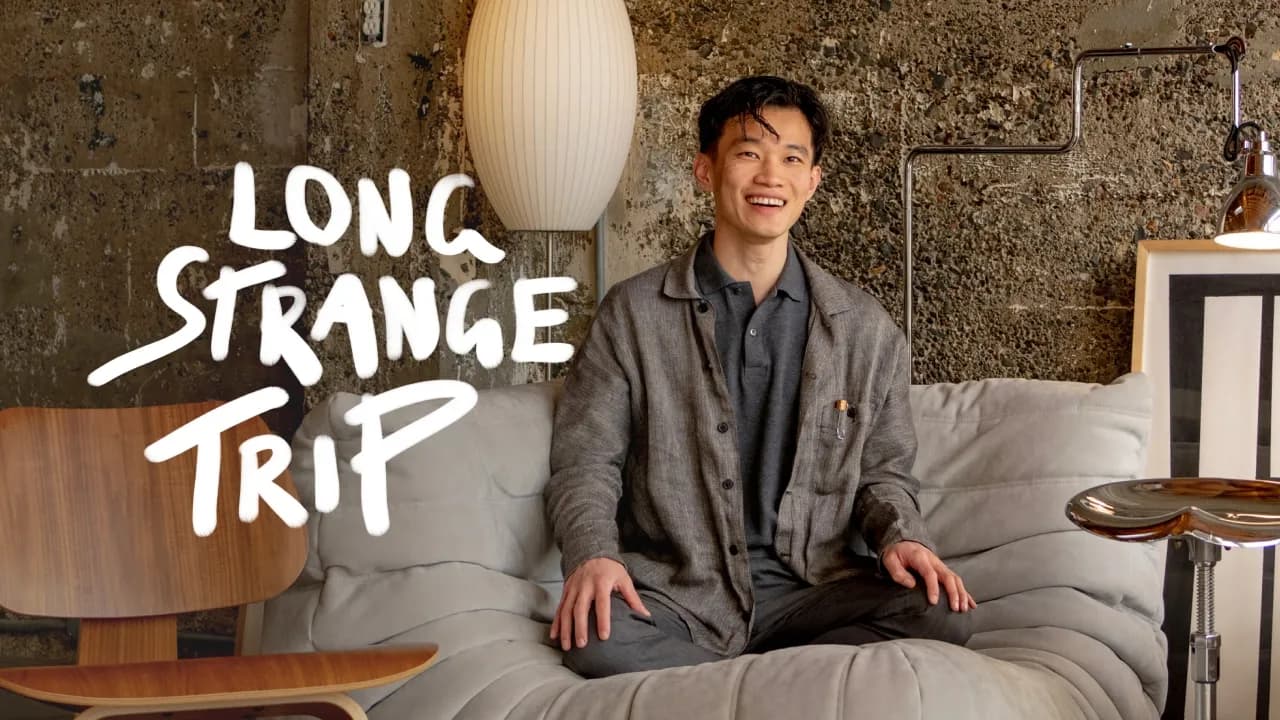
Snapchat CEO: Why distribution has become the most important moat | Evan Spiegel
In a Nutshell
Snapchat CEO Evan Spiegel emphasizes **distribution** as the ultimate moat in consumer tech, trumping product innovation (easily copied via AI/software) and network effects—achieved via close-friend connections, creator ecosystems, and leveraging incumbents like Meta for Threads/TikTok success. Snap innovates through flat design-engineering structures, rapid ideation/critiques, deep customer empathy (e.g., inventing Stories from "send all" feedback), and hardware like AR Specs to evolve computing toward real-world social connection. AI accelerates workflows but reinforces humanity-first focus; Snap prioritizes profitability, audience growth (gaming/Spotlight), and Specs launch amid middle-child positioning between Meta/Google and smaller rivals.
These notes were generated by AI and may contain inaccuracies.
Snapchat has over 1 billion monthly active users and generates over 6 billion a year in revenue. People post over 8 billion AR lens photos a day on Snapchat. Snapchat invented Stories, the first AR glasses product, swipe-based navigation, camera as primary interface, face swapping, and making people look older.
Building durable lasting social consumer products is extremely hard. In the 15 years since Snapchat launched, essentially zero social consumer apps have launched and stuck around, except TikTok (more of a media platform) and Threads (leverages Instagram's distribution).
Distribution is one of the hardest things in consumer technology today. Early mobile era had high appetite for new apps; now people download far fewer apps. TikTok succeeded by spending billions subsidizing both sides of the video marketplace: acquiring viewers and paying creators. Threads leveraged Meta's distribution.
Consumer tech focuses too much on product-market fit; people underinvest in figuring out distribution.
Snapchat grew by connecting users to their close friends (best friend, partner, spouse), not all friends, despite bigger networks. This provided majority of network value.
AI excels at ideas, code autocompletion, writing/reviewing code, testing, strategy—but distribution remains the biggest challenge and new moat.
Most exciting tech times involve new platforms (e.g., mobile birthed Uber, Snapchat). Next: glasses and new form factors for generational consumer companies, especially with existing distribution.
Startups face huge challenges getting attention against incumbents.
Snapchat has innovated: Stories, AR glasses (Spectacles before Meta), swipe-based navigation, hold-to-record video vs. photo, Instagram+ subscription (Snapchat+ has 25 million subscribers, over 1 billion revenue run rate).
It's certainly better than making stuff that people don't want to copy.
15 years ago, Snap learned software is not a moat (now evident with AI). Features are easily cloned, so build durable moats:
- Ecosystems/platforms: Creator-Snapchatter relationships; AR platform with millions of developer-built lenses (easy to copy software, hard to replicate ecosystems).
- Hardware: Fully vertically integrated AR stack hard to copy.
Network effects are important but not enough against software cloning, even with patents. Build platforms supporting creator/developer/community relationships.
Snap works on two hard business types: consumer social platform and hardware (past: Spectacles, drones; upcoming: Specs launching this year).
Evan loves computers (built his own in middle school, graphic design in computer lab). Computers/phones isolate people (e.g., kids on phones while hanging out).
Opportunity: Build tech that brings people together, grounded in real world. Phones force AR through tiny screens/thumb interaction—like a keyhole.
People spend 7-8 hours/day on screens; computers need to evolve to fit lives better.
AR evolution:
- 2014 Spectacles: Camera off phone for easier real-world snaps.
- Added second camera for depth.
- Added display to overlay digital objects.
- 2024: OS for developers to build full-featured software inside Specs, prepping consumer launch.
Specs: New computer bringing people outside, connecting friends, freeing hands. ~20 years since iPhone.
Early Specs preview: Airbender, plants in house, drawing, multiplayer features (connect vs. solo VR).
Specs anchor content in the world (not annoying heads-up display or notifications). Avoids looking at crotch while talking. Focus: New ways to hang out/connect with friends wearing Specs.
Snap punches above weight in innovation despite small team (e.g., design team: first day, present work; make things; have lots of ideas to get good ones).
Book recommendation: Loonshots by Safi Bahcall explains Snap's process.
Innovation framework:
- Large orgs for scale need hierarchy/structure/operational rigor → risk-averse, promotion-focused.
- Innovation needs flat structures (e.g., Snap design: no fancy titles, flexibility to try/fail quickly, crazy ideas).
Successful companies have both org types; leaders foster healthy relationships/mutual respect/dialogue between them.
Avoid tensions: innovators criticizing bureaucracy vs. ops dismissing jokers.
Snap runs large public company (almost 1 billion customers, reliable service, effective ops) while maintaining innovation.
Snap's design team is very small, oscillating between 9 and 12 people, constantly innovating and creating new things. The beauty of Snap is the dialogue between design and engineering teams, where innovation happens. Engineers working on customer service or reliability have great ideas, as do designers. This approach is described as the fast thinking and slow thinking parts of the organization, like Kahneman's System 1 and System 2.
New ideas come from everywhere, but the design team has a flat, non-hierarchical structure where ideas can emerge from anyone. This is critical.
Snap's structure was modeled on Evan Spiegel and Bobby Murphy's original relationship. Bobby has a heavy computer science, stats, mathematical, and computational science background but likes design and empathizing with customers. Evan has a design background from Stanford's product design program (part of mechanical engineering) and took computer science classes. They had mutual respect and enjoyed discussing products, creating innovation. Growing the company strengthens dialogue between engineers and designers, fostering an environment for crazy ideas. For design, velocity of work is most important.
Evan meets designers for a couple hours every week to review new work—hundreds of ideas weekly. His education combined Stanford's empathy-focused, iterative, human-centered design with art school (Art Center, Otis in Los Angeles) grinding work ethic and brutal critiques. Key is developing empathy while maintaining high-velocity work: making stuff every week and critiquing as a team.
If you want to have a good idea, you have to have lots of ideas.
Must talk to customers and share ideas quickly and frequently. Doesn't mean taking their advice, but listening is key—not surveys, but deep 1-2 hour conversations on technology use, feelings about products. Customers are an endless source of inspiration.
Pro talking to users, but balance vision with feedback. Example: Stories.
Customers wanted a "send all" button to blast snaps to everyone, but also expressed pressure from permanent social media posts, likes, comments, judgment—only posting pretty/perfect things. Snapchat allowed judgment-free expression.
Social media feeds were reverse chronological: end of birthday party appeared first. Listened but invented Stories:
- Easy sharing with all friends without spamming.
- No public metrics (likes/comments) to reduce pressure.
- Disappear after 24 hours for fresh starts.
- Chronological order, like storytelling since the beginning of time.
Listening provided insights; empathized and created something new, not exactly what was asked for.
Iterative evolution from status updates (knowing friends' activities without snaps) to Stories, including gestures like tapping forward/backward, full-screen vertical content—all new at the time.
Early skepticism: disappearing photos impossible due to screenshots. Working from Evan's dad's house post-school, they detected screenshots via touch event—holding to view snap, screenshot lifts finger from screen, triggering notification to sender. Community resonated: okay to save, just wanted to know. Early invention drove traction and spread Snapchat as new communication.
Snap had 200 employees before first PM. View shaped by designers' role: in traditional tech, designers just produce visuals responsive to PMs, not driving direction/strategy/innovation.
Modeled on design-engineering harmony. Early view: designers should do PM work themselves. This empowered designers in product development.
Today at scale, PMs coordinate legal, trust/safety, data science, etc.—synthesizing analysis, bringing teams together to innovate/deliver.
Standoff dysfunctional. Designers vindicated: now shipping code. Removes friction from idea to impact for nearly a billion users, leveling playing field for creatives.
Design as intentional bottleneck: everything approved by design, slows shipping but ensures cohesive experience. Prevents disjointed apps from siloed teams.
Evan loves building products for community—stays in the weeds, close to pixels. Not just founders: all leaders must stay close to customers, product, team—walk floors, talk customers.
Especially for differentiating on product experience, regardless of consumer or not.
Hiring based solely on portfolio, not experience/prior work. Most join right out of school.
Look for:
- Wide range: difference between art (distinct style, self-expression) and design (empathizing with audience, resonating—requires range, building different things for different needs).
- Story behind work: pick portfolio piece felt strongly about, explain why made it and what learned. Reveals process for building/inventing.
Ensures people with different
Snap's design team strength comes from people with different backgrounds, such as 3D animation or electrical engineering, bringing varied perspectives and skills.
The primary way to develop young design talent is to help them make lots of stuff and get feedback from customers, teammates, or directly from Evan Spiegel. On the first day joining the design team, new hires present work, setting the tone for high velocity creation. This fosters comfort with rapid ideation where ego melts away—creating a thousand ideas means most aren't great, but that's fine. The goal is to eliminate preciousness around ideas, rejecting the notion that one perfect idea defines a designer's worth. Instead, generate as many ideas as possible to find great ones. Establishing high ideation velocity early is crucial for young designers.
Designers rotate through different product areas to bring fresh perspectives and avoid boredom. Examples include working on the world's largest maps and the biggest augmented reality platform. Staying on one product like chat for three years would be boring for great designers.
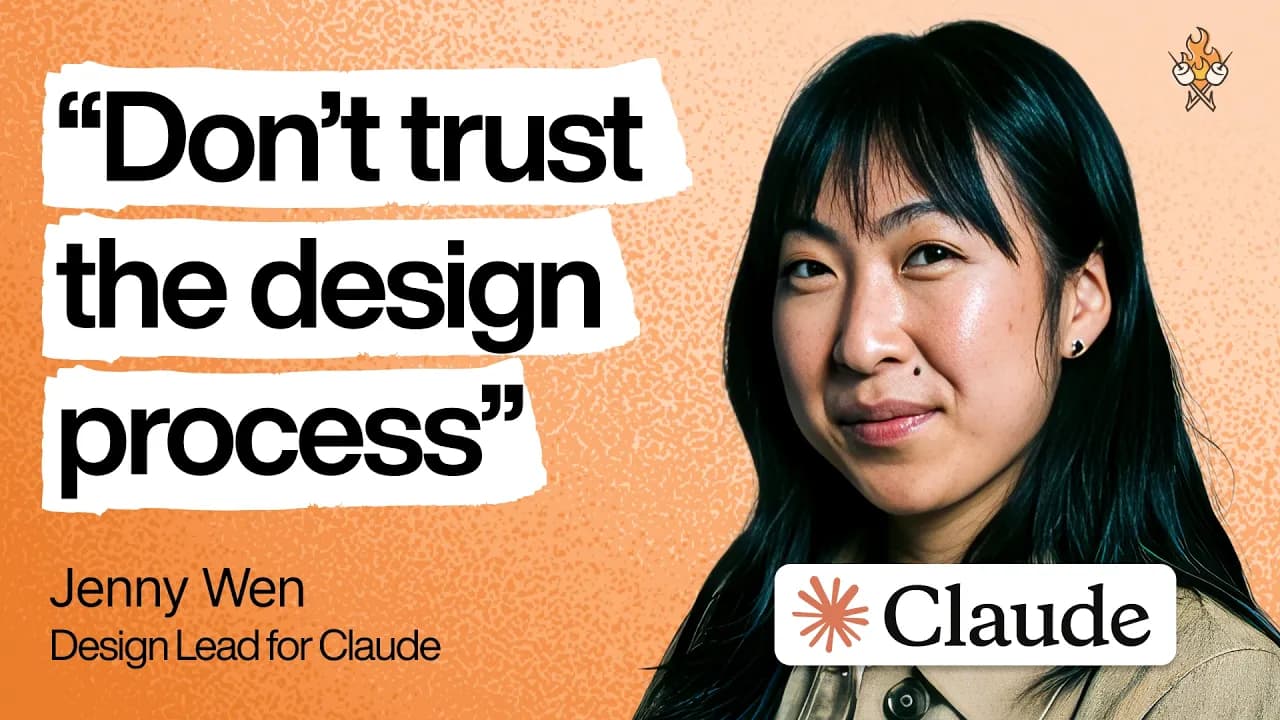
Jenny Wen, former head of design for Claude and co-work, director at Figma, returned to IC design at Anthropic and found constant crits and feedback the hardest part—she had forgotten about it. At Snap, there's no gate to showing work in weekly design meetings; any idea, good or bad, can be presented without filtering. This prevents great ideas from being filtered out by overreliance on critique processes.
Designers are not required to ship code, but many do out of passion and curiosity. The team has a "figure it out" culture—e.g., a designer new to 3D graphics took online tutorials and succeeded. No push or requirements needed for adopting new tools.
Key challenge: submitting PRs at nearly billion-user scale without breaking things. Snap developed AI tools and guardrails like automated code review (detected close to 10,000 bugs) and shake-to-report in the internal app, where agents debug issues, suggest fixes, and will soon implement them.
To manage AI chaos, Snap starts with jobs to be done for Snapchatters (e.g., download app, add close friends, use lenses) and advertisers (e.g., enter ad platform, configure campaigns). This identifies agent use cases, focuses cross-functional teams with AI support, and tracks business outcomes.
Balance experimentation (thousand flowers bloom) with focus on community and advertiser needs.
The CEO job evolves dramatically: early days involved designing product, customer support, legal filings, fundraising. Now it's leadership, developing people, selecting team, building culture and structure, strategy, managing change (AI, pandemic, ad platform rebuild).
Biggest improvement: communicating effectively to team, podcast audiences, world. > President Clinton described being president as "explainer in chief"—explaining to help people make sense of the world, company, their role.
Communication is core; early on, Spiegel was dismissive of it.
Leveling up comes from just doing it. Board member pushed him to do all-hands and Q&As despite reluctance (preferred email). Now he loves it, enjoys tough questions, learns from team openness.
Rahul Vor (Superhuman founder) transitioned to enjoy CEO duties after VC push. Spiegel notes CEO role has unglamorous responsibilities and operational rigor—not for product-only focus. He stays for leading strategy, transforming computing via Snapchat and Specs, despite family time tradeoffs. It's a once-in-a-lifetime opportunity at Snap's scale.
Snap nearing Fortune 500 scale, ~1 billion monthly active users, launching Specs after 12 years investment, but not net income profitable due to heavy future investments. This year must prove strong profitability, audience growth/engagement (topic chats, Spotlight, 200 million monthly gamers). Gaming drives engagement, foundational for Specs success.
Rebuilt ad platform, go-to-market, accelerated small/medium customer growth. 2025 launches next chapter.
Snap as middle child: larger than Pinterest/Reddit, smaller than Meta/Google. Benefits from scale for interesting things, but overshadowed. Specs launch helps define identity vs. siblings.
Four boys: ages 2, 6, 7, 15. Tailored by age.
- 2-year-old: zero screen time except haircut distraction (YouTube Bobcat tractor videos).
- 6/7-year-olds: infrequent movies; no phones. Got Mod Retro (Palmer Luckey startup remake) for Christmas.
- 15-year-old: full tech use for school, friends, Snapchat.
AI in kids' lives: School integration minimal per breakfast table chat. Kids beta test Specs (fun family experiences). Eldest Flynn most fluent in AI tools. AI empowers kids' innate imagination—turn ideas into reality instantly, key for future education.
Snapchat excels at creation (lenses, filters making users superstars); AI unleashes more creativity in imaginative kids.
Uses Glean agent accessing all dashboards, documents, data to comb company activity, flag focus areas. Catches overlooked items. Leaders send weekly 3 things from past week + 3 ahead. Combined with metrics, gives strong sense for hotspots, priorities, service usage.
Evan Spiegel finds AI exciting because it enables a flat, fast-moving leadership structure with an AI co-pilot.
that agent was uh you built it in Glean is that where it lives
yeah that I mean that that I've done uh in Glean which is is great obviously can build all sorts of stuff in in cloud but Glean for us is the most secure way to access all of our different documents and dashboards. and things like that.
AI Stack
They use Glean and Claude.
They are taking the entire workflow and enabling it with an agent. Example: taking a product idea with their go-to-market agent - writing the spec, identifying relevant folks for signoffs, helping with risk analysis from legal, trust and safety perspective, writing go-to-market materials like the blog, working on building visuals, all in one shot.
Agents can play a massive role in changing how they work, connected to jobs to be done. If they define a job clearly enough to build an agent for it, it creates a lot of lift.
What do you where do you build this agent? What's the what platform to use?
Uh we've been using Claude to do a lot of the the work um you know across Snap.
Contrarian take: In an industry focused on technology, humanity is far more important than technological developments because humanity dictates technology adoption.
People underestimate the role of human adoption and comfort with AI advances in determining its deployment. Technology leaders think people will blindly adopt new tech, but there will be huge societal pushback on AI changes.
Focus needs to be on putting humanity first, ensuring tools advance humanity's goals in addition to business goals. That's contrarian in the industry.
Host notes it's hard for AI labs to warn about dangers without freaking people out. Surveys show AI popularity below ice and Iran.
Snapchat's long history with AI shows its playfulness; it doesn't have to be serious.
Books Recommended
- The First 50 Years of Apple by David Pogue (recommend first half: interviews 150 early Apple team members, great stories and learnings).
- The End of the World Is Just the Beginning (touches on vulnerability of global shipping; global economy built on it; predicts US having harder time securing global waterways and implications for building things and organizing society).
Recent Movie/TV Show
Marty Supreme - loved it, off the charts, extreme, full throttle movie experience, on the edge of seat the whole time. Highly recommend.
Recently Discovered Product
Rediscovering Pokemon through kids - so much art, personality, character; amazing brand and franchise. So much they could do to grow that IP.
Favorite Life Motto
You have two ears and one mouth. Use them in that proportion.
Favorite and Least Favorite Snapchat Lenses
- All-time favorite: The Vomiting Rainbow - brought joy to so many people.
- Least favorite: old lens or face swap - intense.
Host notes Snapchat was first to do face swap - early days real-time machine learning transformation on the device, cutting edge. Bobby created their Gen AI lab 10 years ago.
Face swapping era was early generative AI in action; businesses built around it went away.
Exciting time despite AI concerns. Optimistic about computing becoming more human, which is Snap's focus. Excited to share more later this year.
Evan, thank you so much for being here.
My pleasure. Thanks, Lenny.
Podcast outro: Subscribe on Apple Podcasts, Spotify, etc.; rate/review; lennispodcast.com.
Keep Lenny's Podcast in your library
Save the videos and channels worth coming back to, and find them again in one place.