Synthetic opioids 80 times more potent than fentanyl | 60 Minutes
In a Nutshell
DEA agents are confronting a new wave of synthetic opioids like nidazines—up to 80 times more potent than fentanyl—that cartels produce by tweaking one molecule at a time to evade regulation. These drugs are flooding the U.S. via a global pipeline of Chinese and Indian precursors, pressed into fake pills, and have already killed roughly 1,500 Americans. Despite enforcement successes and a drop in overall opioid deaths, the cartels’ rapid chemical innovation keeps the death toll high, with one American dying every 15 minutes.
These notes were generated by AI and may contain inaccuracies.
The DEA, the US Drug Enforcement Administration, is now confronting what it calls the greatest and most deadly drug threat the country has ever faced. Synthetic opioids, which have killed more than a quarter of a million Americans in the last 5 years. Synthetics include fentanyl, but now also ever more lethal new drugs that are entering the bloodstream of this multi-billion dollar criminal industry. These drugs are concocted and tweaked in clandestine labs. Cartels changing one molecule at a time to evade law enforcement and meet demand.
This past August, St. Petersburg, Florida. Heavily armed DEA agents prepared for a raid. The goal, disrupting a ring that distributes drugs, cocaine and methamphetamine, but more critically synthetic opioids. Early morning, agents were at a house in a residential neighborhood. One of 10 locations throughout the area hit simultaneously. A drone sent in to determine if anyone inside was armed. Then a flash grenade tossed into the house. Recovered stacks of cash, a weapon, and one man inside who was arrested.
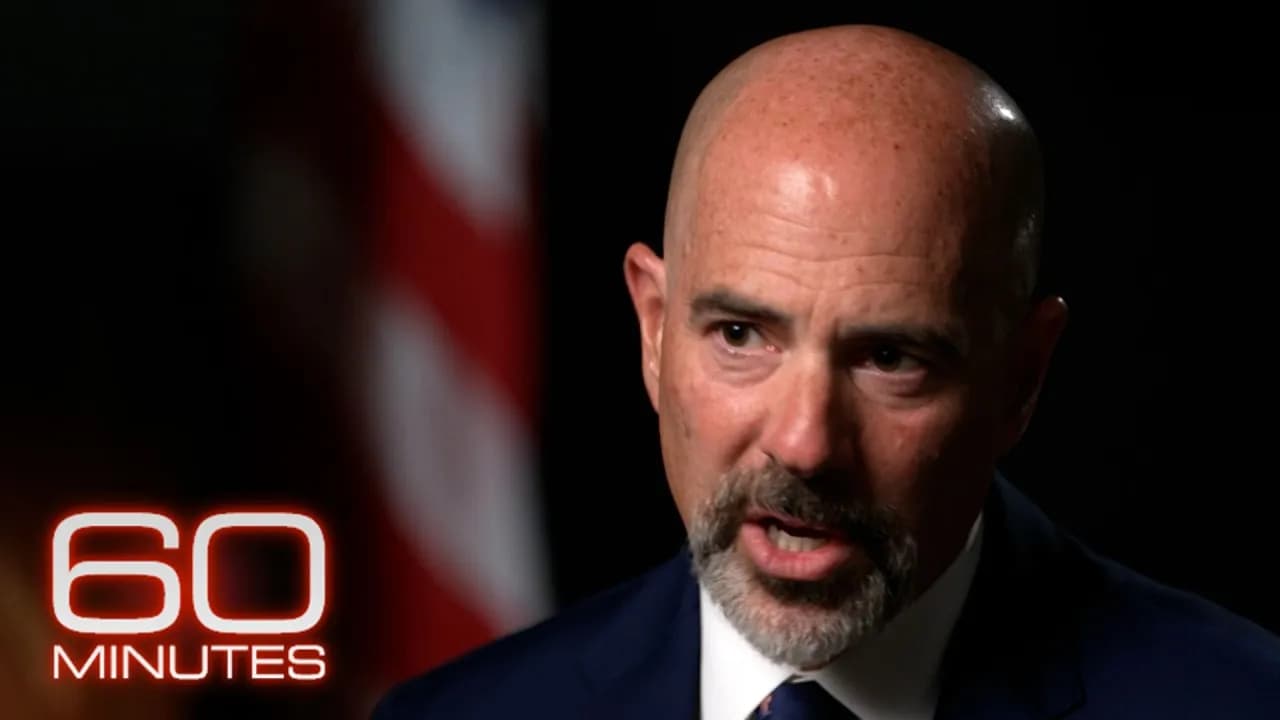
Taking part in the sweeping operation, longtime agent, now head of the DEA, Terry Cole. After we took the main target in custody, we're going to continue to dismantle the network, the network that is bringing this poison in, this network that's killing our youth, that's addicting our youth. This is just a small portion of what's going on globally for DEA.
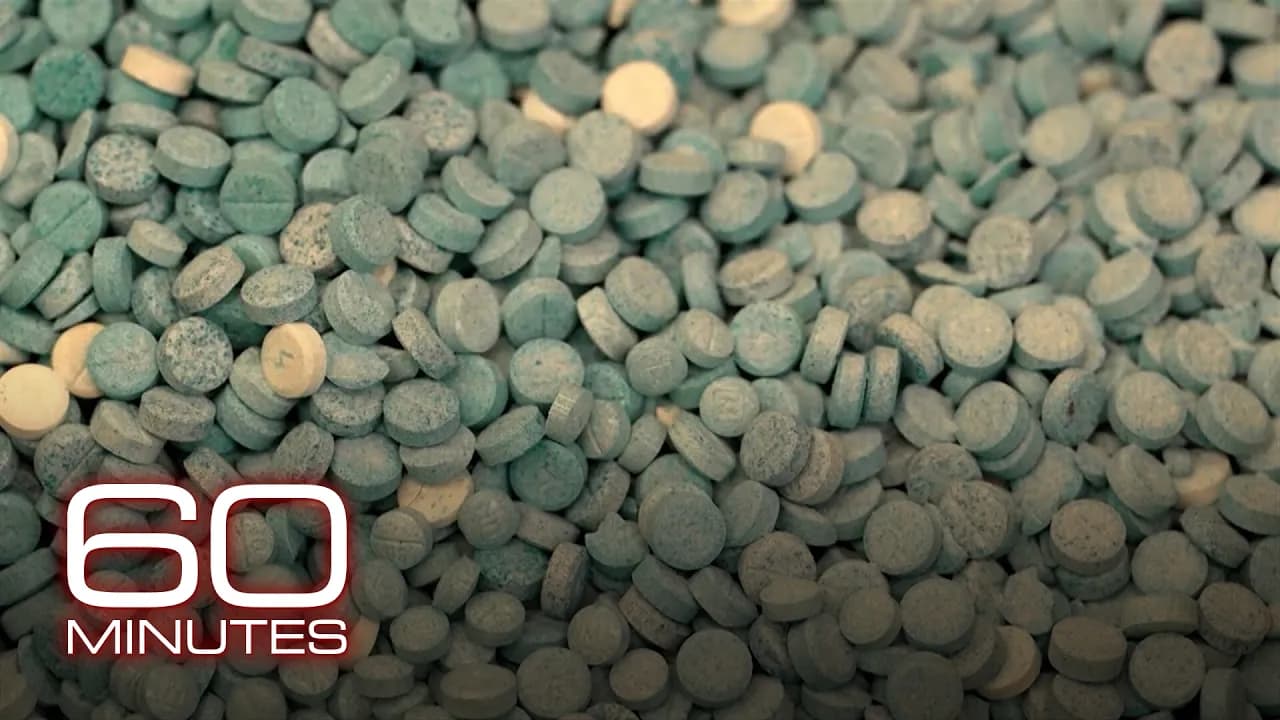
Danny Escobar, special agent in charge, showed seized drugs. You got the prescription pills, the fake prescription. So, they have all these different kinds of pills that they're using. We don't know what any of this is, where it was manufactured, how they did it. The cartels, this is what they're distributing to our people.
In raids like this, DEA head Terry Cole says agents are increasingly finding new synthetic pills more deadly than anything they've ever seen. Most Americans know about fentanyl. We're hearing about all sorts of other synthetics now. As we continue to, you know, clamp down on the pressure in Mexico. They continue to evolve as well. The cartels will exploit every avenue and every source possible to bring new poison to the United States. It's all about profit for them. They don't care about our citizens. They don't care about our sovereignty, our national security.
You're describing not just a public health crisis now. You're describing a national security crisis. In the past when we talk about cocaine, methamphetamine, and heroin, the traditional type of narcotics that come into the United States, they've never killed at record numbers like we currently see now.
Opioid deaths are declining, owed in part to more effective enforcement, improved access to opioid treatment, and reversal drugs. But they are still on pace to kill more than 35,000 people this year, the leading cause of death among Americans ages 18 to 45.
The DEA continues its crackdown on fentanyl. While the cartels continue to innovate, cooking up ever more deadly synthetics such as nidazines. An opioid not just more profitable than fentanyl, but up to 80 times more potent. Nidazines, scarcely in the drug supply a few years ago, have already killed roughly 1500 Americans.
Quay Brotten was killed by nidazines. Never in my life had I heard nidazine. Quay's mom, Fred Rica Robersonson, manages a medical practice outside Atlanta. Quay's older brother, Marquel Broten, was a two-time captain of West Point's football team and is now a first lieutenant in the US Army.
Quay was my energetic child. He was a ball of energy. Always dancing, always jumping around. He was like my little twin, as I would say. We did everything together. Quay, a promising athlete, was prescribed painkillers after a high school sports injury. His mom says he became addicted. He turned to counterfeit opioid pills known on the street as Blues. Usually containing fentanyl.
How did Quay describe his addiction to you? He's like, I can't control it. He's like, I don't want to be this way, but it basically takes over everything. I would rather take this pill than eat. That broke me.
On the evening of March 31st, 2025, Quay, set to go back to rehab for addiction the next morning, went seeking one last high, and not from a corner drug dealer. He sent this Instagram message to a former high school classmate who got blues. He made an Apple cash payment and a couple hours later pills dropped at the front door. It came via Uber courier in a book bag.
The book bag containing three pills. Do you know what he paid for those three pills? I think they were $10 a piece. I think he paid $30.
The next morning, Fred Rica went to Quay's room to check on him. Quay was laying on the bed with his like legs hanging off the bed. So I instantly went into nurse mode. I ran and got my Narcan. I had three Narcans at the house and I hit him with the Narcan and you know I go to do CPR and I was like, Come on, stay with me. Stay with me. Hit him with another Narcan and he looked at me. He laid his head in my hands. A tear rolled out and he took his last breath.
Next to Quay, some candy and a folded post-it note containing the pills and a personalized message from the dealer. Stay dangerous. The pills looked like the blues Quay was seeking, but with one fatal difference. They contained a nidazine.
Was there any percocet in those pills? Not one. No. No oxy anything in it. Fentanyl. No fentanyl, straight nidazine. This is something that can be up to 80 times more potent than fentanyl.
The first person to identify nidazines in the American drug supply, forensic toxicologist Alex Krotulski. We're on track this year alone to identify over 50 new drugs. That's one a week. Director at the Center for Forensic Science Research and Education outside Philadelphia, Krotulski is on the front lines of the American opioid war. He sees the everchanging chemistry as he looks for new threats in blood samples from overdose victims and in drugs seized, bought undercover, or purchased online.
All over the US is where you're getting this. We have powders from the Midwest. This powder is black. It's often called gray death. I think there's somewhere around 10 different opioids that are contained within this one individual powder. This powder contains cyclopamine which is one of these novel potent opioids. Cyclopamine has killed more than 200 Americans in more than 20 states. It proliferated after a global crackdown on nidazines.
That's how the cartels work. Create a new drug that's legal until regulation catches up. So where do drugs like this come from? Illicit chemists actually dig up old patents. One synthetic carfentanil was once used as an elephant tranquilizer. Cyclopamine was formulated in the 1960s as a painkiller but was never approved. This past August, enforcement caught up and cyclopamine was scheduled, that is banned. So goes the cat and mouse game.
So you hear cyclopamine is now banned. You're not throwing a party. You're pivoting to figure out where the train's going after this. We're not saying, Oh, yay, that's gone. We're saying, Oh crap, we've got something else new that we need to start looking for. Sure enough, the illicit chemist took the chemical structure of cyclopamine and used it as a building block to create a new drug. Three tiny edits, snapping on a chlorine atom here and removing these two small chemical attachments. And behold, yet another synthetic opioid that's already causing overdose deaths.
We keep hearing this phrase, one molecule at a time. Explain that. For us, one molecule at a time means today it could be cyclopamine. Tomorrow it could be 5 chloromethylcyclopamine. On the street, they're still an opioid product. On the street, the person consuming it may not know even what they're consuming. But for us looking at it at the molecular level, we're tracking it that closely to see these individual changes to the molecule over time.
It all gives new dimension to the term chemical warfare.
Head of the DEA, Terry Cole, considers synthetic drug making the most deadly criminal act carried out by today's cartels. We're seeing these synthetics getting made more lethal with just a little tweak to a chemical compound. That must scare the hell out of you. How they evolve is truly amazing. Listen, they have the money to hire the best chemists in the world. They have the money to bring people into their laboratories. This is industrialization. Industrialization through a global pipeline.
Here's how the DEA explained it to us. Chemicals from China and India are ordered online and shipped to makeshift labs in Canada and in Mexico. The chemicals are then mixed by cartels and made into powders and then pressed into pills either in Mexico or in the US.
The DEA led us into their special testing and research lab outside Washington DC where we got a demonstration of just how easily the cartels can make synthetics. Lab director Agnes Whitaker showed us how, for example, fentanyl is made by mixing chemicals in a plastic bucket using some simple household tools. And that's what you see here to make about 1 kilogram of fentanyl. They may go to a hardware store, buy certain utensils. Someone made that in their basement. Yeah. So if you had a reaction that required constant stirring, you can actually go and makeshift this then tape it right like this so that you don't have to hold it.
The DEA and its global counterparts have been trying to cut off the pipeline before the chemicals reach the cartels. But it's not that easy. The chemical ingredients known as precursors that make up the synthetic drugs can enter countries legally for use in commercial products like dye and perfume.
The DEA has successfully pinpointed and regulated dozens of chemicals. But in the ongoing game of whack-a-mole, the cartels and their clandestine chemists simply find replacements. So let's say that all of a sudden you cannot obtain it. There's other substitutions. This gets scheduled and suddenly it's regulated. You still have ways to substitute and now you have more variations.
Variations like the nidazine found in the blues that killed Quay Brotten. Pills manufactured on presses like this one seized in a DEA raid. What kind of volume are we talking here? A little over 330 tablets per minute. Just per minute. So approximately 20,000 an hour. That's millions of dollars worth of pills in 24 hours. Part of the synthetic opioid supply that kills an American every 15 minutes, taking lives like Quay, who never saw his 22nd birthday.
A reminder that in our ongoing drug war, the stakes could scarcely be higher. Is there just an element of futility? Whatever we do, they're just going to pivot to another substance. As much as we want to say this is too tall of a mountain to climb, it's a mountain we have to climb because it's answers that families won't get, that public health and public safety won't get if we're not doing this work.
Keep 60 Minutes in your library
Save the videos and channels worth coming back to, and find them again in one place.