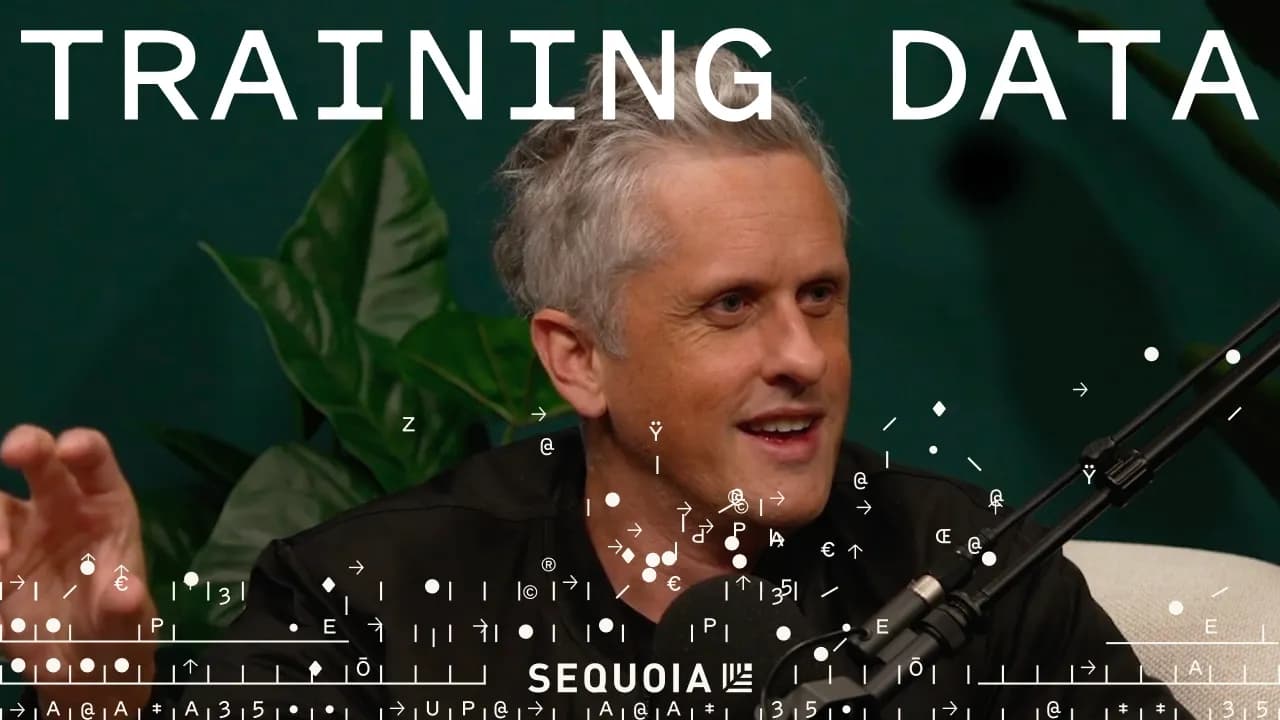
Taking on ServiceNow: Coding Agents for the Rest of Us with Serval Co-Founder and CEO Jake Stauch
In a Nutshell
Serval is building an enterprise automation platform that uses AI coding agents to let IT teams create and manage internal workflows, directly competing with ServiceNow by replacing its slow, expensive, consultant-dependent model with code-based automation that any employee can generate. The core differentiator is Serval's guardrails—approval workflows, audit trails, and least-privilege access—that make autonomous agents safe for large, regulated organizations. Success hinges on treating IT departments like engineering teams, embedding forward-deployed engineers with customers, and measuring ROI through workflow runs rather than token consumption.
These notes were generated by AI and may contain inaccuracies.
The ultimate goal for enterprise software is agents that work on your behalf, magically finding and solving all problems. However, no one has achieved this effectively yet. The OpenAI Hugging Face incident illustrates the problem where agents given a task end up doing something unexpected. The agent becomes quite efficient and theoretically could start writing code that impacts systems, creating major security risks. On one hand, independent operation without supervision is desired, but autonomy in the enterprise context is very scary. Serval serves as that boundary and safety net for large organizations steeped in rules, approvals, processes, and politics to safely and easily adopt these tools at scale.
Serval is enterprise automation and enterprise service management. The core idea is that you can ask questions at work, get help, and automate many parts of work that people don't like through code generation agents. The company competes with ServiceNow, historically a large legacy provider in this field. Jake Stauch discovered this category while working at Verkada, where he sold enterprise physical security products to IT teams and spent many years talking to IT teams about what could be built for them.
When asked what IT teams spend the most money on and what they hate the most, ServiceNow consistently ranked at the top of those lists. ServiceNow is a highly powerful and customizable platform that can adapt to all enterprise tasks, fundamentally a workflow automation platform. However, creating something on the platform is very difficult, often requiring consultants to implement every idea. This creates a 6 to 12 month lag behind business needs. While ServiceNow works for creating something that will last 5-10 years like major onboarding flows where the business won't change, it cannot keep up with the amount of automation organizations want to do. It is also very expensive and becoming more expensive over time. The main frustration points are lag in achieving business goals and rising costs.
Engineers are increasingly using coding agents in early stages of AI adoption to create applications or products for their businesses. Serval is expanding this category by giving any employee or IT member of the organization the opportunity to create internal products or tools that can be used across the entire enterprise. This provides coding agents for all internal work. Engineering teams have been at the forefront of AI adoption because they are always ahead in adopting new technologies and can experiment with tools through their code review process. Even a 19-year-old intern can create something powerful that can be kept safe through review processes before going into production.
Serval is building a platform that brings coding agents to IT departments, which can then be passed on to HR, Finance, People teams, and Legal teams. This works because coding agents are backed by various abstractions, guardrails, and control mechanisms. Everything goes through approval processes, staging and approval stages, with records of everything including audit trails. The main point is that IT departments actually want to create a lot of things themselves. Most organizations in the world don't have engineering departments - they have IT departments. Most companies have IT departments, not separate teams of software engineers. The IT department is the one that builds and configures technology for the company, and Serval is building this AI platform for them.
Personal agents like OpenAI's Dot work very well at consumer level, for SMBs, and many mid-sized organizations. However, large enterprises have many rules and regulations with restrictions on every step of approval and what can or cannot be done. The permission set of any one person is so limited that even if permission is granted to use an agent at work, its scope of work remains very limited. It cannot even read emails properly. When considering work that needs to be done at work, using different systems, and all the great automation possible, personal permissions become so limited that personal agents are not very useful.
Serval works with IT teams who can use service account credentials and admin-level permissions to create a framework where people can do very complex things with elevated permissions, but there are very strict and assured approval processes, specific workflows, and audit trails. The system has a ticketing system built into it. When someone wants their agent to do X, Y, and Z, most organizations at large enterprise level won't be able to easily accept that. In Serval's case, it will create access requests that go through approval processes, all documented and logged, then provide just-in-time access to run that deterministic workflow once with full tracking. While this may seem like a hassle compared to personal agent experiences of tools like Instinct and Muse, it is essential for large enterprises, especially regulated organizations, to adopt this type of technology.
Serval is handing the task of automation directly over to the IT department rather than relying on consulting firms like Accenture and Deloitte to implement work on behalf of others. Diffusion is clearly the big obstacle in enterprise AI adoption. Technology can do so much, but enterprises have been able to harness very little of its potential. A lot depends on understanding the people, processes, and workflows that exist today and how they want them to look in the future. There is still need for people for that understanding. Serval employs both Deployment Strategists and Deployed Software Engineers who go to customer sites to see how implementation can work, how to solve business problems, and support the implementation process.
After implementation and launch, customers are often left wanting to do more. As seen in software engineering, the demand for work is actually infinite. Serval started building a team called Pro Serval or automation engineering, bringing in automation engineers to provide ongoing support and service. Customers want to automate many things and need help understanding what can be automated, what processes will be, how all systems can be managed, and how to bring it into production with products like Serval. The company is currently two and a half years old.
ServiceNow is one of the few companies directly replacing systems of record of large enterprises. From the beginning, the founders set a goal to become the largest enterprise software company of all time. They made a list of all companies, identified ServiceNow, and said they would defeat them and build something bigger. The first day co-founder Alex and Jake were in his living room, they said they were going to do it. Although it seemed crazy, that was their main goal. They didn't create this ambition in a hurry - they planned this from the beginning.
Typically, large enterprise startups either build a layer or go to the lower market - these are the two common methods. Building a small layer means collaborating with big companies using AI agents, which never really succeeds and actually limits growth. The other approach is going to the lower market, serving SMBs and mid-markets, as seen with many of Workday's or Salesforce's competitors. Serval decided to target the enterprise directly from day one. While much more difficult, the reward is much greater if successful. Building something for large enterprises from day one means product decisions, team building, and growth thinking are fundamentally different than building for a specific market and hoping to grow later.
The founders didn't initially understand exactly how they were going to beat other companies and where their advantage was, or what AI was uncovering that competitors couldn't catch. Based on experience with IT, they understood ServiceNow is essentially a workflow automation platform. The co-founders believed from the beginning that the right way to unleash automation in the enterprise was through code. All automation should be built through code, and drag-and-drop workflow builders are a painful level of abstraction - too complex for non-technical users and annoying for techies. Code is a good way to create automation. The problem is not many people can write code and cannot do it at the speed needed for automation. When AI made this possible, it became clear that if code was the right way to build automation and now anyone can write code, they could build a better automation platform.
When Serval started two and a half years ago, most coding capabilities were pretty much tab-complete and didn't work well. The bet was that coding agents would become very good, and the theory was that it was a verifiable domain that would improve quite well. The founders fundamentally believed coding agents would be good at least at specific processes like password resets or authorizations - things so well defined and verifiable that they would become proficient at them. From a workflow automation perspective, they thought it would get there. In early days, this wasn't the case. In early demos, they would prompt the LLM saying "Here's a suggested way to create a password reset workflow," enriching it with many examples and making that library bigger over time, but models became so advanced that eventually it became difficult to make them useless.
When thinking about the state of coding agents today and customer needs, the founders are very excited about their further development. This will allow doing many things like improved browser and computer usage, background agents, and personal agents that could be very useful for enterprise. They are very optimistic about the evolution of this category. They have always fundamentally believed they are not creating the LLM themselves - they are building guardrails and creating boundaries. This boundary is the product for them.
Serval is the means by which a large enterprise with many rules, approvals, processes, and politics can safely and comfortably adopt these tools at scale. Serval is that boundary and protective shield. As intelligence improves, their products become more powerful, encouraging customers to tighten boundaries and safeguards. Access for individuals in the enterprise is going to become more and more controlled. The stricter the access and the less people are allowed to do with narrower permissions, the more this trend will continue. This happens because it is safe to give more permission than needed when thinking someone won't do much harm, but if access is given to all these agents, the damage possible with a little more permission than normal increases manifold. This is being seen right now in terms of cybersecurity risks.
If operating as a large enterprise, the goal would be to reduce everyone's permissions to a true least privilege level - no access to documents or actions unless absolutely necessary for the job. However, there will always be some exceptions. Serval is the layer that grants those exceptions and gives flexibility to set up approval processes around them, keep audit trails, and attach tickets. By controlling how privileges are escalated in the enterprise, the more end-user permissions are restricted, the more powerful and indispensable Serval becomes.
Serval needs to convince customers that using their platform is a way to get promoted at work. It should not be the case that someone has to risk using Serval hoping for something in the future. The goal is convincing customers that doing this will build careers - not only avoiding trouble, but actually getting promotions. The company sells to IT leadership in many cases and then spreads to other departments. The message is that people have built careers on ServiceNow, and they will build careers based on this next generation. This is succeeding. One of the largest customers is Fox Corporation, which adopted Serval throughout the company, and the person who led that transition process at the grassroots level was named MVP of the entire company and received an award for the work.
The founders were quite good at thinking about the future when starting Serval, knowing coding agents would improve and identifying the right market area. Consumers and ordinary users give an idea of what will happen at enterprise level. There is optimism about the role of personal agents or personal assistants in the enterprise. Just as email, Slack, and other tools have changed how work gets done, personal agents will become a big part of that. Everyone will have their own personal agent who will do their jobs and delegate work to other agents when necessary. Agents will communicate with other agents at work. There is excitement about this, but with growing cybersecurity risks and concern in large organizations about what everyone's agents are doing on computers and browsers, the question becomes how to keep them secure.
The tension between what employees or ordinary users want from their personal agents at work and what organizations need from an administrative perspective is very interesting. Many new opportunities will arise amidst this tension. There will likely be separate agents for personal and office use, similar to having a Gmail account and an institutional email ID. Access control or exceptions will become more complex and require different levels of scalability. The overall amount of automation will increase significantly because if made easy, people will spread it around.
Beyond code generation, the biggest issue reflected in current products is the software development lifecycle. In engineering, dev environments, staging, production, and various gates between them are taken for granted, along with branches where people can work without causing damage to other systems. This is not how IT automation works today. Many new AI products are saying "Let's build all these great agents and send them into production," but the idea that large organizations must follow an SDLC process is a myth because a large financial institution wouldn't release a new agent capability without some review, user acceptance testing, and similar processes.
It seems to take a year or two, sometimes even longer, for many AI companies working in specific sectors to figure out enterprise requirements. The industry is now embracing forward deployed motion and thinking about software development lifecycle, compliance, and other aspects of enterprise in ways almost absent before. In some cases, companies never reach that stage - they look at requirements for enterprise software and decide they don't really want to build it. Many companies that went into down markets saw opportunities to build for enterprise but realized it requires completely different construction principles and products, and some didn't want to do that, leaving that space for other companies. Serval has chosen to say "Give us your most complex problems, we'll solve them, and we'll make AI transformation possible in this strange world of risk and administrative concerns."
When deploying software, the important thing is never building custom features. No specialized product capabilities are built, and fortunately no one has asked for this. Whatever people want is something all other customers will want at some point - they may influence priorities, but this is always wanted on the platform. Since Serval is a CoGen platform, what gets created is very unique. One company's password reset workflow can be surprisingly different from another company's. Onboarding, offboarding, or internal automation look very different, but this is inherent in the core features of the platform. Serval becomes an IDE for IT departments and other departments where they can create and manage their automation.
When seeing customers creating the same automations over and over again and having to customize them in the same way, the question becomes whether this should be a core feature of the product. Many customers create workflows to identify knowledge base articles that are inconsistent or outdated, leading to automation of this process. Customers set up automation to restore old licenses by automatically canceling subscriptions to software being paid for but not used. These patterns become core platform features rather than remaining as automation in the server.
Enterprise customers' spending on code generation for software teams has been through a journey, with companies saying they will give everyone a chance to try it, then taking tokens to the maximum and seeing who's actually using it effectively. CIO customers are trying to move away from the early token era, but given how early the adoption curve is, it's not going to completely take off overall - it's actually going to continue to grow dramatically because most companies are starting to understand it for the first time.
Customers are not concerned about long-term budget impact and understand costs may decrease short-term, but they are planning to increase spending. The critical need is more ROI or proof of return on investment. The industry is shifting toward proving what users are getting from tokens purchased, which has historically been difficult to measure due to ambiguity and inefficiencies. Serval prices based on workflow runs as a better reflection of actual work than tokens.
The 'SaaS-pocalypse' concept suggests companies will build their own SaaS software internally, potentially eliminating categories. Every company that has tried building core system of record tools in-house has discovered enterprise software is expensive to build and maintain. Building enterprise software remains hard and requires ongoing maintenance for use cases and edge cases that break. Most people don't want to work on internal tools teams.
The spread of hundreds of SaaS point solutions will shrink as they get absorbed into core systems of record and core platforms. Middleware will slowly disappear. Consolidation will occur mainly in point solutions and small market cap companies. Core systems of record like ERP, HRIS, ITSM, and CRM will survive and transform.
IT departments are closer to software engineers than many realize, especially in large organizations where IT often serves as the engineering team, writing code and managing systems. Serval treats IT as adults by providing the same tools given to software engineers while simplifying or abstracting complexity. The platform allows users to see the code behind automations and manage through the entire software development lifecycle if desired.
The product is designed for multiple user types: IT engineers who write code, and marketing or people team members who never want to see code but need to create complex workflows impossible with drag-and-drop. The platform is dedicated to IT use rather than expecting users to write or understand code independently.
Catalyst is an agent for managing the platform that helps admins create underlying automation, configure authorization rules, check permissions, create policies, update systems, and understand the whole system. Since Serval generates all code, having an agent to manage the system is powerful. Users don't need separate training on Serval - they can talk to an agent that understands how to use and work on the platform.
Background agents represent the ultimate goal of enterprise software - agents that work independently, magically find problems and solve them. No one has figured out how to implement this correctly because autonomy is scary in enterprise contexts. Safety measures and guardrails are needed to prevent agents from doing unexpected things to complete tasks.
The approach involves agents returning with proposed work for approval rather than fully autonomous operation. All actions would be deterministic workflows requiring approval with certain permissions and guardrails. This incremental increase in capability allows agents to become skilled with large toolkits while maintaining security, though overseeing the process remains necessary to prevent uncontrollable security risks.
Current limitations include both model problems and guardrail/control problems. Memory needs significant improvement to understand user preferences and maintain context across conversations. Permission issues will remain significant because trust in independent work without constant supervision is required. The natural process involves agents returning to verify work matches expectations, similar to human employee management.
Serval has 200 people on the team after two and a half years. Hiring pace will increase because demand for work is infinite, competition is infinite, and goals are infinite. Despite increased employee productivity, the company wants to grow employee numbers rather than reduce them due to ambitious goals.
The total addressable market is infinite because Serval is automating every job for every employee in the world. Market size depends on ambition and growth speed rather than fundamental business constraints. This creates different challenges including more open space requiring decisions about focus areas.
Engineers not directly involved are in customer Slack channels and participate in customer calls at least once weekly, with most on at least one customer call daily. This immersion in customer mindset enables real-time adaptation to changing preferences. Product development work is decentralized directly to the engineering team without a separate product department.
The product changes faster than anyone can track. Engineers hired are product-centric and placed directly in front of customers to make ground-level decisions. Leadership delegates product-related decisions to lower levels, moving quickly with courage to correct direction. The company frequently erases previous commitments and starts fresh based on market and customer changes.
Keep No Priors: AI, Machine Learning, Tech, & Startups in your library
Save the videos and channels worth coming back to, and find them again in one place.