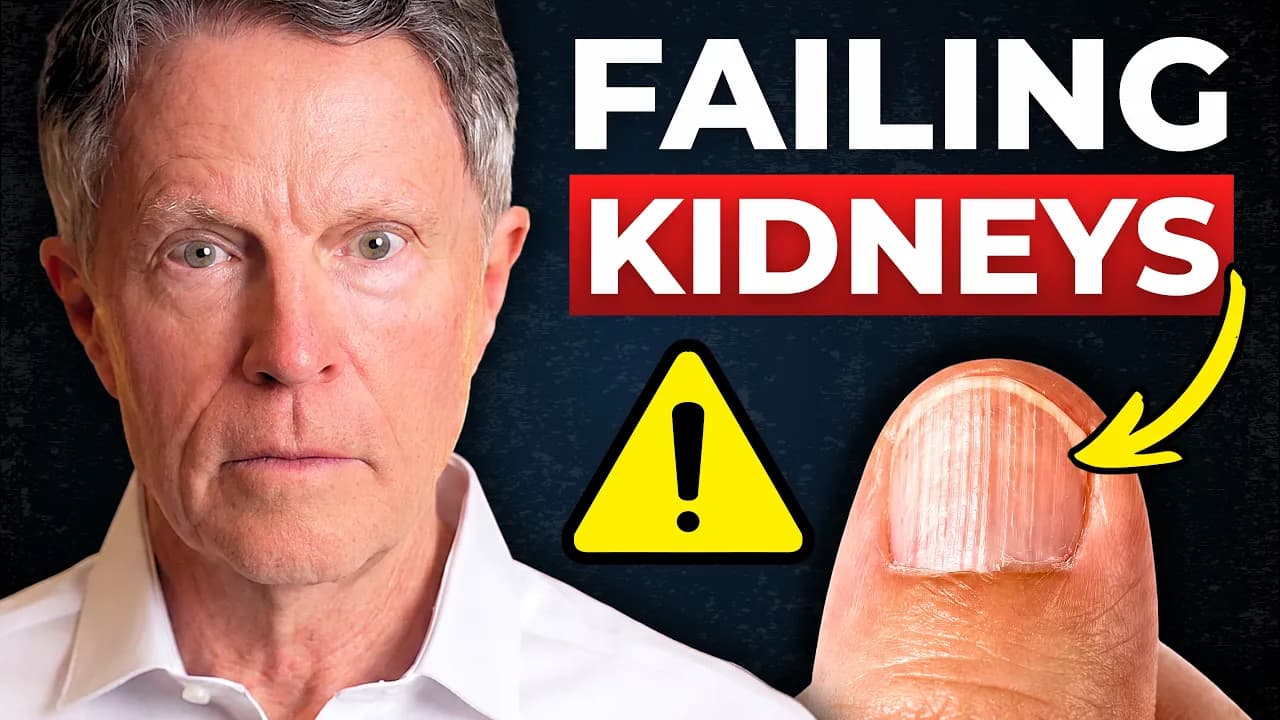
The #1 Warning Sign That Appears Before Stage 4 Kidney Disease
In a Nutshell
Puffy eyes are a key visible warning sign of kidney damage, as protein leaks into urine and fluid accumulates around the eyes and ankles. Up to 90% of kidney function can be lost without symptoms, leaving millions undiagnosed until tests like eGFR and urine albumin-to-creatinine ratio reveal the problem. Avoid kidney stressors like ibuprofen, high-carb foods, and junk, while using intermittent fasting, magnesium, vitamin D, and potassium to protect function.
These notes were generated by AI and may contain inaccuracies.
A 25-year-old man arrived in the emergency room with puffy eyes. The doctor sent him home with a water pill to reduce fluid without ordering a urine test or kidney function test. Five minutes later, he returned and was diagnosed with kidney failure. The patient had been silently leaking protein in his urine due to damaged kidneys that allowed protein to pass through the filtration system. When protein levels drop in the blood, fluid accumulates in tissues, often appearing first around the eyes. After 30 years in practice, the speaker can recognize kidney problems by observing puffy eyes from 25 feet away. Puffy eyes represent one of the strongest visible signs of kidney issues.
Up to 90% of kidney function can be lost while experiencing no noticeable symptoms. A person may have puffiness around the eyes without feeling tired, sick, or experiencing any other symptoms. Currently, 35 million Americans have chronic kidney disease, with the majority undiagnosed. Between 80% and 90% of affected individuals remain unaware of their condition because the kidneys possess an exceptional ability to compensate and adapt until significant damage has occurred.
Two key laboratory tests are recommended when kidney issues are suspected. The first is the estimated glomerular filtration rate test, which measures how effectively the kidneys filter blood. When filtration units become damaged, beneficial substances are lost and harmful substances accumulate in tissues. The second test is the urine albumin to creatinine ratio. Both tests typically cost under $30. Blood pressure monitoring is also advised because elevated blood pressure can damage the tiny filtration units within the kidneys, though it is not necessarily the root cause of kidney disease.
Foamy urine indicates kidney damage and protein loss through the urine. When protein is lost, fluid leaks into surrounding tissues, producing puffiness not only around the eyes but also in the ankles and feet. Pressing into swollen ankles reveals pitting edema, which is a classic sign of kidney dysfunction. The speaker shared a personal experience of having puffy eyes during his 30s and displayed a photograph from that period. At age 61, he reports being significantly healthier than during his 30s.
Pulling down the lower eyelid in a mirror should reveal a pink inner surface. A white or gray appearance suggests anemia, which is associated with kidney problems. A bright red or irritated appearance can also indicate kidney issues, often linked to elevated blood glucose and diabetes. High blood sugar acts like sandpaper passing through the kidney filters. Approximately 60% of patients on kidney dialysis experience serious anemia. The kidneys play a critical role in blood health and preventing anemia.
Yellow bumps on the eyelids represent cholesterol deposits. Kidney problems can rapidly lead to significantly elevated cholesterol levels. As the kidneys lose protein, the liver compensates. Reduced kidney function also leads to lower vitamin D levels. Vitamin D is essential for preserving, protecting, and maintaining healthy kidneys.
White bands across the front of the eye indicate calcium deposits. These occur when vitamin D becomes dysregulated, causing calcium to accumulate in inappropriate locations, including the cornea.
The body does not always provide early warning signs of internal problems. People cannot rely solely on how they feel or on symptoms to detect kidney disease. Everything consumed passes through the kidneys for filtration. Alcohol and junk food expose the kidneys to toxicity and damage. The kidneys must be treated with greater care by avoiding junk food.
Ibuprofen is particularly harmful to the kidneys. For blood pressure management, magnesium, vitamin D, and potassium are recommended in larger amounts. Individuals with advanced kidney disease must consult their physician before taking high doses of vitamins or minerals. A low-carbohydrate diet is necessary to reduce kidney stress, as higher carbohydrate intake increases kidney damage.
Frequent urination, defined as getting up two or more times at night, signals that the kidneys are losing the ability to retain urine. Intermittent fasting is one of the most powerful interventions for protecting the kidneys and addressing frequent urination. Additional information on intermittent fasting is available in a linked video.
Keep Dr. Eric Berg DC in your library
Save the videos and channels worth coming back to, and find them again in one place.