The AI layoffs end in 12 months and I know why
In a Nutshell
Cloudflare's CEO laid off 1,100 employees after a record $639M quarter, citing AI-driven 100x productivity gains that eliminate "support roles" like backups, now replaced by tools like Claude as mediocre substitutes. The Jevons Paradox won't explode software demand short-term but will unlock the long tail of ad hoc internal tools (dashboards, bots), enabling leaner teams—though companies will soon rehire once efficiencies max out. To survive layoffs, brand yourself as an "AI wizard" orchestrating 10+ agents on your resume and personal website (70% marketing, 30% skills), not a hybrid who codes by hand.
These notes were generated by AI and may contain inaccuracies.
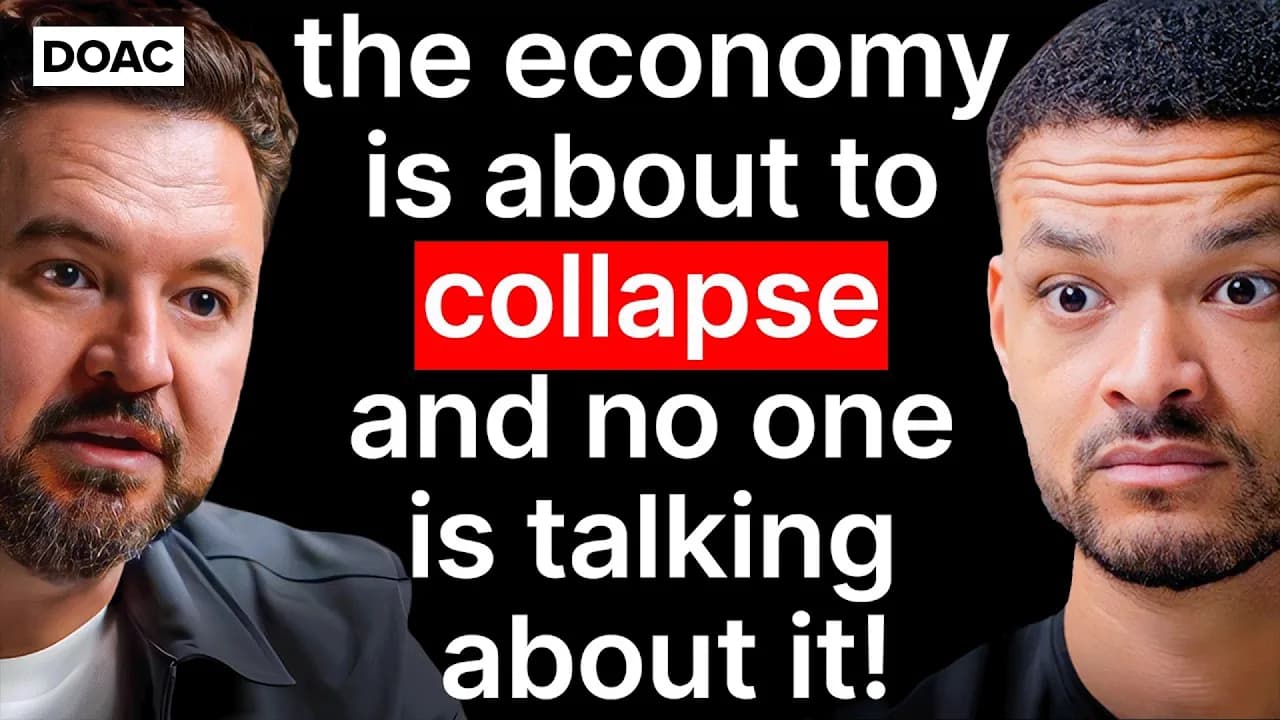
On the recent Cloudflare earnings call, CEO Matthew Prince announced two things: the company had its best quarter in its 16-year history with $639 million in revenue, and they were laying off 1,100 people (just shy of 1,111 that Matthew wanted, but staff stopped him). He said, "Congratulations, team. We had our best quarter in the history of the company. And also, we're firing one in five of you. So, thank you. Thank you all for your hard work. Here is your severance."
An analyst asked why lay off so many after the best quarter ever. Matthew replied, "Just because you're fit, it doesn't mean you can't get fitter."
He said employees have become 100 times more productive, comparing them to going from a manual to an electric screwdriver. He noted productivity gains from people directly creating code have been incredible, and many support roles behind them won't drive companies going forward.
"The productivity gains from the people directly creating code have been incredible and a lot of the support roles behind them are not going to be the roles that drive companies going forward."
Support roles refer to reserves or backups hired for redundancy—like a bench in sports. Companies hired them as insurance against star players getting injured, quitting, or going on vacation, especially when one person held institutional knowledge. Smaller companies were vulnerable.
Now, companies don't need this bench because AI (e.g., Claude) serves as the mediocre backup dev. If a star player quits, open a Claude instance, ask questions, and get by—it's not perfect, but sufficient.
William Stanley Jevons (died 1882), a Victorian economist, observed in 1865 that more efficient steam engines increased coal demand, not decreased it (Jevons Paradox).
People cite this to argue AI will increase software demand 10x or 50x. Speaker questions: "What do you mean by 50x more software? I have enough software. I want better software, less software—not 50x more apps, notifications, or bugs."
Correct interpretation: the long tail of software—infinite list of desired software (external/internal) that never gets built due to budgeting, OKRs, or priority mismatch.
Examples: teams want dashboards, automations, Slackbots, ad hoc tools. Pent-up demand internally for software that couldn't be budgeted.
AI excels at building these ad hoc, low-quality-tolerant tools. Internal dashboards have historically been horror shows—outdated, low quality, nobody wants to work on them. AI will be a godsend.
Companies lighten the load to steer/pivot easier with smaller teams. They haven't fully realized efficiency gains yet.
Advice:
- Wait patiently for Jevons Paradox to kick in (rhetorical; don't actually expect to wait).
- Or differentiate:
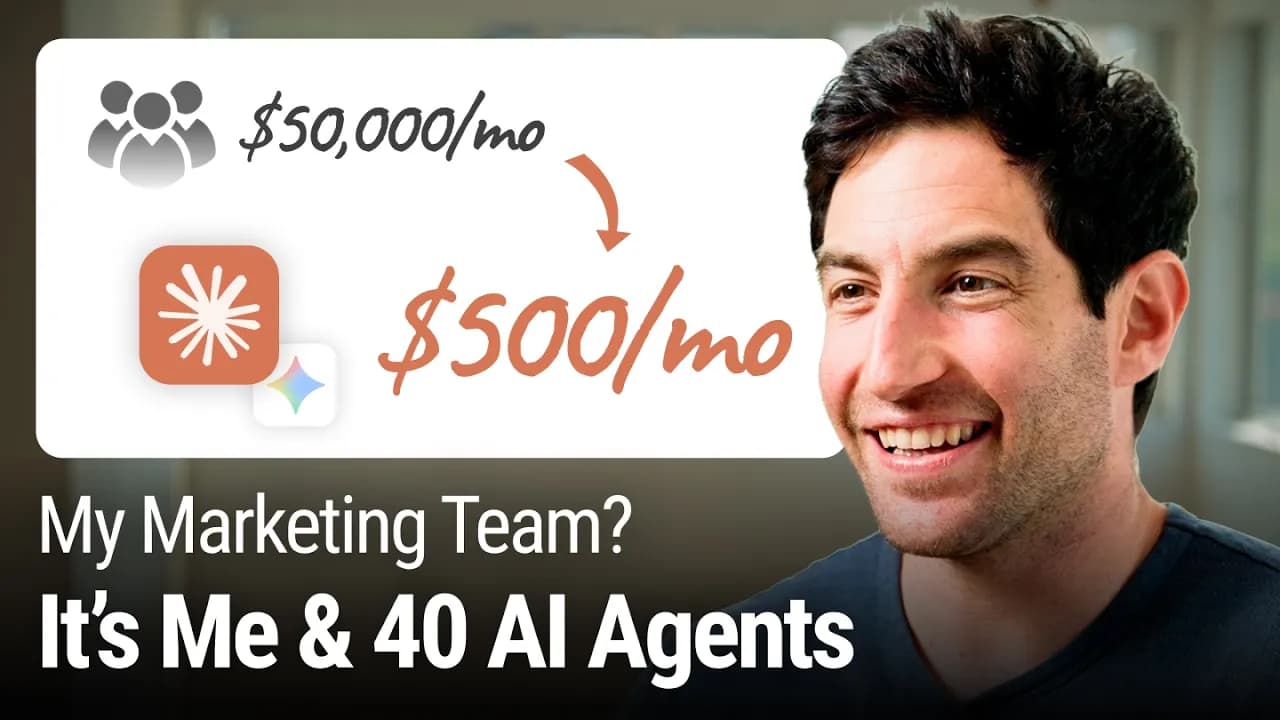
- On resume: Claim to be an AI wizard who orchestrates 10 agents.
- Example: "I have in the last 12 months 1000x'ed my throughput by using exclusively AI. I have a proprietary agent orchestration system that lets me ship more pull requests than Boris himself."
- Boris brags about doing 300 pull requests from his phone in an Uber to a podcast.
- Exaggerate if needed: "Get the job first and then fill in the gaps." Managing 10 agents is easy (open cloud instance, spin up 10 agents)—no real skill, but CEOs don't know that; use it to stand out.
A laid-off Cloudflare engineer posted on Hacker News: linked resume, said "I'm more than happy to use AI, but also I could do things by hand."
Speaker: Wrong approach. Employers don't want someone who can do both; they want AI-maximizers.
Balance shifted: now 70% attention/marketing/positioning, 30% skill (used to be reverse).
- Build personal website (takes 10 minutes)—crucial for standing out. Speaker always hired those with one; design reveals what you stand for.
- Do thought leadership, show interests/pride.
Everyone sucks at impressions; this is the 20-year playbook.
No need to act—wait for Jevons Paradox; companies will beg for people once they max out current labor ("We need more people"). Temporarily: "Let's try less people." Capitalism cycle moves quick.
Future video: concrete tips to take advantage.
Keep Mo Bitar in your library
Save the videos and channels worth coming back to, and find them again in one place.