The Fastest Way to Gain 20 lbs Of Muscle (Naturally)
In a Nutshell
Gaining 20 lbs of muscle naturally takes at least 1 year with optimal training (10-12 sets per muscle/week, split over 2+ sessions, 1-2 reps shy of failure or fewer intense sets to failure), prioritizing compound exercises tailored to your experience level and body response. Eat at a scaled surplus (2% body mass/month for beginners), 1.6g/kg protein minimum, creatine, pre-workout carbs+protein, and prioritize 7-9 hours quality sleep. Use upper/lower or PPL splits, test intensity/volume methods for adherence, and stay consistent to achieve 3-8 lbs in 6 months.
These notes were generated by AI and may contain inaccuracies.
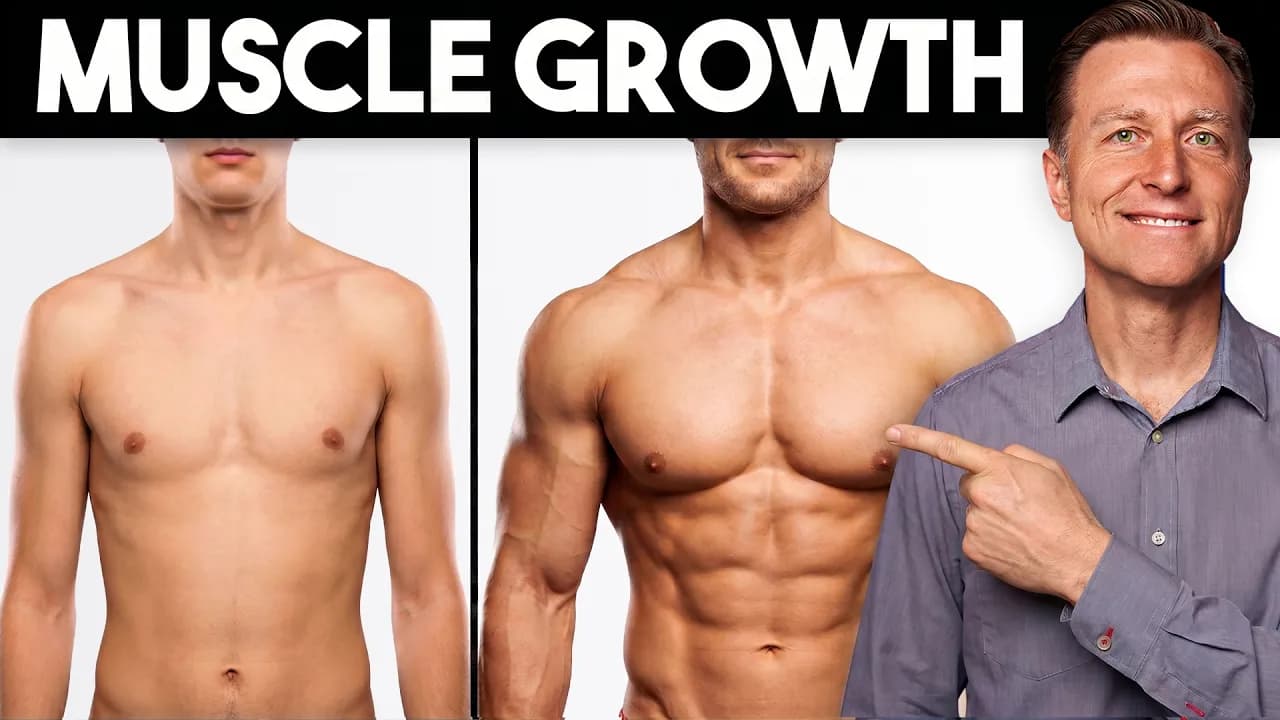
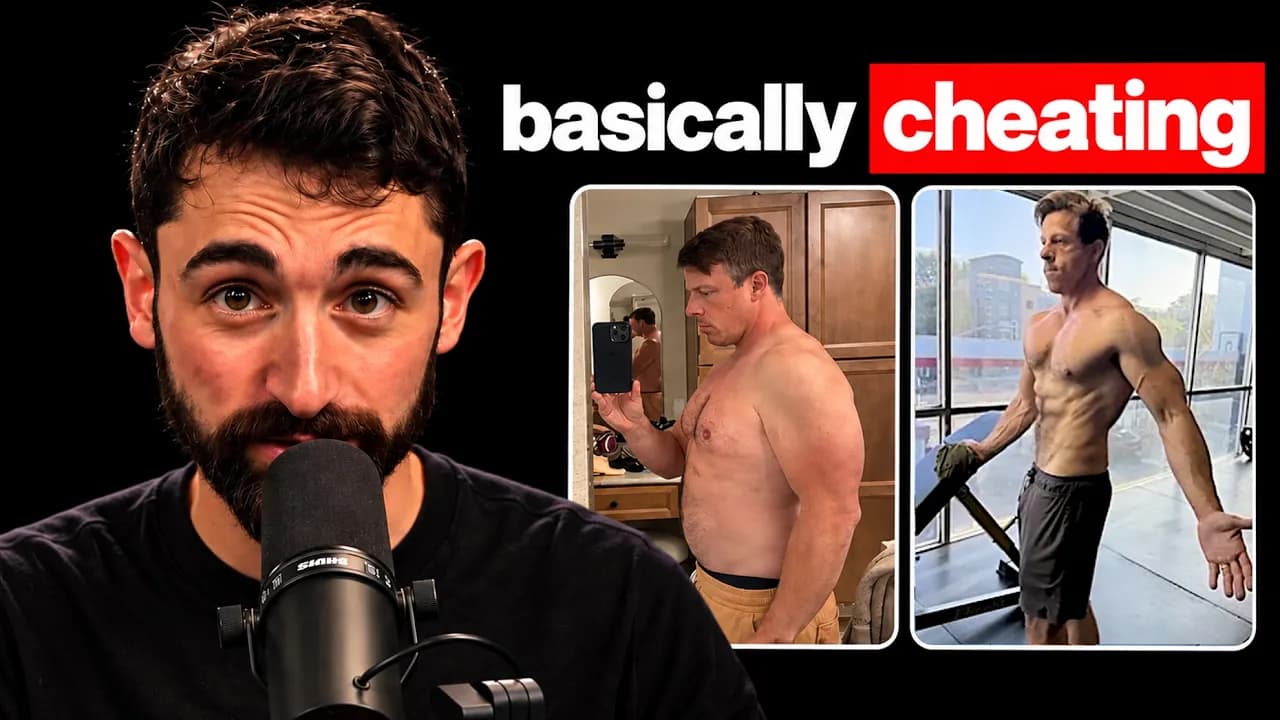
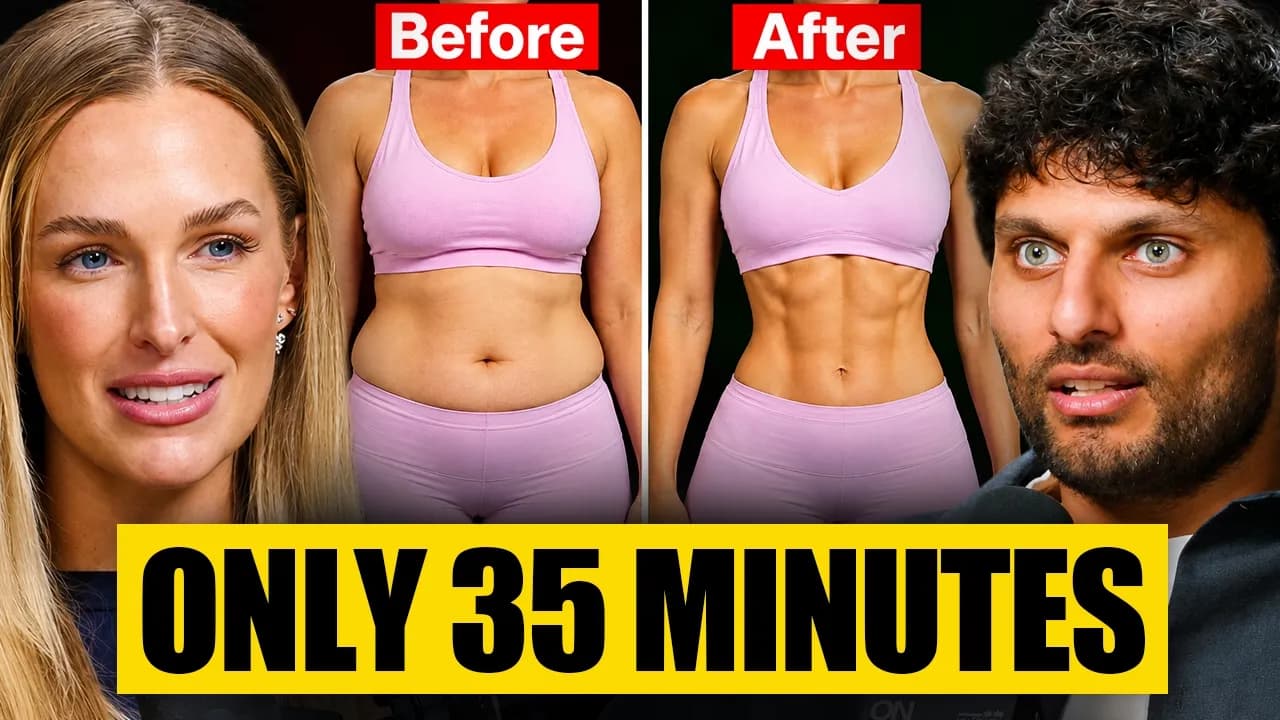
This is a skinny guy, skinny fat guy, and heavier guy. Here's what it looks like if they each gain 5 lbs of muscle, 10 lb, 15 lb, and 20 lb. Gaining that much muscle completely transforms your body, no matter your starting point. I went from this to this. Just 12 lbs in the right places took my wife from this to this. Based on the data, less than 5% of people ever gain that much muscle naturally. Not because of age or genetics. It's because without the right plan. You might make some progress early on, but afterwards you get stuck spending years with the same physique. More protein, more creatine, and more workouts aren't going to help you break through that. Teamed up with five of the world's smartest scientists and coaches, experts in all different areas related to muscle growth to answer one question. What is the fastest way to gain 20 lbs of muscle naturally? At the end of this video, step-by-step plan that combines everything into one simple system.
Before we talk about how to do it, clear something up that almost nobody online is honest about. How long this is actually going to take. Fitness coaches promise 20 lbs of muscle in 3 months with special sauce. But naturally, muscle doesn't work like that. With proper training and nutrition, it takes at least a year to put on that amount of muscle. Every year after that, gains slow by about half. Your fastest gains come when you start lifting properly.
Start with training because this is where 90% of your muscle growth actually happens. 56 of the world's top natural bodybuilders, guys who have naturally built well over 20 lbs of muscle beyond what most guys could achieve even with drugs. A group of researchers studied their actual training routines. On average, they only do about 12 sets per muscle per week. For chest, that's four sets of bench, four sets of incline, and four sets of flies for the whole week. For some muscles, just six sets a week. Probably a lot less than what you're currently doing.
Diminishing Returns on Sets
The more sets that you're doing, the less benefit you get from each extra set. Dr. Mike Israetel, professor cited in over 6,000 studies, runs a muscle growth lab at Florida Atlantic University. He and his team investigated how much more muscle you grow by doing more sets. Most expect a straight line upward. From sets 1 to 5, a lot of growth. From 5 to 10, some. After that, not as confident you're still getting more growth.
Mike and his team ran a second analysis. How much more growth do you get by taking each set closer to failure? Stop at 8 reps short of failure, muscles still grow. Push to just 1 or 2 reps short of failure, growth nearly doubles. Tests for pushing hard enough: last rep isn't moving really slow; on very last set of exercise, can do more reps than first set with same weight.
Balancing Intensity and Recovery
If more sets help and training closer to failure helps, why not do more sets to failure? Downstream effects: taking all sets to failure makes you feel terrible, fatigue and soreness next few days, decreases frequency and total volume. Goal is building muscle as fast as possible: train hard, consistently, avoid injury.
Intensity method: If you hate spending hours in gym. Knock out sets to failure, 5 to 12 sets per muscle per week. Chest: 3 sets bench, 3 incline, 2 cable flies (8 sets total). Whole chest workout just over 20 minutes. Gym 3 or 4 hours a week. Every set to true failure: cannot move weight another inch, muscles shaking, face red, weird noises. Mentally tough, but lifters see better gains with half the sets by training with actual intensity.
Volume method: 12 to 20 sets per muscle per week, stop 2 or 3 reps short of failure. Chest: 4 sets bench, 4 dips, 4 incline, 4 cable flies. Each set easier, workouts longer.
Difference is pretty small. Whatever you enjoy and adhere to most.
Personally, mix: arms and back fewer sets to failure; legs add extra sets instead of failure. When short on time, intensity approach.
Sample Workouts
Upper and lower body workout with intensity approach. Same with volume approach. Try both, see what you stick to.
Be smart about sets per workout. Recent paper by Jake Remer: diminishing returns at 10-11 sets per session per muscle group. Over that, not sure of more growth due to fatigue. Frequency important: split 12 sets of chest into at least two days per week. Speeds up gains by up to 30%. Upper/lower, push/pull/legs, full body splits great. Favorite: 5-day upper/lower push/pull/legs split. Exact split matters less than fitting schedule for consistency. Stick to this, build 3 to 8 lbs muscle in 6 months depending on experience.
Speed up gains by choosing right exercises.
Stage 1 (Beginners): Fewer exercises, general movement patterns: press, pull, squat, hip hinge. Six core exercises 3x/week build well over 10 lbs muscle.
Stage 2 (Intermediates, 2-3 years training): Compound movements have limitations. Body grows efficient muscles first (e.g., squats grew glutes/inner thighs, not quads; bench bugged shoulders, not chest). Added hack squats for quads, machine/cable for chest. Become your own guinea pig: find what body/joints respond best to. Add specialized for lagging muscles: rear delts, upper chest, lats.
List of exercises that work well for most per muscle. Try 2-3 per muscle, choose best pump, soreness, joint feel.
Stage 3 (Advanced): Double down on winners, rotate when needed.
Steve Hall's one exercise per muscle:
- Delts: cross body cable lateral raise
- Triceps: dumbbell skull crushers
- Biceps: preacher curls
- Chest: converging machine press
- Lats: shoulder width to slightly inside lat pulldown
- Upper back: pronated grip shoulder width or wider machine row
- Glutes: machine hip thrust
- Quads: Cybex hack squat
- Hamstrings: good RDL
- Calves: straight leg calf raise
Even advanced still discovering new exercises. Chest and back grown more past couple years despite stable body weight.
Training drives growth, nutrition fuels it. How much to eat?
If above 20% body fat (men) or 30% (women): unique advantage, 5x energy in fat vs lean tissue. Body recomposition: lose fat, build muscle without surplus. Aim 80-70% of max muscle gain while losing fat. Cap deficit at 0.5% body weight per week (body weight x 0.005), 250-500 calories below needs per day. Example: brother-in-law lost 12 lbs scale, 20 lbs fat, gained 7 lbs lean mass in 6 months.
Once below 20/30%, switch to maintenance or slight surplus for max growth.
Scaling Surplus (Dr. Eric Helms):
- Beginner: 2% body mass gain per month
- Intermediate: 1%
- Advanced: 0.5%
Study (Rossner 2002): untrained males on hypertrophy program + 2000 cal shake gained ~1 lb lean mass/week over 8 weeks (8 lbs total). New lifters expect 10-20 lbs lean mass/year.
Protein has very small effect. 1.6 g/kg (0.7 g/lb) or higher as low-end cutoff for maximum benefit. Still gain at 1.2 g/kg. Summary:
- Even low protein builds muscle.
Biggest mistake: poor pre-workout eating (e.g., 3 hours ago coffee + granola bar). 1.5-2 hours before: slow carbs + protein (oats, Greek yogurt, protein powder). 30 min before: fast carbs for immediate energy.
Creatine super cost-effective, consistent small positive effects on growth. Boosts lean mass 2-3 lbs first 8-12 weeks (mostly water). Not ongoing. 20-30% non-responders. Test: 20-30% rep increase (e.g., 10 to 12-13 reps). No other supplements needed. Prisoners build muscle without them if training stimulus there.
Stimulate muscle but no chemical signal = shrinkage. Sleep produces more growth hormone and testosterone. Need recovery sleep post-workout.
Not just 7-9 hours: quality matters. If 7 hours not refreshing, quality issue.
Sleep Saboteurs (Dr. Andrew Specter):
- Environment: pitch black (can't see hand in front of face; cover LEDs), quiet.
- Temperature: cold room, drop thermostat at night (2-4 AM coldest).
$15 fix: eye mask + earplugs make 7 hours feel like 8-9.
Naps: 20 min nap after 4 hours sleep improves performance (e.g., sprint speed vs no nap: 2-3% difference, elite margins).
Nothing magic, but works across ages/body types. Biggest challenge: consistent application. Try 2 weeks free of Build with Science Plus app (QR code or builtwithscience.com) for exact workouts/nutrition based on your body.
Keep Jeremy Ethier in your library
Save the videos and channels worth coming back to, and find them again in one place.