The Housing Market is Cooked. (Here's Why)
In a Nutshell
Mortgage rates at 7.49% have locked homeowners into their existing 3% mortgages, creating a stagnant market where both supply and demand are suppressed and prices remain elevated despite poor affordability. Monthly payments on a $400,000 mortgage are now $1,100 higher than at 3%, requiring either 20% price drops or rates falling to 5.2% to restore affordability. Buyers should only purchase if they can comfortably afford current payments with stable income, emergency funds, and retirement contributions—not based on hoped-for future rate cuts.
These notes were generated by AI and may contain inaccuracies.
Mortgage interest rates have now reached 7.49%, the highest in nearly 3 years. Waiting for interest rates to drop to buy a house is bad news because inflation was assumed to decrease, the Federal Reserve would lower interest rates, which would also reduce mortgage rates and bring relief to the housing market. Instead, mortgage rates are going in the opposite direction.
According to the Mortgage Bankers Association, the average 30-year fixed rate has risen from 7.3% to 7.49% in just one week. Mortgage applications are falling again, and the 10-year Treasury bond rate recently exceeded 5.2%. The questions are why interest rates have returned to 7.5%, what needs to be done to bring them down again, what impact these rates are having on home prices and affordability, and whether it would be wise to buy a home now or wait longer.
At a $500,000 house price with 20% down payment and $400,000 loan:
- At 3% interest rate, monthly principal and interest payments are approximately $1,686
- At 5% interest rate, payments increase to about $2,147
- At 6% interest rate, payments are about $2,400
- At 7.49% interest rate, payments are about $2,795 per month
This represents about $1,100 more per month than at 3% interest rate, over $13,000 a year, excluding property taxes, insurance, HOA fees, maintenance, or unexpected problems.
According to the Mortgage Bankers Association, overall mortgage loan applications fell 4.2% last week. Purchase applications decreased by 2% and refinancing applications decreased by 8%. Adjustable rate mortgages account for 10.3% of total applications, indicating people are looking for ways to reduce their down payment. The difference between the interest rate environment in 2020 and today's situation could easily be more than $10 or $15,000 a year.
The Federal Reserve does not directly set 30-year mortgage rates. The Fed controls the federal funds rate, a very short-term interest rate. The 30-year mortgage is far down the interest rate curve. One of the major criteria for mortgage valuation is the 10-year US Treasury.
The US government can currently borrow for 10 years at about 5.2%. Since borrowers are not the US government, investors demand additional compensation for risk. Lenders get compensated for taking risks, including prepayment risk since mortgages can be refinanced, sold, or paid off early. This also includes servicing costs, guarantee fees, and everything else associated with the mortgage market.
Mortgage rates can be thought of as 10-year Treasury plus a spread. If the 10-year Treasury is above 5% and you add in the mortgage spread, mortgage rates around 7.5% are not difficult to imagine.
The Fed can lower its short-term policy rate, but this doesn't mean 30-year mortgage rates will drop by the same amount. The Fed Funds Rate and the 10-year Treasury are completely different things. Bond investors look at inflation, economic growth, future Fed policy, government debt, and other global conditions to decide how much profit they need to pay off a 10-year loan. For understanding where mortgage rates are going, equal or greater importance should be given to the 10-year Treasury.
High mortgage rates change seller behavior. Homeowners who bought a few years ago at 3% interest face significantly higher payments if they move. A homeowner with a $400,000 mortgage at 3% pays approximately $1,686 monthly, but at 7.49% would pay about $2,795 monthly - an increase of about $1,100 per month.
This is called the mortgage lock-in effect. A 3% mortgage is valuable in itself, and there is a big financial price to pay for giving it up. Unless homeowners absolutely have to move, they may choose to stay put, finish the basement, add a new area, or have kids share rooms rather than sell.
If mortgage rates rose from around 3% to 7.5%, house prices were expected to collapse, but this hasn't happened on a national level. According to the National Association of Realtors, the average price of an existing home in August was about $429,000, up from a year earlier. The annual rate of existing home sales was around 4 million, indicating a very slow housing market.
Volume of transactions is very low, affordability is poor, mortgage rates are very high, yet house prices have not decreased nationally. Higher rates reduce demand, but if current homeowners don't want to sell either, supply is also reduced. Buyers won't buy at current prices with 7.5% interest, and sellers won't give up their 3% mortgage benefit.
According to the National Association of Realtors, there were about 1.62 million existing homes for sale in August, equivalent to about 4.9 months of supply at the current sales pace. This is the highest level seen in more than 10 years. Buyers are finally getting more options than when people would make offers without seeing homes and make deals without due diligence.
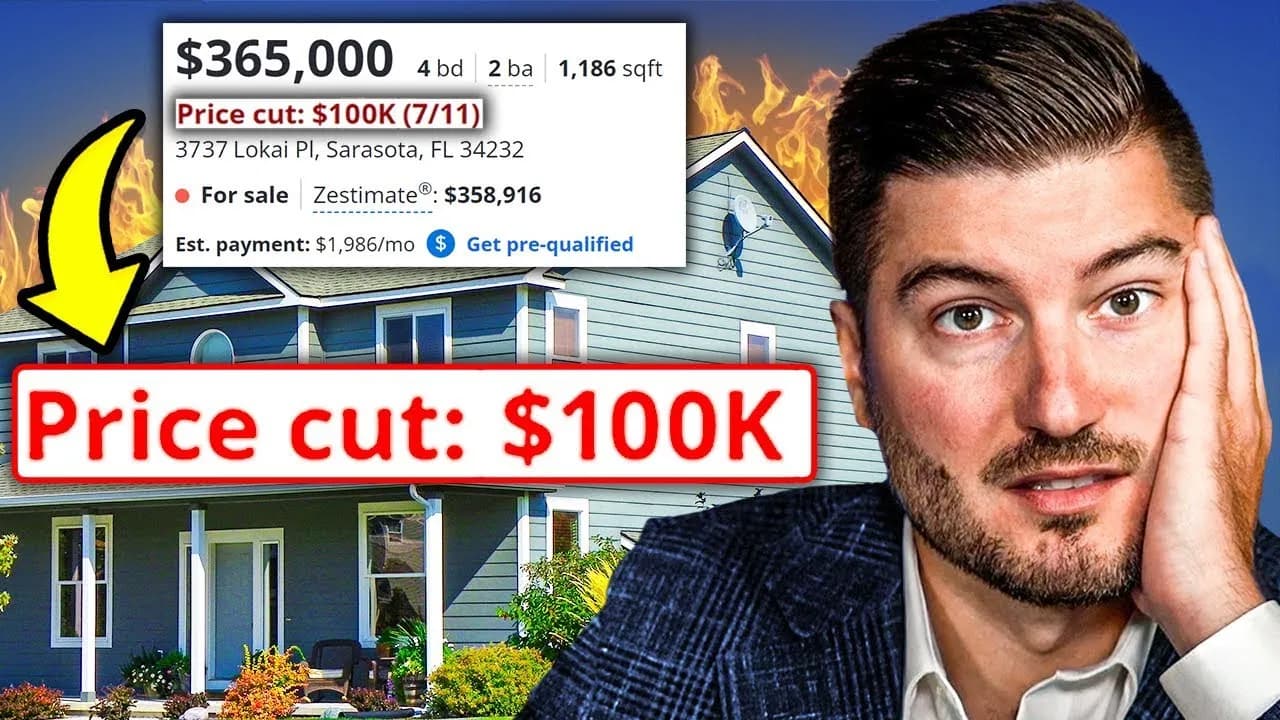
If mortgage rates remain close to 7% or 7.5%, pressure on demand will continue. If inventory continues to grow, sellers will eventually have to compete for limited qualified buyers, which may mean lowering prices, covering closing costs, offering mortgage rate reductions, or allowing more home inspections.
The 2008 housing crisis is not returning just because inventory increases. These situations are completely different. Millions of homeowners currently have fixed-rate mortgages much cheaper than current interest rates, so they don't have the same pressure to sell.
The market is slowly becoming balanced, which is good for buyers, but purchasing power is still very poor. People's home loan ratios are much lower now than during the global financial crisis of 2007 and 2008.
To bring monthly payments from $2,795 down to around $2,200 on a $500,000 house with 20% down payment, the mortgage interest rate would need to be about 5.2%. If rates remain at 7.5%, the house price would need to drop to about $400,000 - a decline of about 20%.
Affordability requires change in the equation of house price, loan amount, and interest rate. Possibilities include mortgage rates dropping to 6%, house prices dropping by 5%, incomes continuing to increase, or manufacturers offering special benefits. Affordability might remain poor for longer than expected, with house prices not falling, interest rates not returning to 4%, and wages slowly adjusting over years.
The biggest event that would need to happen for house prices to drop dramatically is for people to lose their jobs. If seriously troubled, they would have to sell at lower prices or go through foreclosure. The foreclosure process can take months or years to complete. The best time to buy after 2008 was 2010-2013, not immediately after the crisis.
To bring mortgage rates down, inflation needs to return to the Federal Reserve's 2% target, which could help lower Treasury yields. The 10-year Treasury bond is critical - if yields drop from 5.2% to 4%, that would be more encouraging than Fed rate cuts. The gap between Treasury yields and mortgage rates should also be monitored, as both can change.
A significant economic weakening could bring mortgage rates down quickly if unemployment rises, economic growth weakens, and investors flock to Treasuries for safety. However, getting a 5% mortgage might coincide with job loss fears.
The answer depends on income, down payment, how long you plan to stay, local housing prices, rent costs, and job stability. Don't buy a house you can't easily afford today based on the assumption of refinancing next year. The phrase "marry the house, date the interest rate" sounds appealing, but if you lose your job, refinancing won't pay your mortgage.
At 7.49%, monthly payments are about $2,795 on a $400,000 mortgage. At 6%, payments would be about $2,400, saving about $400 monthly before closing costs. However, the main purchase decision shouldn't be based on potential refinancing.
The key question is whether you can afford the house easily based on today's payments - not just technically getting approved, but affording it while saving money, investing, maintaining an emergency fund, and living a normal life. Renting isn't necessarily a waste of money, especially if buying means pushing finances to the limit with 7.5% interest.
Check these conditions before buying:
- Do you have an emergency fund?
- Can you still contribute to retirement?
- Can you live a normal life without extreme sacrifice?
- Is your income stable?
If you can meet four or five of these conditions and your job and income are stable, buying may be reasonable. Don't spend all money on a house and become destitute. Live below your means and be comfortable rather than stretching to afford maximum house size.
A free 7-day roadmap is available as a Google Drive spreadsheet that can be copied. The personal community at whiteboardfinanceuniversity.com or wbfuniversity.com offers courses streamed live every Thursday at 5pm Eastern Standard Time for a $10 monthly fee. Direct financial planning services are available for a maximum of 30 to 40 families on a long-term basis.
Keep Marko - WhiteBoard Finance in your library
Save the videos and channels worth coming back to, and find them again in one place.