The man determining the monetary value of lives lost on 9/11 | 60 Minutes Archive
In a Nutshell
Kenneth Feinberg was granted sole, unreviewable authority to decide how much each of the 2,976 victims of 9/11 would receive from a federal compensation fund designed to shield airlines from lawsuits. He set awards by calculating economic loss plus a flat $250,000 pain-and-suffering payment, but Congress’s rules—especially deducting life insurance—created wide gaps between rich and poor families and sparked anger from both sides. Despite criticism and emotional pleas, Feinberg refused to differentiate pain levels and accepted no pay, viewing the job as an act of public service that ultimately forced grieving families to put a dollar value on the lives they lost.
These notes were generated by AI and may contain inaccuracies.
No single person in history has been given the kind of authority by the United States government that this man has. His name is Kenneth Feinberg, a 58-year-old arbitration lawyer who's been asked by Attorney General John Ashcroft to become judge and jury over the federal government's September 11th victim's compensation fund - a man who in a certain way has been asked to play God. He's been given the archaic title of special master. He is the one man who must place a value on each of the almost 3,000 lives lost that day.
Though a December 22nd deadline is fast approaching, there are still hundreds of families who've not yet applied for compensation. Fineberg has been listening to a relentless catalog of heartbreak that can often be reduced to a single word: grief.
There are many people who have been traumatized by September 11th, who when you sit with them and say, "I will help you fill out the forms, you may get $2 million tax-free. I will assist you. I'll fill it out with you." And they say, "Mr. Feinberg, leave the application. Thank you for trying. I cannot put numbers to my daughter's life, to my son's life, to my husband's life."
But that is exactly what Kenneth Feinberg must do. Attach a price tag to suffering, to injury, and a specific price tag to each of 2,976 lives.
Did Congress make your job more difficult by asking you to evaluate each life? Absolutely. As opposed to saying, "Here's four, six, 10 billion dollars, whatever. Divide it by the number of claimants and each will get the same."
Juries every day evaluate economic loss and non-economic pain and suffering. Juries do that in every village and hamlet in this country, but they do it quietly, out of the public eye, according to local community standards. Here, Congress said, "You do that. No appeals from your decisions. You will decide."
We anticipate three to four billion dollars being spent.
Congress has given Fineberg enormous discretion to interpret the hastily written legislation that created the compensation fund. It was designed primarily to protect the airlines whose planes were used in the attacks from ruinous lawsuits.
Congress was conflicted, frankly, when they created the fund. On the one hand, the purpose of the fund clearly is to provide an alternative to lawsuits against the airlines, the security companies. That's the practical. But there was compassion. Clearly, Congress decided that this unprecedented historical event in American history, we must come to the aid to the rescue of those in need.
Fineberg almost immediately met with survivors. In explaining the fund, he was accused of being insensitive. He became the lightning rod for their anger at government and at the terms of the deal they were being offered.
In order to qualify for compensation, families had to give up all rights to sue the airlines. Fineberg maintained that suing would be pointless, but still people had their reasons. One family member stated: "My lost loved one would have wanted me to sue to make the airline safer. We have to discover what really happened on that day. We will get in a lawsuit all the information about what the CIA knew, what the FBI knew, what the administration knew."
Feinberg responded: "You're not going to get any of that in a lawsuit."
Feinberg says he agreed to accept this job, cut back on a good part of his lucrative private practice for 2 years as an act of patriotism. He's settled huge class action lawsuits on Agent Orange and asbestos. That's why the attorney general appointed this liberal Democrat who thrives on the toughest cases.
He begins each day before dawn. These moments of isolation surrounded by music may be the only respite from an 18-hour workday, often seven days a week. He receives very little thanks and at his own request no pay. He knows more about those who died on September 11th and the lives they left behind than anyone has any right to.
Banker dies on the 103rd floor of the World Trade Center. I have to try and compute, calculate, predict with a crystal ball what that 35-year-old banker who died leaving three children and a wife. What would he have earned if he had worked, survived and worked till he was 62 or 65? There is no crystal ball, just pages of projections, victim's salaries, future earnings, educated guesswork on the value of an individual life.
Feinberg admits he keeps the awards to the families of the highest earning victims down to narrow the gap between rich and poor.
What should I do with the undocumented worker, the military, the banker, the stock broker, the fireman, the policeman? That's the challenge.
What's really unusual here is that Feinberg had the guts to publish a chart which was the expectation of how much money you would get and for the first time ever the government was in the position of doing comparative values of human lives.
Steven Brill, an attorney and author of a book on the aftermath of September 11th, says Feinberg's chart was certain to offend all families regardless of income. At the same time that some of the wealthy families are angry at him, the poor families are angry at him. How dare Ken Feinberg do that? How dare someone put a value on human life that says that my husband and the father of my children is worth one-tenth of what this other person is worth.
One claimant got up and criticized me. "Why are they getting less than the stock broker or the bond trader?" And she sat down and then the stock broker's widow got up. "How dare you? My husband worked long and hard to make that money and I have every right to get what's due me."
Even if you think that you're being shortchanged, any precedent in giving a single man, Ken Feinberg, the kind of power that Congress gave him.
This is almost unbelievable. This is the only time in the history of this country that we've ever passed a law that says one person literally has the ability to go to the Treasury checkbook and write a check on his say so to an American citizen with no appeal, with no way to stop him.
It was a law met with a certain bitterness. For example, no compensation for families or victims of Oklahoma City and other terrorist attacks.
Feinberg in explaining his mission talks of their anguish and the letters they send him:
- "Dear Mr. Feinberg, my son died in Oklahoma City. Where's my check?"
- "Dear Mr. Feinberg, my daughter died in the African embassy bombings of the terrorists in 96. Where's my check?"
- "Dear Mr. Feinberg, my son died in the first World Trade Center bombing in 93 committed by the very same people. Why aren't I eligible?"
Did Congress act too hastily, too emotionally when they set up this very particular fund? You have to ask Congress that. I must say I think that they acted appropriately. I think the program is an excellent one.
No program would satisfy everyone. Of course, early on, Feinberg decided that in addition to his calculation of economic loss, he would give each family, regardless of income, a flat payment of $250,000 for pain and suffering. Grieving families complained it was not enough.
And he takes a lot of heat over things he has no control over, like Congress's decision to deduct life insurance from the awards. A lot of people will not accept this program because you're taking away life insurance and that has nothing to do with it. You're taking away something they work for, something they live for every day.
By law, families who challenge Feinberg's awards are entitled to a hearing where they must prove to him that their financial circumstances are extraordinary and merit higher payments. But still, people plead on grounds of emotional circumstances.
I've had many claims where a survivor, a surviving spouse will come to me and say, "I'm really entitled to more because my wife was trapped and called me on her cell phone to say goodbye." And I received calls from my wife for 10 minutes on a cell phone until the building collapsed. So, I went through much more suffering than somebody killed instantly.
I will not recognize those distinctions though in my awards. Even though they're powerful. They're powerful and they're very emotional. But I've explained to all of the families that when it comes to pain and suffering and emotional distress, I cannot be Solomon. I cannot make fine distinctions between the pain of one claimant and the suffering of another.
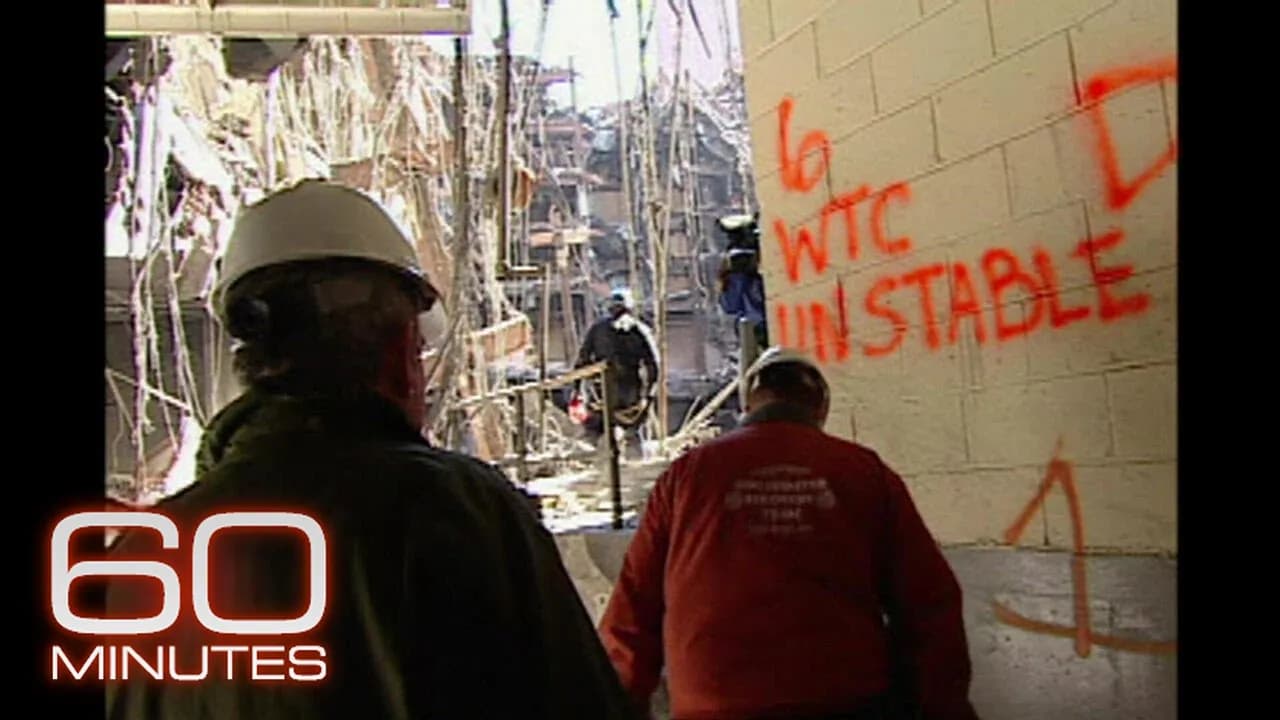
As for his own emotions, it took almost two years before he was able to face ground zero. This is the first time I've been here. The first time I didn't want to come. Why did you not want to go down? I just didn't think I could take it. And frankly the objectivity of my task is such that you try as best you can to try and isolate yourself from that but it's very very difficult to do.
Feinberg is making a last big push meeting with families urging them to sign up for the fund. There's little reprieve for him from the continuous flow of other people's agony. And it can come in many forms.
Some people play CDs with songs that have been written about the deceased. Some people offer photographs and most people just want to talk about what that person meant to the family.
What have you learned about human nature in these two years in this job? I've learned how dogged people will be to preserve a memory of a loved one. And when one way to preserve that memory is through a calculation of money of dollars, one way they will be dogged and committed to getting every last dollar. I don't think it's greed. I think it's an attempt to valuate a lost loved one.
His tone has softened over the two years he's been at it. And he's learned something about that arc that begins with anger, then grief, and finally acceptance.
When I became a widow after 9/11, I have three children. He heard it in the words of a wife who'd struggled with the decision to join the fund:
"You put your kids to bed, you stay up at midnight. When you fill out the papers, it hurts when you look up personal records, but when it's done, you have made a finality to your family where you can move on and you can help them. And although it is difficult, Mr. Feinberg, the fund has treated my family very reasonably and very fairly. And I just want the families with children to know that. Thanks."
This job surely will stay with you for the rest of your life. Yes, it will. It absolutely will.
Keep 60 Minutes in your library
Save the videos and channels worth coming back to, and find them again in one place.