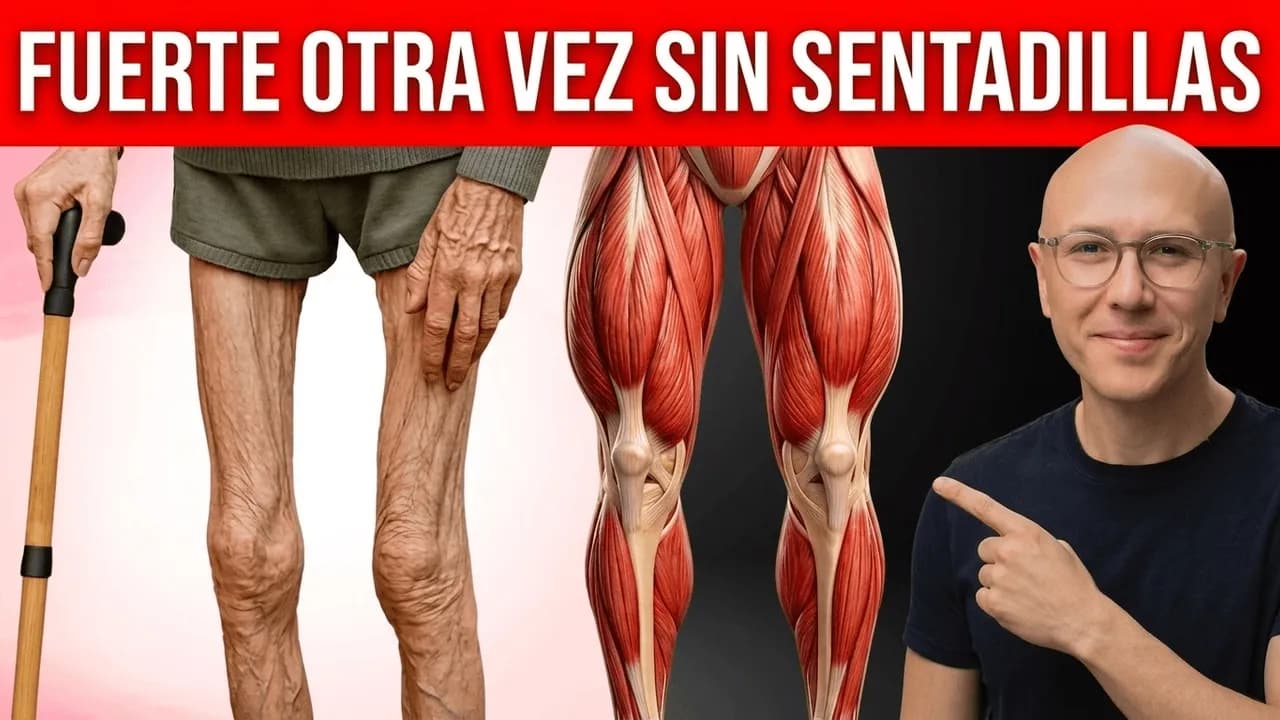
The Most Dangerous Walk You'll Ever Take (& Why It's Worth It)
In a Nutshell
The protocol uses backward walking on flat ground then gradual grassy hills to force the cerebellum to activate, shifting knee pressure by 40%, engaging underused glutes and hamstrings, and rebuilding balance and coordination lost from flat-surface walking. Ten minutes of this rewires brain tissue, improves hamstring flexibility up to 13%, and protects cartilage by varying load instead of repeating the same impact. Progression must be slow—start circling backward in a yard, then add a gentle slope only after stability improves—to avoid falls while delivering neurological and joint benefits regular walking cannot.
These notes were generated by AI and may contain inaccuracies.
The most dangerous walk you will ever take and why it's worth it. This 10-minute walking protocol acts like the ultimate biological reset for your entire body. It rewires your brain beyond fitness benefits for lungs and heart.
A warning applies because this protocol could land you in the emergency room. If knees are aching, balance is off, and shuffling occurs more than usual, the worst action is going for a normal walk on a flat sidewalk. This accelerates knee cartilage breakdown.
The disclaimer addresses the concern about recommending this without warming up. The protocol requires gradual progression to work up to it.
Walking on a flat sidewalk or flat treadmill for exercise resembles animals in zoo cages on flat cement, which is very unnatural. The foot has been sculpted over a long time to navigate uneven surfaces, rocks, dirt, and unpredictable terrain. For the last 100 years, feet have been placed in shoes and walked on very flat, hard surfaces for long periods.
The cerebellum controls balance, coordination, and posture and contains half of the neurons in the entire brain. Walking only on flat surfaces makes everything predictable, so this massive supercomputer does not have to do much because it is on autopilot. As people reach their 60s, this brain tissue starts to shrink. Ordinary walking on flat, predictable surfaces does not stop this process.
Even taking 10,000 steps a day on flat surfaces hits the exact same millimeters on knee cartilage 10,000 times a day, leading to bone-on-bone knees. This type of walking creates an illusion of getting a lot of exercise without achieving close to the potential benefits.
The brain responds to two things: novelty, which is something new and unpredictable, and uneven pressure, which forces the idle cerebellum to wake up. Movement must completely shift the mechanical load from worn-out spots on knee cartilage and force the glutes and hamstrings to do the work they have been avoiding for years.
This requires no gym hour or brain puzzles. The approach is much more powerful.
Walking backwards produces several effects. Pressure on knee joints drops by 40% instantly. A neurological reflex activates that causes the hamstrings to get longer, improving flexibility and loosening tension on the lower back. One study showed 13% flexibility improvement in hamstrings just from walking backwards.
The biggest effect is that the brain lights up like a Christmas tree. Parts of the brain are stimulated, waking up the cerebellum. This activates it to thicken and rebuild itself while walking backwards.
After getting used to going backwards gradually and becoming comfortable and stable, the next step is gradually doing this going backwards up a grassy hill. The biggest muscle activated is the glute muscles or the tissue between the navel and the knees.
Shoes should be flatter without heels to stay more grounded. Some people do barefoot walking. The protocol has been done for a while, resulting in stronger ankles and improved coordination.
This provides something for cognitive function in 10 minutes that could not be achieved with any other exercise.
Walking backwards on an uneven hill could be a high-risk situation where falling and injury can occur. This is not recommended for someone who is more frail or fragile. Starting on a hill is not recommended. Only begin after getting comfortable on a flat surface. Even when reaching the hill stage, use a very small hill that allows gradual ascent, such as at a park.
Start in the backyard and walk backwards in a circle very slowly to develop coordination. Continue this for a period of time, maybe a few weeks, until feeling more stable.
Once comfortable, find a place with a gradual hill that is not steep. Start walking backwards very slowly on that hill. Continue this for a few weeks. This alone becomes a game-changer because so much information is sent to the brain just from walking backwards that the brain starts to rewire and become reprogrammed neurologically for motion.
If the environment is off, everything else struggles. This is like a fish tank where polluting the water makes the fish sick. The best food could be provided and every symptom treated, but if the water stays toxic, nothing recovers. The body runs on 10 signals like insulin, cortisol, inflammation, sleep quality, and gut function. Every one of them affects how you feel. There is always one signal that is more broken than the rest, and until that one is fixed, everything else stays stuck.
Some people might not reach the level of walking up a hill. They might only reach the level of walking backwards somewhere, and that is totally fine.
Walking backwards reverses the flow that has been done forever. It takes a lot of pressure off the knees and activates the hamstrings and glutes much better than going forward.
Instead of walking on cement, find grass in a park with uneven surfaces. Even walking forward on uneven surfaces sends much better information to the brain to activate a part of the brain that probably has not been activated in a long time. This also strengthens knees, ankles, and back, stretches hamstrings, and activates glutes without adding more time. All of this occurs in the same amount of time as regular walking.
Keep Dr. Eric Berg DC in your library
Save the videos and channels worth coming back to, and find them again in one place.