Over 60? These 5 Exercises Are Better Than Walking
In a Nutshell
Dr. Ford Brewer argues walking alone fails to build leg strength, control inflammation, or protect heart health in those over 60, as weak legs exacerbate metabolic disease, high blood pressure, and heart risks. Replace it with five superior exercises: resistance training (chair squats, lunges, calf raises), aerobic-resistance circuits, seated leg extensions/hamstring curls, modified HIIT for blood sugar, and chair yoga for flexibility. Bonus: wall squats (hold 1 min, 3-4x/week) slashed his leg fatigue and blood pressure more than anything else, backed by trials showing 13-point systolic drops and 21% cardiovascular risk reduction.
These notes were generated by AI and may contain inaccuracies.
What if I told you that the exercise advice you've been following for years is not only not doing you any good, it's keeping you from doing what actually protects your heart. Walking alone doesn't build strength, it doesn't improve circulation, it doesn't do what you need, and it won't protect your heart if your muscles keep getting weaker. I'm Dr. Ford Brewer, a preventive medicine specialist with over 40 years of experience. I used to run the program in preventive medicine at Johns Hopkins. In this video, I'll show you five exercises that work better than walking. They build real strength, they improve blood pressure, and they reduce the hidden inflammation that walking alone just can't fix. You start to die in your legs. You need good strength in your legs. At the end, I'm going to show you the one exercise that I just started doing recently, and it's done more for my leg strength than anything else I've tried. It takes less than 5 minutes. You can easily shift the intensity from mall walker, really easy, to professional athlete. Very simple. I'm going to give away my seven-step heart attack prevention protocol. You can download it using the link in the description or if you're on TV screen, just shine your computer, take a picture of the QR code, it'll take you to where you can download that link.
Let me tell you about a patient of mine, Jim. He's 67, retired. He walks almost every day and thought that walking was enough. At his last checkup, his blood pressure was high. His heart wasn't doing what it needed to be doing. His vessels were cramped up. He wanted to enjoy retirement by traveling with his wife. He said, "I want to stay strong enough to travel and carry my own bags. I don't want to be the guy holding everyone back because I can't carry my luggage."
Leg strength is critical. The biggest cause of heart attack, stroke, death and disability, kidney disease, blindness, erectile dysfunction starts with metabolic disease, pre-diabetes, diabetes, and it's undiagnosed. Our best safety valve against that is strong, healthy leg muscles. Jim had weak legs. When leg muscles get weaker, your heart has to work harder, especially doing simple things like walking, standing up, climbing stairs, walking up a hill. That extra strain builds up over time. With weak legs, your body has less ability to manage blood sugar.
We added resistance training. Three simple moves: chair squats, lunges, and calf raises. These work the biggest muscles in your legs, the calves, the quads, the hips. Studies show that resistance exercises like these lower inflammation in the body, including markers like C-reactive protein, IL-6, and TNF-alpha. Inflammation and metabolic disease are the biggest driver of heart disease, stroke, blindness, kidney disease, erectile dysfunction. You need healthy vessels, and in order to have healthy vessels, you need a healthy metabolism. These lower blood pressure. Stronger leg muscles lower blood pressure, make your arteries less stiff, and help your heart pump more easily. Stronger legs mean better recovery after heart problems. Hospital studies show that leg strength, especially in the quadriceps, predicts lower risk of heart failure and better recovery after a heart attack. Just 30 to 60 minutes per week of resistance training can cut the risk of heart problems by about 17%. That's a lot more than just walking alone.
Here's how to do them:
- Chair squats: Stand in front of a sturdy chair. Lower yourself slowly until you touch the seat. Then stand back up. Keep your knees in line with your toes. Do 10 to 15 reps. Rest and repeat that set.
- Lunges: Step forward with one foot. Lower your back knee toward the ground. Then push back to standing. Hold onto a counter or wall if you need balance. Do five lunges per leg. That's a set. Repeat for two sets.
- Calf raises: Hold the back of a chair. Lift your heels until you're on your toes. Hold for a second and then lower slowly. Do 15 reps. Rest. Do one more set. Get more intensity by doing that on the stairs and doing one leg at a time.
These can all be done at home three times a week. No gym needed. After a month, Jim's blood pressure was lower. His legs felt stronger, and he could move around without getting tired or short of breath. He and his wife started planning their next trip.
Sharon is 72. She walked every morning, rain or shine. It helped clear her mind, but she still felt tired most of the day. Stairs left her out of breath. Her legs felt weak. Some days just getting dressed made her tired. She worried about falling behind when taking her granddaughter out to the park. Walking alone was not building muscle or improving her energy, so she needed to switch.
We switched her to a home circuit that mixed light aerobic movement with resistance training, using just her body weight in a small space. Studies show when seniors add resistance to their aerobic workouts, even just a couple of times a week, they see better results. Inflammation markers like CRP drop more. Muscle strength goes up. Fatigue improves and the heart gets stronger. These simple mixed circuits outperform walking alone for fitness, stamina, and inflammation control.
Sharon's routine:
- March in place for one minute. Steady pace, arms swinging.
- Body weight squats, 10 reps. Use a chair for balance.
- Step-ups, 30 seconds per leg. Use a stair or a low step.
- Wall push-ups, 10 reps, slow and steady.
- Rest one minute, then repeat the whole thing two more times.
She did this 5 days a week. After a month, her legs felt stronger. Her energy lasted through the day. She could finally keep up with her granddaughter on the playground.
This is Ron. He's 71. He used to play pickleball a few times a week with his friends. But after his heart attack last year, he lost strength in his legs. Getting out of a chair became harder. He got tired quickly, even walking around the block. We started seated leg extensions and hamstring curls. These are simple movements from a chair with a light band. They work the quads and hamstrings. Research shows that every 5% increase in quad strength lowers the chance of heart failure after a heart attack by 11%.
How to do them:
- Seated leg extensions: Loop a light resistance band around one ankle. Anchor the other end under the leg or your opposite foot. Slowly straighten your leg forward against the resistance. Pause at the top. Leg almost fully extended, but don't lock the knee. Lower back down with control. 10 reps each leg. Three sets.
- Hamstring curls: Stand behind a sturdy chair and hold on for balance. Place one foot on a resistance band to hold it down. Loop the other end around your opposite ankle. Slowly bend your knee, lifting your heel toward your back. Keep knees close together and lower your body facing forward. Lower back down with control. If the band is too strong, do without it. 10 reps per leg, three sets.
Ron did it three days a week, Monday, Wednesday, Friday. After a few weeks, he moved more confidently, less wobbling when standing up. He took longer walks. Then he played a short round of pickleball.
This is Bill. Bill was 70 and newly retired. He wasn't overweight and walked his dog every morning. But his blood sugar kept creeping up. First borderline, then his A1C hit 6.4. His doctor started talking about medication. Bill wanted something natural. He needed to trigger better glucose control with short bursts of interval training at home.
Clinical trials show home-based high-intensity interval training (HIIT), modified for seniors, lowers blood sugar, improves insulin sensitivity, and reduces C-reactive protein. Unlike slow walking, interval movements activate more muscle fibers, increase GLUT4 (transporter that pulls sugar into cells), clears glucose more efficiently.
How to do it:
- After stretching and warming up, do 1 minute of brisk step-ups on a low step, then 45 seconds of slow marching in place, then repeat. Start with just two rounds two days a week. If 1 minute is too much, start with 20 seconds high intensity followed by 45 seconds slow recovery marching.
After 8 weeks, Bill's A1C dropped from 6.4 to 5.9 without meds. His energy went up. Post-meal blood sugar spikes leveled out. He still walks every day, but intervals made the biggest difference. If blood sugar is an issue, check out Glucose Manager, formulated with reduc (natural compound with published studies on post-meal glucose response). Works best with exercise and lifestyle changes. Find it in the supplement store linked below.
Marcia was 68. She didn't have major heart problems, but her body was stiff. After sitting, her legs felt heavy. She'd lost balance, and getting out of bed felt harder. She wanted to stay active for gardening. Walking more didn't help; her hips felt worse. Gardening requires digging and bending, so she needed hip strength.
We added a short chair yoga routine a few days a week. Slow movements, easy stretches, breathing, better hip engagement. Randomized trials show yoga and stretching lower C-reactive protein and TNF-alpha, reduce blood pressure, improve arterial flexibility. Key for older adults: less stiffness in arteries, better blood flow, lower heart risk. Builds gentle core and leg strength with isometric holds. Reduces stress hormones like cortisol (raises blood sugar and blood pressure if high).
Marcia's sequence:
- Seated cat-cow: One minute. Sit tall, hands on knees. Inhale and lift chest. Exhale and round back gently.
- Seated side bends: One minute per side. One hand on chair, other arm reaches up and over. Stretch gently.
- Ankle rolls: One minute per foot. Lift one foot. Roll ankle in both directions slowly.
- Seated forward fold: One to two minutes. Feet flat, knees apart. Lean forward slowly and let arms hang.
These are gentle for people getting started easy.
Even though I'm a physician and taught preventive medicine at Hopkins, I had things to learn. Years ago, I had to dig deep to understand undiagnosed metabolic disease. With right changes, I controlled my atrial fibrillation, improved metabolic disease, avoided a stroke. Don't do this on your own; it's hard and dangerous without support. Don't just depend on local doctors; most are paid by insurance, don't get paid to educate, and 3/4 don't know how to diagnose metabolic disease (per evidence).
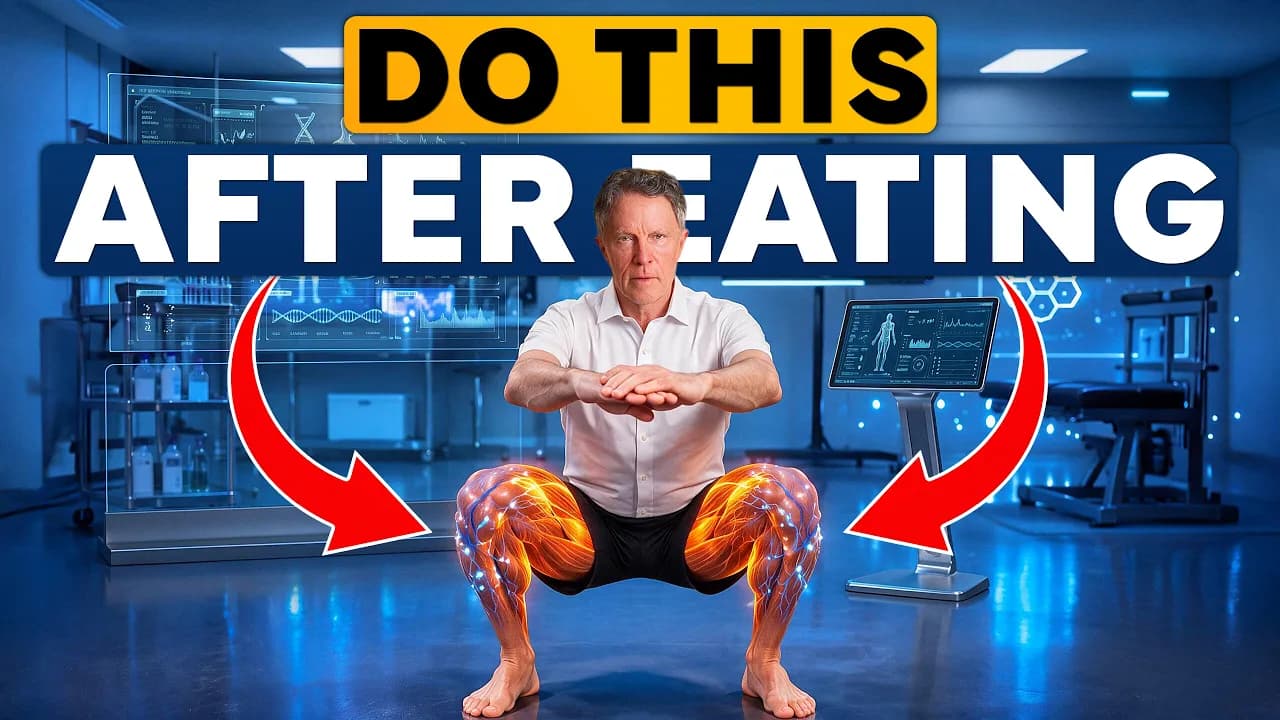
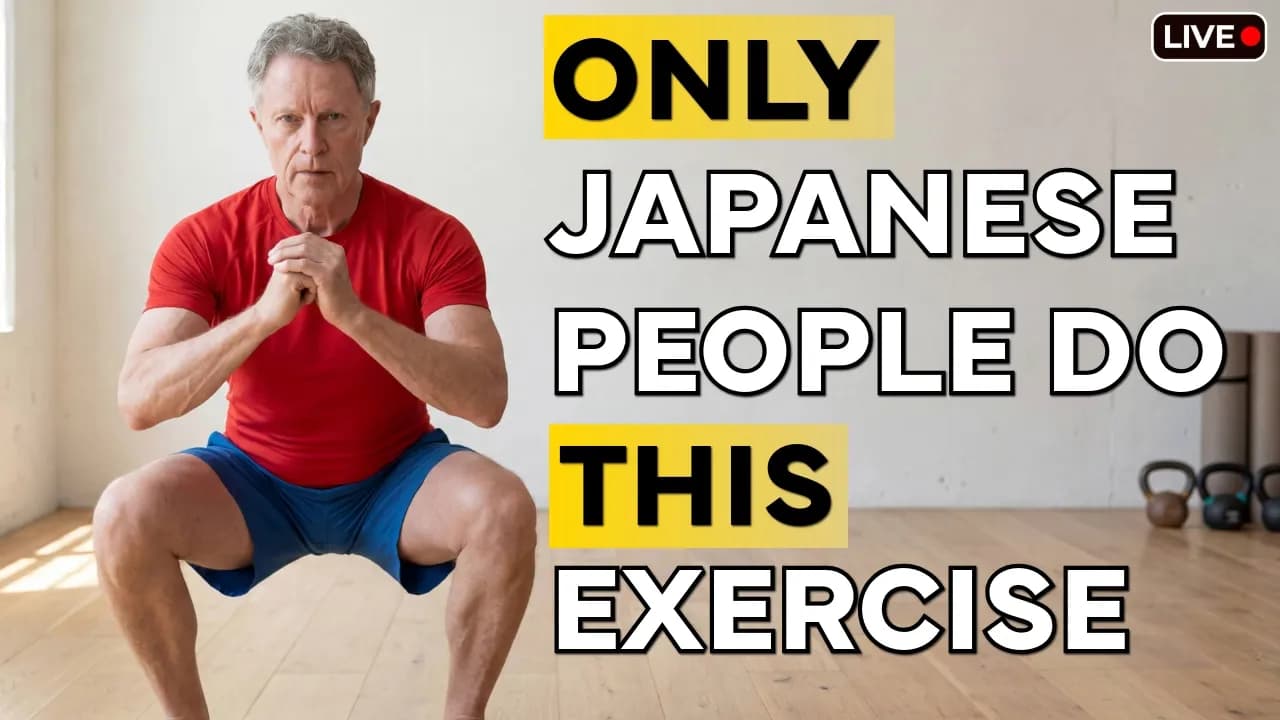
It's called the Wall Squat. A few months ago, I added it to my routine. Talking with friend/business partner Fred (works with channel, family of professional athletes), he ran into consultants for pro athletes that also help geriatrics. Intensity from zero to pro level. I was shocked at how quickly my leg strength improved.
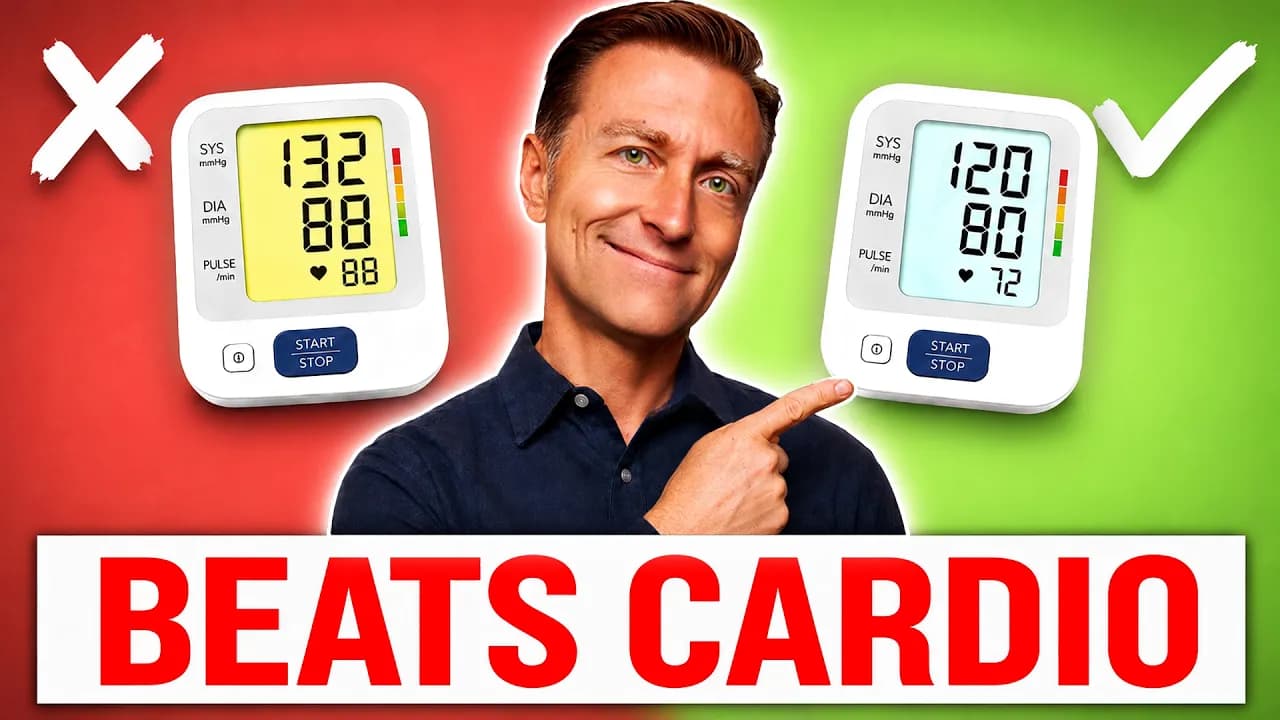
A 2023 randomized controlled trial on adults with high blood pressure: three sessions per week. After 12 weeks, systolic blood pressure dropped by nearly 13 points (more than most medications, zero side effects). Follow-up: four weeks reduced arterial stiffness by over 6%, leading to 21% cardiovascular risk reduction. Takes one minute if you can get that far.
How to do it: Stand with back flat against wall, feet shoulder-width apart, slide down until knees at 90 degrees (thighs parallel to floor). Hold, build to one minute, rest, repeat three or four times. If can't get to 90°, go as low as comfortable. Use rolled towel behind back or chair nearby for safety. Do 3-4 days a week.
I've also added isometric lunges: Step one foot forward like lunge, hold position (front thigh almost parallel to ground, as low as safe). Posture upright, hands on hips or chair. Hold 20-30 seconds, build to one minute. Switch sides, three sets per leg a few times a week.
Science: Isometric movements improve blood pressure, vascular health, strengthen quads and hamstrings without cardio. Useful for older adults who can't tolerate intensity training.
I've noticed real changes: had to adjust rest of workout due to fatigue from wall squats and lunges. Leg strength and endurance improved. Blood pressure improving. Sleeping better, deeper, more restful; wake up with more energy. There are other exercises to keep legs strong; check video right here.
Keep Thomas Fordham Brewer MD MPH in your library
Save the videos and channels worth coming back to, and find them again in one place.