The Common Walking Mistake That's Destroying Your Arteries (Easy Fix)
In a Nutshell
Walking slowly for 10,000 steps provides minimal benefits to arteries and metabolism; brisk walking at 3-4 mph (zone 2 effort where breathing increases and talking is harder) is essential for raising heart rate, improving blood flow, and triggering adaptations. A complete longevity exercise plan includes four layers: steady movement like brisk walking, short high-intensity intervals (e.g., 20-second all-out bursts in REHIT), leg-focused strength training, and frequent "resistance snacks" (e.g., wall sits, lunges) especially for those over 60 to combat anabolic resistance and maintain insulin sensitivity. Prioritize how you walk and exercise over distance to protect arteries, reverse age-related metabolic decline, and prevent disease.
These notes were generated by AI and may contain inaccuracies.
If you walk for exercise, challenge the idea of 10,000 steps that you've probably heard your whole life. Steps do matter and movement is good. But people who lived longer weren't necessarily the ones who walked the most. If you stroll slowly for an hour, your heart rate barely rises, arteries feel very little mechanical stress, and metabolism barely shifts. You're moving, which is better than sitting, but your body may not be adapting much. You're probably walking wrong, missing the one small thing that determines whether walking improves your arteries or just makes you feel productive. How you walk matters far more than how far you walk.
When you start to walk briskly, your heart rate rises, blood flow through arteries increases, muscles demand more energy, body burns more fat and uses glucose more efficiently, and cells begin adapting. You're training your metabolism to support a new stressor, a good one. Brisk walking means walking fast enough that effort is noticeable: breathing increases, talking becomes a little more difficult, you feel like you're working but can keep going. For many, that's around 3 to 4 miles per hour. Exact speed matters less than the effort—a pace that pushes you a little outside your comfort zone. That small change dramatically increases benefits from walking.
Walking is a fantastic foundation for health, what we call zone two steady activity for many people, but not the entire exercise plan—think of it as the first layer. A good longevity exercise plan has four pieces:
- First: movement, walking or another steady zone two activity.
- Second: intensity, short periods of intense intervals where your body works harder.
- Third: strength, building and maintaining muscle because metabolically healthy muscles are your best internal safety valve against metabolic disease with aging.
- Fourth: frequent muscle activation throughout the day, more important for those 60 and older.
If under 60, gym workouts once or twice a week usually suffice. Over 60, anabolic resistance means muscles don't recover, grow, or maintain as well, so more frequent muscle activation is needed. Together, these support metabolism, arteries, and independence as you age.
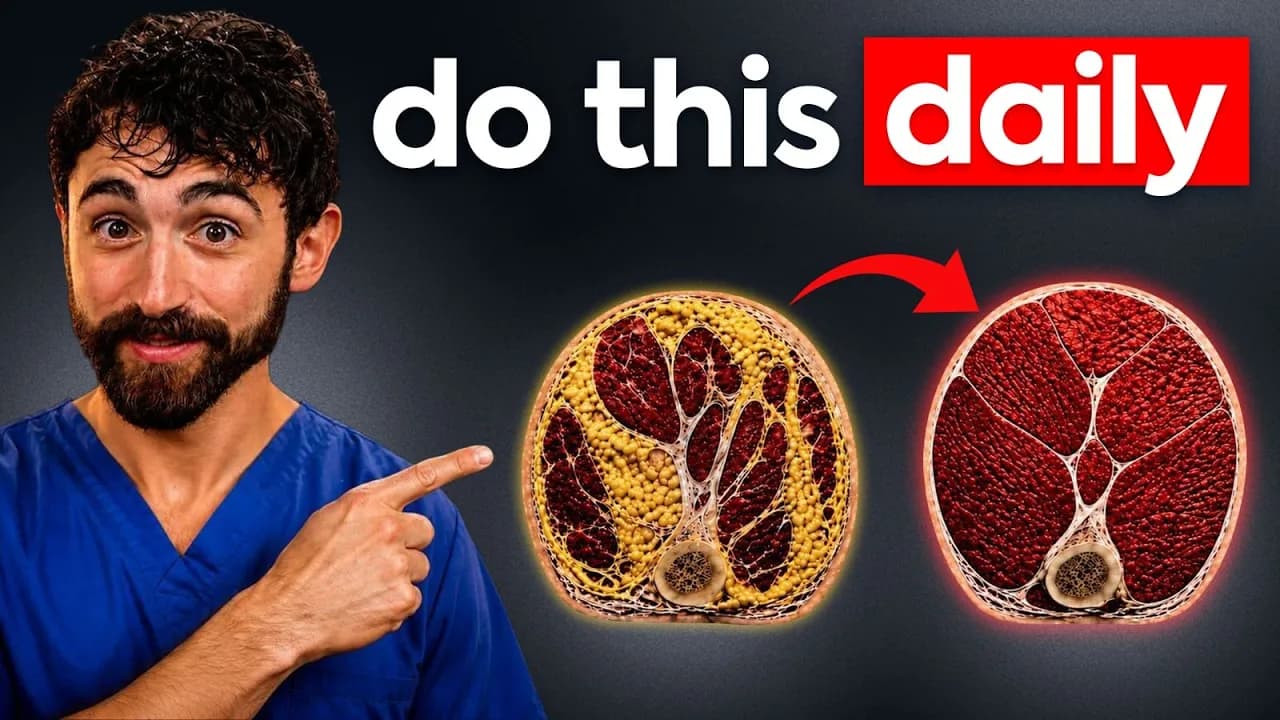
As we age, insulin receptors (move glucose from bloodstream to cells) and mitochondria (produce energy in cells) decline. Aging and metabolic disease damage these. Less responsive insulin receptors raise blood sugar easily; inefficient mitochondria produce energy less effectively. This drives aging metabolism problems and changes associated with type 2 diabetes. Exercise, especially with intensity, reverses these. Your body responds to challenge—if never challenged, systems weaken. You can have diet dialed in, but without exercise, you'll lose muscle, the safety valve, and risk cardiovascular disease. Challenging systems makes them adapt.
Adding short periods of higher effort makes a big difference—intensity signals muscles and metabolism to improve. Strength training, focusing on largest muscles (legs, hips, thighs, groin), contains huge capillary networks and large share of body's insulin receptors. Strong, active muscles act as internal safety valve for glucose, pulling sugar from bloodstream and storing it safely. Muscle mass, especially in legs, strongly linked to metabolic health. Resistance snacks: short bursts like 1-minute wall sit followed by deep lunges for each leg. A few minutes of effort with major discomfort and burn in muscles stimulates them. Some burn and discomfort needed to regain health. These stimulate large muscle groups, remind metabolism muscles are active and need support.
Routine evolved over time. In 40s, distance runner: ran about a dozen formal marathons plus prep, even 40-mile Land Between the Lakes ultramarathon (brutal: snow, ice, mud, rutted trails full of roots, frozen puddles, water everywhere—not recommended for longevity). Learned long slow distance alone didn't improve performance; had to add intervals, short bursts of higher intensity. In mid-50s, ran last marathon and discovered pre-diabetes (blood sugar climbed to around 200). Rethought exercise—walking slowly not enough. Added interval work: 1 minute hard (85% effort) + 1 minute recovery; accumulated 20 intervals weekly (e.g., two sessions of 10 or three of seven).
Later, repeated exertion high-intensity training (REHIT): two all-out 20-second intense phases (by 15 seconds, wondering if you'll make 20); entire session ~5 minutes, strong metabolic signal without exhaustion. Added resistance training: ~1 hour gym twice weekly, focused on legs for metabolic health, insulin sensitivity. Then added resistance snacks (wall sits, deep lunges) due to anabolic resistance in 60s.
Current routine: movement, intensity, strength, regular muscle activation. Your version may differ (slower pace, shorter/faster intervals, lighter/heavier strength), but structure works at any age. In walking, include brisk walking; add intensity; build leg strength; stay consistent.
If frustrated with current care or overwhelmed by advice, built clinical team to help take control before heart attack or stroke. Call 859-721-1414 or click link below for options and plan. Or start with free 7-step heart attack prevention guide (linked or QR code). To help channel: subscribe (tells algorithm). Growing old's not for sissies, but easier with healthier arteries.
How you walk matters far more than how far you walk.
Keep Thomas Fordham Brewer MD MPH in your library
Save the videos and channels worth coming back to, and find them again in one place.