The Only 5 Supplements Worth Taking and Exactly How Much
In a Nutshell
The top five evidence-backed supplements for most people training seriously are: protein powder (to hit 1 g per lb body-weight daily), 5 g creatine monohydrate daily (for strength, lean mass, and pumps), 1 g combined EPA+DHA (for cardiovascular and general health), 1,000–2,000 IU vitamin D3 (to correct indoor-living deficiency), and 5–10 g psyllium husk (for satiety, lipids, and regularity). These plug common gaps when whole-food intake or lifestyle is imperfect; none are mandatory if diet, sleep, and training are already optimal. Dosing should be consistent, guided by blood work where possible, and taken alongside plenty of water.
These notes were generated by AI and may contain inaccuracies.
No supplements are mandatory for fitness. So long as you eat a balanced diet of mostly lean meats, veggies, fruits, whole grains, and healthy fats, you train hard, you get about 10,000 steps per day, and you sleep well, you're already doing the far and away biggest parts of the fitness thing, and will get most of the benefits. These top five supplements just round it out and make everything click better. It's not glamorous, but neither is brushing your teeth.
These five supplements are chosen to be the core basics for anyone and everyone pursuing fitness improvement. If you try to eat well and you try to hit the gym regularly and use the RP Hypertrophy app, and you mind your daily steps, and treat sleep as a pretty sacred thing, you should probably be taking these supplements to round out your needs. If you're a competitive bodybuilder or aspiring CrossFit champion, a different set of supplements on top of these might apply, but for all the fitness folks who are trying at all would benefit from including these supplements.
The top five supplements you should probably be taking in fitness are protein powder, creatine, omega-3 fats, vitamin D, and a fiber supplement. Five scoops of pre-workout didn't make the list.
Protein powder, often whey protein but not exclusively, is first on the list because protein is the main food your body uses to build and keep muscle. If you're lifting, dieting, or trying to look less like Harry Potter and more like Harry Squatter, getting enough protein is a very big deal.
Protein powder helps with four big things: it makes hitting your daily protein target way easier when paired with whole foods, it supports muscle growth when paired with hard training, it helps preserve muscle when you're cutting calories, and it's super useful when you're pinched for time or the food you have around that day just isn't super high in protein.
Protein powder is convenient, high quality, fast, usually tasty enough, often quite tasty, and way easier than trying to chew your way through another two chicken breasts at 10:47 p.m. while reconsidering every life decision you've ever made because you have to meet your macros.
Creatine monohydrate is next because it's one of the few supplements where the answer is basically like, "Yeah, this one actually works with no caveats." Creatine helps your muscles regenerate high energy fuel during hard training, which means you can often get in a little more strength, a little more power, and maybe an extra rep or two here and there. Over time, that and the chemical effects of creatine on expanding your potential for growth help training outputs go up and can produce more muscle growth.
Creatine also tends to increase your lean body mass directly, partly from more water being stored in the muscle. All of your pumps in the gym will be better if you are on creatine. When you're on creatine, you kind of walk around with like a quarter pump all the time. As a bonus, creatine may have some brain and general health upsides as well.
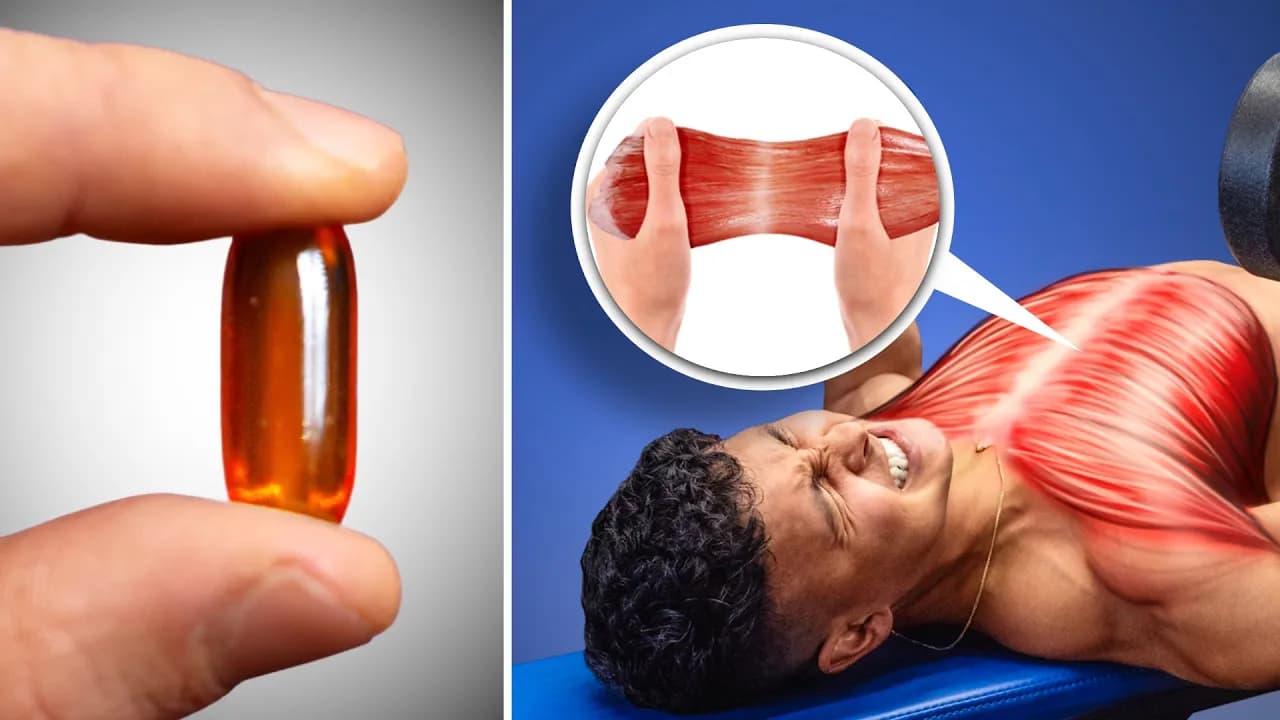
EPA and DHA omega-3 fats are on the list next because a lot of people simply do not eat enough fatty fish and these fats are very useful for general health. They're not like a get shredded supplement.
EPA and DHA can support cardiovascular health, help you keep blood triglycerides in a healthier range, contribute to normal brain and eye function, and may support a less inflamed overall physiology, especially if your current diet is low in fatty seafood.
The big practical point here is that you buy omega-3s, you don't just look for fish oil on the front of the bottle because you're not buying it for the fish oil. You look at the back and add up the EPA plus DHA fats, which should be listed. That's the actual useful stuff. The front label is usually just like marketing slop.
Vitamin D3 makes the top five because many adults spend a ton of time indoors, wear lots of sunscreen, live really far from the equator like in the countries of Norway and Sweden and Finland, for example, and Iceland, or otherwise have vitamin D levels that are not exactly thriving.
Vitamin D is important for lots of really critical stuff: bone health, immune function, and muscle function. Correcting a deficiency, even a small one, can make people feel and function better when they were low in the first place.
Vitamin D is not a fat loss pill. It's not a testosterone booster. And it does not turn you into a golden sun demigod because you took 10,000 IUs and yelled, "Photosynthesis!" as loud as you could in your kitchen.
The goal here is actually pretty boring. Have enough vitamin D, ideally confirmed with blood work regularly, and supplement enough to stay in that healthy range. If you're already sufficient, taking more and more is not more better. It's not even better. It just doesn't do anything.
A fiber supplement, often something like psyllium husk, makes the list because it's one of the least sexy supplements in the world, and hilariously one of the most useful. Fiber can help with fullness when dieting, which is huge, because being leaner is much easier when your stomach is not screaming at you to eat every single pizza slice that has ever been made.
Psyllium can also support healthier LDL cholesterol, better blood sugar control after meals, and more regular digestion. Most people should still get plenty of fiber from fruits, veggies, beans, whole grains, and other actual foods, but a fiber supplement can help to fill in the gap.
When you're supplementing with protein, you take it during any meal that does not give you a sufficient protein amount from whole foods alone. As a fitness person, you want about a gram of protein per pound of body weight daily split over about four or five evenly spaced meals.
For example, if you weigh like 160 lb and you eat about four meals per day, then you eat about 40 g of protein per meal. If your breakfast has egg whites and turkey bacon all to the tune of 45 g of protein, then you absolutely don't need protein powder in that meal.
If your lunch, for example, is on the run and it's just like a bagel with cream cheese for a whopping 15 g of total protein and because wheat protein from the bagel sucks for building muscle it's basically like a non-starter, then adding in a 35 g protein shake is a great idea.
Protein, unlike the other supplements, is more of a supplement you keep around for when you need it rather than something you religiously take every day like the other supplements on this list. As for the type of protein, so long as it's either milk, whey, casein, egg, soy, or another high-quality protein blend, it really doesn't matter.
Creatine intake is actually way more simple than protein. 5 g per day of creatine monohydrate for almost everyone. You can be an overachiever and take 10 g, especially if you're big and muscly, but the majority of studies find no consistent benefits over 5 g for most people.
Yes, up to 20 g or more per day still isn't bad for you. And if you're super tired and underslept, can help you potentially with keeping your cognitive performance from being total crap. But that much creatine for when you're rested is as of yet not really supported by the scientific literature.
As for creatine timing, it's really just like when can you be the most consistent with it. Creatine isn't magically giving anyone energy or recovery if taken before or during workouts, but it does massively rely on consistency. This is because creatine doesn't do hardly anything if you take it once or irregularly. It needs days and weeks of consistent intake to add up in your muscles, which is how it exerts most of its benefits.
You need about 1 g of EPA plus DHA fats per day. Taking them in the morning or before bed is a good idea because consistency is king. It's 1 g of EPA plus DHA fats, not 1 g of krill oil or fish oil because only some of that is actual EPA plus DHA fat and we need 1 g of that stuff. So, you have to turn the bottle around and read the label to figure out how many fish oil gel caps that is.
About 1,500 international units, aka IUs, per day of vitamin D is legit. Again, however you can be consistent with it. Anything from 1,000 to 2,000 IUs is totally cool, but ideally you get guided by your labs. So, you go to a doctor, you get blood work, vitamin D is part of the blood work, and if you're taking 1,000 IUs and your blood work shows low D3, then you need to consider more, and so on and so on until it's really good vitamin D levels in your blood work consistently.
5 to 10 g a day is great for most folks, but starting with 5 g is wise if you have a sensitive GI tract. For psyllium timing, the most important thing is not magic timing, it's again consistency and water. If taking it at once in the morning makes you actually take it every day, great. One morning dose is totally fine.
Start with about 5 g mixed into a full glass of water. You got to drink it right away before it turns into construction grade pudding right there in the actual glass of water. And try to drink a bit more water through the day. Psyllium actually works by absorbing liquid and forming a gel, which scoops through your GI tract.
If you're using psyllium more specifically for appetite control, cholesterol, or blood sugar management, probably because a doctor's telling you to take it, taking it before a meal can make sense. A practical setup is 5 g about 10 to 30 minutes before each one of your major meals. Splitting it can also reduce bloating and gas because your gut doesn't get one giant fiber meteor dropped on it at 7:00 a.m.
If your stomach complains, lower the dose and build up slowly. The big timing caution here is medication spacing. Psyllium can interfere with the absorption of some meds or supplements. A good general rule is to take at least 2 hours away from medication. MedlinePlus specifically flags some meds, for example, like digoxin, salicylates, such as aspirin and nitrofurantoin, as needing 3 hours of separation.
Morning is fine. Pre-meal is useful if you want that appetite and glucose modulation benefits. Split doses are fine if your gut prefers that, and always take it with plenty of water.
Three supplements that almost made it to the top five, but got left standing outside the supplement nightclub looking sad: caffeine, magnesium, and beta alanine.
Caffeine is probably the closest call because it very reliably improves training performance. It makes hard sets feel a bit less like you're being audited by Satan, and can reduce appetite a little bit during dieting. It didn't make the top five because a lot of people already consume it. It can mess with sleep, anxiety, heart rate, and blood pressure. If you take it too late in the day, you just traded a slightly better workout for worse recovery because you won't be sleeping well.
Magnesium could have made it because it's important for muscle function, nervous system function, sleep quality, blood pressure regulation, and general health. The problem is that it's mostly great if you need it to supplement and not everyone clearly benefits from having this or most people clearly benefit. If your diet is low in magnesium or you cramp a lot, sleep poorly, don't eat many nuts, seeds, legumes, whole grains, or leafy greens, it's very reasonable to consider magnesium. If you want to take top six supplements, this is an easy number six.
Beta-alanine is the third honorable mention and could have been included because it can improve performance in hard efforts that last roughly one to several minutes, super high rep sets, and a lot of cardio stuff. It didn't make the top five because it's a bit more sports specific than general. A lot of people who just lift weights and want to get jacked really don't benefit much from beta-alanine. It doesn't directly build muscle by itself. It has no independent anabolic benefit. The main side effect is the classic beta-alanine skin tingles where your face feels like it's receiving haunted Wi-Fi.
Before we outro this thing, the question was raised about wanting to see a video like this for top five drugs for fitness people. It would be quite contentious. There might be a video about the top five drugs you could be taking to get more jacked, lean, and healthy all with the approval of your doctor. Or a video on all of the supplements personally taken daily pill by pill.
Keep Renaissance Periodization in your library
Save the videos and channels worth coming back to, and find them again in one place.