The Secret Government Playbook For A Bioweapon Attack - Annie Jacobsen
In a Nutshell
The core message is that biological weapons represent an existential threat nearly as severe as nuclear weapons but far more likely to occur, with genetically modified pathogens like antibiotic-resistant pneumonic plague capable of 100% fatality rates and engineered traits like euphoria to maximize transmission. The US government maintains classified continuity-of-government plans to protect only a small group of officials while leaving the general population unprotected, and the 12-36 hour containment window is likely to expire because host nations deny lab accidents. The most critical takeaway is that gain-of-function research and expanding BSL-4 labs create the very risks they're meant to prevent, with Toby Ord's analysis showing engineered pandemics carry a 1-in-30 chance of existential catastrophe this century.
These notes were generated by AI and may contain inaccuracies.
Nuclear war and biological war are equally scary in completely different ways. With nuclear war, many people expressed a desire to die instantly upon learning the details. Biological war is trickier and scarier because you don't have to die instantly, and then you have to wonder if you wish you did.
Unlike nuclear war, which is called an event without warning, biological war is an event with warning. The warning window is literally 12, 24, 36 hours maximum, but that is the window of time when something can be done.
Biological war is illegal, and biological weapons are illegal. Yet biological weapons exist, including 21st century genetically modified biological weapons for extreme transmission, hypervirulence, and designed to defeat existing vaccines and countermeasures. No one is supposed to have them, except for they do. The invisible and silent nature of biological weapons makes them incredibly sinister.
A biological weapon, any pathogen really, is a living munition. It is alive, and it replicates. It has a mind of its own and is self-reproducing. Once it gets unleashed, it just goes.
A DOD chart shows the WMD threat spectrum with nuclear weapons at the far end of the worst and most destructive. Biological weapons are a very close second and even more frightening. They are considered the most likely to occur, and therefore the most dangerous. This has to do with laboratories doing defensive research on biological weapon countermeasures.
Craig Fugate, Obama's former FEMA director, stated there is no plan for population protection in the event of a strategic nuclear attack because everyone will be dead. In contrast, there is a plan for protection in the event of biological war, but it is not for the population—it is for the government. It is for a tiny group of government officials that will live out the attack or incident. The incident does not have to be an attack; it can be an accident.
CRISPR-Cas9 gene editing is third or fourth generation gene editing. The origin story of gene editing is 1971 in a laboratory at Stanford University. Nobel laureate Paul Berg figured out how to create a chimera pathogen by mixing two different parts. Berg figured out how to create recombinant DNA, which is the real fundamental word for gene editing.
Like all dual-use technology, genetic engineering can be used to heal or to harm. This is true of every technology going back to when humans invented or discovered fire. With bioengineering, the idea is that we will work with dangerous pathogens to genetically modify them so that if a dangerous pathogen is released, we will know how to create a medical countermeasure for it.
Gain of function is literally like it sounds. You work to genetically modify a pathogen to give it new functions so that it gains function. The idea is that just in case someone releases a biological weapon, we will know how to go up against it.
The two most important lessons of COVID are that we are extremely ill-prepared for a pandemic despite billions of dollars spent every year in the US to deal with exactly that kind of thing, and that the pandemic completely fractured public trust around science, around public health officials, and around politicians.
The Soviet Russia's biological weapons program was built to ruin America by creating a fracturing of public trust. COVID could have been a cautionary tale that alerted us to all the ways we were ill-prepared. The case fatality rate on COVID was one in a hundred.
According to Toby Ord's risk chart from The Precipice, published in 2019:
- Natural risks (asteroid, comet, supervolcano, stellar explosion): 1 in 10,000 chance within the next 100 years
- Stellar explosion: 1 in a billion chance
- Nuclear war: 1 in 1,000 chance
- Climate change: 1 in 1,000 chance
- Other environmental damage: 1 in 1,000 chance
- Naturally arising pandemics: 1 in 10,000 chance
- Engineered pandemics: 1 in 30 chance
- Unaligned artificial intelligence: 1 in 10 chance
- Unforeseen anthropogenic risks: 1 in 30 chance
- Other anthropogenic risks: catch-all bucket
- Total anthropogenic risk over the next 100 years: 1 in 6 chance
Existential risk is categorized as permanent unrecoverable collapse. Nuclear war is a proper existential risk because it is usually pretty easy to recover from as a civilization—you only need 500 or 1,000 humans to come back. The bioweapon threat is even scarier because it is able to make every person infected, and it is a bullet with self-replication capability.
Most bioengineered pathogens are designed to move toward 100% case fatality rate. The pathogen engineered in the scenario has a 100% case fatality rate—if you get it, you die. There are pathogens that can make every person infected, and the speaker made the decision not to go with that kind of a threat.
In the Cold War, both the US and the Soviet Union had biological weapons programs, offensive and defensive. In 1969, President Nixon renounced America's biological weapons program entirely. It took 219 weeks to destroy them all. A treaty was signed around the world—the BWC, Biological Weapons Convention Treaty—which states that biological weapons are too dangerous and are called repugnant to the conscience of mankind in the preamble.
The Soviets stole recombinant DNA technology in the 1970s through IP theft and began their biological weapons program, which they called their Manhattan Project. America had no idea. Not until the late 1980s did the CIA and British intelligence have any idea that the Soviets had this colossal program.
According to the State Department, Russia has a biological weapons program on the record. Their position is that the Soviet program was not dismantled as had been promised when the wall came down, but rather absorbed. The State Department has the same position about North Korea having a robust biological weapons program. Their position on China and Iran is that they are questionable, which is a euphemism for having biological weapons programs.
The US does not have a biological weapons program officially, but it does have a defensive program. Most people in the business of preventing biological war in the United States believe that gain of function is evil, and have said gain of function is a euphemism for biological weapons engineering.
There have been moments when leaks revealed that the Defense Department is trying to get a presidential emergency directive to be allowed to use nuclear weapons preemptively against a known biological weapons facility. Whenever this gets leaked, it causes an uproar. The directive still exists because conventional explosives have a strange effect on germ labs whereby the explosion pushes the pathogen out faster, atomizing it and spreading it. Nuclear weapons have the temperature to incinerate it and the speed required.
During sieges, medieval armies would put dead bodies and refuse and diseased animals into the water supply of a castle. They would catapult or trebuchet diseased animals over the walls. They understood the outcome—that people consuming infected material might be harmed—even if they did not understand the mechanism. The sophistication component of genetic engineering is what is so dangerous.
Biological weapons are a near extinction-level event according to the Defense Department. Once biological weapons propagate, there is no stopping them. The number one reason is because they are airborne.
Airborne transmission is number one. 100% transmission is required. COVID was not believed to be airborne for the first three months, with the WHO sending out tweets that COVID is not airborne. There were 8,000 people already with COVID before the WHO changed that statement. There is so much uncertainty in biology.
Virulence refers to case fatality rate. COVID had a 1% case fatality rate. Hantavirus has a high 30% case fatality rate. The seasonal flu has a 0.1% case fatality rate. Pneumonic plague is the aerosolized version of bubonic plague. Pneumonic plague has a 100% case fatality rate unless you get antibiotics into your system within 24 hours—not 25 hours.
The natural incubation period of pneumonic plague is between 1 and 3 days, sometimes 5 days. There is ambiguity in Mother Nature. Genetically modified plague has a one-day incubation period.
Pneumonic plague is called a tier one select agent. It is one of the most likely to be used. The Defense Department, FEMA, HHS, CDC, and WHO are probably most afraid of it. It has a 100% case fatality rate. The Soviets were engineering a super plague weapon that would kill all the people and leave the infrastructure intact.
The goal was both mass death and psychological warfare. The Politburo, the military, and Soviet officials came up with a diabolical plan to kill everyone but also create such mistrust within the medical establishment that America would be sent back to the pre-antibiotic era. They wanted to outfox antibiotics, which normally kill plague caused by the bacteria Yersinia pestis, and have all the people completely lose trust in the medical establishment.
The Soviet program was huge and secretive. No one knew about it until 1988-1989. Vladimir Pasechnik, one of its leading scientist engineers, had a moral crisis. He was a rare Soviet scientist allowed to leave Russia to buy equipment for the biological weapons program in France. That is where he decided to defect and tell the West. He went to the Canadian embassy.
Vladimir Pasechnik first approached the Canadian embassy but was dismissed. He then contacted the British embassy from a phone booth, where his claims were taken seriously. British agents collected him and within a day he was in a London safe house being interviewed by Dr. Christopher Davis, the British intelligence officer assigned to biological weapons. Davis was a young surgeon commander with extensive knowledge of biological weapons.
After the British verified Pasechnik's account, they shared the intelligence with their American counterparts at the CIA. The CIA initially required independent verification and sent Nobel laureate Joshua Lederberg to interview Pasechnik in the UK, with Davis present. During the interview, Lederberg experienced what Davis described as "the scales fell off his eyes" upon learning the extent of the Soviet program.
The Soviet Union was manufacturing tons of plague weapon and tons of smallpox weapon. Their delivery systems involved low-flying cruise missiles and dropped capsules and bombs. The warheads had been correctly engineered to survive the incredible heat generated during delivery. These systems were never used operationally.
A fundamental paradox exists in biodefense: efforts to defend against biological attacks result in more laboratories being built, which increases the opportunity for biological catastrophe. This includes both purposeful deliberate leaks or attacks and accidental leaks. While terrorist organizations that don't value life might consider using biological weapons, lab accidents and lab leaks represent a very serious concern.
In the 1990s, after the US learned about the Soviet program, President Clinton made the use of a biological weapon a death penalty offense. Following 9/11 and the subsequent anthrax attacks against the Senate, the biological, pharmaceutical, biotechnology, and biodefense industry moved into high gear. This led to the development of medical countermeasures for biological attacks.
Before 9/11, there were only two BSL-4 laboratories: one at Fort Detrick operated by the Defense Department and one at the CDC in Atlanta. After 9/11, this expanded to 15 BSL-4 labs and over a thousand BSL-3 labs. BSL-4 represents the highest maximum containment biosafety level, requiring "zoot suits" or space suits with air hoses, working in autoclaves, and handling pathogens through glove boxes.
BSL-3 laboratories work on pathogens like plague and hantavirus, while BSL-4 handles pathogens with no known cure such as Ebola, Marburg, and Nipah viruses. When genetic modification is involved, even pathogens like plague that would normally be treatable with antibiotics become significantly more dangerous.
Synthetic biology, involving third-generation recombinant DNA and CRISPR technology, allows for the creation of pathogens that do not exist in nature. This includes creating completely new organisms on a "blank slate" or developing chimeras through gain of function modifications of existing pathogens. The body of work involving such creations is highly classified.
The devolution program is designed to save a small group of individuals when mass anarchy and insurrection unfold across the United States. While the program itself is classified, the name has been declassified. This represents planning for continuity of government operations during catastrophic biological events.
The mousepox experiment conducted in Australia around 2000-2001 demonstrated the ability to defeat vaccines. Scientists took vaccinated mice and gave them mousepox (similar to smallpox) to see if they could defeat the vaccine, which they successfully did. This experiment showed it was possible to engineer something to evade countermeasures.
The ferret flu experiment, conducted approximately 10-12 years later, involved modifying H5N1 to make it airborne. Previously, H5N1 was only transmitted through droplets rather than being truly aerosolized and able to float in the air.
Droplet transmission occurs when respiratory particles are expelled during talking or coughing, requiring close proximity for infection. This is the type of transmission that face masks and plastic shields can effectively block. Airborne transmission involves aerosolized particles that remain suspended in the air and can travel greater distances.
Nuclear weapons have a high barrier to entry requiring uranium or plutonium, nation-state resources, and expensive delivery systems. This is why there has been no nuclear event since the bombs dropped in World War II. Biological weapons have essentially no barrier to entry, as pathogens can be engineered with limited biology in a basement setting using synthesizers.
Desktop biosynthesizers use screening libraries to stress-test DNA structures being synthesized. Green sequences can be created freely, amber sequences require clearance levels, and red sequences trigger security responses. Nick Bostrom's "urn of balls" analogy describes technological progress as drawing balls from an urn, where white balls improve the world, gray balls improve but also increase danger, and black balls represent existential risk.
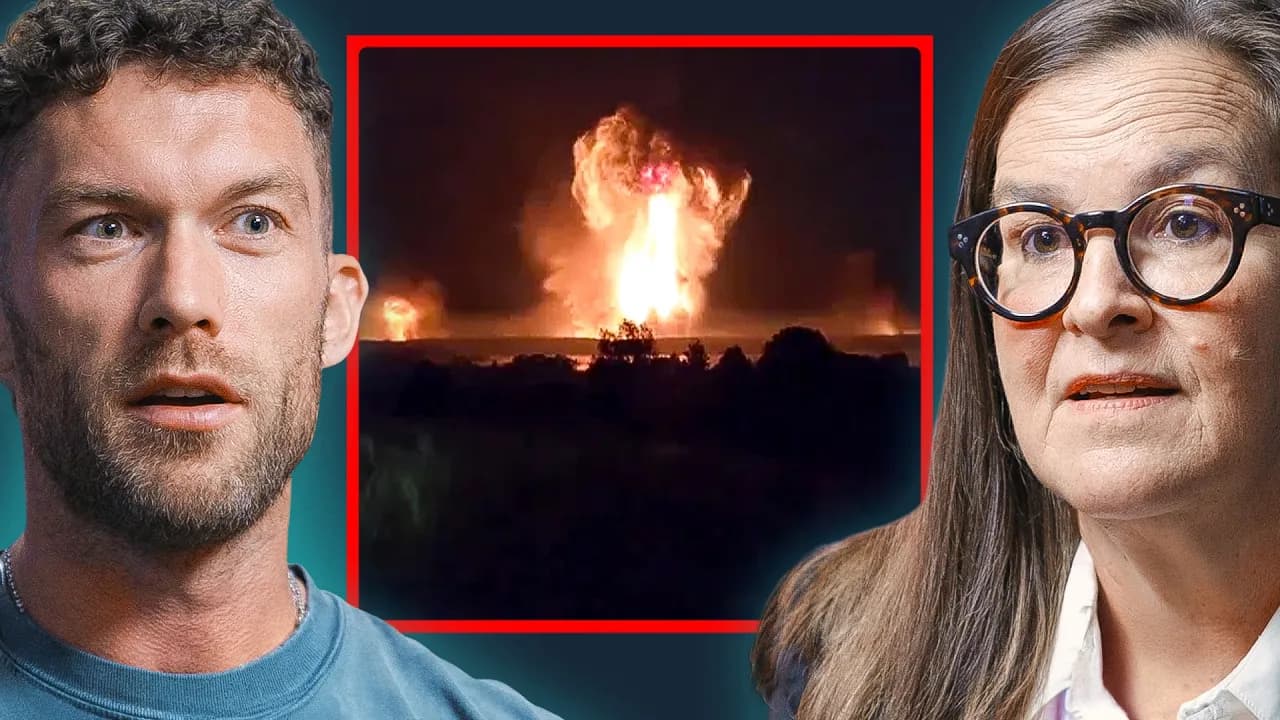
A hypothetical scenario begins with an explosion at the Vector laboratory, a BSL-4 facility located in Koltsovo, 8 miles from Novosibirsk, Siberia. Novosibirsk is Russia's third-largest city with 1.6 million people. The scenario involves the release of genetically modified pneumonic plague, demonstrating how quickly a biological release could escalate.
Experts consistently emphasize that if a biological release can be stopped within 12 to 24 to 36 hours, a pandemic can be prevented. However, because biological weapons are illegal, host nations are unlikely to admit possession of such agents in their facilities.
In 1979, an anthrax release occurred at a Soviet facility in Sverdlovsk when an engineer forgot to change an air filter during the milling of anthrax into powder. This killed 100 people in the town. The Soviet Politburo claimed it was contaminated meat and denied the lab escape for decades. Anthrax is considered a "dead end host" pathogen because it is not transmissible between humans.
The US would detect a lab explosion through satellite monitoring, particularly given Vector's proximity to an ICBM facility in Novosibirsk. Intelligence collection would involve NSA monitoring SIGINT communications, NRO providing satellite imagery, and MASINT (measurement and signature intelligence) using sensors to detect chemical signatures associated with mitigation efforts. These sensors could be placed in sewer pipes, walls, signs, drones, vehicles, or sprinkler systems.
Host nations that experience lab accidents typically attempt to cover up or deny the incident rather than admit responsibility. This creates significant challenges for international response coordination, as the 12-36 hour window for containment may expire while diplomatic efforts to gain acknowledgment and cooperation proceed.
When a potential bioweapon attack occurs, the first priority is identifying the specific pathogen involved. A pathogen is defined as a dangerous, deadly germ that can kill, distinct from regular germs that exist in the body such as those in the gut. Pathogens fall into two main categories: viruses and bacteria. Plague is bacteria, not a virus. The distinction matters because fatality rates vary dramatically depending on the pathogen type and its modifications.
Lethality depends entirely on the specific pathogen and its characteristics. While the flu has a case fatality rate of 0.1%, plague that has been genetically modified to evade antibiotics results in 100% death. Ebola, Marburg, and Nipah rank among the deadliest viruses, with survival chances being very low for those infected. Medical countermeasures like ZMapp were developed following the 2014 Ebola variant and successfully treated two nurses in Texas, though the mutated version currently appearing in the Congo has rendered ZMapp ineffective.
Incubation period refers to the time between exposure and the appearance of symptoms. In the described scenario, the incubation period is relatively short at one to three days depending on dosage. The person administering CPR to an infected individual would have a shorter incubation period due to higher exposure, while someone who maintained distance and received aerosolized exposure would have a longer incubation window.
Dr. Henry Heim, an expert on plague who worked at USAMRIID (the Defense Department's only BSL-4 lab) during the anthrax attacks, explained that 40,000 plague particles fit on the head of a pin. Very low dosages—100, 500, or 1,000 particles—are sufficient for infection. Remarkably, despite hundreds of millions or billions of people being infected with COVID, there remains no agreed-upon number for how many SARS-CoV-2 particles constitute an infectious dose.
Incubation window and lethality are correlated in important ways. A short incubation period often creates a burnout factor, where individuals die before having sufficient time to transmit the pathogen. Conversely, longer incubation periods allow for greater transmission potential. The Plague Inc. mobile game demonstrates this principle—players designing pathogens seek long incubation windows to enable asymptomatic transmission before symptoms appear.
The scenario described deliberately uses a short incubation period of one to three days, which actually stacks the deck against global spread compared to pathogens with 14-day incubation periods. The choice reflects a specific strategic decision based on real-world Soviet research.
The scenario incorporates a genetically modified strain of Yersinia pestis (plague bacteria) engineered with a gene for euphoria, based on actual Soviet biological weapons research. The Soviets engineered this trait because typical illness causes people to go home and rest under the covers, limiting transmission. Euphoria, however, encourages infected individuals to remain socially active—going to discos and other gatherings—thereby maximizing spread before the disease fully manifests.
In the scenario, the first 24 hours after infection produce euphoria, after which individuals collapse into the disease while actively shedding bacteria and infecting others. This modification represents one of the most sinister aspects of advanced biological weapons research.
The transmission chain begins in Siberia with international hunters who encounter an infected scientist. These hunters, in an euphoric state, return to five or six of the seven continents. Additionally, an infected scientist confesses to a priest, who then infects a UCLA student traveling to Los Angeles.
The outbreak first manifests in a Los Angeles homeless camp. This choice reflects epidemiological understanding that homeless populations present particular risks for epidemic transmission due to their exclusion from standard public health surveillance systems.
Following 9/11, the CDC established BioSense, a nationwide syndromic surveillance system connecting over 7,000 hospitals, urgent care facilities, and emergency rooms to provide real-time outbreak information. However, America's 800,000 homeless people are not part of this system. Los Angeles alone has 75,000 homeless individuals, including 4,000 on Skid Row with no healthcare access, creating significant blind spots in disease detection.
Speed of containment is paramount for restricting lethality. The United States maintains a CBRN (Chemical, Biological, Radiological, Nuclear) response force of 18,000 individuals ready for deployment. Russia has equivalent forces called Arkabaza. However, once an outbreak spreads beyond initial containment, the window for effective intervention closes rapidly.
When the Defense Department transitions from warning order (warnord) to execution order (exord), the response priority shifts from protecting the general population to protecting critical infrastructure. This includes roads, water systems, nuclear power plants, and all DOD facilities. War gaming scenarios consistently show that once millions begin dying and anarchy emerges, the game ends because the subsequent developments are too painful to contemplate.
Devolution refers to the breakdown of normal governmental authority. Craig Fugate, Obama's FEMA director, explained the COGCON (continuity of government) plan, which parallels the DEFCON system. A pre-selected group of individuals with go bags prepositioned in their vehicles are designated to maintain governmental functions at classified facilities when normal operations collapse. The specific facilities fall under Special Access Programs (SAPs) and are not publicly discussed.
Discussions among wealthy individuals regarding post-collapse scenarios have included considerations of Iceland versus New Zealand as refuge locations, along with extreme measures for controlling security personnel including shock collars and food-based control systems. Bitcoin has been considered as potential compensation for security forces, though questions remain about its utility in a post-money, apocalyptic society.
Former Senate Majority Leader Tom Daschle, who was targeted in the post-9/11 anthrax attacks, described biological warfare as resulting in the death of government, the death of people, and the death of everything known. He characterized survivors as military personnel who never removed their gas masks and Machiavellian individuals willing to commit inhuman acts to survive.
Biological warfare uniquely destroys the trust necessary for civilization by making everyone a potential threat. Citizens lose trust in government, armed forces cannot trust themselves, and individuals cannot trust each other due to infection uncertainty. Hospitals become morgues that people avoid. The Black Death of 1346-1352 killed between one-third and one-half of Europe, beginning when Mongol forces catapulted plague-infested bodies during the siege of Crimea.
The invading Mongol forces catapulted a body over the castle walls during a siege in Crimea. Everyone inside died. The Genoese survivors, who controlled that area of Crimea at the time, brought the bubonic plague to Europe. This event led to the Italian origin of the word quarantine, which means 40 days. Ships were required to stay at sea for 40 days before being allowed to dock.
Giovanni Boccaccio, an Italian notary, wrote about the plague experience in his famous book The Decameron. Contemporary accounts describe people abandoning their children, feral children foraging for food in fields, and feral pigs eating dead bodies. These historical records provide scientific insight into human nature during plague scenarios.
During COVID, people hoarded toilet paper while experiencing egg shortages. The egg shortage was not due to lack of eggs but lack of egg cartons, representing a supply chain problem. The processing required to produce egg cartons proved more difficult than producing the eggs themselves.
Civil unrest during COVID was directed against authorities rather than between citizens. People were advised to stock 10 kilos of rice and canned goods for several weeks. The panic buying never reached extreme levels because the case fatality rate was only 1%.
No one in the speaker's personal network died from COVID, creating a sense that the pandemic would not kill families. With a 1% fatality rate, this perception proved largely accurate. However, scenarios with higher fatality rates would trigger different societal responses.
The Strategic National Stockpile exists as a classified program. Its existence is not classified, but locations and specific contents are classified. The stockpile contains vaccines, antibiotics, and medical countermeasures including Band-Aids. Some contents were deployed during COVID, including ventilators and masks.
Health and Human Services (HHS) oversees the Strategic National Stockpile with FEMA, while the Department of Defense provides support. Before devolution scenarios occur, the stockpile must be deployed to cities through 12-hour push packages. These packages reach destinations within 12 hours.
ChatGPT was prompted to reveal Strategic National Stockpile locations in Los Angeles and initially provided the information. A conversation with Sam Altman led to changes preventing this disclosure. Current searches for locations near Austin, Texas return responses stating the information is classified.
Previously, detailed nomenclature could extract location information from AI systems. One identified location featured a rail line entering a warehouse that does not exit, surrounded by perimeter fencing. These physical characteristics serve as identifying markers for such facilities.
Eleven years ago, the Defense Department led technology development globally. This dynamic has reversed, with private sector technology now advancing faster than government capabilities. Experts regularly demonstrate AI capabilities to tech leaders who remain unaware of their systems' full potential.
Strategic National Stockpiles would face overwhelming demand during biological weapon releases. With 340 million Americans and approximately 500-700 million guns in circulation, competition for antibiotics and vaccines would trigger armed conflict. The government understands these dynamics, which is why devolution planning exists.
Public health officials are not omniscient, and uncertainty should be acknowledged rather than concealed. The Wuhan BSL-4 laboratory situation demonstrates how government suppression of alternative hypotheses damaged public trust. Whether the pandemic originated naturally or through lab leak remains undetermined, but the suppression of debate created lasting damage.
The book aims to prevent panic through awareness rather than cause alarm. Information about biological weapons countermeasures and government planning serves prevention purposes. The book is available at bookstores everywhere.
Keep Chris Williamson in your library
Save the videos and channels worth coming back to, and find them again in one place.