The Surprising Relationship Between Muscle Health and Brain Health
In a Nutshell
Skeletal muscle acts as an endocrine organ, secreting myokines like BDNF during exercise to boost brain health, NAD levels, neurogenesis, and cognitive function, making 150+ minutes of weekly activity indispensable for preventing Alzheimer's (type 3 diabetes) and countering sedentary risks. Statins impair muscle mitochondria, accelerate sarcopenia, and slash GLP-1 levels, warranting caution over routine use; prioritize muscle quality via exercise over fat loss or pharmacotherapy. New dietary guidelines advance by prioritizing protein and omega-3s (especially for pregnancy) but retain arbitrary 10% saturated fat caps due to politics, underscoring precision over universal thresholds.
These notes were generated by AI and may contain inaccuracies.
Muscle is an endocrine organ. Skeletal muscle is the most overlooked and underappreciated organ system. Alzheimer's disease is characterized by a brain energy deficit particularly NAD, an electron carrier critical for mitochondrial function. NAD boosting in preclinical models can prevent and potentially reverse Alzheimer's disease. In humans, NAD is depleted in the Alzheimer's brain; higher levels associate with resilience and greater cognitive health. Lean body mass, muscle mass, and markers of functional fitness like VO2 max associate with higher NAD levels. Muscles are a hormone-secreting machine that protects brain longevity.
Skeletal muscle sends myokines (myo for muscle, kine for hormones) to the brain with profound impact. Length, time, intensity, and duration of exercise determine myokine release, including cathepsin, interleukin-6, and hundreds more not fully characterized. Exercise increases BDNF (brain-derived neurotrophic factor) secreted by skeletal muscle, aiding neurogenesis. Exercise supports vascular health and blood flow. Alzheimer's is type 3 diabetes of the brain; exercise contributes to protection though not definitively prevention for all dementias (e.g., frontotemporal, vascular). Sedentary behavior is a risk factor. Recommendation is 150 minutes weekly, but more may be optimal for brain health though exact dose unknown due to myokine complexity. Myokines associate with improved cognitive function post-exercise. Cognitive velocity improves with speed of body movements.
Operate on first principles since long-term RCTs for exercise dosing in Alzheimer's prevention unavailable. Mechanistically, muscles talk to brain via exercise, making it completely indispensable for long-term cognitive health.
Physical activity connects to brain function. Skeletal muscle (40% body weight) is key metabolic unit for glucose disposal, fatty acid oxidation, insulin sensitivity. Risk factors for Alzheimer's (type 3 diabetes): type 2 diabetes, obesity, poor blood sugar control, insulin resistance. Insulin resistance in skeletal muscle mirrors brain. Fellowship project examined body composition and brain function to determine insulin resistance threshold in brain. What benefits muscle benefits brain; primary control via muscle health and quality, not fat loss. Contracting skeletal muscle via exercise improves metabolic profile even without body composition changes. Patient anecdote: lifelong weight cycling showed brain resembling early Alzheimer's on fMRI, despite complex assessments (euglycemic insulin clamps, body composition, strength testing). Skeletal muscle under voluntary control; exercise improves blood flow, BDNF, metabolic regulation. Anything is better than nothing; start with baseline recommendations (50% population inactive); skeletal muscle exercise indispensable.
Observational data: statin use (for cardiovascular health/event prevention) associates with accelerated decline in muscle mass and function. Biological rationale: statins penetrate muscles; atorvastatin (most prescribed, profitable drug in history) reduces complex 4 mitochondrial activity by 50%+ at nanomolar concentrations. RCTs show statins increase fatigue, especially in women. Not claiming statins cause muscle loss definitively; area underexplored. Principle: pharmacotherapy not innocent until proven guilty.
As practicing physician, take seriously not assuming innocent until proven guilty. Metformin example: low-dose off-label for longevity (inhibits mTOR) underappreciated risks like offspring defects. 40 million on statins. Use cautiously; not just cholesterol/LDL—assess full picture. Water-soluble vs. fat-soluble statins. Mild muscle symptoms in first year common but not always stopping therapy. True statin-induced myopathy: elevated creatine kinase, pain, weakness (rare). Changes in cognition possible with statins. Rarely use statins.
Statins inhibit mitochondrial activity asymptomatically. Cell Metabolism 2024 RCT: atorvastatin slashed GLP-1 levels by half in humans over 16 weeks (N=40). Under-discussed despite top journal. Polled Harvard doctors: unaware. No headlines or medical discussion. Mental gymnastics to dismiss (e.g., small N); larger confirmatory studies unlikely due to cost, no business model. Medicine uses drugs liberally without full risk assessment, including muscle health.
Muscle underexamined; not routine primary organ evaluation. No specialists for skeletal muscle as endocrine organ (unlike cardiology). No myologist field yet. Orthopedics/PMR handle structural/functional but lack endocrine rigor. No routine skeletal muscle biomarkers in practice.
Blinded RCT: 80 mg atorvastatin vs. placebo (crossover with washout). Monitored via 5x500m ski erg with 2-min breaks, using 5th time as metric. Day 6: placebo improved with training; statin worsened. Felt it subjectively. N=1 powerful when executed properly. If needing lipid-lowering, not statin.
HIIT produces modest lipid improvements (slight triglyceride reduction, HDL increase); questionable meaningfulness.
Biomarker drivers affect intervention response. Exercise can increase LDL in some (e.g., speaker's energy trafficking). ApoC3: locks onto lipoproteins; loss-of-function lowers triglycerides/triglyceride-rich particles (LDL higher), associates with longevity (centenarians 2.5x higher frequency). Targeted by antisense nucleotides. Evaluate biomarkers beyond levels (e.g., functionality); HDL high but non-functional possible. Pharmacological decisions need limitations/negative outcomes considered.
Medicine siloed; specialties focus narrowly (e.g., cardiology wins on LDL via statin) ignoring whole-body trade-offs/off-target effects. Precision medicine/precision nutrition emerging: individualized (e.g., saturated fat <10% not universal; some sensitive to sat fat, others carbs). Dietary guidelines broad generalizations.
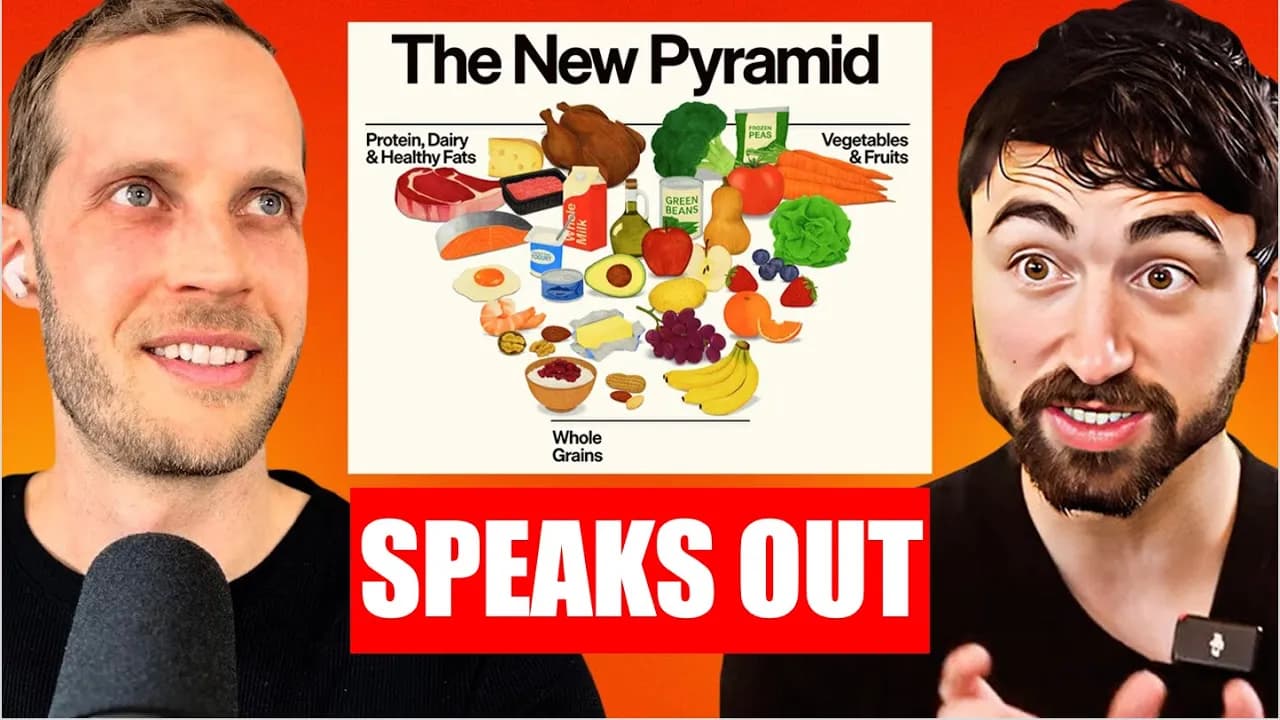
Inconsistency: ending war on saturated fat but keeping <10% threshold. Math impossible with prioritized red meat, full-fat dairy, butter/tallow at 3 meals/day. Conversation with Ty Beal (Scientific Review Committee): guidelines step forward but forward-facing documents political/propaganda (mere exposure effect). Science Review Committee separate. Focus on calories vs. real food shifts norms positively.
The nine-page forward-facing document is designed for the average person to read in 10 minutes, conveying the main takeaways. It involves political horse trading and compromise, which is pragmatic. Guidelines highlight research gaps.
Example: A urology resident at Baylor running ultra marathons on a 4,000 calorie diet with 44 grams saturated fat fits guidelines. On a 1,500 calorie diet with 20 grams saturated fat, it exceeds limits, showing no universal hard number exists. This underscores the need for more research on whether specific amounts are harmful.
No universal number for saturated fat; same percentage (e.g., 10%) across calorie levels is problematic, similar to protein at 1.2-1.6 grams per kilogram. Thresholds are unnecessary and create barriers.
On a 2,000 calorie diet, a four-egg omelet cooked in two tablespoons of butter maxes out the allowance. No room for salmon dinner or Greek yogurt lunch. Nobody would argue against eggs, butter, yogurt, and salmon as unhealthy. The 10%, 15%, 20%, or 80% number is arbitrary; tight restrictions lack science-based justification and stem from political holdovers.
Tai responded that the scientific review committee did not write the forward-facing document. No scientific basis for the 10% saturated fat threshold, nor for not having it. This is not how science works: cannot disprove a negative, like assuming a purple elephant on Neptune's backside without proof. Including the threshold is scientifically inappropriate.
Guidelines prioritize full-fat dairy and healthy red meat, yet cap saturated fat at 10% of calories. Even on a non-low-carb diet with full-fat yogurt, berries, and salmon, the limit is easily exceeded. This internal contradiction creates vulnerabilities for critics in a political context, acting as a math error exploitable by opponents.
Positive direction overall; better to highlight weak spots as an ally than let them be exploited. Independent review found guidelines conservative, not extreme despite flipped pyramid visual: same 2,300 mg sodium threshold, same saturated fat limit, prioritizes whole grains, deems vegetables essential. Logical inconsistencies in messaging need addressing.
First time guidelines prioritize protein. Removing 10% saturated fat limit would have faced pushback, making progress difficult despite potential positives. Guidelines are conservative.
Desire for leaders like RFK Jr. to transparently admit the 10% saturated fat as a political trading card. Claiming to end the war on saturated fat while limiting it to 10% of calories two pages later is logically inconsistent. Transparency would be welcomed.
Guidelines recommend swapping hydrogenated plant fats; fully endorse animal saturated fats. Animal- and plant-fat agnostic: eat nuts, seeds, butter if lesser processed.
Favorite element: emphasis on omega-3 intake and low-mercury seafood for pregnant women. Previous fear-mongering deterred fish consumption, detrimental to fetal brain development needing abundant omega-3. Discussion with William Harris (omega-3/omega-6 expert) and father (maternal-fetal medicine, high-risk obstetrics) highlights this win.
Wins include omega-3s for pregnant women, increased protein intake. Progress, not perfection.
New book: tactical field manual, visually effective. Dr. Don Layman (dietary guidelines author) co-authored nutrition chapter. Available on Amazon or drgabriel.com/playbook. First chapter: how to think.
As a physician since 2006, building stronger humans requires more than perfect plans, which most ignore. How to think chapter addresses ebbs, flows, human weaknesses; prepares for discernment to avoid failure.
Modern life treats comfort as the ultimate win, but comfort when unchecked acts like a sedative. Sedentary routines blunt our biology. One of the best ways to interrupt autopilot is to introduce friction.
Impressed by depth and writing quality in mindset chapters.
Fun pictures, e.g., page 158 with Dr. Lyon mid-air (her idea, aligning words and actions). Links to playbook provided below.
Keep Nick Norwitz in your library
Save the videos and channels worth coming back to, and find them again in one place.