The Shocking TRUTHS About the New Food Pyramid
In a Nutshell
The new dietary guidelines feature an inverted food pyramid promoting whole foods that visually aligns with low-carb/carnivore diets, but the written details push whole grains (5-9 oz/day for seniors), cap saturated fats and salt at 10%/2300mg, ignore insulin resistance/sarcopenia/protein needs (recommending just 2-3 oz/day vs. ideal 80-100g), and overlook healthy fats/seed oil dangers amid industry ties. Critiques highlight persistent carb-heavy advice despite aging-related insulin issues, vague processed food distinctions, and political compromises under Kennedy/Trump admins that maintain status quo funding for poor school/hospital/SNAP meals. Seniors should prioritize protein, quality veggies/berries, animal foods, test blood sugar responses, buy organic to avoid glyphosate, and ignore one-size-fits-all caps—eat to glucometer and personal needs over guidelines.
These notes were generated by AI and may contain inaccuracies.
Welcome. Today discussing new dietary guidelines. Dr. Bro says hi.
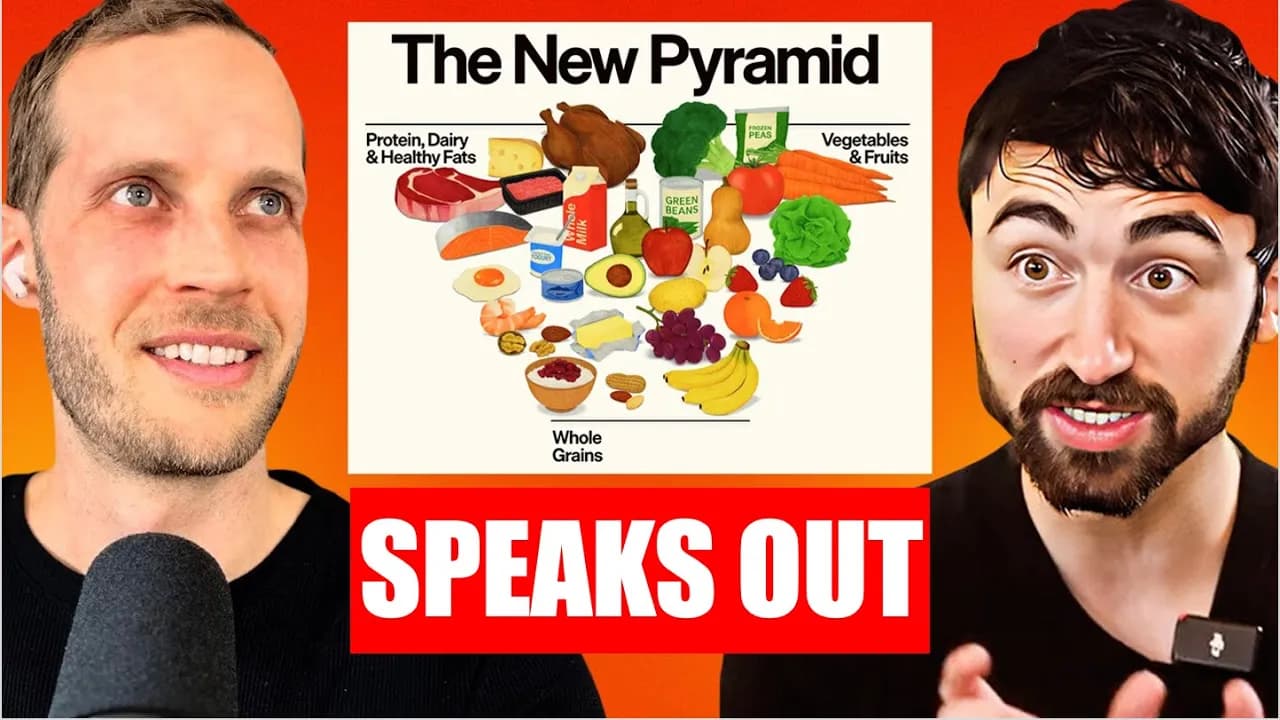
New dietary guidelines announced, trending for two weeks. Low carb and carnivore crowd excited: message is eat whole foods, avoid processed junk. Problem: inverted food pyramid looks good but doesn't match the written document. People over 60 not prioritized for dietary requirements. Focus: what guidelines get right, miss, and matters for over 60 (even over 50).
Guidelines take lifespan approach from birth to seniors—progress, less generalized. Focus on dietary patterns over time, not specific grams/portions. Emphasizes big food groups over micronutrients—pros and cons.
Eat more fruits and vegetables—solid advice. Caveats as we age: eat less, so quality > quantity. Prioritize cauliflower, broccoli, strawberries, blueberries (antioxidants, fiber, nutrients). Not all plants/fruits equal—cannot live on bananas and iceberg lettuce. Fruits can spike blood sugar; some more than others. Seniors with insulin resistance may not tolerate high fruit amounts.
Big push for whole grains (at pyramid bottom). As we age, insulin resistance increases, carb tolerance decreases. No specifics on eating whole grains: pair with protein/fats? No mention of monitoring blood sugar spikes.
Saturated fat capped at 10% (top left pyramid shows red meat, eggs, poultry). Based on older research linking to cardiovascular disease—nuance needed. Food context matters: whole foods vs processed. Processed foods' damage not just saturated fats but chemicals.
Claim lifetime approach on paper (birth to seniors), but devil in details—marketing, not reality. Low carb crowd happy with pyramid; traditionalists call it madness. Guidelines same as before, just marketing changed.
No mention of healthy fats for seniors' hormones, brain function, vitamin (A, D, E, K) absorption. Focus on salt ≤2300 mg/day. Mexico legislation: no salt shakers on tables unless requested. Not everyone needs same amount—aging kidneys, electrolyte imbalances, low blood pressure may need more. Excess salt mostly from processed foods.
Low carb dieters need more salt. Insulin/IGF cause kidneys to retain fluid, leading to blood pressure rise with insulin resistance. Stop carbs or salt? Mechanistic link sodium-blood pressure overstated; issue from processed carbs wrecking metabolism/hormones.
<10% calories from added sugars—sounds good, but easy to exceed. Excess sugars/glycemic carbs spike blood sugar, inflame arteries. Compares apples to oranges: caps saturated fats and added sugars both at 10% as if equally dangerous. Added sugars more damaging than saturated fats from whole foods.
No mention of insulin resistance as pathway to metabolic disease—major issue for most. Seniors often metabolically wrecked; guidelines keep status quo. No mention of muscle loss (sarcopenia)—key longevity risk. Less muscle = worse outcomes. Mentions cardiovascular disease but not vascular disease/plaque.
Seed oils barely mentioned; pushes olive oil but ignores seed oils in processed foods—no avoidance guidance. Protein needs increase with age/sarcopenia, but no mention. Low protein leads to weakness, falls, infections, disability. Still pushing carb energy sources.
Fat fear via 10% saturated fat cap promotes low-fat products (yogurt, snacks)—not healthy. Processed food definition confusing. Seniors section: low protein, high carb.
Eat less with age (appetite loss, meds, digestion). Every portion critical—no empty calories. Prioritize protein, healthy fats, micronutrients. Guidelines focus on limits/reductions, not what to eat—puts seniors at disadvantage, under-eating leads to frailty, lost resilience/independence.
Table 6: seniors' amounts.
- Leafy greens, fruits: fine (details in PDF).
- Grains: 5-9 oz/day (~144g)—below 150g low carb but too much for many. OK with half refined (~70g refined carbs/day)—contradicts pyramid.
- Protein (meats, poultry, eggs, seafood, nuts): 2-3 oz/day meats etc., but weekly: 240-300g/week total—too little. Recommend 80-100g/day protein (~1.2-1.5g/kg body weight)—way more.
Guidelines writers: nutrition experts with food industry ties (beef, dairy, grains, International Food Information Council funded by processed food companies). Intrinsic bias. Guidelines similar to old: vague on whole vs refined grains (same amounts OK). Impacts government programs (hospitals, schools, military, retirement).
Pyramid good if followed blindly (whole foods, no fat fear). Guidelines feel like old pyramid. Marketing changed, but text/programs unchanged—stuck. Progress in public messaging, but falls short.
Political marketing version. RFK Jr. implied cleanup, but reality: 18-19/20 committee members have food industry ties (~80%). Need clean house. Failed political promise. Compromise, somewhat better than before, but not best or original goal. No apology from government/cardiologists for past low-fat high-carb advice. Same industry-linked people whitewashing.
Kennedy administration saw a need for guideline changes before implementation, but couldn't get it done. This isn't what was promised and isn't healthy. Wealthy individuals can choose their own healthy food, but family members and others are impacted. Tax money funds bad advice shoving carbs into kids in school, military, SNAP programs, hospitals, and military.
Compromise doesn't make it right. Most people isolate and do what they can personally. Viewers tuning into 'The Shocking TRUTHS About the New Food Pyramid' deserve transparency. Audience is smart, needs to go beyond the screen and read details. Simplifying trending topic as pure marketing.
Transition to Q&A. Shoutout to new members: Pamela Johnson, David Lemoner, Speedy Guy, AVD Hashim. Members get questions answered first and monthly exclusive content.
ADSr: Most disagree with 10% cap on salt, saturated fats; inconsistencies prevalent; slow path to boil the frog. Boiling frog analogy means slow change to get people used to it. Whole milk debacle fits: afraid of public reaction to saturated fat after vilifying steaks, meat, bacon, eggs. Start with whole milk as least worst saturated fat area.
No enough coordination; couldn't clean house with new people and mandate. Harder finding unbiased experts without bias or conflicts from funders, institutions, Big Food ties.
Greetings: Nepa Gandhi, Daniel's Rocks, Newsp Guy (new member), Cool not cold Florida, Millard (not Mard), Snowy Western PA (Pennsylvania gets good snow).
Daniel rocks at least trashes old pyramid. Old pyramid very old; transitioned to MyPlate for portions, more realistic, but didn't resonate like pyramid.
Nippagandandy: Desi ghee (local A2 cows or buffalo milk ghee, A2 casein) has big role before, during, after meals. Not addressed in guidelines: impact of protein, fat, glucose spikes. RFK aware but lacks power for significant change.
Healthy whole grains = oxymoron. For some, real whole grains with fiber can work if used properly, not as recommended. Big issue: leaves open for Wonder Bread labeled 'whole grain' with glycemic value higher than table sugar, only 10 less than white bread.
House Calls project demo with Harlon: homemade ancient grains bread spiked to 250 in half hour. Dangerous to assume whole grains safe. Einkorn flour sourdough didn't spike for one patient. Test yourself: eat to the glucometer. Unless rip roaring insulin resistance where blood sugar stays down but insulin >100.
Not about vaccines. Stick to food pyramid. Vaccine topics political, impact body differently based on vote; got dogpiled, quit years ago. Minefield with unpopular opinions on both sides.
Why not hit grains harder? Politics and money. Apology and political = oxymoron. Not considering dietary differences by age group major failure. Seniors focused, but not what they need.
Pagani: Eat what fathers/grandfathers ate in small town/village, seasonal food. Best: grow yourself, own cattle, test soil/water for toxins. City dwellers trust available sources. Dairy industry powerful; ties in every industry: carnivore, grains, plant-based.
Reliable supplements: bremanhel.com shop has Dr. Bur's vetted options used with patients.
Low carb diet milk-based foods: lots of cheese. Okay with whole milk if lactose tolerant. Draw line at raw milk due to contamination risk despite best processes. Pasteurization doesn't kill nutrients. Seniors often lack calcium; cheese, some milk good. Drink milk occasionally. Personal: low carb coconut cream creamer in coffee, lots of cheese. Lactose-free milk okay if no additives.
Millets (major/minor better than wheat, old grains). Not super familiar.
Stopped red/all carbs, lost 50 pounds in 2 months without workouts post-back surgery, getting stronger. Cold turkey carbs impactful; long-term keto/carnivore can plateau but overall beneficial.
Methylene blue: short on Dr. Bur's channel shows no significant evidence yet; might revisit. Planned video but low interest.
India ancestral grains (kapley sonotei) gaining popularity; test as ancient not always better.
Prior to Kellogg's, heart disease not #1 killer; soared after Crisco seed oils, food processing.
Iodine supplements: place when necessary, but worsens Hashimoto's. Popular YouTuber takes Lugol's iodine; okay for some but understand thyroid first. Not all hypothyroidism from iodine lack; excess can damage if body can't use it.
Focus upper left triangle: animal foods, become own expert. Works individually, but systemic guidelines affect food programs; hospital food sucks.
Flu shot in November caused flu-like symptoms: reach out privately. Vaccines have issues, not 100% safe; compromises made.
Compromise common but not best. Understand political/financial realities but prefer different guidelines.
Jalen: Fat/sugar capped, remaining 80%? Capping added sugars; seniors 144g whole grains possible if no refined carbs. Still carb-heavy. Healthy fats good but risks processed foods, saturated cap limits omega-3s, boosts omega-6s.
Kennedy: long time to fix; Trump's term ends 2020? Midterm, 2 years in; unlikely stays post-Trump.
Visceral fat vs other fat: content on apple cider vinegar, multiple videos.
Cardia mobile devices: not medical grade but diagnosed speaker's atrial fib. Need high suspicion, knowledge (most common arrhythmia, aging/metabolic linked, paroxysmal). Confirm with doctor.
SF Attorney General sued major breakfast companies for contributing to poor health last 20 years.
Gut/kidney problems reduced high protein; now eat carbs for weight. High protein cutoff for kidney disease 0.8g/kg/day (more than guidelines). Healthy fats increase calories with micronutrients.
Additional testing like cystatin C is more accurate for identifying kidney impairment. Many people cannot tolerate 1.5 grams per kilo of protein, but that does not mean resorting to refined carbohydrates.
Chlorine dioxide was promoted for COVID, but there is no good evidence for it; it is not used. The food pyramid may have changed, but there are rollbacks on protections against toxins in food and glyphosate. RFK was vocal about this. It is more important to buy organic when eating more fruits and vegetables due to glyphosate and other toxins. The only reliable way to avoid them is growing your own food with uncontaminated soil.
Dr. Bur thanks everyone. They are doing fewer lives due to travel and expanding the house calls project, visiting patients at home to discuss their health. > When's the last time a doc did a house call for you? House calls are fun and a throwback, rare outside their practice.
Humor about better Wi-Fi in Mexico. Thanks exchanged. Next show on Saturday about AIB and strokes. Take care.
Keep Thomas Fordham Brewer MD MPH in your library
Save the videos and channels worth coming back to, and find them again in one place.