The Terrible Paradox of Self-Awareness - Pursuit of Wonder
In a Nutshell
Self-awareness is a paradoxical poison—horrific for exposing life's chaos, uncertainty, regret, and inevitable loss, yet beautiful for enabling wonder, meaning, art, and love—demanding we embrace its spectrum without self-destruction. Regret is illusory under determinism, adversity is rare fuel for growth (e.g., JK Rowling's rise from poverty and rejection), and chasing certainty fuels anxiety; counter with humility, action bias, contained anger, and pursuit of wonder over happiness. Life's worth lies in transmuting suffering into enthralling moments, accepting endless desire as the trap and open door to meaning.
These notes were generated by AI and may contain inaccuracies.
Self-awareness is generally viewed positively, as a gradient where more is better. However, here it refers to the mere awareness of a self through human consciousness, which is problematic. This awareness evolved for propagation, not for the first-person experience of consciousness. Humans are at odds with reality's fickle, chaotic, uncertain nature. We attach to self, ideas, people, and things, yet lose everything through time, distance, decay, age, illness, or death. We exist in a cosmic ocean with crashing waves but must continue as part of the substrate that built us, enduring intense pain and suffering.
Self-awareness is the most horrific, terrifying thing in the known universe yet also the most beautiful. It enables conceptual understanding of existence, beauty, wonder, meaning, purpose, and hope. The horrific qualities are necessary for the beautiful.
Self-awareness is a sort of poison that we each consume upon birth.
It is our birthright, a poison transmutable into gold: art, beauty, wonder, love. We love and hate it fully simultaneously. Life is both positive and negative, a spectrum, but must be both at once paradoxically.
Avoid universalizing personal perspectives. People's modes of thought vary: visually inclined, linguistically inclined, feeling-oriented. Experiences of the world differ widely.
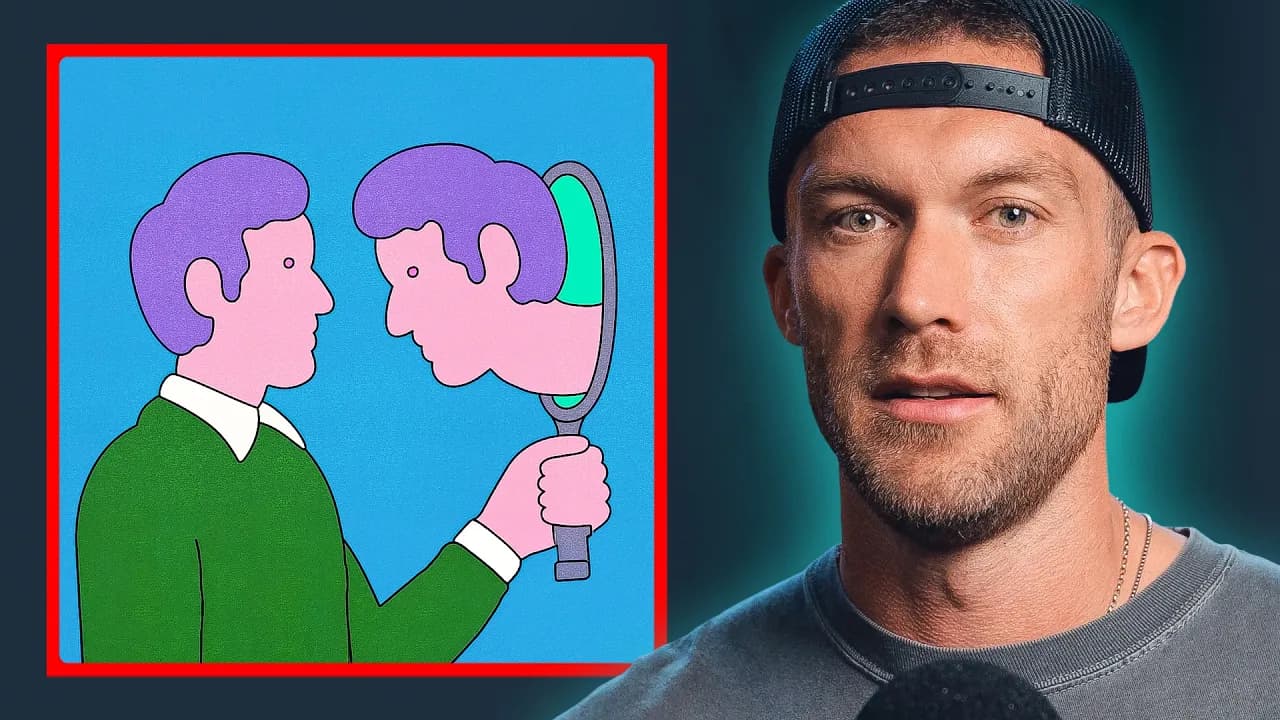
Consciousness cannot fully understand itself, creating a multi-hearted paradox. From the first-person perspective, it is limited; no consciousness can perceive itself without its consciousness—a feedback loop like Zeno's paradox of the arrow, approaching but never breaching comprehension. Like measuring an inch with an inch or a minute with a minute.
This is tragic but fuels unending inquiry into being conscious and human. Exploration of existence's nature is riveting, an infinite flat landscape of possibilities, questions, and answers that never fully satisfy.
Self-awareness exists on a spectrum. Start with reflectiveness, facing difficulties, confusions, sufferings without easy justification. Progress to comfort with uncertainties, recognizing lack of answers, stability, rigidity as par for the course and its beauty. The goal is embracing confusions without resolving them.
More self-knowledge brings complexity, responsibility, self-doubt, self-esteem issues, higher standards, awareness of past shortcomings, ways success was unvirtuous (lying, cajoling, coercing). Previously, simple happiness sufficed. Higher resolution feels like a curse, equating to more suffering.
This reaction is valid. Unraveling absurdity leads there. Thoughts arrive via experiences and neurology; cannot choose not to think them. Once opened, the can of worms cannot close. Move forward, not back—past self is inaccessible. Resolve practically/tactically or embrace feelings to reduce their gravity.
Regret implies alternative actions were possible, but rewinding reality yields the same self, brain, physiology, information, circumstances—same decision 100% of time. Regret is an illusion from hindsight and time-referencing, deluding us into possibilities. No world exists where different decisions were made (setting aside quantum multiverse theories).
Free will is not believed in conventional sense. Regret is understandable but irrational, existing in an illusory realm. Free will might be literally true but figuratively useless. Determinism from Big Bang to now is possible but functionally pointless.
Regret refuses limits of foresight; under same conditions, no different choice. Acceptance of necessity dissolves it. Even without determinism, constraints (physiology, mind, emotions, information, influences) dictate decisions. People make best decision possible given constraints unless intentionally masochistic.
Regret points to lack of embrace that no life conditions resolve fundamental tensions: desire for certainty, happiness, right decisions, order. Proportional to unwillingness to accept endless hamster wheel of desire, suffering, boredom, anxiety.
Whoop tracks sleep, workouts, recovery, breathing, heart rate, steps. New 5.0: 7% smaller, 14-day battery, health span for habits and aging pace, hormonal insights. Worn over 1,600 days. Join for free: new Whoop 5.0 strap, first month free, 30-day money-back guarantee. join.woop.com/modernwisdom.dom.
You never know what worst luck your bad luck has saved you from. (Cormac McCarthy)
Story: "Nova Effect" and Kurt Vonnegut line—we never know good from bad luck until story ends, which is after we're gone. Good fortune doesn't guarantee perpetual good; one advantage can lead to misfortune, vice versa. Accept potential trials with good, hope with bad.
Adversity is a terrible thing to waste.
Biggest growth from lowest points. After shock subsides, pain, resentment, bitterness, anger provide activation energy for change (e.g., losing parent, betrayal, job, breakup). Fuel launches new life.
JK Rowling example: Mid-90s, single mother in near-poverty Edinburgh, abusive marriage, fled to Portugal with baby and manuscript (ex hid it). Clinically depressed, suicidal, couldn't heat flat, wrote in cafes. Manuscript rejected by 12 publishers—survival-level rejection. Sold 500 million Harry Potter copies, richer than the queen.
Not all adversity becomes growth; some crushed. Adversity is fuel, not destiny. Undirected, curdles into rumination/self-destruction. Pain calcifies into identity. Anger moves but doesn't steer—rocket fuel needs guidance. Chip on shoulder becomes purpose.
TLDR: The worst thing that's happened to you might be the only thing powerful enough to change you. Pain is temporary and fuel is rare. Don't waste it.
Practical factors differentiate collapse from fueling:
- Spend less time alone (friends, tacos, ice cream, movies).
- Stay busy.
- Reconnect with childhood hobbies in groups (football, pickleball, martial arts, running).
Bias for action when capacity diminished (1 rep max chopped 95%), struggling to lift even smallest weights.
One rep max has been chopped down by 95%. You're really going to struggle to lift anything, even the smallest weight. When you have a weight that you can't bear, spread the load between other people. Not everybody has other people. The broader lesson is a bias for action. Action is the antidote to anxiety. It sounds like running away from problems or hiding them in the fog, but for fans of Pursuit of Wonder or Modern Wisdom, they have the opposite problem: they're the David Goggins or Bonnie Blue of rumination. They don't need to be told to spend more time thinking; they need to be told to have a bias for action. Learning to trust yourself again is done through experimentation and evidence. Once you've got just a little bit of that moving, it tends to help. Not being afraid to use negative emotions like bitterness, resentment, and anger. Self-awareness makes you dislike these darker emotions, thinking you should transcend them as base, juvenile, petty. But what got you here? You probably used that kind of fuel, which is toxic if held too long, like still thinking at 45 about what kids said in school. The anger will subside, resentment wane, bitterness dissolve. Time will pass anyway. Tap into that fuel tank for a little bit and make use of it. You can look back on this period as a kinetic spark at the beginning of growth, your own primer switch for a hydrogen bomb, or self-work your way through it. The JK Rowling story is powerful, and the Cormac McCarthy quote is useful, though not true for all people in all situations at all times.
You don't know if it's true for you until you do everything in your power to attempt to make it so. You're up against zero possibility by not trying to make adversity worth it for your circumstances and goals. That's a 0% chance if you don't try, and some percentage chance of transmuting adversity into ultimate good fortune. Approaching it from a fuel-minded perspective is the only viable way. There are degrees of environmental factors that make it difficult to recognize or actualize that potentiality in adversity, and continual adversity is one of those things. Good luck versus bad luck isn't the end-all; environmental and external factors weigh down.
Survivorship bias of JK Rowling's 500 million books, but many have not just one kick in the nuts, but a series so frequent their ability to lift the lightest weight gets degraded. The alternative is to keel over. As someone kicked in the nuts a lot over the last couple of years, you have only two choices: give up or do the opposite. Rage against the dying of the light. Time is going to pass anyway, so send it. If you're still alive, you're a survivor in some sense, and as long as you're alive, there's hope. The ultimate inversion of survivorship bias: every person that gave up. Every person that reaches survivorship bias is a mark on the wall for somebody that didn't give up. To guarantee you're not part of the survivorship bias numbers, just give up. That creates pressure—it's all on me, not fair, harder for me than for her. But better to see you win and be in discomfort than lose and keel over. You can carry both thoughts: recognize survivorship bias where many who try fully face continual adversity that doesn't pan out, but as an individual, weigh the JK Rowlings more heavily to inspire trying everything. Continue forward toward what makes meaning out of chaos viable, until the bitter end. If you have a preference, priority, sense of meaning, orientation toward meaning, use your time until the clock goes to zero. No prescription: it could be ungodly achievement, beautiful relationship, family, simple quiet life. Continue onward toward achieving, maximizing, maintaining that, whatever you're up against.
We can never step outside our own minds, so we will never obtain objective truth. The appropriate response is humility and a love of uncertainty. Your mind is molded by geography, culture, history. Every stage of history has presented ignorance, futility, wrongness. We're up against a contorted, pinhole view of reality. Rigid beliefs and certainty are a less than ideal response. You don't have to be totally nebulous; you can be convictive and confident without being dead set. The essence is confidence and conviction across a spectrum, prioritizing exploration, curiosity, openness, humility as essential to wisdom.
Self-awareness brings knowledge of how much better you could have been and all optionality ahead, leading to choice anxiety or paradox of choice. Recognize the ceiling where desires no longer serve you to reduce choices. If on an infinite conveyor belt of desire-satisfaction, infinite choices; but recognize minimum quality of experience limit to redirect toward fewer options. Cereal example: infinite choices in grocery store, but if cereal isn't a proxy for quality of life, pick one and move on. Reduce relevant decisions by recognizing ceiling on how much decisions change quality of experience. Make decisions that allow you to keep going—decouple awareness from desire for what lets you get up caring, with continual fuel. No clean way to absolve paradox of choice anxiety unless oscillating between foresight anxiety and hindsight regret to remember absurdity of current anxiety. Chisel down options by recognizing much isn't what you care about.
Oliver Burkeman: "How much should you care about things? Answer, I'm not sure, but I'm pretty sure it's not as much as possible about everything all of the time."
That's the curse of the overoptimizer. Example: friend into credit card points optimizes airlines, supermarkets for free family flights; his friend consciously deoptimizes in that area. When you make the big decision not to bother, subdecisions fall away. Power in letting go, like leaving a bad relationship liberating from rumination.
Anxiety is a fundamental consequence of being aware of reality on any level, building from there. Hard to imagine life without it as a building block of consciousness and self-awareness. Decision-making, regrets, adversity: hodgepodge of chaos and uncertainty that a singular perspective tries to control. Filtering ocean of possibility into pinhole of desire, preference, hope, idealization is anxiety-inducing.
Desire for truth is a fear response to future uncertainty. Everything humans do is based on preference. Desire for truth is for what it provides: quelling uncertainty and unknowability. We want everything okay now and forever—that's why heaven, religions, philosophies exist. Pursuit of truth brings down the heavens to make sense now for comfort. Truth is a proxy byproduct of desire to reduce uncertainty.
Anxiety arises from foresight without control; anger from denied desire for control. Anger intertwined with regret. Recognize absurdity of regret and lack of control over past events to shave edges of anger. Many anger cases are real-time events you couldn't control. Difficult in the moment, but recognize lack of control over everything besides yourself (and perhaps even yourself). Anger as brain ramping pain of lesson: like hand on stove or dog bite at five teaching avoidance forever. Amplitude proportional to importance and pain at time. If in pain and making it worse by whipping yourself, love that part: thank it for trying to keep you safe despite fallibility and repeated mistakes. Anger is all-encompassing, hard to think rationally in it. Depends if anger necessary or convertible to other emotions. Many convert because anger wasn't allowed as kid: fragile parent, overly disciplinarian, parent with anger problems, absent parent. World split: people who get mad vs. get sad, both from same place. Anger outward or inward. Anger evolutionarily: crossed boundary, no police, so behave to show it won't happen again, signal to others. Sadness pro-social, anger antisocial—everyone disincentivized from anger.
People come and give you a hug. Anger is antisocial. It makes people run away. There should be a container for anger. Many people are angry but don't feel it directly. They turn it into bitterness, agitation, resentment, depression, anxiety, frustrations at themselves, other people, the world, or politics.
Anger is a bit more warping because it's the raw uncut version of the fuel.
If you let it burble down a little, you can make better decisions. No emotion is worse to use for decisions than anger, maybe except being horny.
Those are probably the two horsemen of the apocalypse.
There is practical application for anger. Assuming you should never be angry curses you to a life of being taken advantage of, without signaling when boundaries are crossed.
- Correctable anger: Towards people or things that can be corrected.
- Existential anger: Towards existence or uncorrectable misfortunes no one intended.
Correctable anger is productive if a line is reasonably drawn between the act and the harm. Blanketed anger humming in the skull, neck, and spine is unproductive.
Distinguishing these types is difficult but essential. Avoid being too willing to be angry about uncorrectable things or too passive about correctable ones. Not expressing warranted anger does a disservice to yourself and others, as they lack information for healthy relationships. Passivity propagates problems.
RP Strength training app, designed by Dr. Mike Israetel. Over 45 pre-made programs, 250 technique videos. Spoon-feeds step-by-step plans: sets, reps, weights, form optimization. Adjusts weights weekly based on progress. 30-day money-back guarantee. Get up to $50 off at rpstrength.com/modernwisdom with code modernwisdom.
Desire fuels suffering. Even the desire to escape desire is a desire. Evolution hardwired dissatisfaction. We may prefer striving over satisfaction.
Desire is inescapable for most; ascetic life isn't practical or necessary. Understand constraints on decisions and what matters. Desire never ends, like hunger or breathing. You're destined to never feel ultimate satisfaction, but that drives pursuit of things, people, goals, achievements, art.
The trap is also the open door. Stuck in an infinite hallway of open doors; choose what to care about, derive meaning, get bored, move on. An unending hallway if you keep moving. Not purely tragic.
Happier people could be less aware or better at metabolizing awareness. Both possible. Can be happy by being less reflective about absurdity, futility, suffering from desire. Or know everything is absurd and futile but still experience enthralling moments, love, wonder. Awareness of futility doesn't negate them. All kinds can find justification, wonder, reason to keep moving.
Don't trust any conclusion in the absolute sense. Everything isn't uncertain: current experience is completely real and certain. Tether to experience, selfhood, existence. Can't extrapolate to metaphysics, but navigate life based on feelings. Provides a barometer, compass for what you're after.
Not pursuit of happiness, but pursuit of wonder. Experience wonder through art, relationships, friendships, aesthetic experiences like walking in nature. Take trouble of existence and make it beautiful. Enough such moments (relative) make it worthwhile, by a slim margin. Like a boxing match you're destined to lose, but putting up a hell of a fight. Underdog story; spirit makes it worth it.
Self-awareness makes love more fragile, increasing self-consciousness about how you come off and integrate with others' preferences.
Flip side: Recognize your own annoying, neurotic qualities. Makes you more understanding of others' difficulties with them. Without awareness, hard to empathize why someone reacts negatively. Lacking full picture hinders empathy in closeness.
Ultimately beneficial but challenging. Seek ideal integration of negative qualities, an impossible goal. Can lead to overzealousness or anger at lack of success.
Robert Pantano's YouTube: Pursuit of Wonder. New book The Terrible Paradox of Self-Awareness out March 10th (pre-order now). Pursuit of Wonder on all socials and pursuitofwonder.com.
Keep Chris Williamson in your library
Save the videos and channels worth coming back to, and find them again in one place.