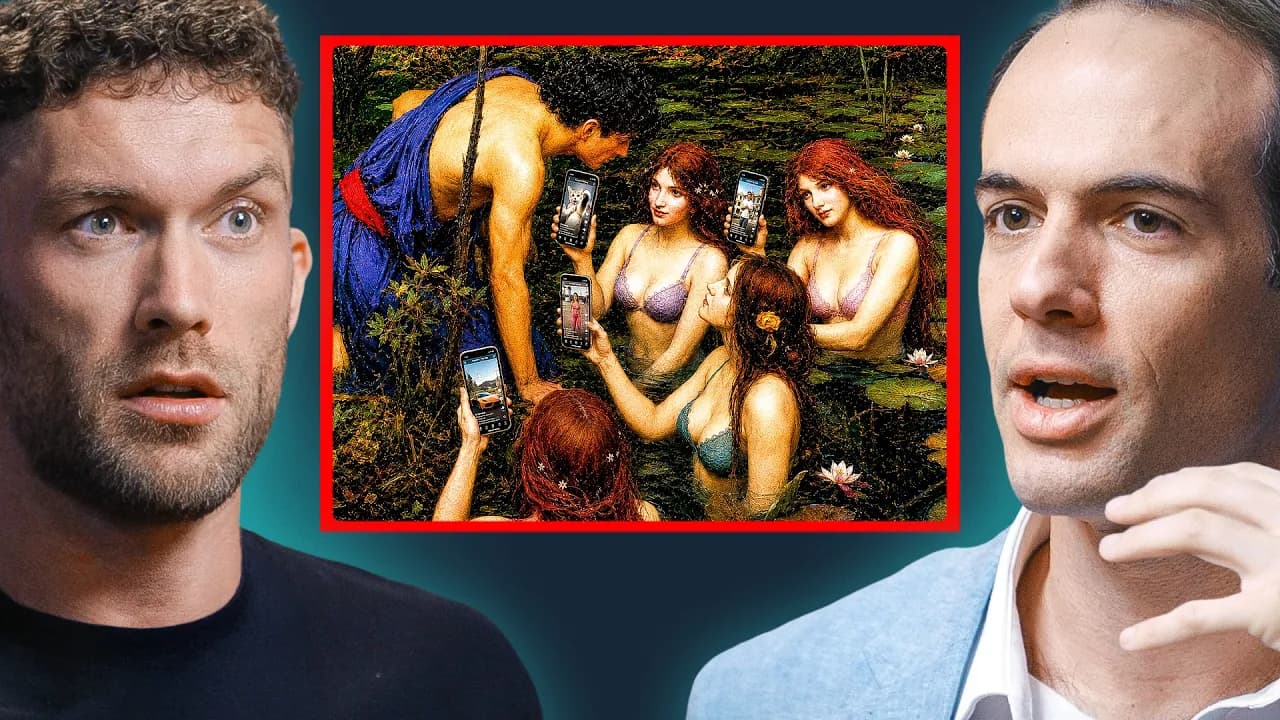
The True Story Of The Odyssey (and why it matters) - Alex Petkas
In a Nutshell
The Odyssey is fundamentally about restoring patriarchal order and civilization against entropy and anarchy, embodied by Odysseus's cunning return to Ithaca to slaughter the suitors and reclaim his household. Odysseus succeeds not through brute force like Achilles but through polytropos craft, endurance, and strategic restraint—qualities that let him outmaneuver Poseidon, Circe, Calypso, and 108 suitors despite being massively outmatched. The poem argues that biological household continuity and civilized order matter more than raw glory, that poets and storytellers are moral pillars upholding society, and that these ancient lessons remain relevant for navigating modern chaos.
These notes were generated by AI and may contain inaccuracies.
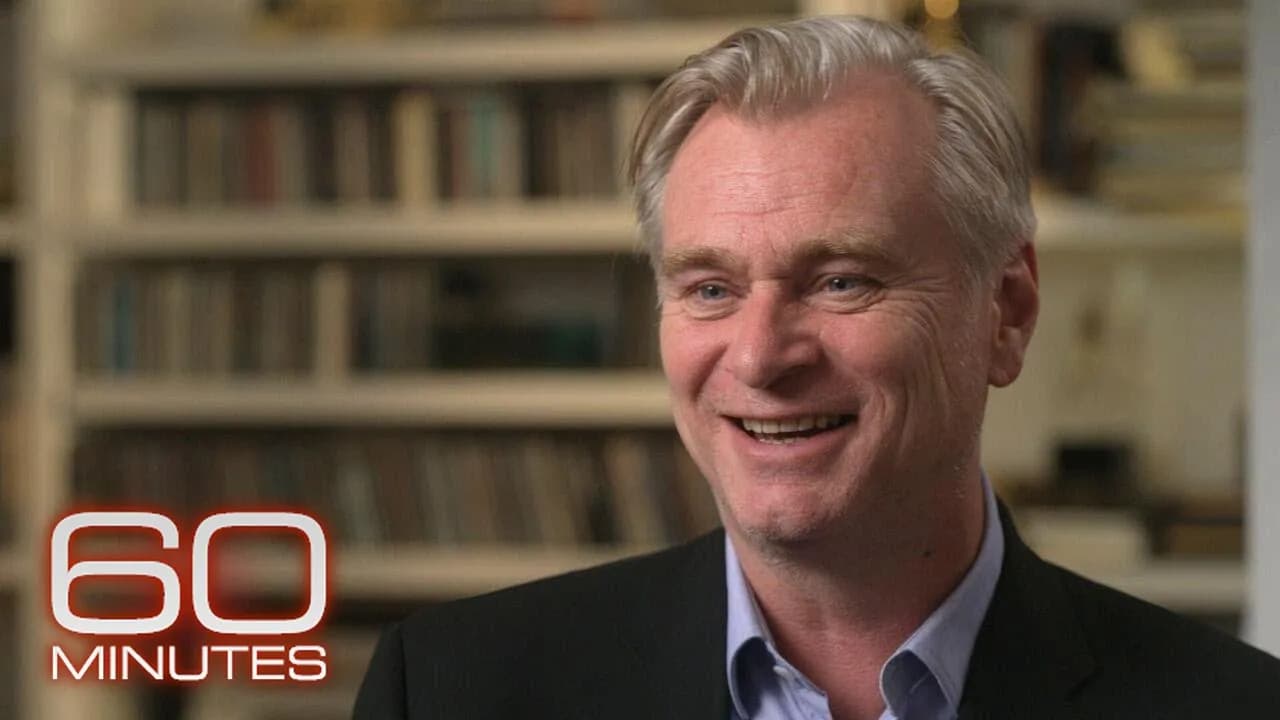
The Odyssey contains universal themes that have resonated across time, including returning home and sacrificing on behalf of the community. Chris Nolan views it as an archetypal story embedded in all of his films. The poem also addresses the collapse of the patriarchy and what is required to restore it.
Homer is the attributed author of both the Iliad and the Odyssey according to the Greeks. Modern scholars debate whether one individual, two people, or a collective working within an oral tradition produced the works. Homer is traditionally understood as a semi-divine epic bard and poet, conceived of as a blind figure who lived around the 8th century BC.
The Greeks discovered writing in the 8th century BC, adapting the Phoenician script with modifications. The Iliad and Odyssey emerged almost immediately after this development. These poems are widely regarded as among the greatest works of literature ever produced, appearing fully formed with rich symbolic layers and depth.
Homer's language and themes contain recognizable patterns found in the Vedic epic tradition, particularly the Mahabharata. Both traditions descend from a common poetic ancestor originating with the Indo-European steppe peoples of central Asia. These peoples spread across regions and influenced languages including Latin, Celtic, Germanic, and Sanskrit. Homer's stories are distinctly Greek but represent a distillation of thousands of years of oral culture that crystallized into writing in the 8th century BC.
The belief that Homer was blind stems from the character Demodocus, a blind epic bard who appears in Book 8 of the Odyssey. Demodocus functions as a Homer figure within the poem itself. The gods are said to have taken his physical sight but granted him deeper vision into the mysteries of the universe and human suffering.
The poem opens after the Trojan War, which lasted ten years. The war began when Paris, a Trojan prince, seduced and abducted Helen from Menelaus of Sparta. The Greeks assembled a massive army to retrieve her and gain plunder. After ten years, the Greeks sacked Troy. Odysseus was credited with devising the Trojan Horse strategy that enabled the victory.
The events are dated to approximately 1200 BC. The Greeks viewed the Trojan War as historical fact, though they did not believe Homer's account was literally accurate in every detail. Homer, writing in the 8th century BC, was imagining a conflict that occurred roughly 400 years earlier.
The Odyssey serves as a sequel to the Iliad. In the Iliad, Achilles is the dominant hero. The Odyssey makes the case that Odysseus was ultimately responsible for the Greek victory. Ancient tradition held that Homer composed the Iliad in his younger years and the Odyssey later in life. The Iliad is visceral, violent, and glamorous, while the Odyssey incorporates a broader range of human experience, including peacetime scenes and greater exploration of female characters.
Twenty years have passed since Odysseus left for Troy. He encountered monsters and strange peoples on his return journey and angered Poseidon. As a result, he is held captive on an island by the nymph Calypso, who wants him as her husband. At home in Ithaca, no one knows his fate. People wonder whether he died at sea, abandoned his family, or continued adventuring.
The gods convene while Poseidon is distracted, feasting with the Ethiopians. Athena, Odysseus's divine champion, appeals to Zeus on Odysseus's behalf, noting that he was a pious man, good king, and good father. Zeus agrees to act. Hermes is sent to Calypso to secure Odysseus's release. Athena herself travels to Ithaca to assist Telemachus.
The poem contains 24 books. Books 1-4 focus on Telemachus. Books 5-8 cover Odysseus's journey from Calypso's island to Scheria, the land of the Phaeacians. In Books 9-12, Odysseus recounts his adventures to the Phaeacians. Books 13-24 depict Odysseus and Telemachus on Ithaca confronting the suitors.
The poem opens with Telemachus, Odysseus's son, who is now 20 years old. Odysseus left when Telemachus was an infant, so they have never met. Telemachus has grown up surrounded by women and loyal servants, with his grandfather too old to act. The 108 suitors have occupied the household for approximately four years, eating the estate's resources. Telemachus feels powerless in his own home.
Penelope is in her late 30s or early 40s. The suitors' desire for her stems partly from mimetic desire: possessing Odysseus's wife would confer heroic status upon them. Penelope refuses their advances but remains uncertain whether Odysseus will return. The suitors are abusing hospitality by consuming the household's livestock and resources without proper courtship procedures.
Athena arrives disguised as Mentes and is poorly received by the suitors, highlighting their violation of hospitality norms. Telemachus welcomes her. Athena recounts the story of Orestes, son of Agamemnon. Upon Agamemnon's return from Troy, his wife Clytemnestra and her lover Aegisthus murdered him and seized the throne. Years later, Orestes returned and killed both his mother and Aegisthus to reclaim his inheritance. Athena presents this as an example for Telemachus to consider.
Athena urges Telemachus to confront the suitors about their injustice, then leave Ithaca to visit Odysseus's old allies on the mainland. Telemachus travels to Pylos and meets Nestor, an aged and talkative Greek hero. Nestor provides information about Agamemnon but has no news of Odysseus beyond his disappearance at sea.
When Agamemnon left for Troy, his wife Clytemnestra was a wise, well-born woman and the sister of Helen. The poet explains that good women can go wrong if circumstances are wrong. To keep her on the straight and narrow, Agamemnon left a bard with her to tell her improving stories and stories of what goes wrong when women behave badly. The poet is presented as an upholder of the moral order, though this is somewhat self-serving by Homer.
This is a very deep Greek idea, visible in Plato and the tragedians, that poets in an oral culture remember the things that need to be passed down from generation to generation and carry significant moral credibility if they are good ones.
Aegisthus, Agamemnon's cousin, repeatedly made advances on Clytemnestra but was rejected. He realized the bard was the problem, so he captured the poet and sent him off to a desert island. Once Clytemnestra was morally defenseless, Aegisthus seduced her. This episode illustrates why the Greeks believed epic poetry was needed as a moral pillar of society.
Nestor tells Telemachus that Menelaus is alive and may know more about Odysseus. Telemachus travels to meet Menelaus and encounters Helen of Troy, now returned to Sparta as Helen of Sparta and repatriated. She has become a matriarch instead of a maiden but retains a spooky allure and femme fatale charm.
At a feast celebrating the marriage of Menelaus's two children, Helen slips a drug into Telemachus's drink that would make any man forget all desire of returning home. Even if his parents were slaughtered before his eyes, he would not care until the next day. The drug is symbolic of the power of female charms over a man. Helen does not come across well across these two books.
Helen is the first to recognize Telemachus. She says that if she is not mistaken, he is the son of Odysseus, whom Odysseus left as a tiny infant when the Greeks came to Troy to take her back, "the shameless one." The Greek word "kunopis" means "dog-face" and is very rude; Helen calls herself a dog-face or something similar. She insults herself, which is disarming.
Emily Wilson translates the line as something like "the one who hounded them," which softens Helen's self-insult. The point is that Helen seduces by naming the bad thing people had in mind about her. With enough self-awareness, she gets away with anything.
Telemachus proves himself to his father's peers by making the journey, asking about his father, and behaving tactfully and piously. He states he is trying to get his house in order. The households he visits are all well-ordered, in contrast to the chaos at home. A key signal of good order is that sacrifices are made to the gods before every meal; people pray and wash their hands. The suitors never pray before a meal, signaling they are godless and chaotic.
Homer cares more about these small signals of good order in culture and society in the Odyssey than in the Iliad.
Menelaus invites Telemachus to stay as long as he wants, even offering horses like giving a kid a Ferrari. Telemachus declines, explaining his island is goat country, not horse country—an ugly, scraggly little island—but it is home. He knows he must return and suffer to become who he is.
While Telemachus is away, the suitors discover he snuck off and plan to ambush him with a ship on his return to murder him.
The suitors represent anarchy versus patriarchy and usurped glory. The Odyssey concerns the clash between order and entropy and the dissolution of complex societies into barbaric or animal soup. The suitors represent forces of violence, turmoil, and primordial soup out of which order must sometimes be established violently. Establishing order is importantly about justice.
Odysseus wakes on Calypso's island, staring at the ocean and weeping for his homeland. Calypso is an incredibly attractive divine goddess who offered him hospitality; they have been sleeping together for eight years. Odysseus states that she never won the heart within him—it was just sex. Homer presents this as an acceptable explanation.
Hermes arrives on the island, sent by Zeus. He is stunned by its beauty—lush fruit trees, pleasant breeze, verdant and perfect, neither too hot nor too cold. Even the gods are amazed at how beautiful the place is. Calypso has been promising Odysseus immortality and eternal youth if he stays with her forever and forgets his wife and son.
There is a cautionary tale of Tithonus, to whom the goddess Dawn granted immortality but not eternal youth; he grew older and more decrepit without dying, shrinking to a little bug. One must always read the small print when dealing with goddesses.
Hermes tells Calypso she must let Odysseus go. She protests that he is her boy toy but ultimately agrees to help him leave. She later offers him the immortality deal again, asking what his wife has that she does not. Odysseus acknowledges she is far more beautiful and the place is wonderful, but he misses his homeland, wife, and child.
Calypso's offer is ultimately unappealing, like an endless island vacation. For Odysseus specifically, Homer gives him recurring epithets: polytropos (much-turned, crafty), polymetis (much-crafted), and polytlas (much-suffering, much-enduring). These qualities make Odysseus who he is. Staying on the island would mean a loss of identity.
Calypso gives Odysseus tools—an augur, an axe—and tells him to build his own boat. He has lost all his comrades; twelve ships left for Troy, and all the men are dead. Building his own seaworthy raft is a symbolic moment. Athena, Odysseus's patron goddess, is the goddess of craft, weaving, the olive tree (symbol of civilization), and technology. She is a warrior goddess who wins through trickery and craft.
Odysseus is about to confront the sea, the realm of Poseidon, god of storms, earthquakes, and brute nature. He will face those forces with Athena's technology. The Greeks think in binaries: civilization and barbarism, nature and culture, male and female, cooked and raw. Odysseus is consistently on the side of civilization.
Odysseus builds a raft and escapes amicably so as not to anger a goddess. He sails for twenty days until Poseidon, returning from a party with the Ethiopians, smashes the raft with a storm. Odysseus must strip off the luxurious robes Calypso gave him to avoid sinking and swims naked to shore. He collapses under an olive bush—a symbolic death and rebirth.
He wakes when a ball bounces near him and discovers he is on a civilized island. Attractive young women are washing clothes in a river. The first woman he meets is Nausicaa, the princess and daughter of the king and queen. She is taller, more attractive, and braver than the others. All the other girls run away when the brine-caked, naked Odysseus emerges holding a branch for modesty, but Nausicaa stands her ground.
Nausicaa is around twenty and had gone to the coast with marriage on her mind. Odysseus flatters her, comparing her beauty to a palm tree by Apollo's altar at Delos, gives her a bit of backstory as a respectable man, wishes her a great husband, and asks for a towel and directions to town. He charms her without mentioning his wife and child. She tells him to speak to her mother, the queen Arete.
Odysseus bathes, receives clothes and oil, and sneaks into the palace. He embraces Arete by the knees and supplicates her as a suppliant of Zeus. She introduces him to her husband, King Alcinoos. Odysseus charms the ruling family with his words; before they even know his name, they offer him their daughter in marriage. This demonstrates his famous power of persuasion. If he had offended them or given any hint of violence, it would have been over for him. These women have power but are dangerous.
The Phaeacians throw a feast for him and promise to send him home on one of their magic ships, but first they want to hear his story.
Odysseus demonstrates shrewdness and the canniness of Athena to navigate challenges with Poseidon. His ability to leave Calypso's island in a gentle manner avoids earning her enmity. When landing on new islands, he cajoles and plays the social game. The emphasis is on being canny and operating as a slick operator rather than relying on force. Agamemnon would likely not have charmed his way in with a young princess in the same manner. These tricky, canny skills are what Odysseus needs to eventually clear out the suitors and reclaim his home. He is a hero who largely cannot use violence in his great arc, relying instead on trickery where he is vastly outmatched in force.
At the Phaeacian court, Odysseus meets the blind bard Demodocus. Athletic games are held, and the Phaeacians challenge Odysseus to demonstrate his abilities. He initially refuses, claiming exhaustion after twenty days at sea, but when mocked about his ability to throw a discus, he stands and throws a giant discus much larger and farther than any others, showing them up. After the meal, they listen to the bard. Demodocus tells stories, including the tale of Ares and Aphrodite, where Ares steals Hephaestus's wife. These tales are pregnant with meaning about what goes wrong when the husband is away, planting fear in the listener's mind about what might happen at home.
After the last story, Odysseus asks Demodocus to tell the story of the Trojan Horse, though no one yet knows his identity. Demodocus recounts how the Greeks built the horse, placed warriors including Odysseus inside, sailed to an island while the Trojans took the horse as a talisman of power, brought it within their walls, and were undone when the Greeks emerged at night to open the gates. While hearing this story, Odysseus begins to cry, trying to be discreet, but Homer describes him weeping like a woman who has lost her husband at war, whose city has been sacked, and who is being led away by captors. This is a poignant moment where Odysseus weeps as though he were a victim of the tragedy he inflicted on Troy. Homer leaves open whether this indicates sympathy for the people he destroyed. King Alcinous notices and suggests that perhaps enough epic poetry for the night, as their guest seems very tired.
Alcinous tells the stranger he could see the story bothered him and asks if he had a brother, cousin, or father who fought at Troy. Immediately after hearing the story of how Odysseus sacked Troy, Odysseus says he will tell them who he is. This marks the beginning of the great narrative in Book Nine, considered the high point and best part of the story. Odysseus essentially plays the bard for four books, narrating his own tales and filiating himself. Notably, he does not always come off as the best guy in his stories, which is interesting, but the tales generally shine a good light on him. He learns from his mistakes. There is a pause in the storytelling in Book Eleven where everyone is gawking with jaws dropped, as he has enchanted the room just as Homer enchanted his audience.
Odysseus states his name and explains he was kept by Circe and Calypso but they never swayed his heart. He is from Ithaca, a rocky island, but everyone's homeland is most dear to them. He then tells the story of what happened right after leaving Troy on the return journey. They attempt a cattle raid on the Cicones, which goes well initially, but the Cicones invite their friends, slaughter and chase the Greeks back to their ships, forcing Odysseus to retreat. This is the first sign that things will not go perfectly.
Next, they meet the Lotus Eaters. The lotus flower makes one want to forget the return journey home and simply sit and eat lotus until death, functioning similarly to opium. The crew is being tempted as they travel back.
They are blown off course to the island of the Cyclopes, one of the best stories of the journey that brings many themes to the fore. Emily Wilson's translation renders Cyclopes as "Cyclopian people," suggesting a DEI approach to a story from three thousand years ago. Her take frames Odysseus as a Greek colonizer viewing everything through that lens, with the people he meets as simply strange but possessing their own ways. However, the Cyclops's way involves being a giant one-eyed monster that eats people.
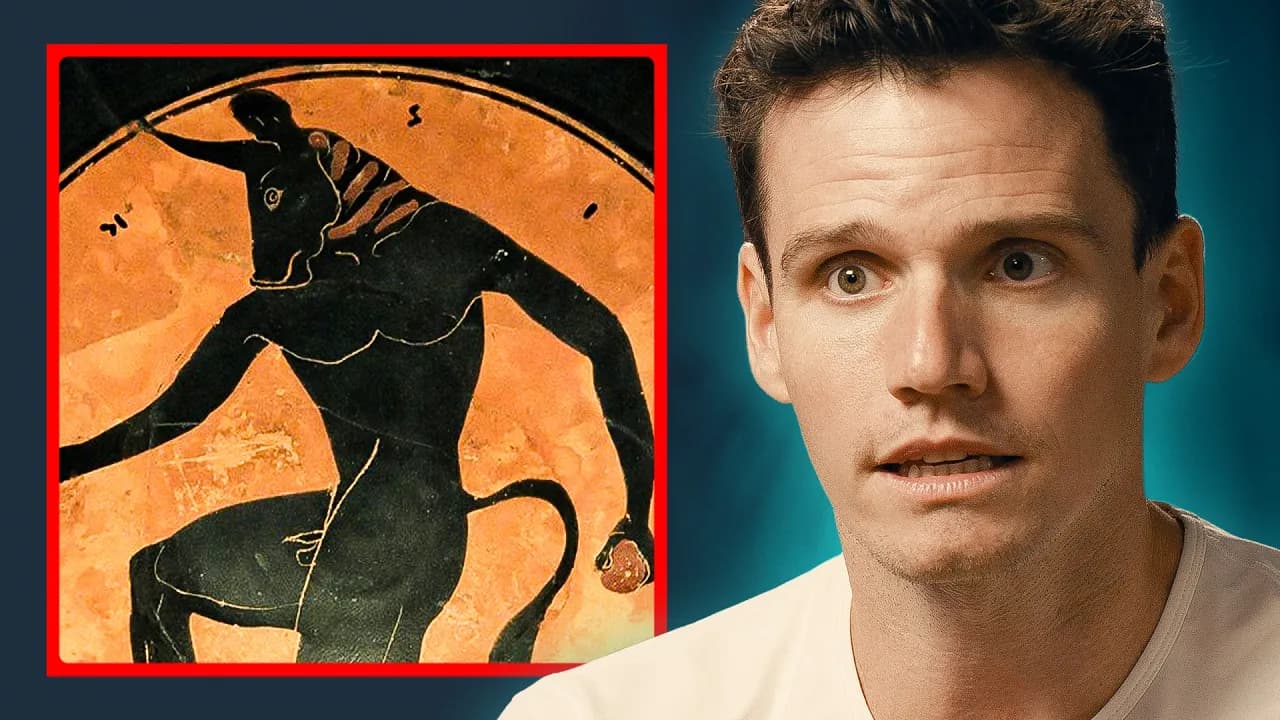
Cyclopes live in little family units and do not care about the gods, considering Zeus a chump. Every man is a law unto his own wife and children. They are giant forceful men who think law and order is for fools, resembling extreme libertarians without social order beyond the household. This makes them vulnerable and causes them to underestimate the power of trickery. They are not coordinated or unified. Polyphemus, the Cyclops Odysseus faces, had heard a prophecy that someday a man named Odysseus would come and blind him. After being blinded, he rages that he thought the man would be strong, not some little pipsqueak, showing he was not on guard for craft. The binary is force and wildness versus cleverness and civilization.
Trapped in the cave, the Cyclops gradually eats Odysseus's men while making him watch. Odysseus gives him excellent wine. The Cyclops lacks the cultural antibodies of moderation and slams the wine like giving whiskey to Native Americans. He gets very drunk and says the stranger's guest-friend gift will be that he will eat him last. While the Cyclops is away tending sheep, Odysseus carves a six-foot stake, hardens the point in the fire, and stabs the Cyclops in the eye when he is drunk and passed out, blinding him. This is another act of craft and technology.
The famous trick is that Odysseus tells Polyphemus his name is "Nobody." When stabbed, Polyphemus calls to his fellow Cyclopes that Nobody is hurting him. They respond that if Nobody is hurting him, there is nothing they can do. There is a play on words in Greek: when Polyphemus says "Nobody is killing me," it is "outis," but the other Cyclopes hear it in an if-clause where the negative changes, sounding like "if metis [trickery] is killing you." Odysseus gets cursed because he makes the mistake of revealing his true name as they sail away. He tells Polyphemus that if anyone asks how he was blinded, to say Odysseus did it. Polyphemus realizes the prophecy has come true and calls on his father Poseidon. Polyphemus curses Odysseus that he may never get home or may have a very hard time and lose all his companions. Poseidon listens, and that is what happened.
They eventually reach Circe's island. Circe is a divine witch goddess, somewhat like Calypso but more dangerous or dark. Odysseus sends his men to investigate smoke from a hut while he waits at the ships. The men find wolves and lions prowling like tame animals and an enchanting lady singing strange songs. She welcomes them, feeds them, strikes them with a magic wand, and turns them all into pigs. One man escapes as a human and reports back. Odysseus draws his sword and charges in, but Hermes stops him, warning that Circe will turn him into a pig too. Hermes pulls up a plant called moly with a black root and white flower and gives it to Odysseus as an antidote. The plant represents the first occurrence of the word "nature" in Greek, referring to the physis or nature that things have.
Odysseus rubs or eats the moly, goes in, and when Circe tries to turn him into a pig, nothing happens. He draws his sword and confronts her. She asks how he avoided her magic and, as Hermes predicted, asks him to go to bed with her. Hermes had warned that this would be a trick to unman him, so Odysseus makes her swear an oath not to harm him or his companions and to change his men back. They go to bed, she changes the men back to human form, and they stay for a year. The men eventually urge Odysseus to leave, missing their homes, and he makes Circe help him move to the next stage.
To get home, Odysseus must undertake a deeper, darker quest to the underworld to consult the prophet Tiresias, a blind wise person who has died. He sails many days until it gets misty and strange, then digs a trench with his sword, puts in honey, milk, and barley, sacrifices lambs, and drains their blood into the hole. The ghosts of the dead come to him. The wraiths are insubstantial remnants, not full identities like souls. To make them speak, they must drink the blood mixture, giving them a moment of liveliness.
The first ghost Odysseus speaks to is Elpenor, who fell off a roof and died; Odysseus promises to bury him. Tiresias tells him he will get home fine if he and his men can keep their hands and mouths off the cattle of the sun on that island. If they eat the cattle, they will be blasted and die. Tiresias also warns about the suitors and a strange additional prophecy. Odysseus then meets his mother, who died since he left. He tries to embrace her but his hands pass through her. She explains that is how it is with the dead and explains how the afterlife works. This metaphysical knowledge upholding civilization is important to Homer.
The first people Odysseus meets among the dead are not the famous heroes from the Iliad but famous women, including the mother of Amphion who built the walls of Thebes and other mortals who had bedded with gods. As they drink the blood and converse, they tell him stories of their sons, fathers, and brothers, giving him access to heroes he would not otherwise know. This illustrates how women fit into the making of a hero by narrating the deeds of their family and upholding order.
Odysseus meets the ghost of Achilles, creating tension between the Iliad and the Odyssey about what is worth striving after. Achilles traded a long life for eternal glory, which the Iliad presents as the right choice. But Achilles tells Odysseus not to make light of death. He would rather be a hired servant, the lowest status person on earth, than king of the dead. Achilles says that if he had one more day of life, he would go to his father's house to slaughter men insulting his father and avenge his father's name. He also asks about his son. In death, what Achilles cares about is his family. This is one of the big messages of the Odyssey about what really matters in the long run.
Odysseus manages to achieve both biological household continuation and lasting glory, requiring cunning, craft, force, and luck. The question of what constitutes permanence is raised: whether glory through being talked about far and wide after death is truly permanent, or whether permanence is the biological continuation of the household.
Odysseus makes his way back to Circe's island facing more temptations. He must pass through the Sirens, Scylla, and Charybdis. The crew finally reaches the cattle of the sun. A god places sleep upon Odysseus. While he sleeps, his men sacrifice and eat all the cattle of the sun. Odysseus does not eat the cursed beef.
Odysseus had warned his men repeatedly about the cattle. One leader says Odysseus is asleep and questions whether he has been lying about other things but might be telling the truth about the cows. The men decide they would rather eat and die than starve, choosing to have a good time. As soon as they eat the cows, the wind starts to blow and they become stuck on the island, growing hungrier. They get on the ship, a lightning bolt strikes, and all the men die. Odysseus grabs a board and floats to Calypso's island.
Odysseus ends his story. The Phaeacians say they will send him off to his homeland on a ship. The journey is incredibly easy. They put him down on the boat, he falls asleep, they reach Ithaca, take him off the boat while still asleep, stick him on the shore, and leave all the gifts there. He wakes up and they are gone.
Odysseus initially thinks he has been left on the wrong island. Eventually it becomes clear it is Ithaca. The transition is compared to fast travel in a video game. The Phaeacians represent a boundary crossing from the adventurous mythical world to harsh reality. They have no pirates, magical ships, and possibly robot golden dogs guarding the palace. Their land is described as an eerie, peaceful Shangri-La. Nausicaa was a temptation as a young Penelope-like figure.
Circe serves a wise counselor role. Tiresias represents the katabasis or descent. Odysseus has gained the knowledge needed to return and is about to face the final boss, which occupies the second half of the poem.
There are 108 suitors in the house. Odysseus does not know which servants remain loyal or whether Penelope has been seduced and might betray him. He makes his way to the swineherd Eumaeus, who was treated well by Odysseus and offers hospitality despite the suitors taking the best pigs.
Telemachus returns from his travels, eluding the suitors' ambush. He arrives at Eumaeus's hut where Odysseus is in disguise. Odysseus later reveals his identity to his son first because he needs Telemachus's help to launch the plan. The first person he reveals himself to is his son. He gradually reveals his identity to a few others: the nurse Eurycleia, whom he swears to secrecy, and Eumaeus right before slaughtering the suitors. Penelope learns last.
Telemachus tells Odysseus about the situation at home and confirms Penelope has been faithful, though Odysseus still wants to test her. Dressed as a beggar, Odysseus enters the palace. He is harassed by a goatherd slave. He begs for food among the feasting suitors who did not wash their hands or pray. Most give him morsels, but Antinous, a chief suitor, tells him to leave.
Odysseus subtly taunts Antinous, saying he seems like a lordly prince and that Zeus brings suffering on all, suggesting Antinous might someday be down on his luck as Odysseus is. Antinous tells him to shut up and leave. Odysseus continues prodding until Antinous hurls a footstool at him. The bench hits Odysseus but has no effect. Odysseus asks if Antinous feels better. This confirms Odysseus's hypothesis that the suitors are not serious men. A hard killer would not throw a bench at a beggar but would handle the situation directly.
Odysseus is given a blanket and cot by Penelope. He lies there planning while seeing the maids leave. Twelve of the fifty maids have been sleeping with the suitors. Penelope is angry about their disloyalty and disobedience. Odysseus wants to kill them immediately but restrains himself, telling his heart to endure as it endured worse when the Cyclops was eating his men. This restraint is a skill developed during his trials.
Penelope had been weaving a funeral shroud for Laertes during the day and unweaving it at night, telling the suitors she would choose one after finishing. A disloyal maid revealed the trick to the suitors, forcing Penelope to decide. Odysseus in disguise tells her he believes her husband is returning and she should wait another day. Penelope proposes a contest: whoever strings Odysseus's bow and shoots an arrow through the ax holes will marry her.
The bow is a large hard recurve bow that only Odysseus could string. The contest creates mimetic rivalry as each suitor tries and fails, underlining that they do not measure up to Odysseus. The suitors refuse to let the beggar try, fearing a loser from out of town might string the bow and make them look bad. Odysseus gets the bow and shoots through the axes. Telemachus has hidden the weapons and armor. Eumaeus locks the door. Eurycleia bolts the other doors. All the women are out and Penelope is safe. The suitors are trapped.
Odysseus, Telemachus, Eumaeus, and Philoetius face 108 suitors. Odysseus kills the leaders first. Antinous, lifting a cup, is the first killed with an arrow through the throat. It becomes a bloodbath with spears through guts and faces. Every suitor dies, including those arguably less guilty, under the principle of communal guilt. Leodes the prophet begs for mercy, claiming he advised against the suitors' actions and never touched the maids. Odysseus rejects this, saying a prophet would have foreseen his return and possibly desired his wife, then kills him.
In the Iliad, the bow is considered shameful and unmanly compared to the spear because it does not involve facing an opponent directly. Paris and Pandarus use the bow. Odysseus uses this tricky weapon to reestablish justice, showing that winning at all costs may require bracketing honorable warrior conventions.
The twelve disloyal maids are hanged. Odysseus tells the group to throw a party with cooking meat and music to buy time before the suitors' fathers discover the slaughter. The suitors' ghosts descend to Hades, wailing. Agamemnon and Achilles are there. When told Odysseus slaughtered the suitors, Agamemnon says "that's my boy." Agamemnon praises Penelope's faithfulness and says the glory of this person will last on people's lips because of Penelope's virtue.
One interpretation holds that the glory of Odysseus will last forever because of Penelope's virtue. Penelope was crucial to the story of the greatest hero. Her faithfulness and trickiness enabled Odysseus to become the best of the Achaeans. They both receive glory as a unit. Penelope represents the Greek archetype of the matriarch upholding the glory of a great household.
The townspeople form a posse and Odysseus forms one, starting a revenge battle. Athena descends and stops the fighting, functioning as a deus ex machina. A couple of people die before peace is reestablished. Odysseus has the favor of Zeus and Athena throughout, despite Poseidon's opposition. He is pious, meticulous about sacrifices, and just, only lying to enemies.
There are two versions of divine justice. One is eye-for-an-eye vengeance that spirals endlessly. Zeus and Athena represent justice that settles quarrels and enables peace. Zeus says mortals generally bring suffering upon themselves. The Odyssey shows the good do win and that revenge, while part of justice, cannot continue forever. The gods intervene to prevent endless spiraling.
Homer represents oral poetry as a pillar of the moral universe that is pious. In oral cultures, detailed instructions are followed exactly. The mental model of the universe in cultures without writing differs fundamentally from written cultures.
Before writing, the brain was trained to store oral information with high fidelity. When the pilgrims arrived in Massachusetts in the 1600s, they were shocked at Native Americans' ability to repeat sentences verbatim without understanding the words. Without writing, people developed a high-fidelity oral brain. When oral poetry encounters a written paradigm and writing becomes the way to store knowledge, that ability is lost.
The speaker compares this to Google Maps: people no longer know their way around their own town because cognitive work gets offloaded. Homer offers a glimpse into a lost way of thinking. Once writing exists, it is too advantageous to ignore. Enemies will defeat those without a written culture. Writing is required for science, philosophy, and recordkeeping.
Something is also profoundly lost in the transition to writing: the tradition of storytelling and the role of storytellers. In Homer's world, the storyteller was a pillar of society. Understanding this helps explain why Homer contains so much propaganda, such as in the Iliad.
The stories people tell still matter for facing problems, happiness, and confidence in life, but the connection is not as visceral today.
The speaker is excited to see Christopher Nolan's Odyssey film as soon as possible and finds it visually impressive. Some viewers have complained about casting choices, including depicting Helen of Troy as Ethiopian. The speaker notes that Ethiopians were known for being great at parties and suggests there might be logic to the choice.
Complaints have also been made about the Laestrygonians, depicted with futuristic steel plate mail armor. The speaker finds this depiction cool even if historically inaccurate. The Laestrygonians are the giant people Odysseus and his men encounter after the Cyclops; the giants slaughter the Greeks when they attempt to seek a gift or alliance.
Nolan filmed the entire movie on IMAX for the first time, and the film runs almost three hours. The speaker is excited that the Odyssey is generating debate about meaning, which indicates the story still holds cultural importance. Nolan receives criticism and attention from multiple directions, showing that people need this story.
The speaker admits to prioritizing personal burnout health over the podcast for the first time. An offer was made to interview half the cast for half an hour each on a single roundtable in New York in ten days, but the speaker had already booked a one-week digital detox meditation retreat. The retreat had been planned since January after 1,100 episodes and eight years of work. The decision felt symbolic: choosing peace of mind and longevity over another high-production media event.
The speaker will feel conflicted watching the film, knowing that major promotional moments with Tom Holland and Zendaya could have occurred on the show. The speaker remains excited for the movie despite this.
The speaker hopes the film avoids becoming another culture war flashpoint. Nolan's films are often controversial because of internal story elements (for example, whether the ending of Inception is a dream or reality, or questions of paternity in Tenet). Casting controversies feel less interesting than narrative ones. The speaker is a massive fan of Nolan's work and does not want it tarnished.
Emily Wilson's translation is reportedly used as source material. Wilson translates the opening line as "Tell me Muse of a complicated man." The speaker finds this rendering problematic because it suggests moral ambiguity or personal issues. Odysseus is the most badass Greek to return from Troy and attracts divine nymphs; he is not the type of figure one would call "complicated."
The Greek word polytropos is multivalent. Tropos means "turn," which could refer to Odysseus spinning about the seas. A turn can also mean a trick, suggesting many tricks. In later Greek, tropos can mean character or persona, implying a man of many guises. The speaker believes the word alludes to Odysseus's mastery of craft and trickery rather than moral ambiguity.
Wilson's translation of Odysseus telling Penelope "I will tell you the truth, my lady" after lying is noted. Odysseus lies strategically. The speaker senses that Wilson suspects Homer feels ambiguously about Odysseus and questions whether he is a hero worth emulating.
The speaker believes Homer views Odysseus as 100% worth emulating, though not perfect. Heroes can make mistakes. Examples include giving his name to the Cyclops, falling asleep while his men risk opening the bag of winds or eating the cattle of the sun, and excessive curiosity (a vice in some Greek philosophy). The Sirens episode illustrates curiosity without a clear end in mind: Odysseus plugs his companions' ears with wax, leaves his own unplugged, and has himself tied to the mast.
Homer does not question Odysseus's core values: civilization over barbarism, order over chaos, and patriarchy over anarchy. These values do not appear complicated.
Recent films rarely feature relatively simplistic heroes. Top Gun: Maverick comes closest, though it includes a subplot about a supplanted patriarch and redemption of a son through a new father figure. A video essay observed that the world of the hero has become unsatisfactory; protagonists must now possess a dark streak requiring redemption. This pattern extends to Suicide Squad, where bad guys become good guys through their badness, and to Loki in The Avengers, who flip-flops without landing in a satisfying place. Captain Marvel is depicted as powerful yet frequently off-screen.
The speaker finds the complicated hero richer in conflict and tension but would like to see an uncomplicated virtuous hero who is flawed and overcomes those flaws by following the hero's journey from Campbell's framework. The speaker wants to observe how that feels in 2026.
A major motivation for the speaker's current focus on storytelling and casual episodes is audience exhaustion with overthinking. There is an anti-optimization trend driven by fatigue from trying to be perfect. People feel overwhelmed by information volume exceeding their ability to metabolize it.
The speaker's line states that most people consume information the same way they consume calories: at too high a dosage to metabolize. Five hundred years ago, with only three books available and low literacy, this was less problematic. The shift from information scarcity to abundance mirrors the shift from calorie-sparse to calorie-dense environments. People do not want everything to feel like homework or require constant decision-making.
Even high-performing business people express a desire for direct answers rather than additional input. The speaker wonders whether movies will begin mirroring this fatigue by offering simplicity in heroes while maintaining complexity in story.
The Netflix series Adolescence succeeded partly because it did not tell viewers what to think, leaving many open questions: how much the boy was influenced by the internet and manosphere, how much he was an incel, how much parents were to blame versus lack of supervision, whether the series was a comment on internet overreach or male loneliness, and when a boy becomes a man and thus culpable. The result was widespread debate about meaning and takeaways.
Nolan's films similarly generate questions (for example, whether DiCaprio's character is in a dream). After a certain point, such ambiguity places interpretive responsibility on the audience, driving conversation through lack of conclusion.
The speaker senses a cultural desire for simplicity that does not prescribe what to think but offers more straightforward narratives. People are exhausted by constant decision-making, future uncertainty about AI and jobs, geopolitical concerns, inflation, and supply chain issues. Destructive escapes become more likely if people cannot find healthy reprieves such as listening to an ancient story.
Movies cannot iterate as quickly as podcasts. The speaker has produced three episodes weekly for years and can sense cultural direction. Many listeners want to finish an experience without a long list of required actions. The Odyssey provides philosophical questions about loyalty, justice, revenge, appropriate aggression, diplomacy, craftiness, and justified lying without burdening the audience with prescriptive life changes.
Homer offers moral simplicity in many ways but tells stories from multiple perspectives because epic poets traveled between cities and audiences of different classes and tastes. The story of Odysseus had to work for many different people: some would side with Odysseus, others might see themselves in the suitors, and some would view him as a lying bastard while others would see necessary actions. Drawing out the message is not primarily the poet's job; the poet's role is to charm and disengage the audience, as Odysseus does for the Phaeacians and bards do in the story.
The Sirens represent a timely image. They are divine but function as bad bards whose song makes listeners want to stay forever. Piles of rotting bones surround their island from those who listened and starved. Odysseus wants to hear them because of his great curiosity. The Sirens offer him the story of everything that happened at Troy, all unknown backstories, and perspectives of generals. They claim to know everything that happens on Earth and can provide infinite knowledge.
This temptation appeals to a man who values insider knowledge and special insight, similar to the power of the moly plant. The speaker sees parallels to academic temptation: the desire to read one more book or discover the end of a story can lead to becoming a pile of bones at the Sirens' feet instead of returning home. The modern equivalent is doom-scrolling that feels actionable and important because it rises in the algorithm, yet prevents reflection.
A former information expert who worked with three-letter U.S. agencies described helping special forces with technical tasks. The speaker's theory is that much online information and propaganda does not aim to convince people of a single narrative but to drown them in so much information that they become apathetic and give up. Apathy might later be directed toward useful ends, but the immediate effect is surrender.
Conspiracy rabbit holes illustrate the pattern: for every theory discovered, an equal and opposite one appears. The speaker feels detoxified and somewhat relieved after engaging with material that has firmer foundations.
Long narratives appeal to leaders like Alcinus, Odysseus, and Julius Caesar because they face constant information and decisions. A long story provides a way of slowing down the brain and creating space for reflection. These narratives contain useful elements beyond entertainment through their structure.
Humans are wired to ingest and process information more effectively in long form when presented as stories. Stories enable memory and storage of frameworks like the experiences of Odysseus, allowing lessons to be drawn years later from archetypal narratives.
Oral cultures like the Greeks invested heavily in stories about heroes because these provided models for emulation. The Odyssey demonstrates that such stories are not simplistic. Odysseus makes mistakes and his actions remain open to debate. Later Greeks held conflicting views, with some seeing him as a liar and cheater while others considered him the greatest hero.
Genuine hero stories can maintain complexity without requiring characters to have secret addictions or affairs. Modern audiences do not need every figure undermined through hidden scandals or overt criminality. More complex hero narratives are needed to navigate current challenges.
Alex Petkas can be found through the Cost of Glory podcast on YouTube, Spotify, and Apple. Additional content is available at Cost of Glory on X and at CostofGlory.com.
Keep Chris Williamson in your library
Save the videos and channels worth coming back to, and find them again in one place.