Christopher Nolan: The 60 Minutes Interview
In a Nutshell
Christopher Nolan directs ambitious, large-scale films using practical methods like IMAX and real stunts over digital shortcuts. His latest film adapts The Odyssey as his most ambitious project, shot entirely on IMAX across multiple countries with stars like Matt Damon. He emphasizes putting audiences inside the story through immersive storytelling and maintains a long career focused on advancing film language.
These notes were generated by AI and may contain inaccuracies.
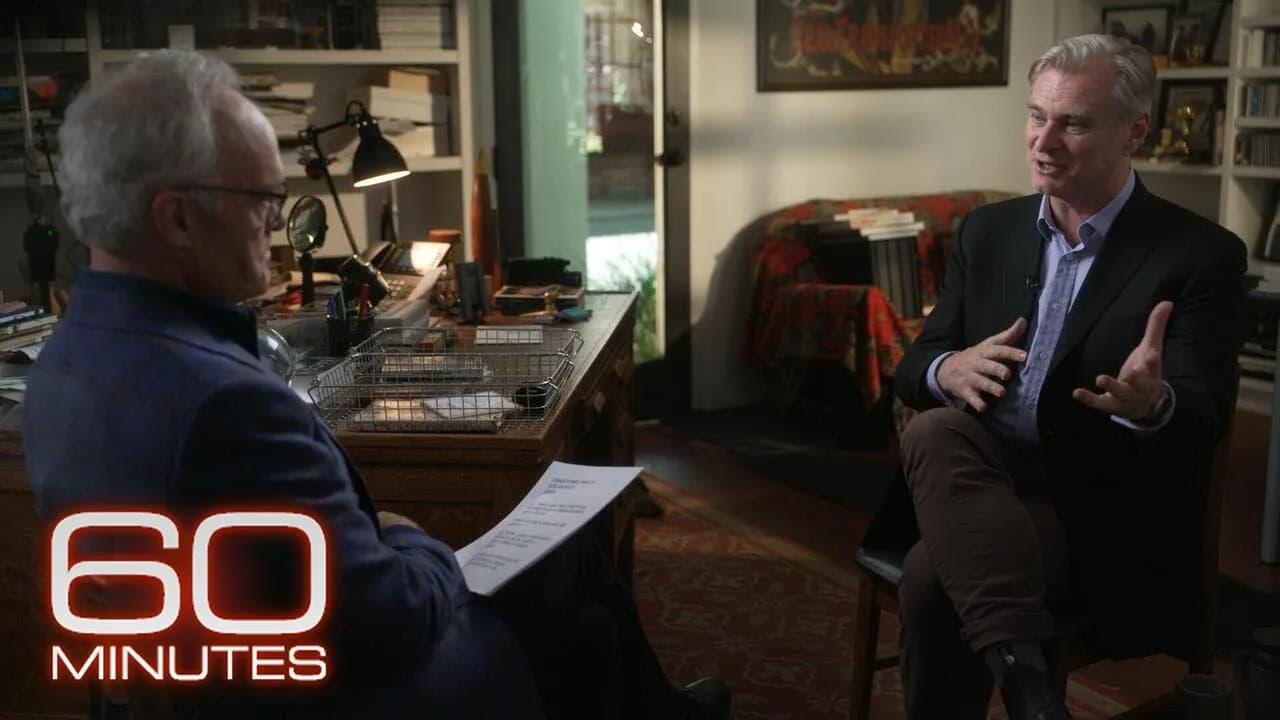
Christopher Nolan is among the great Hollywood directors of his generation. His blockbusters have won 18 Academy Awards and generated more than $6 billion in revenue. His next film is an adaptation of The Odyssey, the nearly 3,000-year-old story, scheduled for release this summer. At age 55, Nolan is a British American who works from an office in Los Angeles where he has written epic films including Oppenheimer, Dunkirk, Inception, Interstellar, and The Dark Knight.
A Nolan movie is a spectacle that is big and loud at the limits of what is possible. A Nolan story emphasizes grace through imperfect people revealing what it means to be human. The Odyssey represents Nolan's most ambitious project yet. He feels a real responsibility to try and get as much on screen for the audience as possible, giving viewers the fullest flavor and the fullest set of images and events that can be provided for a given story.
Nolan always tries to maintain a point of view on the story from inside the film. He avoids looking at characters from 30,000 feet and instead tries to be in the race and in the maze with them. This approach aims to give the audience a sense of what a place would smell like and what it would feel like. He also works to create the most involving and extreme version of a story possible.
Nolan's Odyssey is an extreme version of the Bronze Age war fought by the soldier King Odysseus with his Trojan horse deception and ten-year struggle to return home. The Odyssey is Nolan's 13th film in 28 years. Unlike many directors, he writes the screenplays himself.
When writing, Nolan visualizes the film as an audience member experiencing the story. When directing, he tries to take the audience there. In the case of The Odyssey, he aims to put viewers into the Trojan horse and onto the deck of a ship.
You don't want the audience to watch the film. You want the audience to be in the film.
Nolan feels a connection with his characters and a sense of having lived in the world with them. He has a book titled How to Make Good Movies on his desk, which dates from the 1950s and focuses on Super 8 home movies. Nolan is old enough to have started on Super 8 film, as his family had a Super 8 camera instead of a video camera.
Nolan's earliest memories involve making movies. His younger brother Jonathan Nolan, also a Hollywood director, explained that Chris was handed the family 8mm camera to keep him busy. Their childhood take on Star Wars involved blowing up toys with firecrackers in the basement when Chris was eight or nine years old. Jonathan was three or four at the time.
What fascinated Nolan about the camera was the idea that it could be used as a portal into another universe, functioning like a door. As a young man, Nolan graduated with a degree in literature and applied to film school but was turned down. He received a letter simply stating "No thanks." Despite this rejection, he continued shooting films on weekends with friends.
In 1999, Nolan made Memento, a complex mystery featuring an amnesiac investigator who remembers clues through tattoos. This film revealed Nolan's trademark style of intricate plots with shifting timelines that challenge audiences to keep up. Movie executives initially feared the film was confusing and no one wanted to distribute it. It took a year to find a distributor.
The experience taught Nolan lessons in humility and patience regarding independent filmmaking. After finishing a film and feeling a sense of achievement, convincing distributors can take a long time. Audiences found the amnesia story unforgettable, and the screenplay was nominated for an Oscar despite initial concerns about its complexity.
Emma Thomas met Nolan on the first day of college. She has produced all of his films and they have four children together. They have been married for 26 years. Thomas states that she cannot imagine Chris not making films. Outside of family, which is the most important thing to him, it would be horrifying to think how frustrated he would be if he were unable to tell stories through film.
Nolan prefers extra large formats. He collapsed an actual building in The Dark Knight. He uses computer animation but prefers authentic methods when humanly possible. In Tenet, he bought a 747 and built a hangar to crash it into. In 2024, Oppenheimer won seven Oscars, including Nolan's first for best director and best picture.
Nolan makes movies the hard way, and the harder the better as far as he is concerned. With The Odyssey, he believes they pushed pretty hard and may have found some limits.
Nolan's The Odyssey brought Matt Damon and thousands of cast and crew to Greece, Iceland, Morocco, Italy, and Scotland. They shot 2 million feet of IMAX film. Nolan thinks of himself as the representative of the audience on set, which serves as his north star. He believes that in a sense he is the most important person on set because he represents the audience.
Taking on The Odyssey required thinking about scale. It needed to be the biggest film they had done and challenging to all involved because that is the nature of the story. Matt Damon described it as the hardest movie he has ever done by far. Damon had previously worked with Nolan on Interstellar and Oppenheimer.
During their first meeting about The Odyssey, Nolan told Damon that the movie was going to be really hard. Nolan often returns to his stars, including Cillian Murphy who appeared in the Batman films, Dunkirk, and Oppenheimer.
Nolan really understands what actors do and what is required of them. He is considered an actor's director. People might not think of him that way because the canvas he paints on is so big, but the performances in his movies demonstrate this quality. When handing actors a script, Nolan asks them to become an expert on that character's perspective on the story. On set, actors inform him about how their character would see things and how that character plays.
What separates Nolan from other directors is that the stories he wants to tell are incredibly ambitious and the way he wants to tell them is also incredibly ambitious. For The Odyssey, he wanted to shoot 100% in IMAX, which had never been done before.
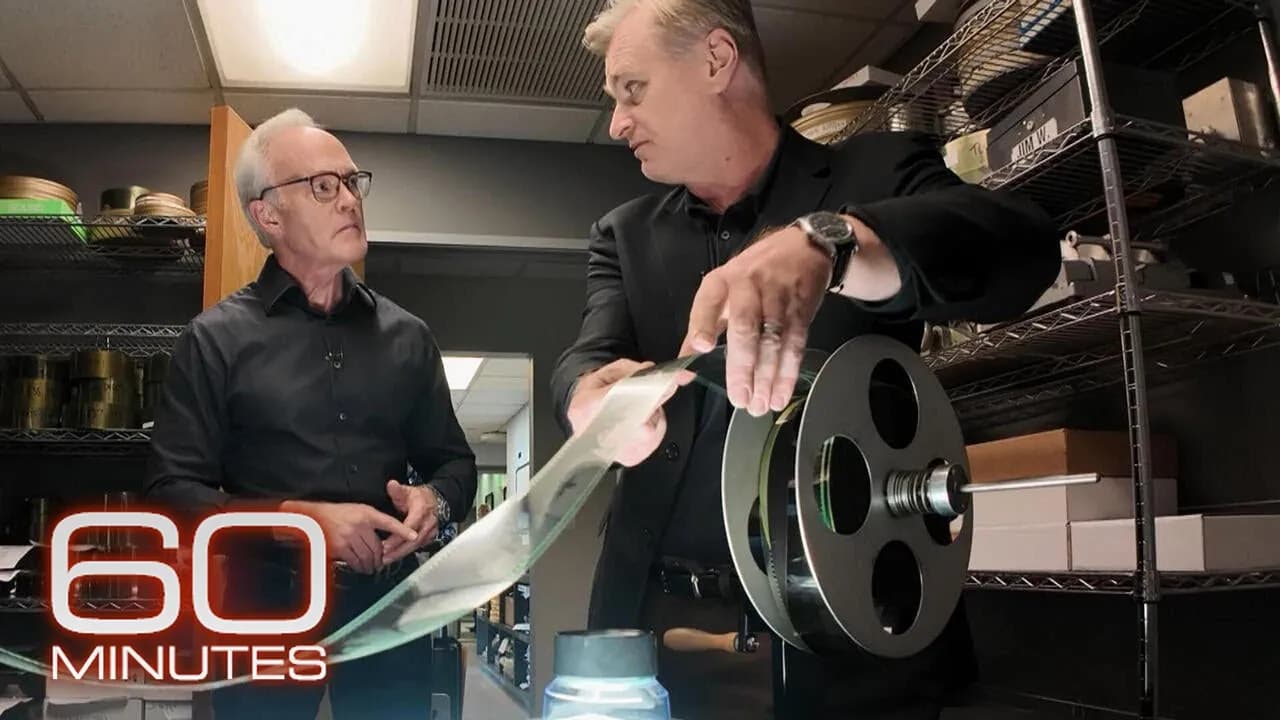
IMAX is Nolan's great ambition. It provides a wonderful way to retain the original image. The Odyssey is the first feature film shot completely on the giant film format. When Nolan was 16, he saw an IMAX documentary at a museum and was spellbound by the five-story screen. IMAX is expensive and cumbersome. Digital photography and editing are faster and cheaper, so almost no one uses film anymore.
The team watched The Odyssey being cut and glued together in the last film lab of its kind in the world. The 70mm IMAX frame has resolution or image quality up to three times higher than digital. Hollywood could argue that IMAX is not practical, screenplays should not challenge audiences, and computers are cheaper than a 747. However, people called artists are inspired by dreams like those of a seven-year-old with a Super 8 camera.
When asked how he would like Hollywood historians to describe his career, Nolan responded that he would like it to be long. He hopes to feel that he had added something to the body of work of filmmakers he has admired and to the great film history that is developing. If he can play some part in moving the language of film forward, that would be a great thing to be remembered for.
Keep 60 Minutes in your library
Save the videos and channels worth coming back to, and find them again in one place.