The Truth About Metabolism Why “Fast Metabolism” Is a Myth | Dr Andy Galpin 5 Minute Phys
In a Nutshell
No such thing as a "fast" or "slow" metabolism; transient boosts from spicy food, caffeine, cold exposure, or exercise raise basal metabolic rate minimally and temporarily, with negligible impact on fat loss due to small magnitude and compensatory mechanisms. Only permanent, meaningful elevations come from optimizing sleep (biggest factor), adding skeletal muscle (small daily calorie burn that accumulates slowly), and resolving underlying health issues. Supplements or quick fixes rarely lead to fat loss directly but may indirectly help via better motivation, exercise consistency, or lifestyle changes.
These notes were generated by AI and may contain inaccuracies.
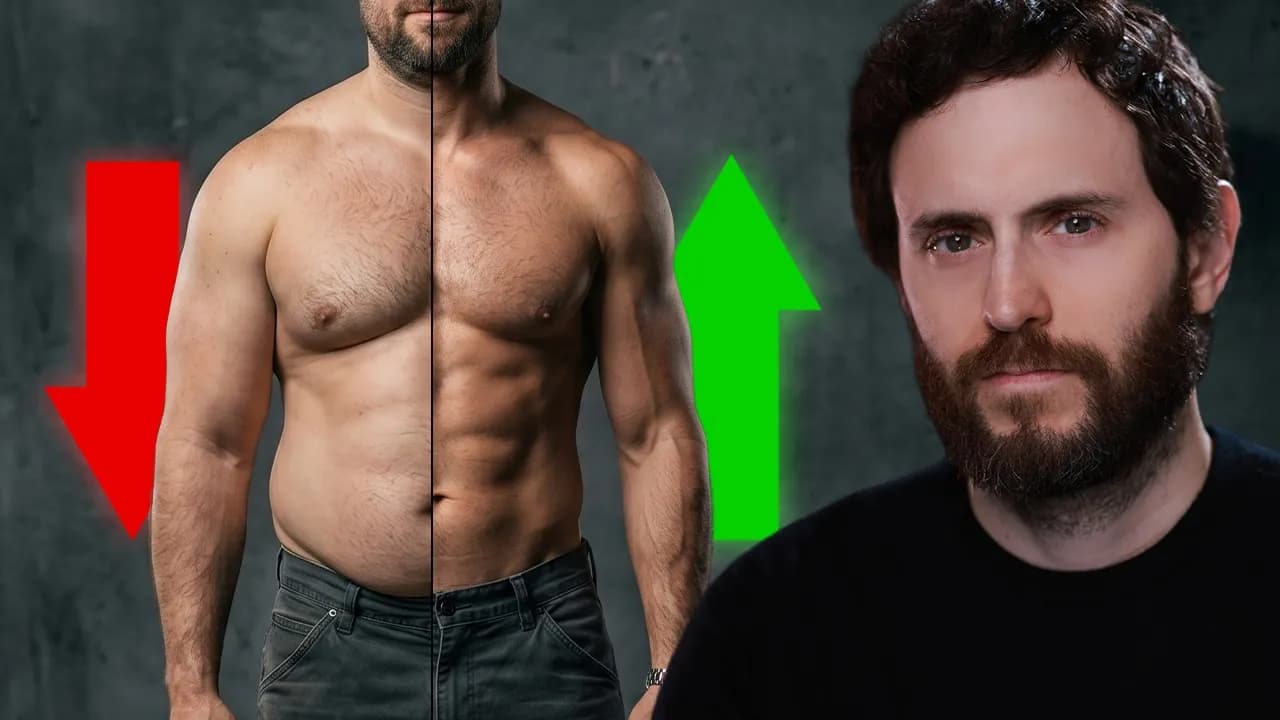
Welcome to another episode of Five Minute Physiology with Dr. Andy Galpin. There are many scientifically validated ways to speed up or boost your metabolism. Unfortunately, very few of them will actually help you lose any body fat. Most things heard in this space are either outright lies or completely exaggerated, often to sell a product. It is true that some people have an easier time eating as much food as they want and staying lean while others have a far more difficult time losing body fat or maintaining it. This is a real phenomenon tied to your metabolism but not in the way you think. There is no such thing as a fast or slow metabolism.
As someone with a PhD in human bioenergetics, here's what's really going on. Dozens of studies show a variety of products can increase your metabolism, specifically your basal or resting metabolic rate—the amount of energy produced every minute or second. This can be elevated by:
- Spicy food
- Cold water
- Cold air
- Caffeine
- Green tea
- Stimulants
- Thermogenics
- Sleep
- Acute exercise
These elevate metabolic rate transiently, from here to here right now. The problem is this may not result in losing body fat because the change is small and the elevation lasts minutes or hours at most. For example, spicy food might raise basal metabolic rate 5 or 10 calories for 30 minutes—that's pennies compared to your body's total caloric load, so it makes no functional difference.
Sometimes there's a compensation mechanism where the body downregulates to keep total net energy the same. Marketing claims use buzzwords like third-party validated, double-blind, placebo-controlled—they're right that it resulted in a statistically significant increase in basal metabolic rate, but it was probably not clinically or practically meaningful for body fat loss.
The real question is: can you permanently elevate basal metabolic rate to burn more calories just sitting around doing nothing, in a meaningful amount that leads to physical weight loss after weeks or months? The list shrinks from dozens to just a couple:
- Sleep: Biggest impact by far, with lots of literature showing meaningful effects. If you're not sleeping great, fix that—it's the top priority for elevating metabolism. Even improving from okay to great sleep has the biggest impact of anything.
- Adding skeletal muscle: Way lower priority. For every pound of muscle added, you burn a small number of calories per day. It adds up over years and months but won't make you lose 2, 3, or 10 pounds of fat in a month.
This is about stacking small wins over time. Add muscle, but don't expect it to cause rapid fat loss just from a few pounds gained.
Other things with quality scientific evidence:
- Eating more calories in general
- Any form of exercise
If something gives a short rise in metabolic rate but you do it frequently, consistently, or it leads to more overall energy expenditure, that leads to fat loss. But it wasn't the metabolism boost itself—it was the exercise.
Indirect Effects Example
Say you eat spicy food, ingest caffeine, take green tea, or put your face in cold water, and it motivates you to exercise harder, longer, more frequently, or more consistently. Or you have a better workout, feel better so you don't reach for more stimulants leading to better sleep, or make better nutritional choices. It's the secondary or indirect effects that lead to better lifestyle actions, changing the energy equation for fat loss. If a product "worked for you," it probably boosted motivation, made you feel better, and led to real changes.
True ways:
- Fix sleep to make it great
- Add some muscle
- Resolve any health performance anchor (clinical disease or subclinical issue constraining metabolism)—treat it and basal metabolic rate rises back up.
Check out episode 11 of the Perform with Dr. Andy Galpin podcast for a full deep dive, exact research, more ground, topics, and protocols—available on YouTube and anywhere else you get podcasts.
If you enjoyed this, sign up for the Catalyst, my completely free newsletter sharing places I've learned from, great books, podcasts, social media people to follow, and ways to stay up-to-date with evidence-informed approaches in human health and performance. Link in description below and pinned to top comments.
Keep Andy Galpin in your library
Save the videos and channels worth coming back to, and find them again in one place.