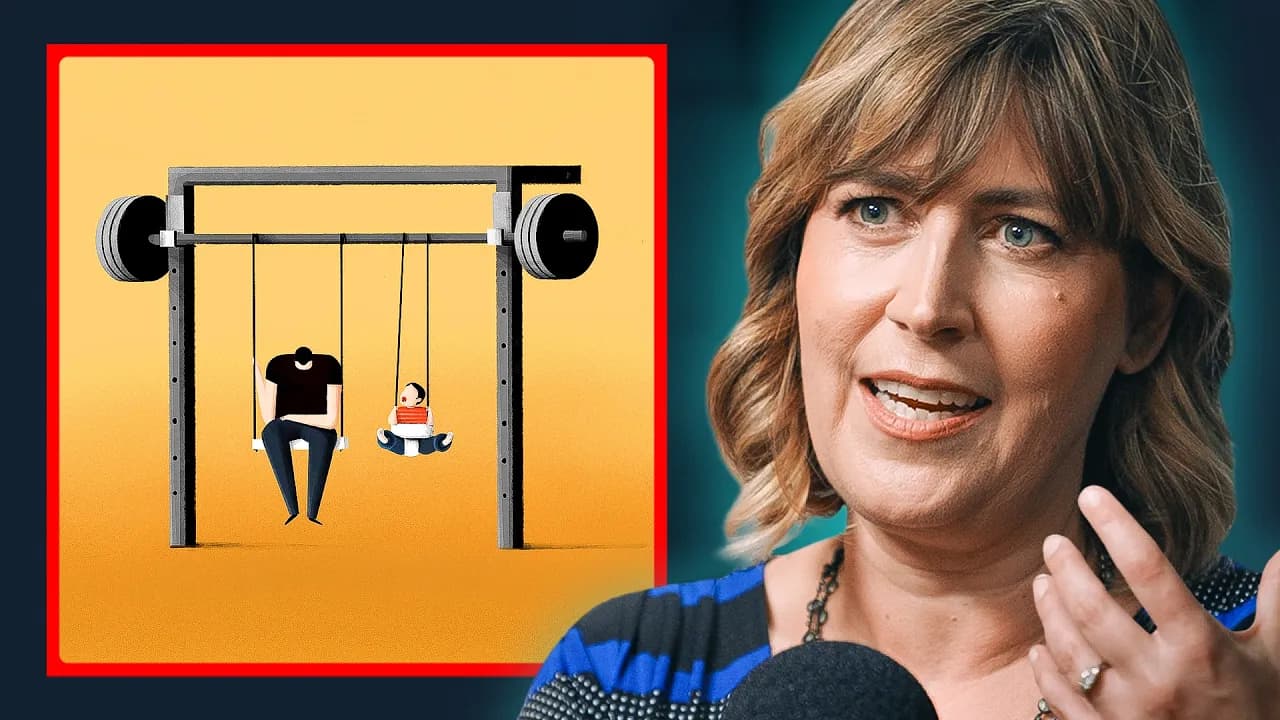
The Truth About Postpartum Depression In Men
In a Nutshell
New dads experience depression at roughly twice the general population rate (~10%), yet are rarely screened or recognized. Mental health is not a zero-sum resource—treating fathers' perinatal depression directly improves outcomes for mothers and infants. Dismissing men's symptoms as mere "discomfort" or claiming men are appropriating the term ignores both the shared risk factors and the family-wide cost of untreated paternal depression.
These notes were generated by AI and may contain inaccuracies.
New dads experience weight gain, testosterone changes, and increased vulnerability to mood disorders. The prevalence of depression in new dads is about twice that of the general population. There is controversy about whether to call it postpartum depression in dads.
Perinatal depression is considered a better term because it means around the birth of a baby. The distinction is largely semantic. Postpartum simply means after the birth of a baby and is a gender-neutral term that does not require having physically delivered the infant. Risk factors for depression are shared by new moms and new dads including stress, disrupted sleep, relationship conflict, new responsibilities, identity crisis, hormone changes, and brain changes.
Some women feel that men are appropriating the term postpartum depression. The strongest interpretation is that childbirth for women is so arduous and traumatic that any man appearing to liken his challenges to those of mothers is seen as callous and dismissive of maternal sacrifice. Women have worked hard to get postpartum depression recognized with inadequate funding and attention paid to reproductive health and mood disorders in mothers. Some women's health advocates feel men are making it about themselves.
A psychotherapist working with new dads reports that women's health advocates say "Can't we have this one thing?" The argument against this position is that failing to treat fathers' mental health negatively impacts mothers and children. Mental health is not a fixed pie or zero-sum game. The best predictor of mom's mental health is the support she receives from her partner.
A father described struggling to bond with his daughter Aurelia after her birth. He felt disconnected and had growing shame about not being the natural father he expected to be. He opened up to his wife after 6 months and eventually got therapy, though postnatal depression was never raised. At one year postpartum, he discovered an article about men's PND. Approximately 10% of new dads experience depressive symptoms during the perinatal period and first year of a child's life. Men are not routinely screened for PND, leading to many undiagnosed cases.
Online comments frequently dismiss paternal depression as "discomfort and uncertainty" rather than true depression, claiming it's linked only to hormonal changes in women. Comments suggest men are trying to make the situation about themselves or that calling it postnatal depression is inaccurate terminology.
Mental health is a family system requiring the best possible team around a baby. If dad is not well, he cannot support mom's mental health. A zero-sum view of empathy is problematic. Society cannot expect men to be fully involved caregivers while denying that caregiving has mental health consequences including being taxing, isolating, and draining.
New moms have depression rates of 19-21%, while new dads have rates around 10%. Women have approximately twice the rate of anxiety and depression in the general population, and paternal rates track with this base rate difference. Postpartum depression in fathers may be mediated by the amount of caregiving they perform.
Keep Chris Williamson in your library
Save the videos and channels worth coming back to, and find them again in one place.