“This is Bibi’s War” - Harvard’s Graham Allison on the Influences and Endgame of the Iran War
In a Nutshell
Harvard's Graham Allison analyzes the US-Israel strikes on Iran as "Bibi Netanyahu's war," driven by Netanyahu's two-decade obsession rather than imminent threats like nuclear weapons or ICBMs against the US, with Trump motivated tactically amid military successes in Venezuela but risking economic backlash and no clear endgame beyond regime weakening. He warns of historical pitfalls in regime change (Iraq, Afghanistan), low odds of a democratic Iran, and disruptions like oil shocks impacting Ukraine aid, while downplaying near-term China-Taiwan invasion risks (~5% through 2028) due to Xi's military purges and political timelines. Broader takeaways include sustaining 80 years of great-power peace and nuclear non-use amid eroding regimes, US inequality fueling socialism/populism, and the need for elite philanthropy to avert unrest.
These notes were generated by AI and may contain inaccuracies.
Video Title: “This is Bibi’s War” - Harvard’s Graham Allison on the Influences and Endgame of the Iran War
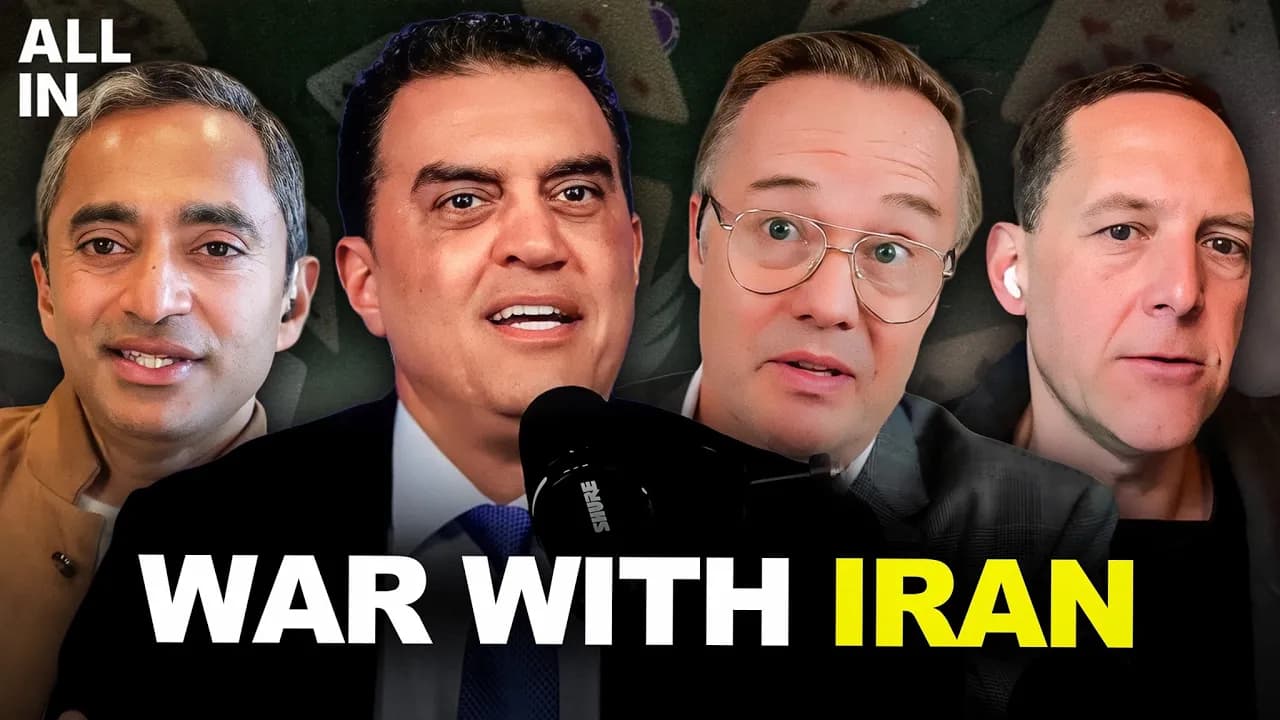
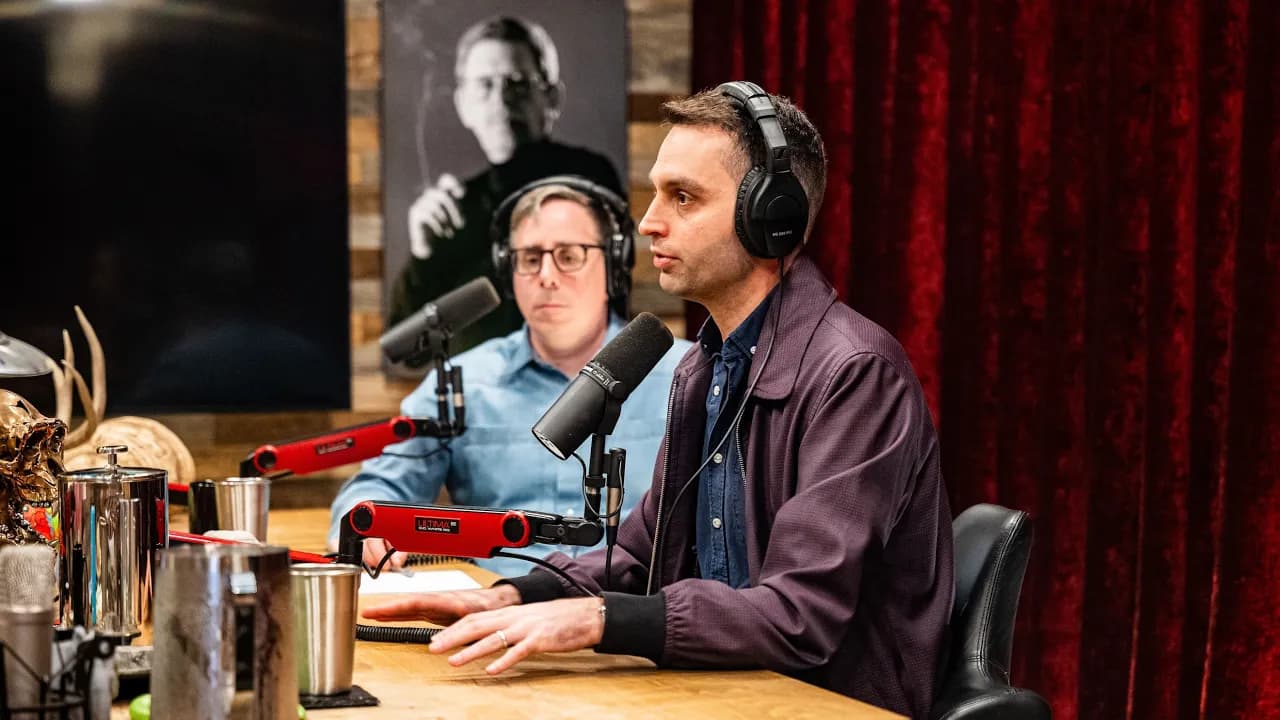
Welcome to another episode of the All-In Interview. Harvard professor Graham Allison returns. He is the founding dean of the Harvard Kennedy School, advised every Secretary of Defense since Kissinger, helped dismantle 12,000 Soviet nuclear weapons, and authored Destined for War, the definitive framework for understanding the US-China relationship.
A lot has happened since the last meeting at the summit in Los Angeles. Sponsor: If building a global financial system from first principles today, you wouldn't build it on 50-year-old legacy rails. You'd build Airwalls, the single platform for global accounts, cards, and payments treating the entire world like a local market. airwall.com/allin.
US and Israel are attacking Iran, Supreme Leader is dead, but regime holds power. Questions: Where will this conflict lead? Are we sleepwalking into World War III?
Graham Allison: Huge uncertainty due to fog of war, amplified by Trump administration and Bibi Netanyahu (BB) as "fog machines", plus chattering class. Why did Trump decide war now? Six different reasons given. Objectives? Five different objectives. End timeline? A day, week, month—who knows? Most conversation pretends confidence, but start with uncertainty.
- Extraordinary demonstration of US/Israeli military and intelligence power—off the charts, makes Americans proud from decades of investment, especially past decade.
- No tears for Haman or Islamic Republic regime—evil leader, evil regime; cheer anything bad happening to them.
- Breaking easier than building. US military excels at destroying targets, but regime change historically fails (e.g., Iraq, Afghanistan—$1 billion+, thousands of American lives; Taliban ruled before and after).
- This is BB's war. Like Ahab's obsession with white whale in Moby Dick, BB fixated on Iran for two decades—tried selling to Obama, Trump, Biden. Mesmerized Trump. Allison is pro-Israel but anti-BB here. BB brilliant politically, but no evidence Iran about to attack US, get nuclear weapon, or build ICBM against US. Many bad things about Iran, but not those claims. Wars: easy to get in, hard to get out.
Multiple reasons, objectives, timelines; this is BB's war. How was Trump motivated? Real motivation? In context of big delegation/visit to China next month—is it to create leverage for China negotiations?
Allison: Wish it was grand strategy. Did Trumpology with Bill O'Reilly (former student, good Trumpologist). Tactical window: Supreme Leader and 40 leaders out in public—prime target. Trump campaigned against endless wars, yet attacked. BB is magician—single-minded, agile arguments—persuaded Trump this good for US (Allison disagrees). Reasons from Trump/close aides unpersuasive. Trump erratic, instinct-driven. BB painted upside: redefine Middle East security for a generation (after proxies post-October 7). New Middle East like UAE—fantastic.
Excited by upside, not careful on risks/downside (e.g., sunk ships, hundreds of dead Americans changes image). Independent of Maduro action and China trip? Not entirely.
Trump thought tariffs magic wand (didn't fully work on Liberation Day). Discovered US military—Maduro operation spectacular (military/intelligence brilliance; no other country could). Encourages hubris. Good for China backdrop—US has remarkable military/intelligence. Timing: War over in 3-4 weeks? Trump in China March 29. Likely declares over before. DoD/Israel see month+—not in sync.
Jason joins. If Iran (93 million citizens) becomes democracy—from monarchy to dictatorship to democracy—what impact? Gulf monarchies evolve human rights but still monarchies; Israel one democracy.
Allison: Spectacular if occurs, but way too ambitious. 100 wonderful outcomes short of that. Recall Iraq: After no WMDs, Condoleezza Rice speech on Iraq as democracy/market economy radiating stability. Good at "I have a dream." Stretch. Happy with regime not building nukes, missiles threatening US/allies, or proxies—even if cruel to Persians (Allison loves Persia's history: Cyrus, Peloponnesian War). Hijacked by terrible group. If ousted, wonderful. Likely: guys with guns take over—tamer version threatening less. Worth it long-term? Wars unpredictable, unanticipated consequences.
Impacts: Oil/gas prices; economies disrupted (e.g., Taiwan—half electricity from natgas now cut); Ukraine—Patriots for Russian missiles now in Middle East.
US military/intelligence professional; Iranians pathetic/paper tiger. At DoD day 1, listed 11 things he'd do as Iran—they did none.
Iran: 100 million people (vs. 50 million ?), 4x land area, better equipped military embedded in industry. Condoleezza Rice (advising White House today) says finish them off, go all the way. More success = no infrastructure/leadership, breeding ground for extremists. No resources for another Afghanistan/Iraq.
Allison agrees—uncertainties. Scenarios: extended civil war, national groups seceding (Syria+); like Afghanistan (decade+, unlimited resources—failed). Small-c conservative: history good guide—nervous.
Too late for Venezuela-like: cut head of snake, regime continues without much damage? Trump erratic but power-focused (November 3 big; economy key, China framing). War impacts economy evident, could worsen. Public opinion 6-to-4 unfavorable (no pre-case made). Sent Higgs/Higsmith to sell war—good luck. Can declare victory: cut head, destroyed nuke capabilities, power projection (destroy/degrade). Now Iranians seize government. BB wants total regime destruction—struggle ahead. Trump pulled BB's chain before when in US interest.
No US support—foreign affairs 1-2% concern; economy higher. No boots on ground. Anti-Semitic undertones acute; Rubio said "Israelis going anyway, no choice" (walked back). MAGA feels Trump betrayed, captured by Israel doing bidding.
Allison: Pro-Israel, anti-BB (BB ≠ Israel). Respects Israeli national security barons (chief of staff, Mossad, Shin Bet)—say BB destroying Israeli democracy. Tom Friedman (not anti-Semitic) courageous: BB destroying Israel's democracy, impacting Jewish kids in US (want pride in Rabin's/Barak's/Ben-Gurion's Israel, not crazy right-wing settlers in West Bank, Gaza unlimited war without proportionality). BB interfering in US politics invites pushback—long-term negative in Dem/Rep parties, especially under-30s polling shocking.
China big story next month. Allison said ousting Maduro could embolden China Taiwan takeover. CIA warned Tim Cook/Apple/tech of possible invasion as soon as next year. Allison met Chinese officials. Likelihood/timeline of China Taiwan takeover? Motivating factors?
Allison clarifies: Chinese study wars, learn lessons—Venezuela makes envious of capabilities, but doesn't increase Taiwan attack likelihood. Taiwan attack this year/next/even to '28 (esp. '26/'27) absent provocation: very low, ~5% (prediction markets).
Why low?
- Peaceful reunification theory: DPP government stymied by parliament—can't buy $11 billion US arms (China complains; legislature buys half?). January '28 election—likely KMT (pro-China).
- Xi deep purge of military leadership—fired equivalent of every US 4-star, combatant commanders, Taiwan force commanders. Buildup continues, but disorder.
- Understands US involvement risk—impacts China economy (worry #1), evolution.
- Trump most accommodating US president on Taiwan—publicly: drew Taiwan as dot on Resolute Desk, rest China.
Longer-run: Xi/leadership—Taiwan inseparable part of China. Challenge: satisfy with Taiwan freedom. 50 years success—Taiwanese: don't screw up.
Are we taking the right course of action? The big question is the strategic imperative to keep Taiwan from falling under direct Chinese control for the United States and whether we're taking the right actions to hedge against that, including onshoring semiconductor manufacturing and defense positioning.
Scott Bassent, Secretary of the Treasury, says the biggest threat he's ever seen is that 96% of advanced semiconductors come from one small island that could become cut off. TSMC produces advanced semiconductors for essentially everybody, with the US as the principal consumer, and we prevent them shipping to China.
Taiwan is halfway around the world, 90 miles off China's shore, and inherently indefensible if China were seriously determined to destroy or take it. Since the opening to China and the Shanghai Communiqué, there's been an agreement maintaining status quo with US strategic ambiguity: US and China committed to Taiwan's internal development left to its own devices, China not using military force, acknowledging one China with Beijing as capital, and ambiguous relationship allowing evolution both parties could live with. Most expect the relationship to work itself out over time.
When talking to Chinese, point out 50 best years on either side of the straits, fantastic for both societies. If China's core strategy of inexorable rise continues, in a decade or two Taiwan will look like a fleat and not an issue. If the narrative fails, Taiwan won't be their biggest problem.
China's Global Influence and Economic Growth
For China projecting influence worldwide, recent GDP growth target is 4.5-5%, a record low. Is it imperative to extend geopolitical and economic influence to grow the economy and keep people happy at home, or can China maintain happiness in a multipolar world sharing influence with US and others?
China is a meteoric rising power, never risen so far so fast on so many dimensions. From 2000 to 2025, dumbfounding on any metric. Like a Formula 1 racer we couldn't see in rearview mirror in 2000, now beside us or ahead in many races. GDP: 2000 less than quarter of US, today by PPP 25% larger. Trade: 2000 5% global (US 15%), today 35% (US 25%). Advanced tech: 5G, EVs.
This is infrastructure for grand narrative of inexorable rise of China to top of pyramid, determined to be number one. Also narrative of inexorable US decline, including unnecessary wars. This seesaw shift creates Thucydides dynamic leading to war via incident over Taiwan.
Economic piece essential: be manufacturing workshop, foundry, supplier for world. Challenges: population decline, unemployment, AI hitting manufacturing with robotics, self-driving. Youth unemployment 15-20%, population decline.
Elon Musk says more robots than people, most advanced robots in China kicking his ass. In January visited Xiaomi factory: 3 years ago decided to make cars after Apple spent $10B failing; now producing with huge demand, one line all robots. Over half of world's factory worker robots in China. Demographics less problem if robots fill worker gap; American workers worry about job loss. Impact on education: educated for low-demand jobs, similar to US college grads in DEI subjects.
Chinese show greater capacity to adopt new technologies. Jensen Huang in China: "I think I came to the future" – no coins, bills, checks, credit cards, just face scan.
Greenland push by US driven by Arctic military threat from Russia and China. Why strategic to US, proxy for defense against them, why now?
US can get everything wanted from Greenland without invading or owning. Important for missile defense (Thule base, two others closed but can open more; amenable). Trump right on long-term lease, 99-year sounds good. Arctic melting opens sea lanes; territorial claims by Russia, Canada, US (Alaska chunk), Greenland piece. Sea lanes less important now: blockades with smart mines or attacking ships, underwater all similar.
Trump's Greenland venture more for fun; he's reality TV producer/star, starts drama, builds tension, resolves.
Pushback: rising socialism in Western Europe pulls nations under Chinese influence, risking China influencing Denmark/Greenland policy. US needs long-term secure needs.
Hadn't heard that argument. Socialism complicated; Chinese autocratic/party-led but fiercely capitalist with gladiatorial competition. Decide on arena like EVs, give subsidies, let fight; end with 5-10 winners, excess capacity sells cheap. Watching Europe/China/US relations relevant. In rivalry with China (4x population), need allies with heft on our seesaw side. Sometimes give cold bath to shape up, but threatening Canadians as enemy, taking territory pisses off (e.g., Carney, Harvard kid, as American as anybody).
Trump at World Economic Forum
At Davos, town shut down watching Trump's 2-hour standup, then two days figuring it out – reality TV. Mooch (communications guy) said it would start with invading Greenland claim, drama builds, Trump does mafioso/Godfather lines (easy way or hard way), then takes gun off table: not invading. Third day announces framework agreement.
Half the time having fun, gets attention.
Three numbers answer questions for big picture on international security in lifetime of everyone alive today.
First 80: years since great power war/world war. Longest peace in recorded history since Rome, not natural/accidental. Post-WWII founders built order after WWI/WWII memory. Should have happened already (e.g., Cuban Missile Crisis). Fragile, eroding.
Second 80: years since nuclear bomb in war. 1945 prediction markets: 10,000-1 odds against.
9: nuclear-armed nation-states today. Kennedy 1963 predicted 25-30 by 1970s as states acquired capability. 90-95 could today; 1970s Sweden, South Korea, Taiwan had programs (US closed). Non-proliferation regime accounts for 9. Fragile, eroding.
Thankful for 80 years no great power war (we wouldn't be here). Don't take for granted; sustain requires work.
Almost had 10th in Iran; latest Pakistan, North Korea. Dr. A.Q. Khan spread from Pakistan.
Did West make error letting Pakistan/North Korea in? Israelis do affirmative non-proliferation: destroyed Iraq (Osirak), Syria (North Korean plant), leading on Iran (we participated). Uncomfortable with wars but cheer to prevent more nuclear states.
North Korea: told Chinese we made mistake; should have said nuclear weapons good for North Korea/South Korea or neither – your choice. Kim has 100+ warheads, missiles to US homeland (20-25 min longer than Iran to Boston). Ticking bomb. Trump tried hard, unsuccessful like prior 20 ways.
China feels ashamed about North Korea, thinks not their problem, but opposes South Korea/Japan, Venezuela/Canada nukes.
Number of US mayors self-declared socialists/DSA. Rising populist movement with deep socialist candidates/policies. Risk if continues? Risk in 2028 Democrat-controlled House/Senate with populist DSA-like Democrat?
Numbers hard to believe: last generation, top 0.01%, 1%, 10%, 20% (us/people we know) benefited. Market bull runs not in 70-80% lives. Facts/perceptions: not stable/sustainable in democracy if top 10-20% take 70-80% pie. Invites populist/demagogue response.
Extremely dangerous. No plausible ways heard to address. Likes Trump accounts for kids giving stake. Could be persuaded for 10% more taxes at his level for adjustment. Uncomfortable with putting on dole/support for non/semi-productive unless lame/ill.
Referring to UBI proposals where people get a universal basic income, that takes away motivation and incentives. The essence of America has been the opportunity for people to be incentivized to invent, create, and create wealth that benefits everybody. But if the jam is not getting spread to 70% of the people, that's not a sustainable political situation. In the New York campaign, there was a preview of this, and in the primaries, people are entering this space. No one has presented a coherent program yet, but for serious people thinking about what's good for the country, it's an important issue to worry about.
There are a couple of proposals: minimum wage increases and some type of wealth tax. People are talking about these things. We may not all agree with them, and they may be hard to execute, but for the people at the top, who have the most to lose, they should be thinking about it. There's generosity in giving away wealth in a more thoughtful way because there's so much wealth in the top 1% and 10% that they can't possibly spend. This is something that group should consider more.
In the State of the Union, Trump called out Dell and a couple of other people for stepping up and saying, "Okay, I'm all in on this." That got attention and made people think they should do something different.
You can measure a man's knowledge and thoughtfulness by his humility.
Professor Allison has extraordinary depth, having thought deeply about so many issues the world is facing, yet acts with humility and grace. Thank you for that and for taking the time today. Looking forward to doing it again in person soon.
Thank you so much on behalf of the audience and personally. This is such a delight and privilege every year or two. Hope we can do it every year because it's the highlight of my year.
It's an honor. Thank you for what you're doing and for thinking of such hard questions. This will take me home tonight to think about socialism.
I'm going all in.
Keep All-In Podcast in your library
Save the videos and channels worth coming back to, and find them again in one place.