This New Invention Blocks Microplastics
These notes were generated by AI and may contain inaccuracies.
Microplastics bind to the gut in a tug-of-war; filling the microbe wins to get pooped out. Tens of trillions of particles float through a liter. What the parent does affects grandchildren almost directly. Everyone has plastic exposure at baseline. Immune cells step on a Lego piece, screaming inflammation into blood vessels. How to dissolve plastics within the human body?
Host excited but scared about microplastics everywhere in environment and bodies, damaging health. Impossible to avoid. Discovered Dr. Matthew Dunn's work at Winnow Labs; now involved in the company for its innovative solution.
Dr. Matthew Dunn: PhD in molecular biology and biochemistry from Arizona State University. Worked in biotechnology and health: precision fermentation, modifying ruminant microbiomes. Now focuses on microplastics in food, water, bodies.
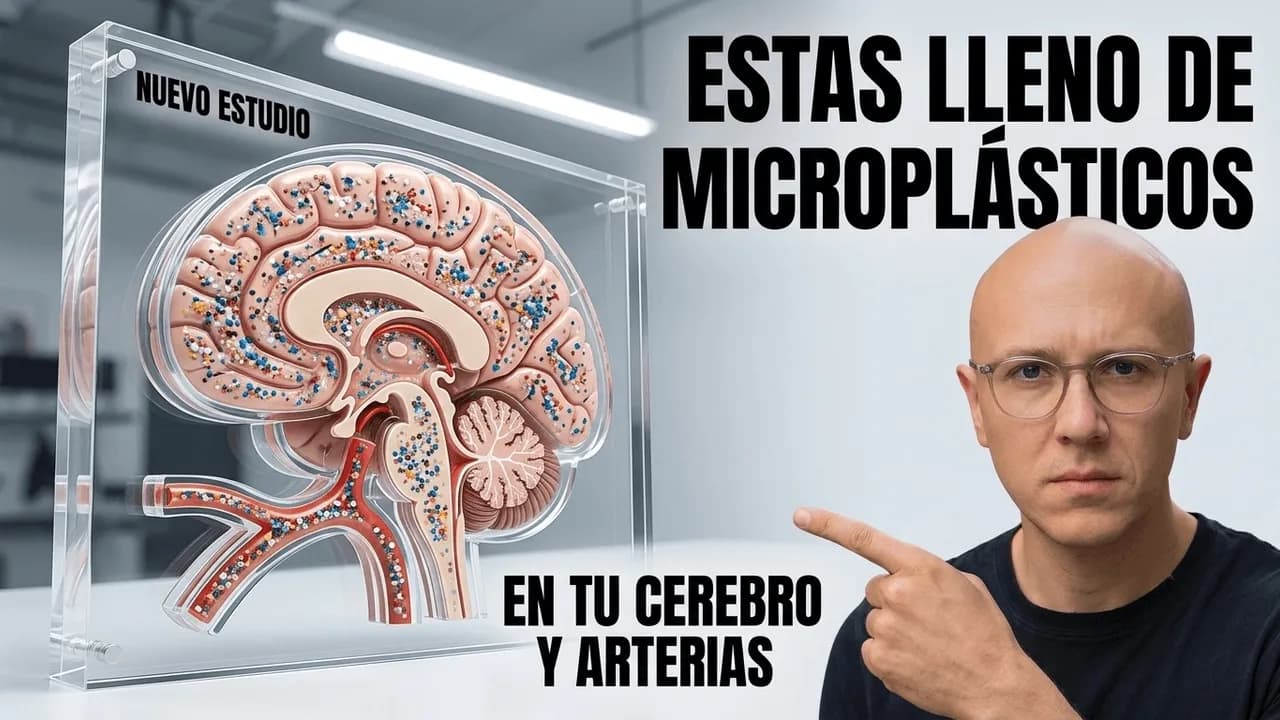
Paper in New England Journal of Medicine: microplastics associated with 350% increase in cardiovascular events (hazard ratio 4.53). Studied patients undergoing artery procedures; 58% had microplastics. Followed for increased risk.
Additional findings: increased inflammatory markers/cytokines; electron microscopy showed microplastics jammed in immune cells irritating them.
Echoes signals in reproductive health, liver, kidney, gastrointestinal health, clotting time. Feedback: correlative, not causal. Takes years for striking correlative data; even smoking remains correlative.
Massive effect size, biological story (inflammation, microscopy), can't do RCTs ethically. Positive charge on plastics causes accumulation via mechanical abrasion, oxidative damage; hydrophobic, stick in fatty places like plaque.
Microplastics in placenta: all 13 women with intrauterine growth restriction (IUGR) had detectable amounts; only 3/40 normal pregnancies. IVF: fertilization rate drops with microplastics (implantation unchanged). Male: sperm quality/count decline.
IUGR obvious (baby size); signals for subtler effects like neurodevelopment unmeasurable by ultrasound. Natural experiments like 1953 Europe sugar rationing show lifelong chronic disease risk.
Female fetuses develop egg cells in utero; chemical exposure causes transgenerational effects (3-4 generations) via epigenome in mouse models. Affects grandchildren directly.
Gut key for reducing exposure/accumulation. Winnow vision: lower intake since plastics ubiquitous.
Paper on human gastrointestinal cells: polystyrene (e.g., Styrofoam) in 3 chemistries (amine-conjugated positive charge, carboxyl-modified negative, nonfunctionalized) and sizes. Positive charge penetrates most: confocal images show green particles throughout cytoplasm, even nucleus, in vesicles. Cell nuclei blue, membrane red. Opposites attract (cell membrane negative).
Mouse model: fed polystyrene nanoplastics 32 days. Controls: long villi, tight crypts all intestinal sections. Higher doses (10 mg/L = tens of trillions 50nm particles): villi shrink, crypts enlarge, inflammation/damage. 10 mg/L = 10 grains salt/liter; environmental bottle ~thousands, trillions need years/multiple sources.
Another paper: polystyrene nanoplastics reduce tight junction proteins (e.g., ZO-1 green glow dose-dependently = leaky gut). Human intestinal linings on filter: fluorescent polysaccharides pass through at 10^6 particles (leaky). Hydrophobic plastics stick to cells/plaques.
Cofounders obsessed after learning pervasiveness/damage. Microplastics gateway to pollution (heavy metals, organophosphates). Build protection tools.
Surprised no prior attempts: Western medicine treats disease, ignores prevention; microplastics new; environmental defense lacking.
Started therapeutic: dissolve plastics in body. But plastics have 16,000 chemicals; dissolving releases them—unwanted outcomes.
Researchers explored dragging chemicals and plastics out of the body using physical mechanisms of probiotics and attachment. The chemical nature of plastics determines binding to gut cells or microbes. Selection of microbes aims to preferentially bind microplastics in the gut, like a tug-of-war where the microbe wins and gets excreted.
A recent paper screened bacteria using glowing plastic mixed with various types in a centrifuge. Plastics sticking to bacteria made them heavier, separating via centrifugation. Residual glow measured plastic capture. The liquid was slightly greener on top, bacteria pellet greener below. Similar high-throughput screening tested thousands of bacteria against the five most prevalent polymers in biological samples: PET, polystyrene, polypropylene, and others.
Single bacteria bind specific plastics—e.g., probiotic A binds PET and polystyrene well, probiotic B binds polypropylene better. Combinations bind all five plastics better as a team. Brute-force screening of ~3,000 bacteria identified top-performing teams for a product.
In mice, bacteria or control fed for a week, then challenged with polystyrene drink. Control showed plastics spreading in gut. Strong binder DT88 clustered plastics into a plug transiting gut lining. DT66 worked well; DT-22 barely bound. Control and weak binders showed spread; DT88 focused clustering for excretion.
After challenge, control excreted ~40% of high-dose plastic (60% unaccounted). DT66 or DT88 increased to ~60% (1.5x increase). Plastics raised pro-inflammatory markers IL-1 beta, TNF alpha, IL-6; probiotics returned them to baseline. Anti-inflammatory IL-10 also returned to baseline (desired: three inflammatory down, IL-10 up). Proof-of-principle for single strains; optimize with bacterial collections.
Plastics reduce Bacteroides, Akkermansia, Lactobacillus, Bifidobacterium (key for fiber degradation, butyrate production, gut lining protection). Opportunistic inflammatory bacteria like Enterobacter fill the void. Winnow is an exceptional probiotic for general gut health, replenishes depleted families, adds plastic-binding (preclinical mouse models show strong reductions in passage).
Human correlational data (e.g., New England Journal) and animal models tested theory. No human randomized control trials proving probiotics reduce plastic exposure/accumulation. Winnow uses preclinically validated plastic-binding bacteria, not clinically proven in humans. Challenges: universal baseline exposure, noisy daily variations (e.g., plastic bottles, Starbucks cups), need long-term longitudinal studies with high sample sizes. No negative control possible.
Collaboration with Altist Bioscience grows human gut linings on chips from stem cells to measure plastic penetration, inflammation, stress with/without intervention. Partnering with Aerrow Labs for first microplastic blood test to measure long-term blood plastic reductions.
Aerrow Labs test (available via Blueprint, Keyspan) measures 1-70 micron plastics in blood/saliva; blind to pervasive nanoplastics. Tip of the iceberg; no known safe limit (e.g., 10-30 particles meaning unclear). Useful for tracking reductions via lifestyle/diet/Winnow. Recommend baseline for interested users; test frequency per expert judgment for monitoring.
- Avoid plastic-lined metal bottles/cans (aluminum leaches taste; common in sparkling water). Recommend stainless steel: Clean Canteen, LifeStraw water bottles.
- High-probiotic diets (yogurts, kombuchas) replenish Lactobacillus, Bifidobacterium.
- High-fiber diet: insoluble fibers speed transit; fermentable/soluble fibers form gut gel to trap/push plastics (despite slowing gastric transit in some cases).
Fiber effects depend on type, dose, host, microbiome (e.g., Bacteroides vs. Faecalibacterium). Inulin (soluble) adapts microbiome against fructose liver damage but high doses caused inflammation/ALT rise (Lancaster et al. 2022, Snyder lab, Stanford; trial terminated for some).
No data on sulforaphane mobilizing microplastics. Zeolites, charcoal, chelators help toxins/chemicals in plastics but unproven for particles. Absence of evidence isn't evidence of absence; helpful generally.
Don't stress—stress harms more than microplastics currently. View pollution as constant pressure; small actions (replace plastics, probiotics, fiber) matter. Reduce single-use plastics to lower toxicological dose. Ongoing discussion encouraged.
Keep Nick Norwitz in your library
Save the videos and channels worth coming back to, and find them again in one place.