Top Omega-3 Scientist Weighs in on Sardines
In a Nutshell
Professor William Harris, omega-3 expert, defends seed oils' linoleic acid as harmless absent human trial evidence of harm, while emphasizing whole-food omega-6s are healthy and processed oils' risks remain theoretical. He endorses eating sardines liberally for boosting the omega-3 index (ideally 8-12%; host hit 16% after 1,000 sardines, gaining cold resistance but not fish odor from omega-3s), debunks skin absorption myths, and dismisses FDA mercury warnings for pregnant women as overblown—meta-analyses show more fish intake raises kids' IQ by ~7 points. Future omega-3s from algae/plants will sustain supply; test your index at omegaquant.com for better mortality risk prediction than cholesterol.
These notes were generated by AI and may contain inaccuracies.
Eat as much fish as you can. You're never just having an isolated fatty acid. Those oils are used in the processing of a lot of different kinds of foods. The host interacts with the inputs in ways to generate outputs that can be so dramatic to be opposite. A higher level of processed foods apparently now is linked with better health outcomes. It's hard for me not to believe it doesn't have profound physiologic consequences. I think it probably does. Smell your hands. You have sardines in your skin.
Host returns for part two with world expert in omega-3s and omega-6s, Professor William "Bill" Harris. Bill chaired the American Heart Association Scientific Advisory Board on omega-6 fatty acids, published hundreds of peer-reviewed papers, innovated the widely used omega-3 index discussed in part one. Topics include seed oils, sardine diet, mercury, fish smell explanation.
Host clarifies confusion: people conflate highly processed industrialized oils with the concept of omega-6 fats. Omega-6 from whole unprocessed foods (walnuts, nuts, seeds) tend to be healthy and anti-inflammatory. Extracting, hyperconcentrating, removing natural antioxidants, heating cycles in processing (packaged in plastic bottles) might be harmful.
Chemically, linoleic acid is identical whether from walnut or soybean oil. Question: is it the company it keeps?
You're never just having an isolated fatty acid.
After processing, fatty acids might oxidize, convert into different things. Heating walnuts (high in omega-6) at 150°C for 20 minutes yields 30 times more oxidized fat than macadamia nuts due to heat sensitivity. Extracting oil removes natural antioxidants (e.g., lignan antioxidants in sesame prevent omega-6 oxidation in vitro).
Cholesterol is cholesterol, linoleic acid is linoleic acid, but practically, highly processed oils with oxidized fats, conversions, or added things could concern human health.
Potentially. I'd like to see the data that it's harmful.
Rabbit trail on fish oils: Norwegian study oxidized high-quality fish oil by bubbling oxygen through it for a day (way beyond physiologic oxidation), encapsulated it, randomized volunteers to unoxidized vs. oxidized for 6-8 weeks. Checked serum lipids, oxidative indicators, inflammatory markers—no adverse effects found. Oxidized oil didn't taste good, but no classic adverse effects.
Where is the evidence other than theoretical stuff that [seed oils] is harmful?
Grocery store oils (corn, soybean, safflower) retain vitamin E. Other protective molecules removed, but need human data showing difference.
Host cites controversial Minnesota Coronary Experiment: RCT swapping saturated fats for vegetable oil showed more deaths, more atherosclerosis on autopsy. Not vilifying linoleic acid—absence of evidence isn't evidence of absence. Physiology, preclinical, some clinical data suggest harm. Host avoids them personally while humble about knowledge limits.
Fair position. We don't know risks/benefits of seed oil-rich diet. Need more data.
Host not focused on avoiding seed oils, doesn't pour them on food.
US primary linoleic acid source: seed oils in processed foods (not just salad dressings). Higher blood linoleic acid levels associated with better health outcomes, implying higher processed food intake linked to better outcomes (healthy user bias, like saturated fat mostly from ice cream/candy, not beef/steak).
Data is messy, confounded, difficult to draw conclusions.
Seed oil debate overblown, polarized on social media.
Omega-6 vulnerability: Linoleic acid/omega-6s are substrates converted to hormones. Some beneficial (12,13-diHOME: anti-fibrotic, longevity hormones for heart); others damaging (4-HNE); oxidation by myeloperoxidase (biomarker/enzyme in blood/fat around vessels, peroxidizes omega-6 fats, starting reactive oxygen cascade).
In disadvantaged metabolic state (obesity), body turns omega-6 more harmful vs. healthy state.
Very reasonable hypothesis, testable. Could measure blood levels of these molecules by body weight.
1980s: Prostaglandins from arachidonic acid kicked off omega-6/3 interest. Thromboxane (potent platelet aggregator, clotter from arachidonic acid). Prostacyclin (prostaglandin I2, from blood vessel wall, blocks platelet aggregation)—compete, yin-yang, both omega-6 derived.
Oxylipins: umbrella for fatty acids with oxygen attached (15 PUFAs in blood → huge variety).
SPMs (specialized pro-resolving mediators): omega-3s turn into molecules shutting down inflammation actively.
Michael Snyder (Stanford, multiomics/metabolic health): Cell 2020 "Molecular Choreography of Acute Exercise"—high-frequency sampling post-exercise showed fitness inflammatory signature: saturated fats drop (burned), omega-3 fats spike (act as resolvins to shut down adaptive inflammation). Figure 6B: gene transcription by insulin resistance—opposite expression patterns.
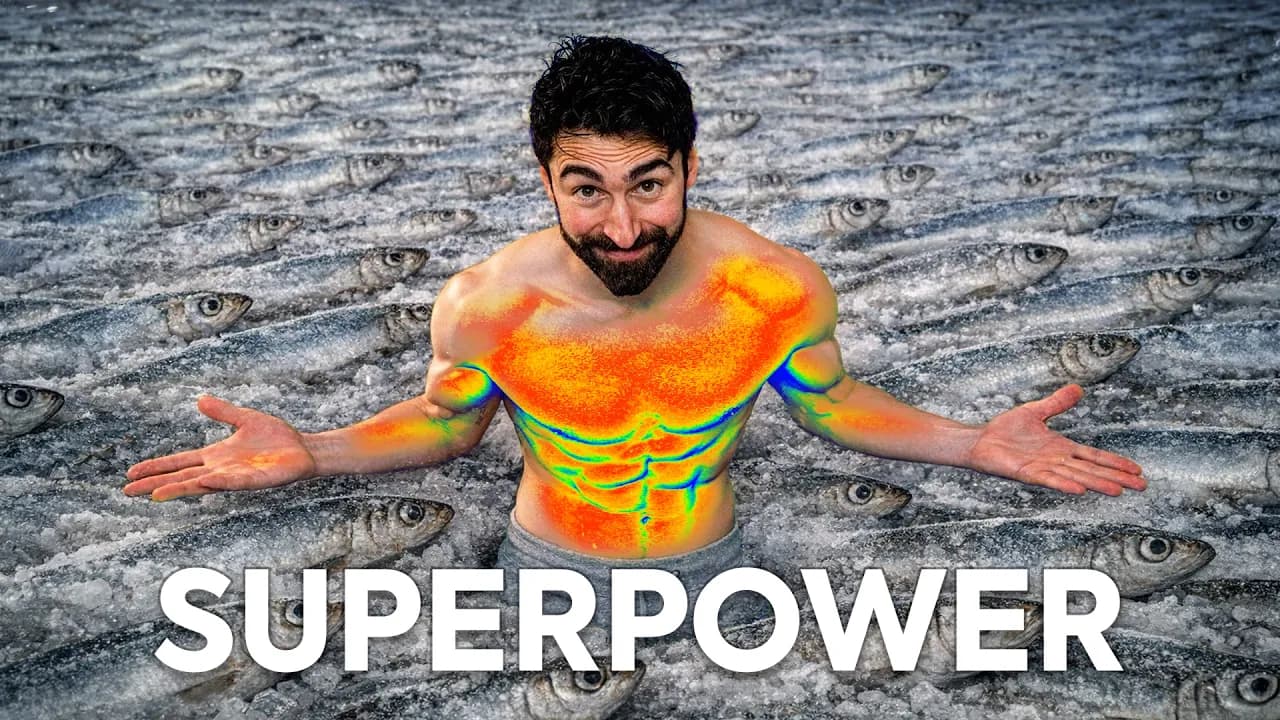
Host ate 1,000 sardines in a month (inspired by Dom D'Agostino on Tim Ferriss, Diary of a CEO). Minimal intake of nutrient-dense food (nutrients + omega-3s): benefits of fasting, preserve muscle, fuel body.
Host's omega-3 index: 16% (scale to 12%, unusual for human; dolphins ~17-18%; US average ~5%). Massive human range (5% to 16%) likely has profound physiologic consequences.
I think it probably does.
Host N=1: became cold resistant (unexpected, not placebo-expected). Literature: omega-3s increase thermogenesis under cold stress. Hypothesis: 12-HpE (oxylipin from omega-3 in brown fat, autocrine/hormonal signal boosting heat production, muscle glucose uptake).
Adult humans have active brown/beige fat (endocrine organ, not just calorie burner). Possible central brain effect altering cold perception.
That's the weirdest thing I've ever heard.
Fish smell: girlfriend noticed sardine scent from skin (not breath, even fasted/showered). Hands smelled like sardines. Host habituated (like to iguanas' poop).
Late 1970s experiment: boss tested if omega-3 comes out of skin—had subjects wear long underwear 24 hours, then
To test if omega-3 from sardines transfers to skin, bring long underwear into the lab, put it in a big vat with acetone or some organic solvent, boil it down to extract any lipids, concentrate them, and inject into a machine to measure omega-3. Results showed zero omega-3. Omega-3 is not what smells; the chemicals giving fish their odor are protein breakdown products and some fatty acid breakdown products, not omega-3s. Pure omega-3s don't smell at all. There's no omega-3s on your skin.
Technical difficulties lost video and audio, but Professor Harris's responses were preserved. First question: thoughts on FDA warnings that maternal fish intake, particularly high-mercury fish, harms infant neurodevelopment.
25 years ago, FDA reacted to studies from the Faroe Islands (part of Norway, north of Iceland) where people ate pilot whale blubber and fish rich in mercury. Studies showed cognitive problems in kids of women with high mercury intake. FDA issued warnings against 4-5 high-mercury fish like shark and swordfish that few eat anyway. This drastically reduced all fish consumption by pregnant women, despite fish being the best omega-3 source for babies. It was counterproductive; FDA exaggerated safety margins by multiplying toxic levels by 10 or dividing by 10-fold.
Recent meta-analysis of 35 studies involving 200,000 women examined maternal fish intake during pregnancy and kids' mental health outcomes. Linear relationship: more fish eaten (regardless of mercury; most fish have very little), higher IQ—about 7 points higher for high vs. low fish eaters. Advocacy to FDA: change advice from limiting fish to "eat as much fish as you can" for DHA benefits. Harm in avoiding fish due to missing omega-3s.
Mercury concerns in fish for pregnant women and young children overblown; people threw out the baby with the bathwater, avoiding healthy food over a whisper of toxin without balancing risk and benefit.
Excited for omega-3 index (or any omega-3 test) to become part of every annual physical exam, alongside cholesterol and glucose. If not measured, not managed. Omega-3 level is a more predictive risk factor for death than cholesterol, better and more safely modifiable.
95% of omega-3 from fish, mainly sardines and anchovies off Peru's coast, processed into drugs, supplements, pet foods. Genetic research to engineer land plants to produce EPA and DHA for infinite resource. Algal microalgae grown in vats (e.g., Arkansas) produce EPA and DHA; algal products available. Shift to smart, non-fish-dependent production: better for planet, cheaper long-term. For 1 gram/day per person on planet, fish insufficient.
Visit omegaquant.com for info on Professor Harris, omega-3 index blood test, lab in Sioux Falls, South Dakota, and sister lab in Stirling, Scotland for EU work. Fatty Acid Research Institute (Google it) for story on him, scientists, and research. Links below.
Thank you, Professor Harris.
My pleasure. Enjoyed talking with you.
Keep Nick Norwitz in your library
Save the videos and channels worth coming back to, and find them again in one place.