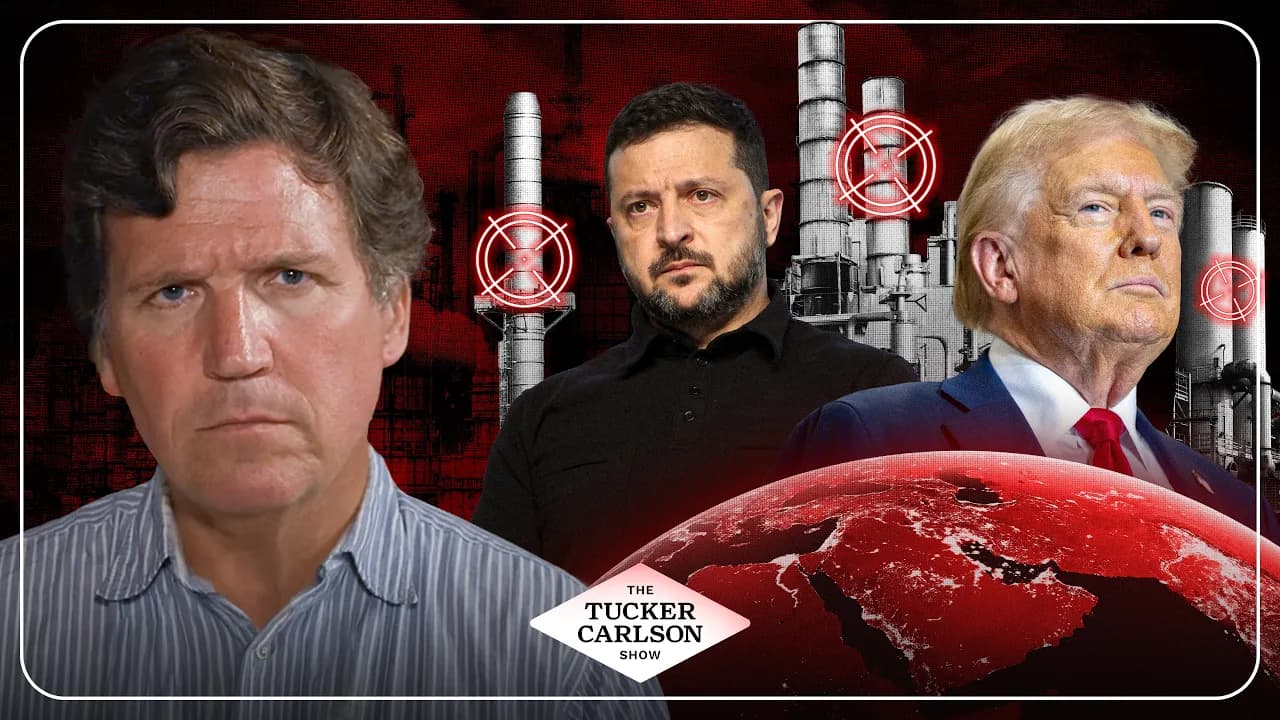
Trump’s Energy Crisis Causes Food Shortages, Skyrocketing Prices, and Global Suffering. What’s Next?
In a Nutshell
Trump’s energy policies are accelerating global food shortages by disrupting natural gas supplies essential for fertilizer production, with Qatar’s LNG plant offline for 3-5 years after attacks and prices spiking from $2-3 to $30 per unit. The US sanctions on Russia, Iran, and Venezuela failed to reduce oil exports but instead transferred $10-20 per barrel discounts to China, enabling Beijing to build 1.5 billion barrels of strategic reserves—five times the US reserve—using discounted crude for its 2027 Taiwan invasion plans. Europe’s self-imposed energy restrictions have created $31/MMBTU natural gas prices versus America’s $3, while 90% of global energy remains locked in hydrocarbons that policy ignores.
These notes were generated by AI and may contain inaccuracies.
The world gets 90% of its energy from hydrocarbons: oil, natural gas, and coal. This percentage has remained consistent over the past 50 years and will remain the same 50 years from now. The remaining 10% consists of nuclear energy and renewables, specifically solar and wind. Solar and wind represent only 5-6% of global energy production, unchanged from 10 years ago despite trillions of dollars invested.
The three main hydrocarbon sources each contribute roughly one-third of the world's energy: oil, coal, and natural gas. China derives 60% of its energy from coal, while India derives 80% from coal. Both countries are rapidly growing their coal usage.
Natural gas is essential for fertilizer production, specifically urea and ammonia. Approximately 80% of the world's food production depends on natural gas-derived fertilizers. Without natural gas production, the global population of 8 billion could only support approximately 2 billion people. A disruption in natural gas production from Qatar due to Middle Eastern situations will cause food shortages in 2027 due to crop cycle lags.
Before the 1910s, crop rotation was necessary to add nitrogen to soil. The Haber-Bosch process discovery allowed natural gas to be used to extract nitrogen from air, creating fertilizers that increased crop yields by 500-600%. This technological breakthrough enabled population growth through cheap energy and cheap food.
New York State banned natural gas drilling and pipelines despite sitting on the Marcellus and Utica shale formations that run through West Virginia and Pennsylvania. Manhattan's electricity comes from four major power stations on the east side, plus facilities in Queens, all running on natural gas. The state simultaneously bans production while receiving electricity from the same fuel source.
The United States produces approximately 25% of the world's natural gas. Qatar produces 20% of the world's liquefied natural gas. Natural gas prices vary dramatically: $2.50 per MMBTU in the US versus $31 per MMBTU in both Europe and Asia.
Europe pays 10 times more for electricity than the United States due to ideological decisions to shut down coal and nuclear plants. This has resulted in electricity prices increasing 100-200% in recent years. The European environmental movement has been captured by political agendas focused on controlling energy consumption rather than legitimate environmental protection.
The modern environmental movement began in 1960s California with legitimate concerns about smog and air quality. The California Air Resources Board (CARB) successfully removed lead from gasoline and reduced sulfur emissions. However, the movement was later captured by political and social agendas unrelated to environmental protection, evolving into mechanisms for controlling how people think, behave, and consume energy.
The anti-fracking movement gained prominence in the 2000s, including through the Matt Damon film "Promised Land" which falsely depicted natural gas contamination. Fracking and horizontal drilling are the core reasons the United States achieved energy independence over the past 20 years. Current movements include opposition to data centers and oil production in general.
New York residents receive $100 government checks to offset high electricity bills while the state bans natural gas production and pipelines. This creates a cycle where restricting energy production increases dependency on government subsidies. The EU's centralized power structure in Brussels enables policies that disconnect citizens from energy production decisions.
High energy costs prevent economic growth. Europe experiences no economic growth because energy and industrial capacity have been deliberately reduced. Everything becomes more expensive: housing, cars, and daily necessities. Energy blindness prevents people from understanding that 90% of their energy comes from oil, gas, and coal rather than visible solar and wind installations.
Five years ago, oil comprised 30% of global energy. Europe previously purchased significant quantities of natural gas from Russia, with the Nord Stream pipeline built across the Baltics. Nord Stream 2 was never activated, while Nord Stream 1 was destroyed under unusual circumstances five months into the Russia-Ukraine conflict. The US government was involved in this operation, which made Europe dependent on US natural gas exports. The theory suggests it was not Ukraine that conducted this difficult undersea pipeline operation, but rather the US government.
Mainstream media, including Fox News and the New York Times, reported that Russia destroyed its own pipeline. This narrative was presented despite the logical improbability of Russia harming itself after running out of other targets. The approach represents narrative setting rather than simple misinformation, creating a dystopian information environment where everything appears absurd. This strategy aims to make populations nihilistic and more malleable to control.
Trump operates in a transactional manner like a business rather than being ideological. He takes matters personally as a normal human response. During his first presidency, European leaders including Angela Merkel openly mocked and laughed at him during a NATO meeting when he warned against European dependency on Russian energy and cautioned against threatening Russia with weapons on its borders via NATO expansion. This personal history may have contributed to US actions regarding Nord Stream, with Europe benefiting enormously from the situation while becoming increasingly dependent on American energy supplies.
Europe now purchases at least double the amount of LNG from the US compared to ten years ago, making Europe a significant energy-dependent vassal of the United States. The transformation of US oil and gas production began around 2005 with two key technological developments: fracking, which pumps water at high pressure to fracture rock formations, and horizontal drilling, allowing drill bits to turn sideways for three to four miles. These innovations reversed declining US oil and gas production that had continued since the early 1970s. The US now produces approximately one quarter of the world's oil and one quarter of the world's natural gas, doubling from under 10% fifteen years ago.
Oil has been central to every war over the past 150 years and remains fundamental to civilization, food production, and geopolitics. The US Strategic Petroleum Reserve releases earlier in the year primarily benefited Europe, as European refineries received 90% of the crude oil. Europe imports 90% of its oil, demonstrating its massive energy dependence on the United States.
European energy production faces fundamental obstacles due to property rights structures. In the United States, private landowners own mineral rights extending to the earth's core, including oil, gas, and other resources beneath their property. In Europe, governments own all subsurface resources, with private ownership limited to surface dirt. This removes incentives for private capital investment in drilling operations, as governments would claim all profits. The US government stepped back from energy production with environmental controls in place, allowing the industry to flourish, while European policies effectively banned North Sea energy production through regulatory barriers.
Gasoline prices demonstrate the stark difference: $3.85 per gallon in Maine versus $12 per gallon in Denmark. The identical oil molecules cost three to four times more in Europe due to taxation rather than production costs. Norway deliberately remained outside the EU to avoid energy production restrictions, maintaining robust oil and gas production while other European nations banned or heavily restricted domestic energy development.
European taxation of hydrocarbons aims to discourage usage but has proven ineffective. Global per capita oil consumption has remained constant at four barrels per person annually for 100 years. The United States consumes 20 barrels per person annually due to geographic spread and commuting patterns, while Europe consumes 10 barrels per person due to higher population density. In Denmark, eight of the twelve dollars per gallon goes to government taxation.
Ireland's economic transformation demonstrates tax policy impacts. After joining the EU in 1973, Ireland experienced unemployment rising from 3% to 22-23% by the late 1980s due to loss of tariff protections. Facing bankruptcy in the mid-1980s, Ireland reduced corporate tax rates to near zero and significantly cut income taxes. Economic growth exploded the following year and continued for forty years, proving that tax reductions create immediate economic incentives and growth.
The United Kingdom's North Sea oil and gas fields, including the Brent field, have declined due to lack of exploration incentives. Oil production costs approximately $60-70 per barrel, requiring profit incentives to justify capital risk. The UK government claims all profits from drilling operations, removing any incentive for companies to risk capital on exploration and production. Windfall taxes further discourage investment. Norway maintained profit incentives for its North Sea operations, sustaining production levels.
The US became the world's largest oil and natural gas producer by allowing private individuals to retain profits from risked capital. The Brent crude benchmark, historically set by North Sea production, is now determined by US crude transported across the Atlantic, with West Texas Intermediate setting European and global oil prices. However, certain US regions including Washington, New York, New England, and California have implemented energy restrictions similar to European policies, crushing local energy industries.
Energy policy failures stem from ideological commitments rather than ignorance, as information about energy production methods remains widely available. The impulse toward self-harm manifests in policies like clearing forests in cloudy regions to install solar panels, representing intentional punishment of populations through energy restrictions.
Leaders are intentionally punishing the people they lead through energy policy. The clearest evidence is the decision to clearcut forests in the cloudiest part of the United States to build solar panels in the cloudiest place in the United States. Energy policy globally, especially in the West, is not designed to help people at all. The political class knows that energy is essential to modern life and uses it as a method of control. If they control how people consume and produce energy, they can control a lot more of their lives than otherwise. Energy policy is more ideological than practical. The actual way to help people on energy policy would be to step back, reduce government involvement in energy policy, and allow it to operate more freely.
Europe put sanctions on Russian crude oil exports during the Russian invasion of Ukraine, setting the price at $60 per barrel. This didn't change what Russia produced in terms of crude oil at all. It was basically self-harm on Europe. The price went to $70 and Europe starved themselves of crude oil. Europe has done almost everything wrong in terms of energy policy and sanctions. The US has also fallen into the sanctions trap, imposing sanctions on Venezuela, Iran, and Russia on their oil production.
The sanctions on Russia, Iran, and Venezuela didn't restrict one barrel of exports. China bought 2 million barrels a day from Venezuela, 2 million barrels a day of sanctioned crude from Iran, and 2 million barrels a day of sanctioned crude from Russia. They bought it all at a $10 to $20 per barrel discount because Europe and the US transferred that money. All the sanctions did was lower energy costs for China. China has been gorging on the sanctioned oil from those three countries for the last five or six years.
The information is available and demonstrable. If you look at Russian, Venezuelan, and Iranian oil output, the oil is being bought at a discount by the main geopolitical rival, China. If the decisions continue to happen, the happening itself is the point of the exercise. This is an effort to help China over the West.
The sanctions showed the limits of control of the blob, the deep state, the bureaucracy. They think they can control energy markets at large globally, but they cannot. The EU makes decisions that stay in place for 5 to 10 years because they're slow-moving bureaucracies. The oil and gas industry showed the limits of the stupidity of those decisions. They thought they could somehow control the oil industry, but oil production globally cannot be controlled by them.
If those sanctions worked and stopped Iranian, Russian, and Venezuelan production, it would hurt everyone. China has been sitting quietly buying up $20 per barrel discounted crude from those three sanctioned countries, secretly saying thank you to the EU and US for these sanctions.
China has been building a strategic stockpile of oil ahead of Taiwan 2027, which is a publicly acknowledged invasion plan or control plan of Taiwan. They've been using sanctioned barrels from Russia, Iran, and Venezuela to fill their stockpiles. China went from almost no strategic storage four or five years ago to now having 1.5 billion barrels of oil in storage underground salt caverns. The US Strategic Petroleum Reserve has roughly 300 million barrels, so China has five times more.
All of China's storage has been built with sanctioned oil cheaply created by US and European sanctions on Russia, Iran, and Venezuela. China has been enabled to build a huge reserve ahead of a potential 2027 Taiwan invasion. Sanctions aren't just economically irrational; they also have side effects that create economic transfers enabling China to build up strategic reserves.
China's ships are diesel-powered. All of their military equipment is diesel or some gasoline. They import 12 million barrels a day. Without a strategic reserve, they would be done within 20 to 30 days if blockaded. If China were trying to invade Taiwan and Malacca and Singapore were blockaded, they wouldn't have oil for their ships within three or four weeks. That's why they've built up a stockpile to power their navy and military equipment.
China's electricity is 60% from coal, 20% from oil, and 20% from natural gas. Solar and wind are under 10% even in China, and nuclear is under 10%. They're in the same 90% hydrocarbon world as everyone else. The 20% oil is for all of their ships, which are diesel.
Coal produces around 70% of China's electricity. Coal is cheap, and that's why India uses 80% of its electricity from coal. Coal is the cheapest way to produce electricity. One-third of US energy consumption is coal. Coal has a bad rap from the 1960s and 1970s smog issues, but the coal industry globally has put scrubbers on their boilers that can remove most or all of the pollutants coming out of coal. The only downside is the expense of putting scrubbers on.
Coal is abundant and easy to handle. Natural gas is challenging to handle because you have to compress it into a liquid or cool it down to a liquid to ship it overseas, which is an expensive process. That's why Europe has $30 natural gas while the US has $3 natural gas. Europe banned natural gas production and decided to be dependent on others.
Oil is the most ideal fuel of all because it's a liquid and dense. Crude oil and its refined products like diesel, gasoline, plastics are in everything. One-third of the world's energy is coal, one-third is oil, and one-third is natural gas. The other 10% comes from nuclear, solar, and wind. Nuclear is very expensive because of all the regulations around it.
The biggest buildout of solar in the US is in Texas because it's sunny there most of the year and solar panels are cheap from China. The energy to produce those solar panels was built by China, which gets 70% of electricity from coal. Those solar panels are really disguised coal. China is willing to do that for now in terms of building solar panels. No one else really at scale in the world builds solar panels or other environmentally friendly energy sources.
Wind is tiny in terms of global energy, just a few percent. It's very difficult to scale and has issues with being too windy or not enough wind. It's a very unreliable energy source. Wind is useful in some parts of the world at some times of the day as an additional energy source, but it's not base load. Society cannot run on wind energy alone.
Hydrocarbons are what society depends on and needs. Maybe with AI, fusion or new technology will emerge over the next 40 to 50 years, but right now there's no alternative.
There's a lot more coal in the world. We're not going to run out in the next 50 to 100 years. Australia produces a lot of coal. China produces a lot of coal. The US produces a lot of coal in Appalachia and Wyoming.
Mike Bloomberg claims he helped destroy the coal industry in the US. But coal production and mining in the US was destroyed by fracking and cheap natural gas, not by environmentalists. The coal industry was undercut by the natural gas industry that discovered fracking and horizontal drilling in the early 2000s. Fracking involves pumping wells with water and cracking the rock a couple of miles down. Environmental regulations were more about putting scrubbers on, but gas became cheaper than coal.
Natural gas is a hidden fuel because it's in pipes and goes to the power station without anyone pumping it. One-third of US energy supply is from natural gas. Earlier this year in Texas it was $10 per MMBTU during a cold snap, and now it's $3 per MMBTU, but no one complained when it was $10. Natural gas is probably the fuel that can most make the US truly energy independent. Oil production is linked to the international market because you can ship it around globally.
Natural gas is not as well connected globally because it's very expensive to ship. You have to cool it down and compress it. If the US wants to be truly energy independent, natural gas is that fuel. There's a huge amount of natural gas under the northeast that's not being produced because pipelines are blocked. Unlocking natural gas production in the US will make the US price independent as well as physically independent. Europe is at $31 natural gas while the US is at $3. Natural gas is trapped in the US because it's so difficult to ship.
Natural gas production is growing at a rapid rate in the US even at $3. Cheap natural gas killed the coal industry, not Mike Bloomberg. Natural gas can continue to transform the economy. The US is learning that if you increase energy production and make energy cheap, your economy grows. The cost of doing everything becomes cheaper. Whether it's a data center or a factory, cheap energy drives manufacturing. China makes things because they have cheap energy from coal. If the US increases natural gas production, that's how manufacturing can come back to the US, or at least stop the drain of manufacturing out of the US.
China has been trying to gasify some of its coal. Coal can be turned into crude oil or natural gas by heating it and putting it under pressure. Coal is hydrocarbon in solid form. Natural gas is methane, another form of hydrocarbon. Oil is the same. You can change hydrocarbons by heat and pressure. This is a relatively simple chemical reaction.
The Fischer-Tropsch process was made famous in the 1930s in Germany. Germany had no oil at the time and oil defined World War II. Japan went down to Indonesia. Germany had coal and tried to turn it into oil, but it's a very expensive process. It costs $200 a barrel to turn coal into crude oil into gasoline. South Africa did it. China does it but not at scale because it's very expensive. They do it at a small scale in case they're cut off from Middle East oil in a war situation.
China cut their oil imports from 12 million barrels per day down to 6 million barrels per day at one stage. They halved their oil imports. This is the biggest question in the energy space this year because no one knows why they did it. There's no consensus on why. China was getting 2 million barrels from Venezuela, 2 million from Iran, and 2 million from Russia, all of which were restricted by sanctions.
People estimate China's strategic reserve at 1.5 billion barrels. They definitely dipped into that strategic reserve to save their own economy because they need diesel for trucks and cars as a manufacturing economy. This set back their Taiwan 2027 strategy a year or two or maybe longer because they were building up that reserve ahead of 2027.
People say China did coal to liquids, but there's skepticism about that because it's very expensive. People also say China told everyone to drive electric cars, but you can't force that kind of behavior even in China. The main thing China did was dip into their own reserves. No one knows how much they did. People say maybe they only reduced imports by 1 million barrels and were relying more on cutting their petrochemical productions.
A huge portion of oil and gas globally goes into petrochemicals making plastics and making fertilizer. People claimed crude oil was diverted from petrochemicals and plastics into gasoline, but technically you can do that through a very expensive, awkward process that cannot be done on a turn of a dime. The most simple answer is that they dipped into their reserves that they had built up from all the sanctioned oil from those three countries that they had gorged on for the prior five years ahead of Taiwan 2027.
They had no choice because they cannot survive. Their economy is fragile with a housing crisis that is a slow-moving crisis going through their economy. They have a debt crisis with their debt-to-GDP ratio being huge when including all debt levels like government debt and personal debt. They had to save their economy. They have a record of doing this, as they did in the financial crisis of 2008 when they pumped a huge amount of money into their domestic manufacturing economy in an emergency way immediately following 2008.
They dipped into that strategic reserve in a big way. No one really knows exactly how much oil was involved. If at an intelligence organization, one would try to determine how much oil was used. China was one, trying to save their economy because oil is a critical part of their economy.
They cut their imports in half because there was a blockade and they could not get the oil. They physically could not get the oil out of the Persian Gulf. Back in March of this year, exports from the Middle East were zero through the straits. They could not increase imports from Russia or West Africa because ships have to go the whole way around Africa, making it a logistical nightmare. China is trying to build pipelines to Russia, but that is a very long distance, and in oil and gas, long distance means expensive. It is also a very cold, harsh environment requiring heating the pipes or putting diluent in to enable flow.
Technically, China could not get access to the crude oil at that time, and that affected not just China but a lot of Southeast Asia and Asia in general, including India. They really did want to save their economy by releasing crude oil from their own stockpiles into the domestic refining space. They did not want high oil prices. Oil looked at one stage like it was going to go straight to $200-300 a barrel. The oil industry operates at a margin that they basically did not want to contribute to that $200-300 price spike. They made a decision not to import because they had a stockpile they could use, along with marginal things like electric cars.
China has been buying $20 sanctioned oil at a discount for the past five years when oil went over $100. Historically, they stop their imports when oil goes over $100, even right now at $105 or $110. China's imports over the past two weeks have dropped off a cliff. They are economically rational. They buy below $70 and stop buying above $100. Once oil got above $100 back in February-March, they stopped buying. They don't want to buy expensive oil. The culture in China has a natural trader instinct.
It was a combination of dipping into their reserves, which caused their imports to drop. They dipped into their stockpile, setting them back in terms of their Taiwan invasion plan. Trump was playing 5D or 8D chess, which had the side effect of knocking them back. Venezuela also knocked them back because China was buying almost 2 million barrels a day of Venezuelan oil. This was only back in January of this year.
Venezuela oil is now going to the US. China had invested billions of dollars into Venezuela. China had also invested billions of dollars into Iran. They built the Hormuz bypassing pipeline called Jask that went around the Strait of Hormuz. It has never been used and was about to be completed by this year. China has been applying the whole Belt and Road Initiative to the oil and gas industry.
Russia is kind of still independent of China's influence through the Belt and Road Initiative. Russia will sell their oil to anyone but hasn't been captured by that Belt and Road Initiative economics. Iran was captured by the Chinese Belt and Road Initiative, as was Venezuela. China does not care about Venezuela's politics or people. They care about the economics. They don't care about Iranian politics, religion, or Israel. They basically ask: can you get me cheap oil below $70 a barrel? How do I get that oil? If you could ask the EU to put more sanctions to discount it even further, that would be a bonus because all that money is not going to Europe, it's going straight into the pockets of Beijing.
Western sanctions against outlaw countries help China's economy directly. China would love for more European sanctions and US sanctions. Western sanctions, which Western politicians brag about continuously, and Western populations feel good about, are feel-good policies. They help China's economy directly, and it's quantifiable at $10-20 a barrel. The Chinese would love nothing more than for the EU to flagellate themselves even further with more sanctions and a $20 cap on Russian oil.
The main reason for this conversation was the war, which has heightened the world's awareness of how important energy is and how hard it is to have a civilization without it. Both wars, against Russia and against Iran, have reminded us of that. Being the regions that they are in, it has had effects on crude oil and natural gas. Coal can be put aside as a third of the world's energy not involved in this situation. The energy market had war-gamed out the shutting of the Strait of Hormuz for a long time, and it kind of happened in the 1980s with the tanker wars when Iraq and Iran were fighting. There were a huge number of tankers knocked out in that war. The US was escorting tankers in and out of the straits at that time.
The oil market immediately in February 26 of this year of 2026 assumed it was going to be a week or two. The forward curve, which is the price of oil as you go out into the future, showed the front of the curve was very high but very low a few months forward. The market was backwardated. The oil market is hyper geopolitically aware and very reactionary. Oil markets use futures and options to do the same thing as prediction markets do.
WTI is West Texas Intermediate, and West Texas Midland crude is also what now sets the price for Brent crude. Brent is a derivative of West Texas crude. There was a window of 15 years where Brent took over because before the fracking revolution, before the 2005 revolution, US crude production was declining and Brent took over for about 15 years between 2005-2020. Now that has flipped back to WTI crude in the US as the global benchmark.
Back in February, oil went from $60 WTI up into the hundreds very quickly. The forward curve showed that the price was going down to $80-70. The front was $120, but three or four months forward it was back down to $80. The market was predicting this thing was going to be quick. Trump went into this also thinking it was going to be quick. The US intelligence agencies, the blob, the deep state, everyone thought this was going to be really quick because they were just coming off Maduro in early January in Venezuela.
Everyone thought this would be a hit and you're one and done, out within two weeks. Just eliminate a few politicians at the top layer, which was strategically a terrible thing to do. The oil market very quickly rallied, and once it wasn't over in two weeks, Iran went to that mosaic structure where they basically distribute control of their military throughout the entire country, the IRGC and Basij. You cannot slice off the onion layer by layer at the top. It just doesn't work. Iran has developed this method of working for the last 30-40 years since the late 1970s. Iran started retaliating with drones, and that's when the oil market went, okay, this is going to be a more protracted thing.
They started hitting Gulf production facilities. They hit Qatar's natural gas LNG plant, which is still out and will be out for the next 3-5 years. Qatar's main source of revenue is that LNG plant. They knocked half of its production out. Qatar produces 20% of the world's LNG. That gas goes to Europe and Asia, and it's gone now for three to five years. Who benefits from this? The US natural gas industry. Nordstream, Qatar. If you were to be conspiratorial about it, you could just knock out all of Qatar and then the US would benefit even more.
The oil market initially priced in a quick win, then Iran started attacking all the production facilities, particularly refineries in the Persian Gulf. These refineries produce a lot of diesel. The second effect was the diesel price spiking. Crude oil. The spread between diesel and crude or gasoline and crude is called the crack spread. That blew out to diesel to crude. Diesel used to be $10 refining margin above crude. It went to $100 and stayed there since. They knocked out 2 million barrels per day of Persian Gulf refining capacity.
The world, the US, produces is a lot more gasoline dependent than diesel. Asia consumes more diesel. Europe consumes more diesel. The world had more gasoline capacity in refineries than it did have for diesel. So diesel was more tight as a global situation than gasoline.
It is extremely difficult to switch a refinery's proportion of gasoline to diesel to all the other refined products. You can switch 2 or 3% from diesel molecules that come out. You put crude oil in, you can move a slight 2 or 3% of the barrel into from diesel into gasoline or vice versa. It's a very difficult thing to switch. Everyone talks about diesel, but gasoline margins went from $10-15 to $60. Gasoline did also rally a lot. This refining margin. Diesel went to $100 spread over crude. Crude at $100, diesel is $200 a barrel. Gasoline, crude at $100, gasoline at $160 a barrel. It did cause a rally in crude and gasoline also. It was just that diesel was much tighter as a reaction.
This was combined with Ukraine hitting all these Russian refineries, which started coincidentally with the first half of this year when the Hormuz situation happened. That knocked another 2 million barrels per day of refining capacity out of Europe. The world produces 100 million barrels per day. Knocking 4 million barrels per day of refining capacity out does have an impact. It caused diesel prices to spike. The CIA helped them target. Ukraine is not an independent actor. Everything in Ukraine that hits Russia is approved and signed off. The US intelligence community wanted to reduce Russia's refining capacity when it affects the price of diesel fuel and gasoline in the United States.
Even though they're very sophisticated entities, the CIA and other entities in the US government sometimes don't think about the effect. They're energy blind to a certain extent. They thought that if they just target Russian refineries, they can damage Russia and it wouldn't affect global markets. They thought they could just pinpoint target these Russian refineries. Oil refineries are easy to target. They're big pieces of equipment. They wanted to create a little bit of pressure on Russia, Putin to come to the table this year. Trump wants out of Ukraine and Russia. Everyone should want out of it. That war should never have started. Everyone wants out except for a certain few vested interests. The CIA or whoever was providing the targeting information didn't think about the impact on diesel.
They thought it's just 2 million barrels per day of refining capacity out of 100. It can't have that much of an impact, but it immediately did. The blowback was in the energy market. It was a mistake. The CIA should never have targeted those refineries. They did provide all the targeting because they want to pressure Putin to come to the table. They want to pressure Zelensky by Elon Musk flipping on and off the Starlink button every other day. These are the two pressure points they're applying. They're trying to destroy Russian revenue with refineries and Zelensky's defense with Starlink, turning it on and off every few days to try and force these guys to come together and at least have some sort of a ceasefire. That was the original thought process behind it. They were surprised by how much diesel prices rallied.
It happened at the same time as Hormuz. If they did this when Hormuz was not happening, diesel would not have spiked as much. Now it depends on day-to-day. There's a pipeline that the Saudis built called the East-West pipeline back in the 1980s because of the original tanker war, Iran-Iraq tanker war. It goes from all of the oil and gas production. Saudi oil is produced on the edge of the Persian Gulf, on the east side of Saudi Arabia. Saudi Arabia is a big piece of land that goes all the way across desert to the Red Sea. The Red Sea has issues with the Houthis over the past few months. All of the oil production is trapped in the Persian Gulf, but the Red Sea is one place they can get it out outside of Hormuz.
During the 1980s, they built this pipeline as a backup plan with a 7 million barrel per day capacity. The world produces 100 million barrels per day. The Saudis produce 10 of that 100. The US produces 25. Of the 10 the Saudis produce, they could get seven of this out through this pipeline. They didn't used to do this because this pipeline was usually run at 2 to 3 million barrels per day of the Saudi 10. They used it as a backup plan. It's cheaper to ship through the Gulf. You've got to pump it across all these pumping stations. If you're a buyer from China or Asia from Saudi, to send a tanker the whole way into the Red Sea past Yemen is a very much more dangerous area, more confined. It was just cheaper for the tankers. Pipeline shipping is cheap also. If you were to buy the oil from the Red Sea at the end of this East-West pipeline, it was a dollar per barrel more expensive. It was cheaper to buy it from the Persian Gulf for China.
Saudi used to produce oil. All those Gulf producers are trapped inside the Persian Gulf. It's the same oil basin regionally. Tan is almost the other edge of Iran to where their oil is produced. Their oil is also produced at the edge of the you car island and down by the coast. It's the same reservoir, the same basin. It's a different reservoir. Some of them are connected like Kuwait and Iraq. Their reservoirs are connected, but it's the same basin. They were created at the same time millions of years ago in the same low spot.
When the whole situation kicked off, the first surprise was the issue of refineries, then it came into tankers. No one would in their right mind send a tanker through the Strait of Hormuz when there's an act of war and Iran is targeting tankers. These are civilian tankers, not military tankers. Iran was hitting them occasionally and hitting them cheaply. They send these $20-50,000 drones to hit them. There was the spike in crude first. That was the first wave. Then there was the spike in refined products. Diesel was the most extreme one. Because you hit these refineries combined with the Russia hits on refineries, then there was a spike in tanker rates.
These tankers went from you could hire a super tanker. Super tankers carry 2 million barrels capacity. They call them VLCCs, Very Large Crude Carriers. These buildings effectively carrying 2 million barrels of crude. You could hire them for $50,000 to $100,000 per day. That's the day rate before January and February this year. Now it's $1.5 million per day. The reason the tankers have gone up is that first of all, you can't get insurance. You can technically get insurance, but the insurance rates have gone up. They self-insure by raising their fees. The Saudis have their own tankers, so they're not paying other people to do this. The Emiratis have their own tankers. The UAE got their own tankers, Abu Dhabi. Those guys are half of the tanker run. They're at speed. These are super tankers that are full of 2 million barrels of crude. They can't move at speed, but they're trying to. They move as fast as they technically possibly can into the Persian Gulf, grab the oil, load it, and come back out.
Usually before February, they would then continue on to China or continue on to Asia somewhere. Now they don't. They stop outside the Gulf of Oman, they lighter, they load the crude onto another tanker, and they go back in again and do that loading. So those super tankers now this
Super tankers are conducting speed runs into the Persian Gulf, which produces 20 million barrels per day. The East West pipeline built in the 1980s has been ramped up from 3 to 7 million barrels per day. An additional pipeline to Friger provides another million barrels per day of bypass capacity. These alternative routes compensate for the Strait of Hormuz being closed to normal traffic.
The major workaround involves tanker runs speed-running in and out of the Gulf, conducting ship-to-ship transfers (STS) outside in the Gulf of Oman. Each run takes a few days and is highly risky. Captains receive $10,000 to $20,000 per run for taking their lives under risk.
Iran is hitting one to two tankers a day, targeting engine rooms, with some resulting oil spills. These are civilian tankers carrying crude oil, crewed by civilians from India and the Philippines. The attacks cannot be sustained because there are only 1,000 super tankers in the world, each carrying 2 million barrels. Annualizing the current attack rate would knock out the entire global fleet of tankers, as repairs take three to four months.
For every tanker hit by Iran, the US should knock out two power generation stations, starting with Tehran's five major facilities. Iran has 150 power generation stations total. The strategy is to make each tanker hit incrementally painful for Iran, creating a tit-for-tat retaliatory system where hitting seven tankers in a week would result in 14 power stations being destroyed.
Iran has five refineries that could be knocked out within 20 days. This would cause the Iranian economy to stop operating as they cannot fuel diesel trucks, gasoline cars, or motorbikes. The speaker argues this is more effective than economic sanctions, which take too long and create side effects like China purchasing discounted Iranian oil.
Killing the Ayatollah and his family in late February/early March, followed by additional layers of targeted killings, is not conducive to achieving negotiated settlements. The policy of assassinating foreign leaders should be reversed through executive order, returning to the previous US doctrine against intentionally killing or assassinating foreign leaders, even if the elections are disliked.
"You send in fake negotiators into a fake negotiation and then you kill the elderly head of their religion and his family in the opening salvo. And then by the way, in case they didn't get the point, you double tap a girl school."
Once the tanker situation is triaged, negotiations can address the Iranian demand for a toll on Persian Gulf transit. The toll should be managed by the GCC plus Iran, with equal sharing among all parties. China, which has $60 billion in yuan from purchasing discounted sanctioned Iranian crude over the past five years, should pay the toll rather than the US.
The US should publicly commit not to target Iranian political infrastructure, even through secondary parties. Nuclear negotiations should revert to the prior UN inspections framework, treating Iran as a nuclear power with appropriate constraints, similar to Pakistan's situation.
The speaker hopes Iran does not return to the Ayatollah regime. A civilian rebellion occurred in January, and the likely outcome is military control by the IRGC, similar to Pakistan. The US should remove itself from targeting the Ayatollah's son, who may have been maimed or killed.
The IRGC killed 20,000-30,000 people in January. By comparison, the Shah tortured and killed approximately 2,000-3,000 people over a 40-year period. The book "The Cauldron" discusses the Shah's regime.
"No one is innocent in this whole situation."
The loss of US military bases in the region is not necessarily negative, as they were exposed targets in modern drone warfare. The US will not walk away from the Middle East because it needs to protect energy production and prevent China from becoming the regional hegemon. The US needs to develop a more mobile, Iranian-inspired base structure to defend the non-Iranian side of the Persian Gulf.
Iran cannot be defeated militarily due to its geography, cohesive population, and status as an ancient civilization. The US and Israel must accept that Iran exists as an independent country that can do whatever it wants as long as it does not assault the rest of the world with nuclear weapons.
Natural gas is the primary input for fertilizer production. Qatar, one of the world's largest natural gas producers with a population of 400,000, accounts for a significant portion of global LNG and ammonia production. Qatar's production was halved this year, driving natural gas prices from $2-3 per unit in the US to $30 in Asia. The growing cycle creates a lag between fertilizer input disruptions and visible food supply consequences.
Sulfur is a critical byproduct of heavy crude oil processing, particularly from oil sands operations. Canadian oil sands facilities produce massive quantities of sulfur that they essentially give away, creating mountains of yellow sulfur byproduct. While the material itself is nearly free, the challenge lies in logistics and transportation. Sulfur is essential for fertilizer production, combining with natural gas to create urea and ammonia. The fertilizer industry has been severely impacted by the shutdown of natural gas from Qatar and disruptions in sulfur supply chains. Canada possesses huge sulfur reserves, but it takes considerable time to redirect supply chains from the Persian Gulf to Canadian sources, as the material must be railed out to fertilizer production facilities.
Fertilizer prices have increased by three to four hundred percent this year. While this has limited direct impact on developed economies like the United States, which is a major food exporter especially to China, the consequences are severe for developing nations. India and poor countries are particularly affected, where fertilizer represents the main variable controlling crop yields. The 300% price increase will significantly impact crop cycles next year, leading to reduced food production worldwide. While developed nations will experience only slightly higher food costs, many regions operate at subsistence levels where this price shock translates to real hunger and food insecurity.
When food prices reach certain thresholds, mass migration follows as populations seek better conditions. Historical examples include Finns moving to Sweden and Irish immigrants to the United States during food crises. The current situation has already established food shortages that will manifest over the next year or two, primarily affecting poorer countries in India and Africa, though these impacts will occur largely unnoticed by Western media.
The oil and natural gas industries demonstrate remarkable robustness rather than fragility, as evidenced by their continued operation despite disruptions in the Persian Gulf. Both global food and energy markets exhibit price sensitivity that disproportionately harms poorer countries. The fundamental reality is that oil, gas, coal, and food production underpin modern civilization, yet many people have disconnected from understanding these supply chains. The world operates with only four to five percent of energy coming from solar panels and wind turbines, contrary to the simulated perception of renewable dominance. This "energy blindness" leads people to rail against the actual sources of their energy and food without appreciating the infrastructure that sustains modern life.
Keep Tucker Carlson in your library
Save the videos and channels worth coming back to, and find them again in one place.