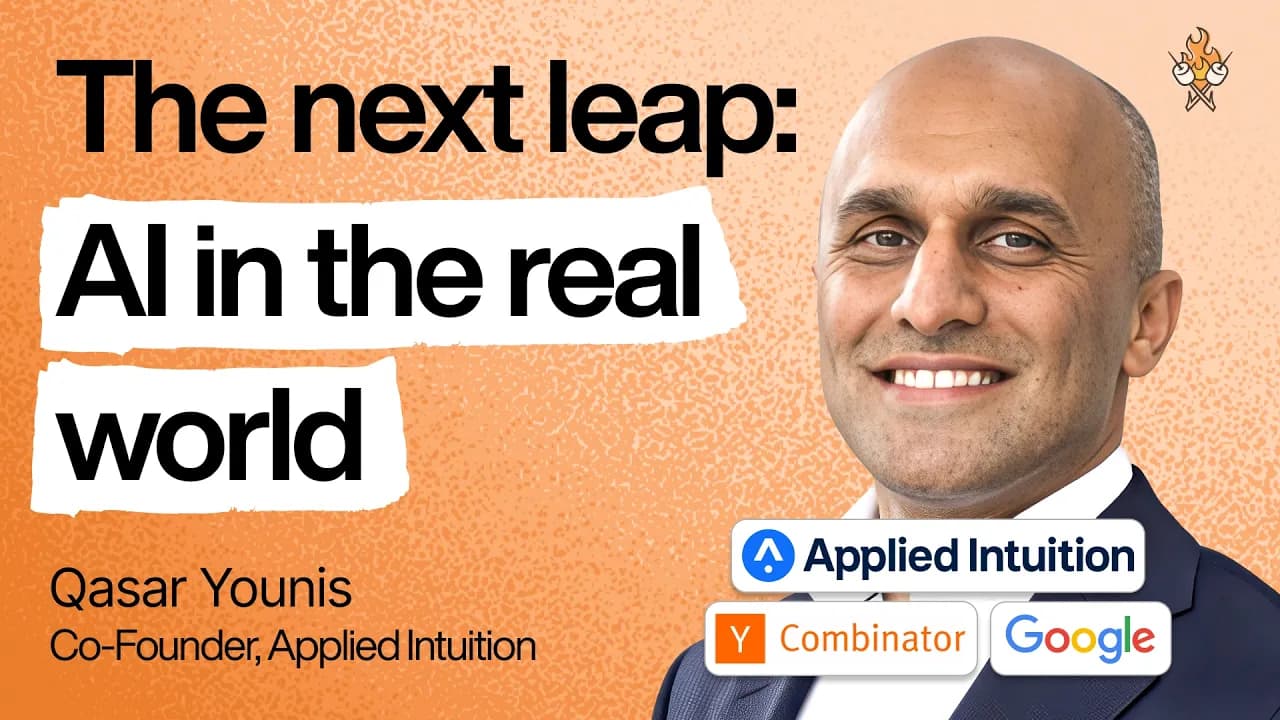
Uber CEO: At Uber, If You Don’t Perform, You’re Out! Uber Was Losing $3b A Year
These notes were generated by AI and may contain inaccuracies.
At Uber, employees work hard; if not performing, they are told directly. If they cannot handle the truth, they can leave. The most important skill in life is working hard, like top athletes Ronaldo and Michael Jordan, who combine talent with relentless effort—a learned skill, not innate.
Uber was losing $3 billion per year when joined; now generates $8.5 billion in free cash flow annually. Born in Iran during the Islamic Revolution in 1978, family unsafe—revolutionary guards entered backyard, bullets through living room. Family fled to US to rebuild when he was 8-9 years old. This destroyed his dad emotionally.
Studied bioelectrical engineering, first job investment banking to observe big companies being built. Took over Expedia: sales increased from $2.1 billion to $8.8 billion in 12 years as CEO; was highest-paid CEO of a US tech company. Left to join Uber.
AI is a major development; Uber has 9.5 million drivers and couriers. Concern about AI displacing their jobs.
Born in Iran during modernization; family built large industrial company lost in 1978 Revolution. Fled to US as unsafe—one uncle was cabinet member under Shah. Revolutionary guards targeted neighbor, bullets shattered living room glass; mom decided to leave. Family driven to rebuild economic lives. Never feels safe; seeing parents lose everything, especially dad's loss of self-value, motivated him to make family proud and build securely. Americans underestimate rule of law protecting achievements—not true worldwide. Drive to build without taking anything for granted.
Father trapped in Iran 6 years without exit visa. Mom raised him alone in Tarrytown, New York (45 minutes north of NYC), becoming salesperson from non-working life. Missed dad; he seemed giant when leaving, diminished on return sophomore year of college (heart attack on plane back). Wanted to reconnect but felt changed.
Father stoic, passed away couple years ago; tough to discuss. Family wrote letters (father wrote poetry); no open expression of feelings or frustration—just dealt with situations. Suffers from over-stoicism, occasional breakdowns. Family loving but humble; father didn't project power, taught don't complain.
Parenthood humbling; kids become their own people despite plans. Exhausting, execute 80% of plan. Control freak initially alarmed, but beautiful. Advice: spend time with kids—that's the magic connection you control.
Photos show happy childhood: fifth birthday, age four in London with cousins, dressed up by mom. Family everywhere. Mom Lily: as little kid, said wants to do something important, make change—not prioritize wealth.
Visited dad's factory; he designed/built/operated them, knew everyone's name, treated with respect—no fear. Imprinted positive impact, broad respect. Initially prioritized money post-immigration (investment banking), but later shifted to building enterprise with team connection like father's.
Arrived NYC age 9. Goal: make dad proud, no specific targets. Father: do anything if doctor or engineer. Chose engineering at Brown University for problem-solving, equations modeling real life. Serves today: companies are machines run by people, CEO engineers organization to goals—pick right goals.
Worked 8 years at Allen & Company: risk arbitrage, then M&A advisory. Lesson from Herbert Allen: bet on people—great people stay great. Allen cultivated loyalty with great potential/character people.
Great character: success, honor, loyalty, follow-through on promises. Talent + hard work = success.
Left for Barry Diller, client during hostile tender offer for Paramount (similar ongoing now). Thought Allen lifer like brother Cave, but jumped for Barry—a doer, constant motion.
Barry lost Paramount bid to Viacom, walked away (could've paid more). Announced plainly: they won, we lost. Next. Not papering over losses or obsessing—recognize, analyze briefly, move on. Take shots, lose, learn, repeat. Constant motion excites.
Business/life advice: deal with rejection/loss without downward spiral. Professionally handles well; personally struggles—conflict avoidant from being youngest brother/cousin, goes with flow. Wife Sid helps; actively fights building resentment.
From banking to M&A (bridge to operating), then CFO (CEO partner). Jealous of CEOs' journeys. At IAC (Barry Diller's), head of IAC Travel (spun to Expedia) resigned; raised hand, promoted despite tough times. Moved to Seattle. Before CEO, handled M&As buying companies.
IAC bought Ticketmaster, Match.com, Expedia, Hotels.com. Focus was movement of commerce online, inspired by home shopping on TV where people called to buy products electronically. Medium shifted from TV screen and phone calls to internet screen and HTTP. Match.com moved online dating from calling a number to describe yourself (e.g., "my name is Dan and I'm 6'2"") and hearing recordings to online matching. Ticketmaster shifted from buying concert tickets at record stores like Tower Records (with lines) or calling to online. Travel shifted from calling travel agents to online. Targeted personals, ticketing, travel as electronic transactions without physical fulfillment (unlike Amazon's physical goods). Pattern: early leaders in shift from retail/phone commerce to online commerce.
Spot great companies by observing leaders in transitions. Transitions are difficult: can't predict direction, speed, investment, returns, market size. Identify emerging leaders, call them to talk. Self-reinforcing: great management/founders recognize and execute opportunities faster. Jump when leadership matches market lead. Never bought successful companies cheap; overpaid relative to market perception at the time, not reality.
Humans think success/transitions linearly because time is linear (e.g., sleep 7 hours/day). But new superior technologies in virtual world grow exponentially without friction—hockey stick vs. straight line projection. Opportunity in the spread. Identified hockey sticks in online travel, personals, ticketing.
Jevons Paradox: When things become easier/faster/cheaper, usage explodes exponentially, not incrementally (defines Uber).
Uber founded as black car service. Garrett Camp idea: snowy day in Paris, couldn't find black car; thought "pick up phone and call a black car." Brought on Travis Kalanick as operator. People fixated on black car ($ couple billion) or taxi market size, missing how radical convenience/cheapness expands market per Jevons Paradox. Uber now far beyond original markets.
Mobile revolution: mobile data, iPhone. Travis hired market managers/GMs for new cities; they gave iPhones to black car drivers (many lacked smartphones). Founding team aggressively replicated pattern worldwide, raised massive capital, blitzscaled. Luck in timing, but aggressiveness made Uber what it is.
Barry Diller: Khosrowshahi not initially a leader (financial background, no people management); learned difficultly, mastered leadership and ultimate responsibility quickly.
Khosrowshahi learned under Barry (not mentor, but leader). Entered Expedia as financial leader. Leadership failed: fired first hire for largest business (50% profits), second disaster (0-for-2). Told Barry/board: if miss third hire, fire me. Took job himself 6 months-1 year to learn it; ended up running it 5-6 years plus holding company (public Expedia Inc.). Learned operating: different from capital allocation/financial wizardry. Loves operations, leadership, organizing, goals, teams. Found true love late after financial career; now combines both.
Learned from Barry: take responsibility, shots, go against grain aggressively.
Three months in, HR head said scaring people—that was job. Turnarounds in tech brutal: positive momentum easy, negative exponentially hard/decaying (e.g., Yahoo). Takes longer than expected; curves down exponential like up.
Expedia: broken tech engine, old unreinvested codebase, coasting tech leadership. Learned from Barry: act fast when bell rings, don't wait. Transparency: go to source for fidelity, cut through layers (junior analyst to president). Summaries lose truth, filtered by layers.
CEO sees team-filtered world. Give transparency to get it back—humans detect BS. If you bullshit challenges, they won't tell truth. Self-defense: be honest to drag hard truths.
If I err, err telling truth, scaring people away. If not up for fight, leave.
Attracts right people, gets good info. CEO failures often from wrong data, not wrong decisions. Build channels/culture surfacing problems fast + random direct channels (orgs have incentives to filter). Meets engineers 4 levels down—they tell truth, disrespect authority (code is truth).
Young 24-year-old tells truth—seek them out.
Arrived: medium hardworking, coasted on past success. Turned over almost entire team quickly for hungry, mission-oriented people. Rough but renewed company. Loves running companies.
How to turnaround culture (200+ people): Difficult. Shortcut: change people aligning with your values/mechanisms. Embody values, ensure team does, imbues down. Examples: Saturday emails, Sunday follow-up "?" if no response.
Expedia worked intensely but not as hard as preferred—selling vacations, discussed work-life balance. Uber: work ass off, demanding, call out non-performance, push out if not fixed. But real agency (big company, individuals matter), world-changing, huge learning, great time. Don't come to coast—clear about it.
12 years CEO: stock +550%, sales 2.1B to 8.8B (+400%). Highest-paid US tech CEO: $94.1M. Left big unvested options for Uber.
Hard work taboo 10 years ago, now accepted ("we're freed").
Most important life skill: work hard. Not instant decision. Focus less on profession (anyone can code now), more on hard work. Elite athletes (Ronaldo, Michael Jordan) outwork others via discipline/structure/relentlessness.
True in business/personal life. Teach kids to work hard. Won't let anyone outwork self—compounds advantage. Wants Uber incredibly hardworking.
Comes at trade-off and
We believe in flexibility; people confuse lack of flexibility with working hard. You can work hard and have flexibility. For example, have dinner with family from 6:00 to 8:00 p.m. when in town, but check emails at 9:30 p.m. and from 5:30 a.m. Life is about trade-offs.
Being honest allows people to make decisions for themselves. Toxicity comes from saying one thing publicly but delivering different reality. Honesty enables mutual openness. This culture attracts some but repels others, and that's fine—plenty of other companies or causes exist.
Working hard is a learned skill: staying focused, not discouraged by failure, trying over and over, working harder than others. Uber value: Embrace the grind—a grim determination, learned, not just innate.
No examples of non-hard workers becoming exceptionally hard workers. Brian Chesky (Airbnb) or Elon Musk said they've never seen it. May relate to childhood context forging relentlessness, ruthless to oneself.
Jeff Bezos considered naming Amazon Relentless. Successful tech companies have relentlessness: every team optimizes its function daily (e.g., payments, fraud, mobile app conversions). Company improves constantly; if not fast enough, others replace. Must improve faster than competitors. Key factors: speed of change (accelerating time, more shots on goal) and identifying opportunities—doubles data points and success probability.
Successful companies become complacent, risk-averse after victories (meta-analysis shows this). Uber has a chip on its shoulder: fought taxi unions, Travis exit, new CEO challenges, COVID, tough IPO, profitability doubts—now incredibly successful, facing AI/autonomous challenges. Always underestimated, stays hungry. Leadership identifies and removes complacency.
Uber turned around: from losing $2.5-3B/year to $8.5B free cash flow ($9.8B last year). Celebrate records, but prefer error of under-celebrating to stay driven. Success in competitive field is its own satisfaction.
Encourage risks: move fast, push execution pace. Promote smart risks—bigger companies should take more risks with cash flow buffer. Challenge teams, set examples by failing publicly, taking risky decisions.
Teams have specific business goals (e.g., ads team: incremental ad dollars, NPS). Tracked religiously, but issues: setting right goals (too ambitious/not enough), gaming system. Not perfect.
First values exercise failed; needed cultural reset post-Travis. Original had cool ideas like toe-stepping: challenge each other truthfully, even if it hurts—truth matters. But weaponized to be jerks.
Jeff Bezos: Values emerge; don't dictate "thou shalt." First redo crowdsourced (forgettable: passion, ambition, teamwork), plus CEO-added Do the right thing. Period.—use judgment, prioritize safety over business, take responsibility.
Reset 4-5 years later: Do the right thing survived. New ones true to Uber: Go get it (go-getters, aggressive, move fast, play to win—ties to rides/eats). Great minds don't think alike.
In exponential acceleration (Ray Kurzweil: 10-year-old experiences year's change in 11 days by 60; law of accelerating returns), embrace change via culture/people. High talent bar always kept. Talented, driven people hunt truth. Chip on shoulder from new industry creation. Leadership pushes, doesn't penalize challenges.
Taxis now fastest-growing Uber segment—counter to origins as taxi enemy. 5-6 years ago, Sachin (head of product) built tech for taxi companies' Uber-like app, then joined Uber, proposed integrating taxis. Founders advised against (hated us, bad rates, prior failure). Ignorance + Sachin's insight succeeded. Goal: wire up every taxi worldwide.
Uber built on AI core: pricing, routing, matching, courier batching (one/two orders). Handles 40M trips/day across NYC/Lagos streets via small local AI models stitched together. Comfortable with AI uncertainty (96% works, 4% issues).
Moving headlong into applied AI experiences. Societal impact enormous: AI replaces 70-80% human work in 10 years (intellectual), 15-20 years physical (harder: robots/cars, capital-heavy). Society may lack time to adjust vs. past shifts.
Changes in society from AI will be giant because it deals with the physical world, but you can't slow down the rate of change. If you're part of that change, you can influence how it imprints on society. It's a very exciting time.
70 to 80% of jobs will be disrupted by AI, and the pace means many won't have new jobs ready. Retraining is a challenge; friends can't just become AI experts. Society has adjusted historically—farming went from a huge percentage of the labor force to less than 1%—but the speed raises real questions. AI might retrain people, but what do those 70-80% of people do? In business, many jobs previously hired for are now done exceptionally well by AI. Daily, they test new models like Gemini Pro 3 to replace manual tasks. Coding has seen big positive disruption at Uber.
90% of Uber coders use AI. 30% are power users showing clear differentiation in productivity, measured by number of diffs (code releases different from the last). Uber is a giant codebase; engineers are builders manufacturing bricks and architects designing the system. These power users accelerate at a pace never seen before. The coder job will shift from writing code to orchestrating agents that write it or build systems—more orchestration than manual writing. The job will still exist. If average engineer efficiency hits 25% more (not there yet), they'll hire more engineers to go faster, as unsolved problems remain. In 5 years, with higher productivity, they might add agents and buy more Nvidia GPUs instead of headcount.
Considering linear vs. exponential improvement, executives might soon tell agents the strategy to build everything. Agents might even suggest better strategies. One team built DAR AI to prep presentations for Dara, tuning slide decks. Dara asked to see the code but was denied.
AI lacks real-time learning that humans have—we learn 0.1% from this conversation. Current models capture data, pre-train, post-train on feedback, then release (e.g., 35 becomes 38, but 35 doesn't learn). They're building around foundation models with real-world signals. When models learn real-time, everyone becomes replaceable, but no model does that yet.
Autonomous vehicles are a major AI disruption area. Tesla in LA enables 2.5-hour drive to Joshua Tree hands-free. Driving is one of the biggest professions: Uber has 9.5 million drivers and couriers, the largest organizer of flexible work globally (second to Chinese army). Statistically, autonomous Tesla has fewer accidents than human drivers, safer overall. Waymo is safer; Uber works with them in Austin and Atlanta. Waymo drivers are safer than humans. Globally, 1 million driving deaths yearly; US has 35,000-40,000 auto fatalities. AVs will save human lives.
Those 9.5 million drivers' careers could end. In 20 years, 9 million could become 20 million AVs, but time exists due to physical world: regulations, building cars, sensor stacks, model improvements. Majority of trips by robots in 15-20 years, not 10.
Uber expands work: from driving to delivering, shopping (AI shoppers farther off). Uber AI Solutions lets people train AI agents and do knowledge-based work on phones, extending opportunities. Question is velocity of platform extension vs. automation—unclear which wins. Unemployment will increase with continual AI improvement, disrupting knowledge and physical jobs. Historically, new jobs emerged, but timing of retraining is a question mark. Not a big issue in next 5 years, but beyond that, yes for society.
Dara's father came to US, lost job and meaning/purpose—jobs give worth beyond money. Australian study on men's suicide letters: sentiment of not feeling worth to family, extreme as "family better off without me." Adjacent to AI displacement: where do we find meaning when machines disrupt intelligence and muscles?
Every universal basic income test failed. Robots create utility, so work doesn't need to, but recipients did worse—market forces drive work, self-value, success. Success brings feeling of creating value, supporting family, building art, being great parent. Government money won't help.
Refreshing perspective vs. CEOs saying "it'll be fine." Historically true, but private conversations reveal anticipated disruption; public says "figure it out" to avoid hurting innovation/fundraising. Dara pursues opportunity but admits big disruption without answers. CNBC anchor praised him for answering questions directly, not pivoting per PR training. He swore to answer honestly.
AVs as force for good: safer (35k to 3k US fatalities), cheaper transport for all (e.g., Uber changed one woman's mom's life). Don't slow change—China won't. Have discussions like this; leaders like Dario (Anthropic) sparking them. Society lacks skill/investment in retraining at scale.
To four kids: Work hard, you'll be fine. AI might work harder, but advice: don't plan. Dara didn't plan path from investment banker to CEO. Over-planners lose curiosity, seek confirming signals, ignore contradictions. Let world change you before changing it—take input without blinders. Good people work hard; success requires it. Dara got lucky but was open to seize it.
Daniel Ek (Spotify founder) advised Dara at Allen & Company conference: life about impact, not happiness. Uber was a disaster then; Dara happy at Expedia with great contract and Barry. Daniel's cold eyes: "Dara, since when is life about being happy?" Dara called headhunter next day. Dad's advice: when a company that's a verb asks you to run it, say yes. Uber as verb even for competitors—owns category. People come for challenge, stay for impact on important company.
One conversation to rewind: with dad. Moved to NY from SF as dad aged, lost mental facilities. Spent time but not really him. Wish to discuss his experiences, building excitement, loss, regrets. Relationship had love but not deep talks—hopes for that with kids. Time can't return; permanent mistakes are life's tragedy and beauty. Corrects by having genuine conversations/connections with wife, kids, friends, workmates.
Speaker praises individual consistently successful across different domains, having built a rare skill stack from investing to CFO to transitioning to CEO. Has repeatedly contended with moments of transition and provided frameworks for founders and entrepreneurs on dealing with transition. One great takeaway is honesty.
Honesty is so powerful.
Learned honesty from wife, who treats everybody the same regardless of position: people are people, they eat, crab, have to go to sleep. Similar to how dad did. It's powerful.
Thank you so much. You're very welcome. Unbelievable inspiration. Thank you. Appreciate it.
YouTube has new algorithm using AI and viewing behavior to know exactly what video you would like next. Algorithm says this video is perfect for you, different for everybody. Check it out, you might love it.
Keep The Diary Of A CEO in your library
Save the videos and channels worth coming back to, and find them again in one place.