Travel Through the Lens of AI with with Booking.com CEO Glenn Fogel
In a Nutshell
Booking.com CEO Glenn Fogel argues that AI is transforming travel from a frustrating, manual process into an agentic experience where systems like their "Penny" AI handle complex itineraries, disruptions, and personalized recommendations with superior speed and memory. The company is investing heavily in AI while maintaining that durable advantages come from scale (8.6M alternative listings), deep partner relationships, and regulatory navigation—not permanent moats. Fogel emphasizes capital discipline through massive buybacks, continuous innovation over complacency, and the need for companies to upskill workers as AI displaces roles faster than past technological shifts.
These notes were generated by AI and may contain inaccuracies.
There is no such thing as a moat. There is no such thing as somewhere you're going to be protected against innovation. Today we have a competitive advantage on areas absolutely but those can go away tomorrow. The only way to really long term is to continue to develop new services, new ways to do things. How can we do your business better? What do you need? Where you need more demand? Where are you hurting? It's so much more complex if you think you're just going to come in and do this business and knock away these very big players. I say you should really understand what the business is before you decide to commit your capital.
Glenn Fogel is the CEO of Booking Holdings, a 20-some year veteran of the company who joined when it was just Priceline and worth a few hundred million in the year 2000 and has since helped grow it to a hundred billion plus company with multiple massive assets across travel that are now being used in the AI era.
Glenn attended Wharton and Harvard Law. He worked in the MIS program at Morgan Stanley. His first job was putting tapes on a drive in a data center of IBM 384s and the discs that went and the tape drives and putting the tapes on the drive. He started as an operator of a mainframe. He then became a developer but learned that this was not a career for him.
All the people he knew from undergrad had gone off to investment banking and made money. He thought he should try to do that but could not transition directly from his current path. With a degree in finance from Wharton, Harvard led him into law school. He got a job on Wall Street as a banker and did that until 1995. The bank was bought by another bank and they fired most of the bankers including him.
Being fired taught him a valuable lesson about how to do it right, not do it wrong, and understand what goes through the other person when you tell them that there is no longer a room for them there. This is something he has kept with him throughout his career.
After being fired, Glenn's father had just died, his grandmother died, and even the dog died. In his young 30s, alone, he decided he always wanted to write a book. He wrote a novel and tried to get it published through an agent. He was introduced to a woman on a blind date from a friend who used to work at Random House as an editor. The book never gets published, but he ended up marrying her and they have two great kids.
While trying to get an agent interested in the book, she said if the relationship was going to go forward, he should get a job. He did not want to go back to banking. A friend from law school was a senior person at Morgan Stanley and told him about a trading position. Glenn ended up being head trader for Barton Biggs, a Wall Street legend, for a number of years but did not like it.
When the internet was taking off in the late 90s, Glenn started interviewing. He had skills from being an IT person and knew a little bit about corporate development from banking. Priceline was the only real company on the east coast at the time with internet abilities and had a job for corporate development. He got an offer but wanted to wait until he got his bonus for 1999 which was paid at the end of February 2000.
He got his bonus check and was ready to start when the NASDAQ peaked. Priceline had difficulties after that. The stock went from being worth 30 billion shortly after going public to about 15 billion when Glenn joined in February/March of 2000. In nine months, market cap was down to just a couple of hundred million. The stock was trading at a dollar a share. They did a reverse split to avoid delisting, going to $6 a share. Glenn stayed and has been there for his 27th year.
From the reverse split $6 share price, the stock came very close to $6,000 last summer. Over a little more than a quarter of a century, it went up a thousand times. Market cap peaked around 180 billion. A big headline in the FT from an interview stated: "Got to fight for a customer every day."
Glenn sees a lot of parallels between the current AI wave and the internet era. The numbers are much bigger, the issues at hand are much bigger, the pluses and the minuses. Some companies clearly have enormous revenue bases. OpenAI and Anthropic are rumored to have 30 to $50 billion in revenue run rate each. Companies that are extremely highly valued at 10 billion do not necessarily have even revenue yet.
In the internet era, approximately 450 companies went public in 1999, 450 went public in the first few months of 2000, and maybe 500 went public before that. So there were 1500 companies, of which two dozen are left at most. The other 480 are gone. These were the very strongest or perceived to be strongest companies.
Glenn would not want to even guess at what the ratio of success to failures will be this time around versus that time versus any other time when there was an incredible boom. Over the last 150 years, there have always been these speculative booms that create tremendous innovation. People come in with both money and people. Examples include California during the 49ers gold rush where companies were selling axes and hammers, and the Detroit auto boom. There will be a great deal of disappointment. There will be a lot of people who are going to lose a lot of money. That is just the nature of how economies work when there are speculative bubbles. That does not mean that there are not a lot of companies that are actually real.
There is no general rule for whether to keep going or sell without knowing the facts of the specific situation. There were times early on where Priceline would have been happy if somebody made an offer. It really depends on how confident management and people who have put the money in are that there is going to be a future, and how conservative they are. What are they really trying to do? Are they trying to accomplish something that matters or are they just here to make money? Nothing wrong with making money, but you have to understand what your motivation is and what you are trying to achieve.
Glenn has a 78 year expected lifespan as an American male. The question is how you are going to spend those years, what is important to you, what you want, and what is the meaning to it. He would not give general advice to people in those situations.
OpenAI had checkout in ChatGPT where one of the main use cases was travel and then canceled that feature. Booking went up 8% on the news. From the outside, it looked rather easy that AI will take care of travel, all the travel companies will not be worthwhile, and that is why companies like Booking took a big hit as some of the new models were dropped that had a much better way of doing agentic commerce. When OpenAI announced they were not planning to be a merchant of record or keep an app type of way of doing commerce, people said they were wrong to worry about it as much.
The truth is the way Booking looks at AI is as an incredible beneficial tool and a way to be able to do their mission easier, hopefully cheaper and better for their customers. All business purpose is to do something of value to its customers. Booking has two kinds of customers: travelers and partners. They are in the middle as a marketplace. AI, particularly using large language models, can help make it a much more valuable method for travelers to get the information they need and be beneficial to partners.
Many people find travel very frustrating, especially trying to put together a complicated trip with family involving multiple destinations. It is complex and painful, and people start planning then stop because it is too much of a pain. Everybody would like somebody else to do it for them. That is why very wealthy people have travel concierges who are human beings who really understand the needs of that customer. People not quite in that wealth zone will have their partner or spouse try and do it for them.
With AI, it is going to make it so much easier. Booking Holdings is offering personalized agents that know everything about you, everything you want, and are able to do so much more for you than any human travel agent could ever do because the machine never forgets anything. The machine has an infinite amount of permutations and can rapidly look through and choose what is the best lane, go down and then back up if something does not work, and come back with alternatives.
People always want some agency. They make the decision themselves or at least confirm they want it. For complicated things, most people do not want to double check everything, which is different than a business person going from New York to Chicago where their human assistant does it for them.
Priceline has Penny, an agentic AI system. Glenn used it for a very complex family travel need where his wife and he wanted to go up in the front of the bus, the young adults in the back, two cabins, one person has to go back to a different city, going to Europe, deciding whether to have the hotel where they land and travel the next day or go that night, what restaurant, and other things. He also told it he had a lot of frequent flyer miles and asked whether to use miles or cash and for which ones.
Penny went back and forth and asked questions like how many miles he had with each airline. They ended up using miles for the upfront part for his wife and him, paying cash for the kids' flights. They were going to go to the hotel in the city they land in, then get a shuttle the next day to the other city. It was wonderful.
When things go wrong in travel (weather, mechanics), you want one point of contact that can fix everything because travel is like dominoes. One thing falls over and it all starts falling over. The beauty with AI is being able to figure out and look ahead. The goal is to have a system that can predict well enough what the problem will be before it happens and suggest changing or fixing it.
Penny adoption has doubled every month for the past few months. It has generated a lift in conversion, faster search or path to booking, lower cancellation, and higher customer success.
Last year Booking did around 86 billion dollars worth of travel and over a billion room nights. Penny is still really small in terms of the absolute number. They are not pushing it fully yet. Issues include understanding the cost of running it, how many tokens are being consumed, how many times users come back and forth, what the cost was of getting that trip for that person, and what the ROI is going to be. Long term lifetime value questions include whether customers come back, whether loyalty is up, and how much.
Token economics involve which model should be used for which purpose and when. Different models can be a lot cheaper. They have to look at that very closely.
Using AI for customer service is great because it happens much faster. Instead of having to staff humans and at peak time somebody is going to have to wait, the computer can pick it up and solve the problem even better and faster. In the future, you will never have to talk to a human who says they are sorry and you have to be on hold again while they get somebody else. AI will solve that problem.
Sometimes customers want to talk to humans, so you have to balance that because what you do not want to do is end up with all AI when that is not what the customer wants in the end. It is always what is best for the customer. Customer service costs per reservation are down about 10%. Customer satisfaction is up. They have to make sure they are always able to recognize when some customers want a human being and some are happy through AI.
Booking is investing approximately 700 million this year. It is in many different areas, not just developing more AI, though there is definitely money going into tech enablement. There are different projects and different areas. The amount talked about on the call was 550 million of cost savings being invested into AI and platform, but the actual investment is higher.
The idea is that you have savings, money, and cash flow. How much should you be putting into reinvesting in the company, how much should you be looking at acquisitions, and how much should you be handing back to shareholders? That is always a balance trying to figure out the right ratio. The first thing is whether they believe investing in the top line is going to give a positive ROI that is sufficient to justify doing that, or after that, are there acquisitions.
Glenn Fogel emphasized that companies should either reinvest capital effectively or return it to shareholders who can allocate it better. He expressed pride in Booking.com's capital return strategy over the past dozen years, during which the company bought back approximately 40% of outstanding shares. In Q4, the company executed $3.6 billion in stock buybacks and distributed over $300 million in dividends. An additional $300 million was allocated for tax withholding on vested equity grants. Fogel noted his investment banking and trading background influenced this philosophy, as he viewed companies accumulating large cash reserves without productive use or shareholder returns as problematic.
The discussion highlighted Booking.com's scale with 8.6 million alternative accommodation listings at the end of 2025, including homes, rooms, and various rental properties. This marketplace infrastructure was described as a durable asset that creates competitive advantage, as AI agents would need access to comprehensive inventory to book alternative accommodations. Fogel noted this scale is often underappreciated, particularly by Americans who may focus more on Airbnb's presence.
Booking.com's alternative accommodation business is approximately three-quarters the size of Airbnb when measured by total room nights across the entire company. Over the past five years, Booking.com has grown faster than Airbnb in the alternative accommodation segment. Fogel stressed there is no permanent moat or protection against innovation, and competitive advantages can disappear. The company maintains 25,000 employees focused on continuous innovation and development of new services.
Fogel explained that true competitive advantage comes from ongoing development of new services, including the agentic travel assistant, and deep partnership work with property managers and hotels. The company employs thousands of people working directly with partners to improve their businesses, identify demand opportunities, address pain points, and optimize systems. This operational complexity goes far beyond simply loading inventory into databases.
Travel is described as a highly regulated industry globally, though less so than banking, airlines, or pharmaceuticals. Companies acting as merchant of record in travel must comply with extensive rules that vary significantly by country. Regulations are increasing worldwide, and large-scale companies have the resources to navigate this complexity. Fogel warned that new entrants should understand these regulatory requirements before committing capital.
Fogel described the current period as the most exciting time in his career due to opportunities to build new AI-powered capabilities. He joined Priceline when it was valued in the hundreds of millions and has seen it grow into a company valued at over $130 billion, having reached $180 billion earlier in the year.
Fogel reflected on his career and life choices, stating he continues working because he believes travel adds value to people's lives by enabling them to experience the world, other cultures, and other people. The company's mission is to make travel easier for everyone. He emphasized that people should choose their paths wisely because they only get one life. He expressed concern about individuals, including some law school classmates, who followed conventional career paths like law without deep consideration and later felt wistful about unexplored alternatives.
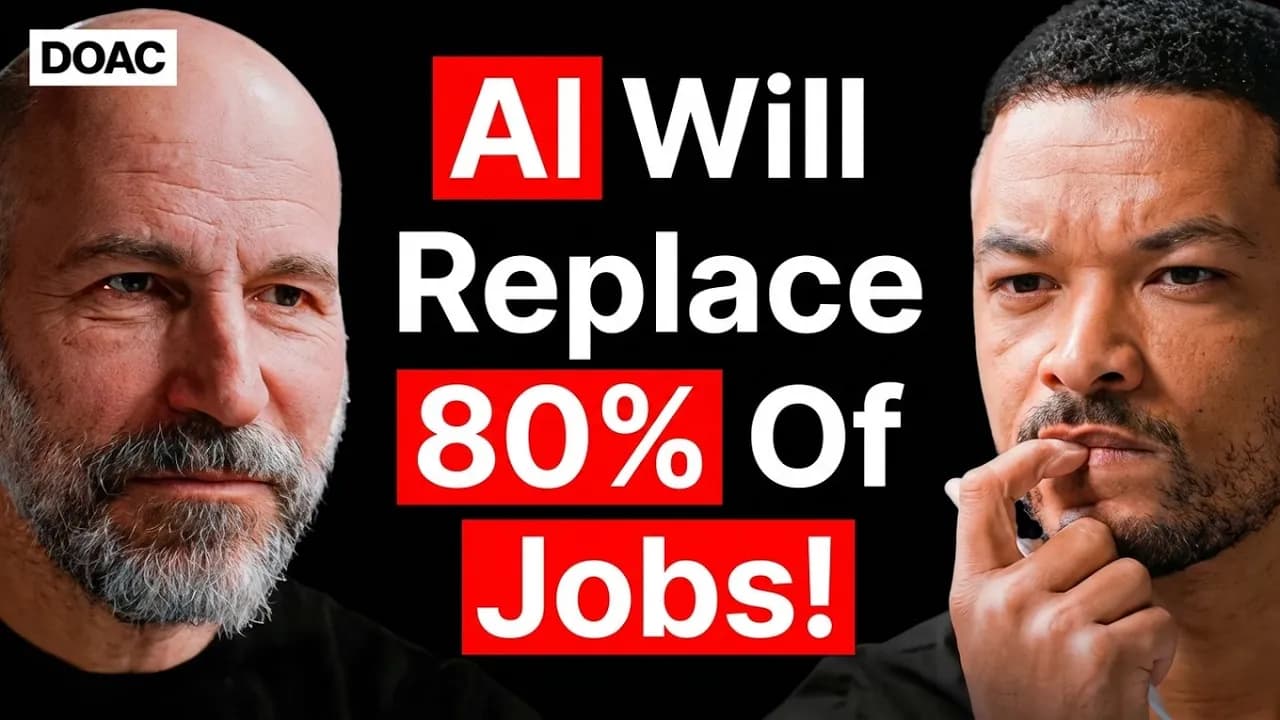
Fogel discussed how technology has historically replaced jobs, citing Booking.com's transition from human translation across 40 languages in 2005 to machine translation, which eliminated those positions. The current challenge differs due to the speed of change. AI is now affecting roles like financial analysts that previously seemed secure. While new jobs will eventually be created, the mismatch between job disappearance and new job creation rates creates problems.
Fogel highlighted concern for workers like a 50-year-old truck driver who built a career and identity around operating an 18-wheeler, only to face sudden automation. He noted that forced economic dislocations have historically caused social problems, and society must address how to handle rapid technological change.
Booking.com focuses on upskilling employees daily, with Fogel regularly discussing training programs with the Chief Human Resources Officer. The goal is to make employees AI literate and prepared for future roles. Fogel believes companies have an obligation to help workers develop new skills, which benefits both the company through increased productivity and individuals through enhanced career prospects. He expressed skepticism about government retraining programs, noting they have not worked well over the past 50 years.
Fogel warned that if Western societies reject AI due to fear, other regions like China will not face the same constraints and will gain competitive advantage. He advocated for honest, open conversations about AI's implications rather than political messaging designed to gain votes. He stressed the importance of level-headed discussion about how different economic sectors will be affected and how to ensure broad participation in AI benefits.
Keep No Priors: AI, Machine Learning, Tech, & Startups in your library
Save the videos and channels worth coming back to, and find them again in one place.