Visceral Fat Doctor: If I Wanted to Lose Visceral Fat FAST, I'd Do This
In a Nutshell
Visceral fat—the inflammatory fat around organs—is the real health threat and leaves fastest when you cut all processed foods (especially carbs and seed oils), replace jogging with short maximum-intensity sprints, and stop grazing so insulin can drop between meals. Two case studies showed dramatic visceral-fat reduction on MRI scans from diet changes alone or switching from long runs to sprints, without any other interventions. The bathroom scale is useless; only MRI reveals whether disease-causing fat is actually leaving.
These notes were generated by AI and may contain inaccuracies.
Almost everyone trying to lose fat is doing it wrong, not because they're lazy, but because no one ever showed them what actually works. A 7-year National Science Foundation study scanned over 6,000 Americans, and when they targeted one specific type of fat, chronic disease started to reverse in all of them.
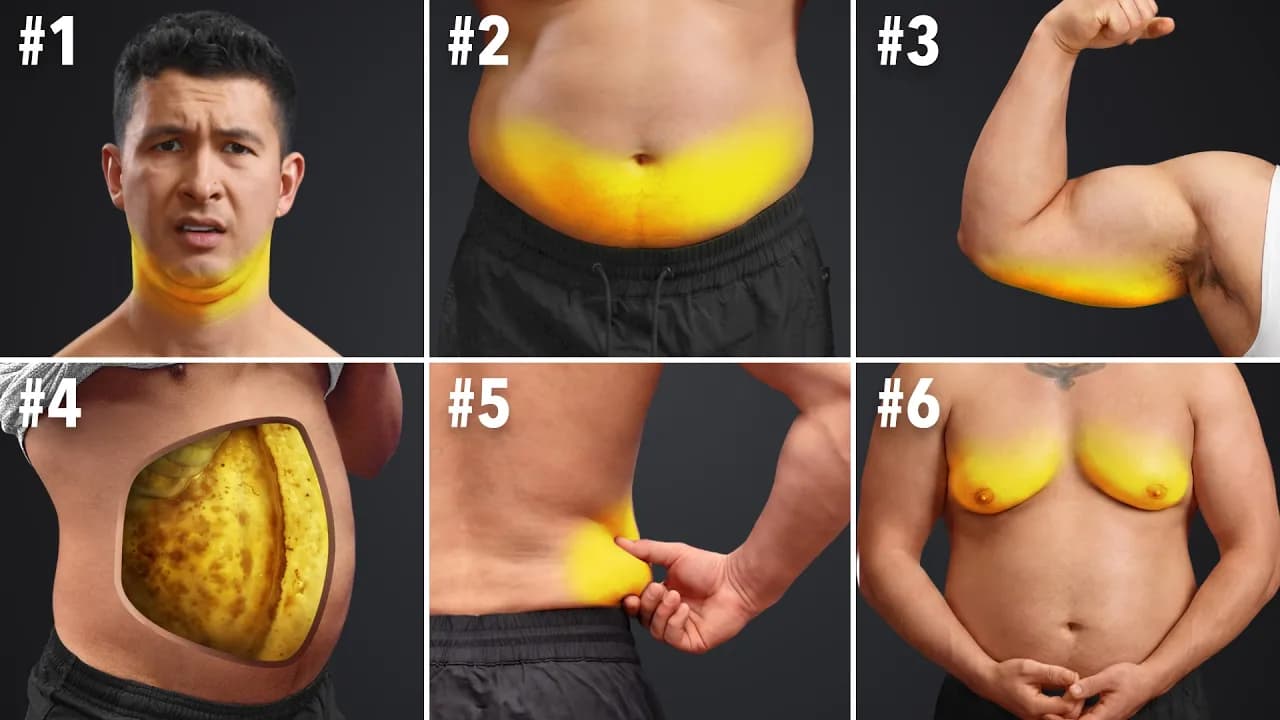
Visceral fat is the inflammatory fatty disease packed deep around organs, around the heart, and even filling the inside of muscles. This is the fat that comes off fast because it's metabolically active in a bad way, decreasing metabolism. When you stop feeding it, it signals the body to improve metabolism and start burning that fat, causing it to leave fast.
Get an MRI to establish a baseline and watch visceral fat leave the body. The MRI ends the lie because even if someone thinks they're thin and healthy, the scan reveals the truth. The fat you can pinch around the outside of the body is mostly cosmetic, while the dangerous fatty disease you can't see or feel never shows up on any scale.
The first change that does most of the work is cutting out all processed foods, especially processed carbs and industrial seed oils. These disrupt the microbiome, spike insulin, and drive the body to store more visceral fat. Cutting the spikes cuts off what feeds the fat.
A 2024 mouse study showed the connection between industrial seed oils disrupting the microbiome leading to insulin resistance.
A 68-year-old gentleman had a series of six MRI scans over 35 weeks. The only change he made was cutting out processed foods, especially processed carbohydrates, and he did not exercise one single minute. The scans showed visible change in just 2 weeks. Over the course of 35 weeks, he kept losing more and more of the deadly inflammatory visceral fat inside his body while improving his muscle.
Food alone can produce these results. You cannot exercise yourself out of a bad diet and visceral fat. You have to take control of what you're feeding your body.
Trade jogging and running for sprinting or maximum intensity exercise. Sprinting means maximum effort as fast as you can possibly run, with short all-out bursts for 10 to 20 seconds, then rest and repeat. Maximum intensity sprint spikes growth hormone and adrenaline, and those signals pull visceral fat out of the body.
Long slow cardio like running and jogging never creates that signal and instead releases cortisol, telling the body to store visceral fat.
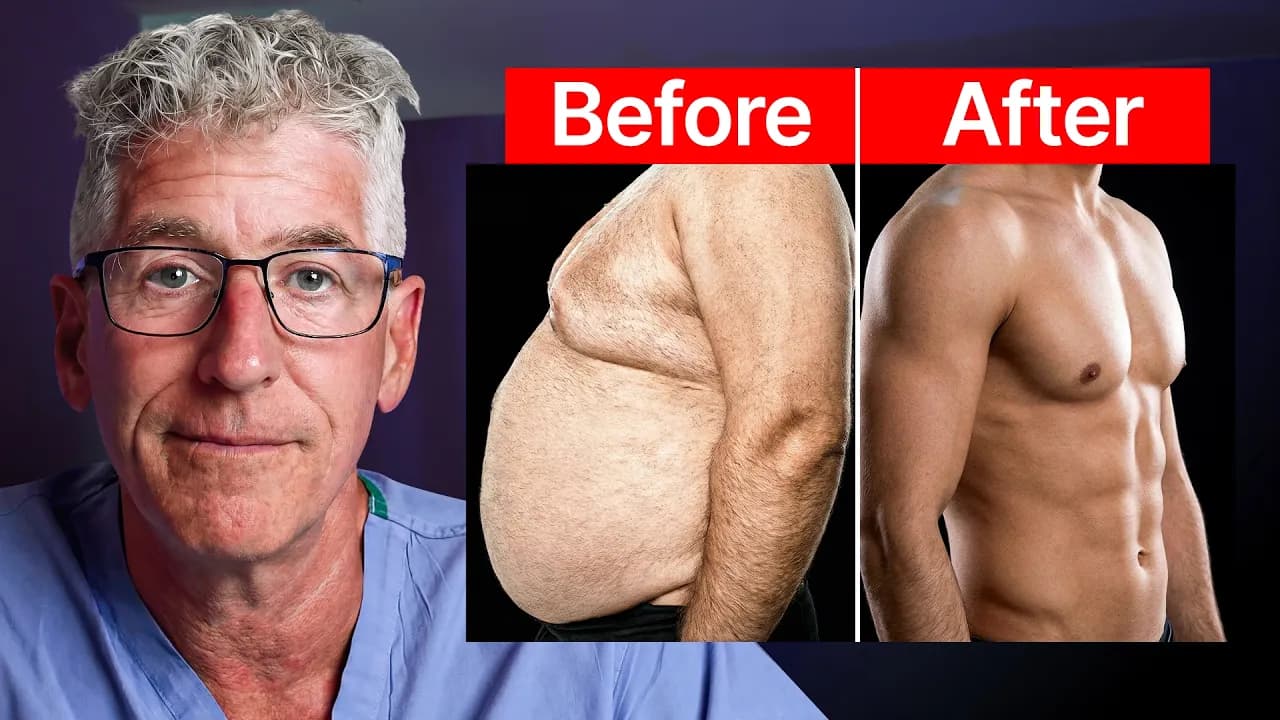
A 58-year-old CEO executive had been running 10 miles a day, 5 days a week, totaling 50 miles per week, yet was still full of visceral fat. When he stopped running and started sprinting instead, in less than two months the visceral fat left his abdomen, he developed a six-pack, and became more muscular.
Talk to your doctor before starting sprinting or any form of exercise because you can get hurt exercising, including sprinting or lifting weights. Work with someone who knows how to do it safely.
Stop eating all day long. Most people eat three meals plus snacking from morning to night. Every time you eat, insulin goes up. Grazing all day means insulin never comes back down, so the body never gets the window to burn anything. Constant eating isn't a natural pattern.
The fix is to leave real gaps between meals so insulin can drop and let the body use its own fuel. The recommended pattern is feasting and fasting. Eat a large amount of meat when you get a kill, followed by periods of deprivation where you're fasting. This is the pattern humans lived with for hundreds of thousands of years.
At age 48, the speaker weighed 165 lbs and was filled with visceral fat, visible in the inflamed puffy look in his face. At age 59, he weighed 178 lbs but had far less disease inside because he lost his visceral fat. He gained healthy tissue and put on muscle while getting rid of disease.
The bathroom scale measures the wrong thing. It measures weight instead of disease. If the speaker had followed his scale, he would have thought he was failing because his weight went up, when reality was he weighed more because he put on healthy tissue.
Keep Sean OMara, MD JD, Health & Performance Optimizing in your library
Save the videos and channels worth coming back to, and find them again in one place.