Watch A Humanoid Robot Come To Life
In a Nutshell
Foundation founder Sined tours Robo Factory 1 in San Francisco, demonstrating the full assembly of the Phantom Mach 1 humanoid robot—from pressing ring pins into actuators, soldering motor controllers, and building sub-assemblies like forearms, neck/head with 360° cameras, torso, pelvis, thighs, shins with titanium rods, to tendon-driven hands. The 500-part robot, sourced globally (30% from China), withstands 5-10G vibrations for human-like world interaction. Fully calibrated, it walks, envisioning a screenless future where robots use human-built tools, freeing people for enjoyable pursuits.
These notes were generated by AI and may contain inaccuracies.
We didn't grow up thinking that things that we read in sci-fi we would actually be working on to actually make it—making it walk, make it do something useful. It's probably the most fun I've ever had.
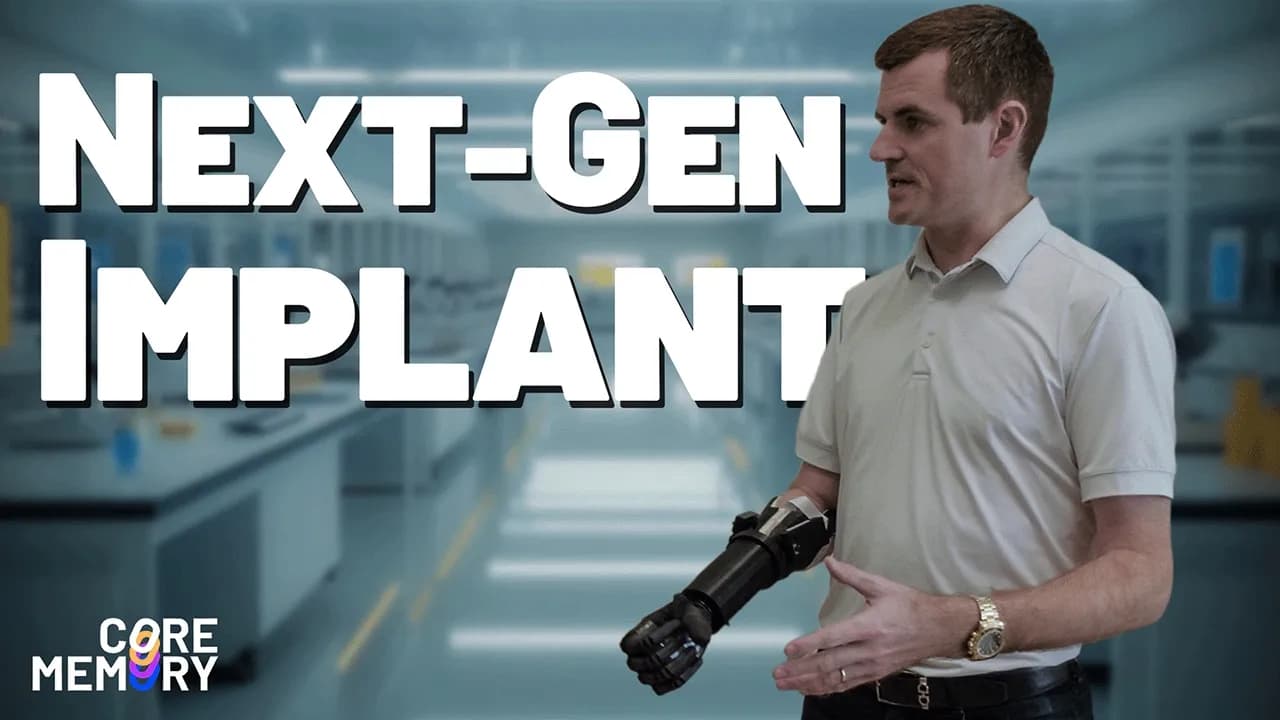
I'm Sined. I am the founder of Foundation. You're in San Francisco right now at Foundation's design headquarters that we call Robo Factory 1. Right behind me is a robot called Phantom. The goal with the robot is essentially to build something that can interact with the world the way humans do. There are close to about 500 unique parts in the robot and a lot of them get sourced from different places. We have about close to 30% of them that still come from China and then the rest of it are coming from US, Mexico, Israel, South Korea. Today we're going to show you how we build Phantom Mach 1 robot pretty much from the beginning to end from putting an actuator together all the way up to making the robot walk.
Step one in the process is ring pin housing press which essentially is a part of us building the actuator. Actuators are your motors and gear boxes that you use to be able to actually move the robot. After we've put ring pins in place, the next thing is we just start assembling the gearbox.
We're placing a position encoder into the actuator. Now we're soldering the motor controller. It needs to be able to speak to computer.
Now with all the actuators we've built, we're now going to sub assembly. And the very first sub assembly is the forearm assembly. This is where the robot starts coming together. Now we will put the entire forearm together and then we will test it as if it was a functional unit on the robot.
Given it's a humanoid, we want to be able to put a neck and a head together. We have about six cameras enabling the robot to be able to have near 360 view which is not only important for the robot to be able to do the task really well but then also to be able to do the task safely. Now we're starting to put the torso together. That's pretty much the upper structure of the robot. What we do is we start attaching the arm.
Now we're moving to the bottom half. The first part of that is putting the pelvis together, which essentially connects your torso to your legs. The next thing is we move on to the thighs. The shin has titanium rods. Robot legs are very high vibration system. You're kind of building something that needs to be able to withstand 5-10 G's pretty easily.
So then the final piece is we put the hands together on the robot. The current hands are actually what I would consider quite trivial. So the next generation hand that we're building is a tendon-driven hand. Just like a human hand, tendons go into the robot's fingers and you have all of your actuation move into the forearm.
And now that the robot's fully built and calibrated, we're excited to take it out for a walk. I think it's somewhat fascinating that we want to build these machines and tools kind of in our own image. I do think there's a pragmatic part to this as well. We have built the entire world around us. It's built by us. To me, the ideal future is a future where you're in the screenless world. And now you finally have robots that can use all the tools that we've built where we don't have to be glued to a computer. We don't have to go and interface between different machines. We can by and large focus on things that we enjoy doing.
Keep Core Memory in your library
Save the videos and channels worth coming back to, and find them again in one place.