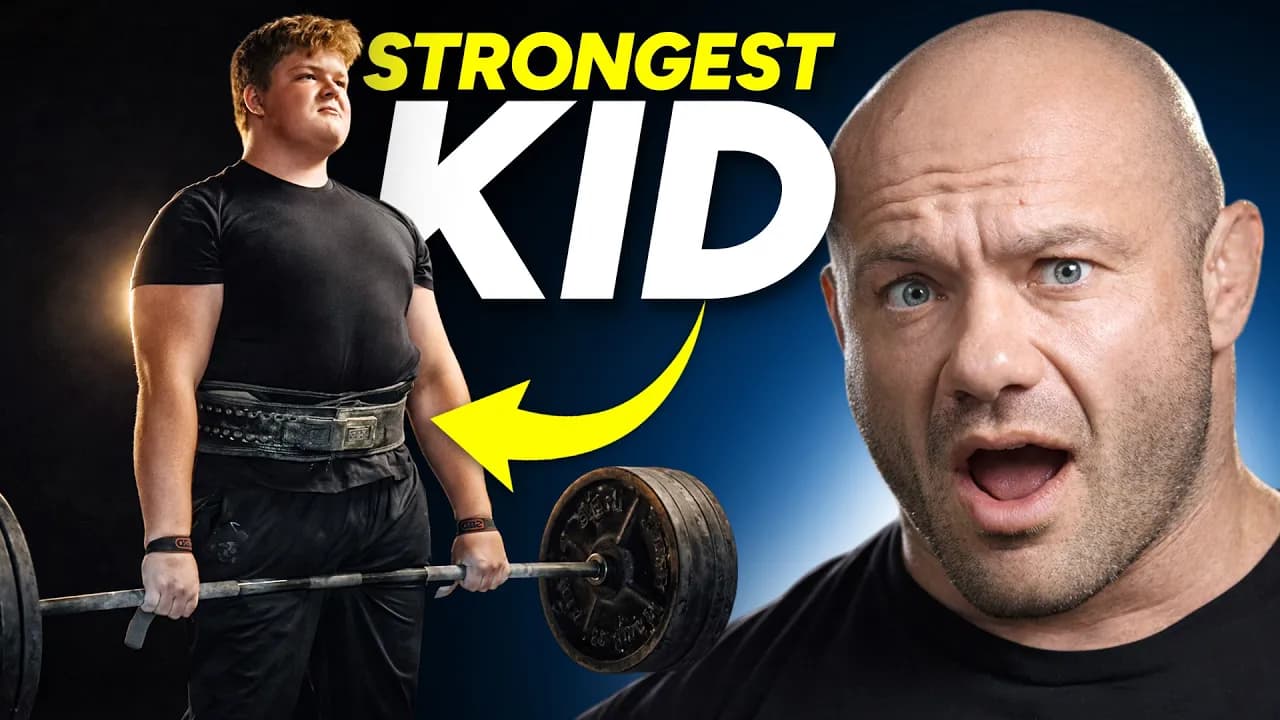
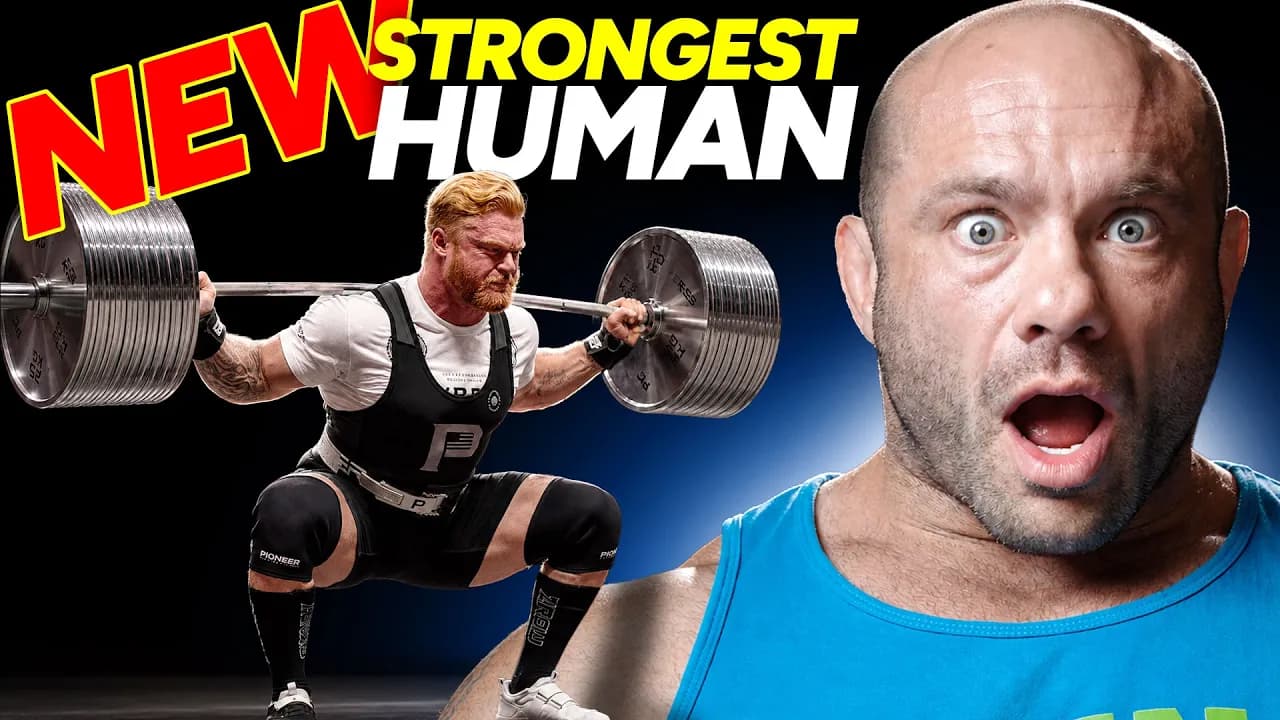
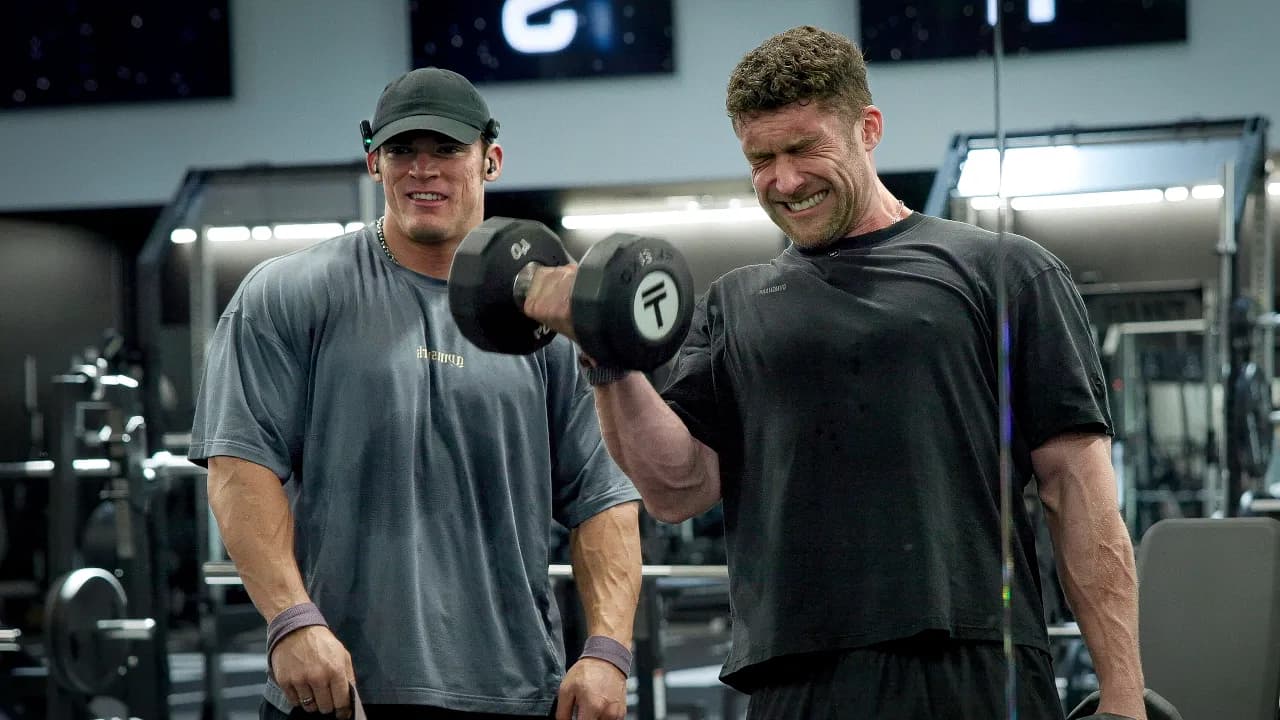
We Trained With the World's Strongest 165 LB Man
In a Nutshell
At 163 pounds, Austin Perkins has elite powerlifting totals of 750/450/755 pounds and demonstrates exceptional strength-to-weight ratios across machine tests like 25 pull-ups, 21 strict lateral raises, and full-stack cable pushdowns. Despite early setbacks including being told he'd never succeed due to his 5'4" frame and abandoning NFL dreams, he transformed from unstructured high school training and poor college habits into a world champion after meeting his wife at age 22. His core message emphasizes that consistent structured training, recovery focus, and determination enable smaller athletes to achieve world-class results and inspire others.
These notes were generated by AI and may contain inaccuracies.
At 163 pounds, Austin Perkins has a 750-pound squat, 450-pound bench press, and 755-pound deadlift. The discussion focuses on how these powerlifting numbers translate to performance on standard gym machines.
Perkins participated in multiple sports growing up including soccer, flag football, baseball, tackle football, and basketball. His father enrolled him in these activities as soon as he was eligible. He entered powerlifting primarily to improve his football performance, with aspirations of playing in the NFL.
Perkins is 5'4" tall. He stopped growing height-wise in ninth grade around age 14-15. This ended his NFL aspirations, as professional sports favor larger athletes. He was frequently told he was too small to succeed in sports.
During high school at age 16, Perkins witnessed another student (now in the NFL) being interviewed after practice. A teammate told him directly that he would never achieve similar success, stating "I don't know why you're looking. That's never going to be you one day." This moment remains a driving force for Perkins, motivating him to demonstrate that smaller athletes can excel in powerlifting.
Pull-up technique requires chin to reach hand position at the bar, with a dead hang at full extension at the bottom of each rep. Perkins predicted he would complete a minimum of 20 pull-ups. He performed 25 full range-of-motion pull-ups, tying with another competitor who had done 25 earlier.
Perkins' first conventional deadlift was 225 pounds at 100 pounds bodyweight - double bodyweight. His initial squat was approximately 135-140 pounds. He does not remember his first bench press weight but estimates it was under 135 pounds.
From ages 12-18, Perkins was not on a structured powerlifting program. He attempted to deadlift and squat 600 pounds daily without following any program. He never benched during this period, only benching on meet days, because he believed it was better to maximize his stronger lifts rather than prioritize his weaker bench press.
Perkins performed the Precor chest press machine at 260 pounds for 15 repetitions. When asked what the average person could do on this machine, he noted that most people cannot complete even one repetition with the full stack.
Perkins confirms he is drug-free. During college, he did not prioritize recovery, drank heavily, smoked, and occasionally showed up to powerlifting training drunk due to depression. His performance improved significantly after age 22 when he began taking training seriously.
Meeting his wife at age 22 marked a turning point. She encouraged him to put genuine effort into training. Perkins emphasizes that a coach is not necessary, but a structured program with consistency is essential for progress.
Perkins performed strict lateral raises with 20-pound dumbbells, pausing at the top of each repetition. He predicted 15-20 repetitions and completed 21 repetitions, achieving the "manhood test" threshold according to the host's humorous cultural reference.
People express skepticism about Perkins being drug-free, partly because they may not realize his height and weight. He notes the difficulty of maintaining 163 pounds while on enhancements, as his body naturally wants to gain weight. He attributes his success to good genetics combined with hard work.
Recovery is prioritized through maximizing sleep, especially as a new father of a 9-month-old. Perkins only began tracking macros in February, previously consuming around 50 grams of protein daily for years. He now aims for 100-200 grams of protein daily, noting improved recovery and training quality.
On the preacher curl machine with a 170-pound stack, Perkins predicted three repetitions. Due to fatigue from 41 pull-ups and other exercises, plus having a newborn who kept him awake, he completed only one repetition. He noted his large size 10 feet affect positioning on the machine.
Perkins completed 11 repetitions with the full cable tricep pushdown stack. He joked about switching to bodybuilding based on this performance metric.
Perkins does not feel he is the best, viewing it as a "double-edged sword." He is the best 74-kilogram tested athlete and the best pound-for-pound tested athlete globally. He prefers to focus on catching athletes in higher weight classes rather than declaring himself the best at 74 kilograms.
Perkins won the Sheffield competition overall, crying afterward not from joy but sadness for missing his 900-kilogram total goal (just under 2,000 pounds) by 20 pounds despite 6 months of training. His world record exceeds the weight class above his, yet he continues pushing for higher standards.
At 27 years old, Perkins aims to win multiple world titles and at least three weight class world titles. He wants world records and to be remembered on the "Mount Rushmore" of powerlifters alongside figures like Ed Coan. His goal is longevity in the sport, with world records potentially still standing 20 years from now, and to motivate others that smaller athletes can achieve significant success.
Keep Renaissance Periodization in your library
Save the videos and channels worth coming back to, and find them again in one place.